Tag Archives: Native American

Maidu Mythology – The Lizard

Lizard Rock, 1982.

Thought some might be interested of on accounts of the lizard that was relayed by a Big Meadows Maidu and published in 1883:

“Speaking of Indians, reminds of a curious legend of theirs that I drew a few days ago from Dick, an Indian, an intelligent Big Meadows buck. Accidentally, I spoke of the arrowheads occasionally found everywhere over the country, and he remarked ‘they were no account, as they were made by lizards.’ This excited my curiosity, and with a little questioning I obtained the following, which in a tradition they have the appearance of religiously believing, as it is told them by their fathers.

“A long time ago the lizard was a little man, very little man indeed, and he was very much afraid of the grizzly bear, who was the ‘hi[yu’ boss-the right bower-the four aces so to speak, of all beasts, and what is more could talk. Well, these ugly bears seemed to hanker after these little lizard men and would think nothing of making a lunch of whole family, with mother-in-laws thrown in as dessert. The lizard were mortally afraid of them, but would shoot arrows at them without doing any harm, only making the grizzlies laugh. (These arrowheads are the ones we find.) At last there was a smart little cuss of a lizard who had had all his relatives eaten except his grandmother, with whom he lived, and resolved to make at a bow and arrow that would kill the bear. So he set himself to work and when questioned he told them all what he was doing at which they would laugh. When he got his bow completed his grandmother would not let him leave the campooda, for fear he would meet the fate of the others. At one last evening, while the old lady was gone after a basket of water, he took his new bow and quiver of arrows and stole away to a valley where the bears congregated to hold their meetings and all over the prospects of yellow jackets crop. Arriving at the valley, he soon saw a number of bears, among was the old boss himself-a monster that had grown fat on lizard men. Climbing  a small sapling, he made a noise by shouting, whistling and other means, to attract the attention of the bears, which soon did, and the old boss bear walked growling up to the tree, and savagely inquired what Mr. Lizard wanted. The little fellow up and told him what he had made, and that he was going to kill him, at which the bear laughed and told the little fellow to come down  and he would go home with him and they would have would have big spree that night. But lizard declined the bear’s invitation to his own home and told him he meant business, and if the old grizzly did not believe him, to just shut his eyes and open his mouth and he would show how it was  done. To this the bear laughingly consented, when the little fellow fired away, the arrow entering the bear’s mouth, killing him on the spot. He then hastened to his grandmother, whom he found weeping, thinking that he, too, had been a made a lizard angel, just like the rest of his relatives. He told the old woman to ‘dry up’ and then told her what he had done, and it took him some time make her and the other lizards believe him, although he had never been known to tell a lie. At the last the truth became known, he was made a big chief, a great feast of crickets, acorns and suckers was given, and he lived long to enjoy the honors he had achieved by his daring act, while the bears, having found their match, became frightened and sought the darkest shades of the forest, where they have ever since remained, only when forced by hunger to seek food in the valleys.”

Support

P.S. Thanks to for the birthday wishes yesterday. I did not take the day off, but processed calendar orders, etc.
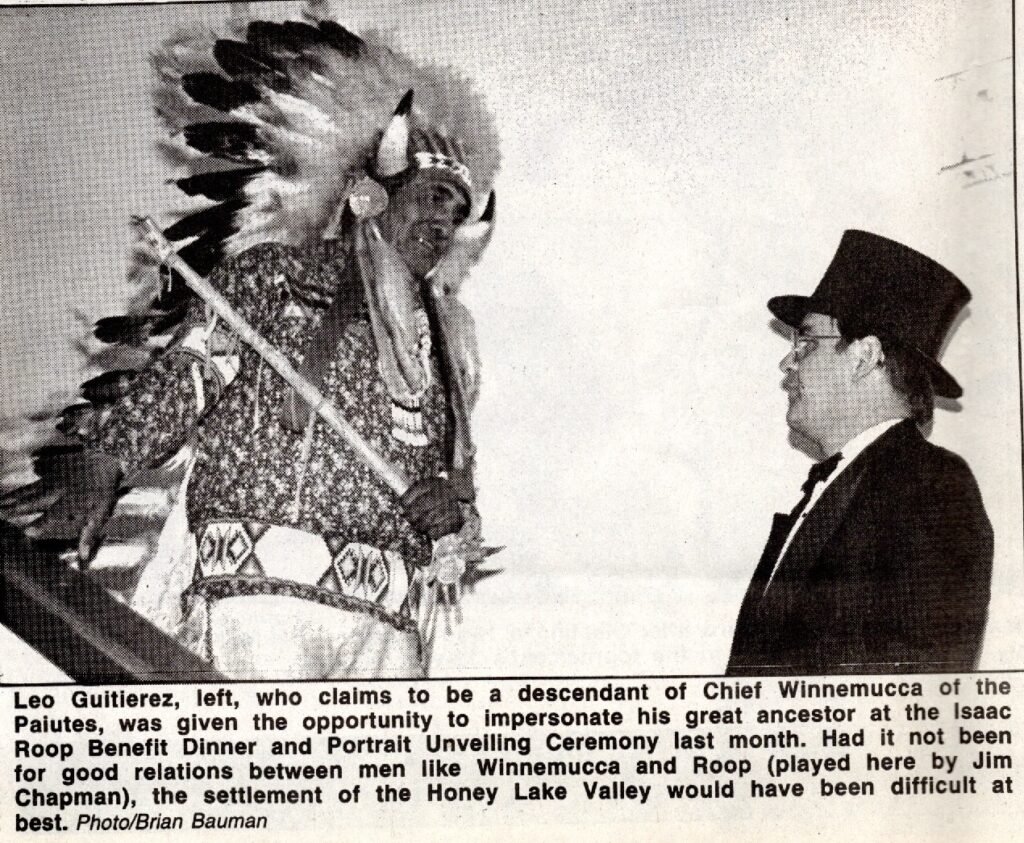
Chief Winnemucca, Papoose Meadows and More

Lassen County Times, April 12, 1994

In the early 1990s there was a local lobby effort to have a portrait hung in Carson City for Isaac Roop, he being the first Provisional Governor of the Nevada Territory in 1859. Nevada officials agreed to a portrait placement, but private citizens would have to pay for such a portrait. Fundraisers were held.

Once such fundraiser occurred in April 1994, a month after the portrait was hung. The Lassen County Times covered the event which included Chief Winnemucca’s treaty with the local settlers and the Papoose Meadows Massacre of 1866. I have covered this with Version One, Version Two and Version Three. At this dinner, there is now a Version Four. Without further ado here is the published account.

“Harold Dixon, who consider  himself a local Indian historian, provides some insight into that historic treaty.

“Young Winnemucca, according to Dixon, was a Paiute Indian born near present day of Litchfield in the Honey Lake Valley. He was chief of the Wadatkut band of the Paiutes who for centuries roamed the Eagle Lake and Honey Lake areas, as well as other areas of Northeastern California, Oregon, Washington and Nevada.

“Winnemucca was related to Old Man Joaquin who was best known as being the only survivor of the Eagle Lake Massacre (1862) in which 80 to 100 Paiutes were killed by the local settlers.

“According to Dixon, the massacre occurred at Papoose Meadows, and the settlers who did the killing had actually journeyed to the area to take revenge on Pit River Indians who had reportedly been stealing cattle.”

Unfortunately, this account is full of factual errors, but since it is published, some might take as factual to quote and perpetuate it.

Tim


Mountain Maidu Bear Dance Update

The final segment of the bear dance along Baxter Creek, 1900. Sponsored by Anna Stewart

“One of the truths about historical research is that it is never finished. So many sources are consulted, there are always more to be added. There are certainly more sources of information about early Bear Dances and about early Mountain Maidu life that I could not get to when researching this book.” — Leigh Ann Hunt, Preface for the 1996 Edition of Rite of Spring: A History of the Mountain Bear Dance .

Rites of Spring is Leigh Ann Hunt’s thesis for Master of Arts of Anthropology at California State Unversity, Sacramento, 1991. I met Leigh Ann back in the 1980s when she is doing her research. In 1996, the Lassen County Historical Society published Leigh Ann’s thesis. I am not if it is still available, though I highly recommend it.

One of notable inclusions is Edith Young’s notes, a field matron in Susanville, who was only such employee in the Greenville Agency of Bureau of Indian Affairs. Young was in Susanville during the 1910s, and I, too, have some of her  observations, and I think a possible photograph of her. I will add it to my to do list.

Tim


A Rare Portrait – Mattie Jackson Ives

Mattie Jackson Ives, circa 1895 – June Chappuis

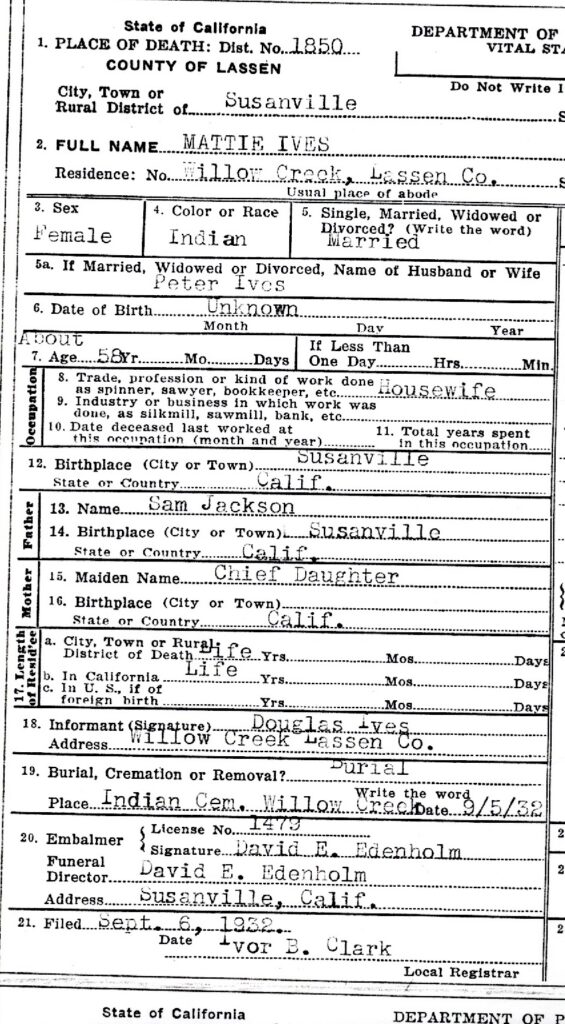
It was a rarity for local Native Americans to have a professional photographer take their portrait in the late 1800s. This was case of Mattie Jackson, a Maidu. She was born circa 1878 in Susanville, the daughter of Sam Jackson and Chief Daughter. A number of local Maidu and Paiute women worked as domestic for their Anglo counterparts. Her employer, might have been instrumental is having this professional photograph taken.

In 1900 Mattie married Pete Ives. who he was of mixed race, his father was Anglo and his mother Native American. They had one child, Douglas.

Mattie’s death certificate

The Ives family spent their life between Janesville and Willow Creek Valley. Mattie died at Willow Creek  on September 2, 1932 and is buried at the Indian Cemetery near the Jackson family home in Willow Creek Valley.

Subscribe

Susanville Indian Rancheria

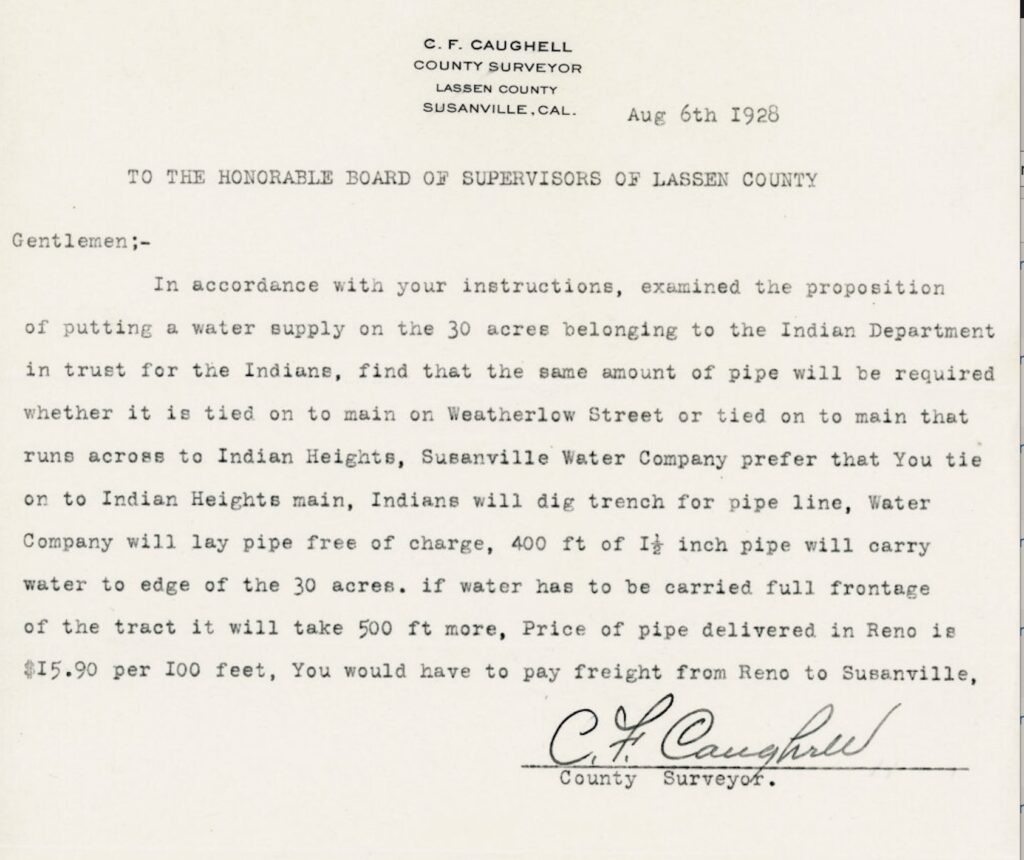
Notice of the pending water pipeline to the Rancheria.

This might be called a trifecta as the last two posts were about the Indian Heights Cemetery and the Indian Heights Subdivision. Adjoining the subdivision to the east is the Susanville Indian Rancheria. The thirty-acre Rancheria was created on August 15, 1923 to serve the Modoc, Paiute, Pit and Washo tribes.

There was a major hinderance that hampered development of the Rancheria, a lack of water. The. few early day hardy Indians obtained their drinking from  a small spring located on the hillside above Chestnut Street and between Roop Street and Paiute Lane. Relief came to the Rancheria in 1928 when County of Lassen approved the expenditure to construct a water line to that place.

Tim

Susanville’s Indian Heights Cemetery

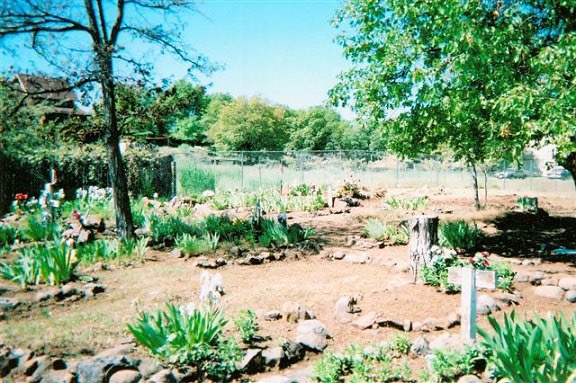
Indian Heights Cemetery, Susanville, 2007

Many people do not realize that Susanville has three cemeteries–Indian Heights, Lassen and Susanville.

Indian Heights Cemetery located on Paiute Lane and is a Native American cemetery.,. The earliest known internment is for the wife of George Peconum who died on September 5, 1905 and buried there on September 6, 1905 . This makes its the second oldest cemetery, as Lassen Cemetery on Chestnut Street was not established until 1919.

This cemetery contains numerous graves that do not have the traditional type of Anglo headstone, and provides no indication of the internments. In addition, it should be noted that many Native Americans are buried in the nearby Lassen Cemetery ..

The cemetery was so named as it was in the Indian Heights Subdivision that was created in 1912. It should be noted that the  half-acre parcel that the cemetery is located was owned for many years by Clifton and Betty Cramer.  On June 6, 1975, the Cramer’s signed Quit Claim to the cemetery  to the Bureau of Indian Affairs to hold into trust for the Susanville Indian Rancheria. It should noted that even the oldest of the Anglo cemeteries were located on private property, and that during the late 1890s the County of Lassen began negotiations to acquire them.

Tim

Native American Mythology

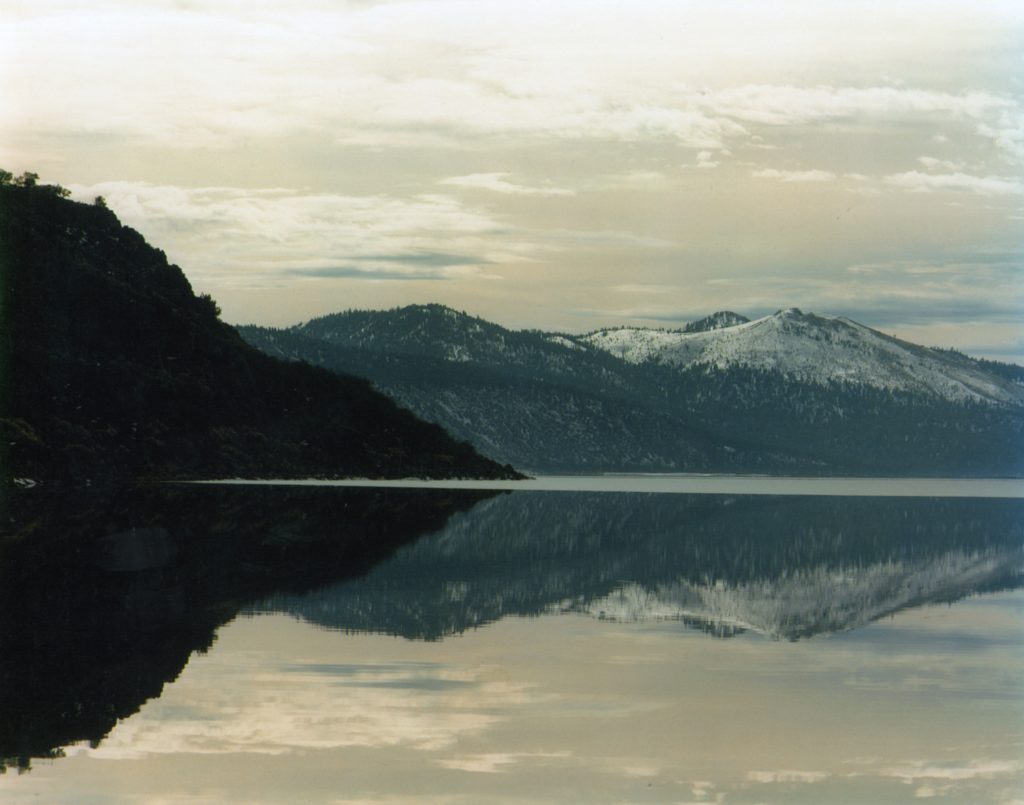
Eagle Lake, 1984

Native American mythology of the western Great Basin has that a serpent lurks in the waters of the various lakes, whether it be Eagle, Honey, Pyramid or Tahoe. Some versions assert the lakes are connected by underground channel, and this is why sightings of the serpent are rare as the serpent is constantly traveling from lake to lake. Herewith are two accounts one at Eagle Lake and the other at Honey Lake.

According to the Lassen Advocate of August 13, 1976: “Suspicions of a possible Loch Ness monster in Eagle Lake were aroused Tuesday, Aug. 10, at about dusk when a group of people apparently saw a mysterious creature twice surface near the Eagle Lake marina.  According to Gene Moore of Hemet, California who was fishing from shore, it looked like a 15 to 20 foot creature that almost looked like a big eel.”

Honey Lake, 1997.

Orlando McNabb was a mining prospector of the Honey Lake region in the early 1900s, but was he was also a prolific writer. Here is his observation of a Honey Lake serpent:

“Mr. J.C. Wemple, an old and respected citizen of our village [Milford], and a friend of mine, has been, for some time, observing very carefully the strange actions of Honey Lake. Mr. Wemple and I are both of an observing. turn of mind, with a desire to investigate the strange and mysterious nature. At various times during the last year so we have wandered on the sunlit shores of this beautiful lake we have heard strange sounds and often at evening late, we have seen the waters of this lake in great commotion, great waves rolling on its surface. At the same time we also heard a noise like unto the roaring of a dozen bulls. ‘What is the cause of all of this? Said I to my friend. ‘Well’ said Mr. Wemple, ‘It is a long, strange story. It is undoubtedly the return of the sea serpent that comes back every thousand years. During my early days here I found an old record written in what afterward was found to be in the Piute language. I was unable to read it, of course.’

“Both of us being much interested we called in consultation Piute Jack, a very intelligent native who lives at Willow Ranch, Long Valley. He is well versed in all the lore of his race, and by his aid translated the manuscript written in hieroglyphics on slabs of slate rock and will provide a translation at a later date. In the mean time and I would give a word of caution to persons who go fishing to have an eye open for this serpent-also be aware of the ‘eye-opener.'”

Donate

Leavitt Lake Cemetery, Lassen County

Les Evans
Lester Evans, 1903-1970.

This is  Native American Cemetery located on Rice Canyon Road and adjacent to the High Desert State Prison.

It is also a family cemetery of Charlie & Jennie Piute. Charlie Piute was half Maidu and half Paiute and was born in 1837 at Big Meadows, now Lake Almanor. As to Jennie she was born in 1861. She died on March 26, 1916 at their home at Rice Canyon from some form rheumatism affection and was the first person to be buried. The second was her infant grandson Laurence Charles Mullen born January 21,1925 and died August 31, 1925.

Charlie Piute died on April 9, 1927. It is not known when the family moved from Big Meadows to Rice Canyon, but it appears to be after 1900. I inquired with the late Leonard Lowry as he is somewhat related, but he did not know.

Charlie & Jennie’s eldest child Ora was born circa 1873 at Big Meadows. She married George Evans on November 5, 1893. They had four children: Willis, Oliver, Lester and Marie. In 1912, George and Ora Evans were the first Native American couple to file for divorce in the Lassen County Superior Court. Ora Evans died in Susanville on September 6, 1948 and was buried in the Lassen Cemetery.

Other children of Charlie and Jennie include, John Brown, Russell Piute, Minnie who married James C. Mullen and Nellie who was married to Jimmy Mullins.

The last time I did any research on this family was back in 2004 for Adam Mullins. Leonard Lowry wrote in my file; “Descendants of Charlie Piute living in Susanville include the Valadez, Granados, Nelson, Kingston, Law, Allen and others.”

Subscribe and support this site for as little as $5.00 a month.

Honey Lake Paiute & More

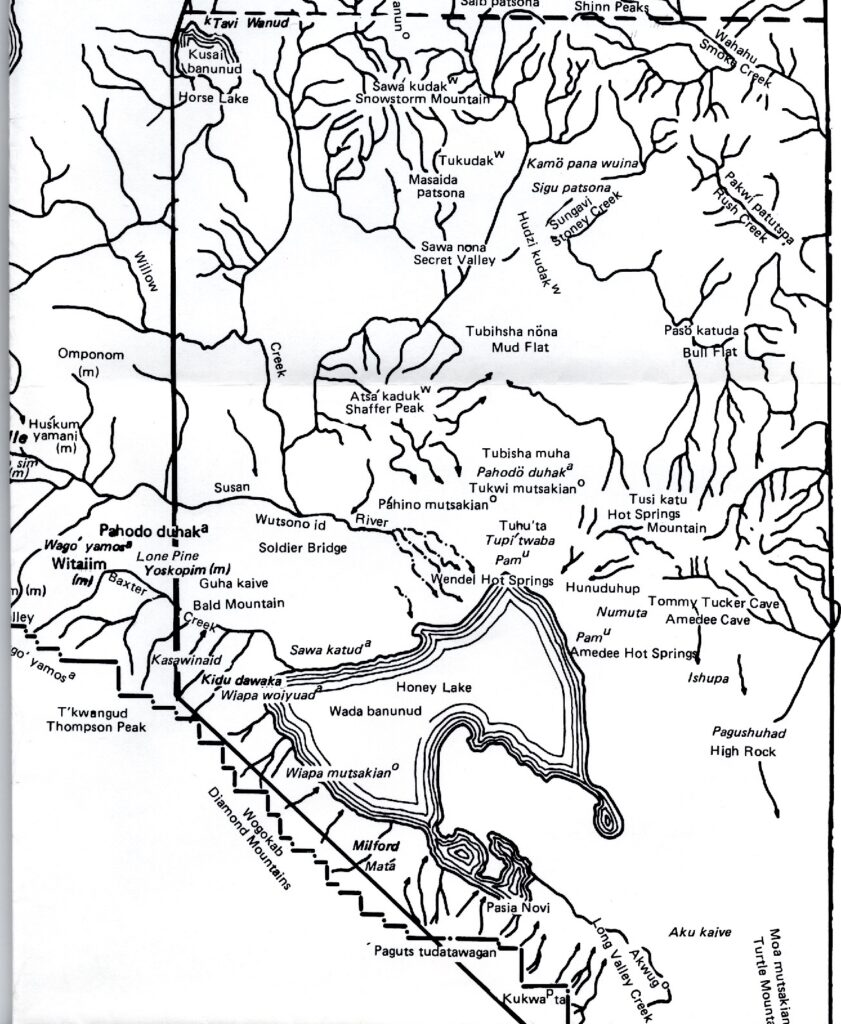
Map of the Honey Lake Paiute territory-Riddell

In 1960, the Nevada State Museum published Francis Riddell’s “Honey Lake Paiute Ethnography” as Anthropological Papers No.  4.  It was widely popular and was soon out of print.

In 1977, the Nevada State Museum Board of Trustees contacted Riddell about a reprint. Riddell agreed, but wanted to revise his original work with a chapter on the general prehistory of the region. Also, Riddell suggested that the volume be expanded to include another paper “Ethnographic Notes on the Honey Lake Maidu” by Williams S. Evans, Jr.  The trustees agreed. The Honey Lake Maidu ethnographic notes were enhanced by notes, photographs and genealogies collected by Riddell and incorporated in this book. As Donald Tuohy, the editor wrote: “The melding of scholarship and talent has led to the production of this excellent volume.” 

I could not agree more. It is your A-Z guide. It will require a bit sleuthing to locate an out or print copy, and it will not be cheap either. By the way, it was published as the Nevada State Museum Occasional Papers No. 3.

Tim

A Spring Ritual-Maidu Bear Dance

The final segment of the bear dance along Baxter Creek, 1900. Sponsored by Anna Stewart

The spring bear dance ritual of the Mountain Maidu, locally, has been held at a variety of locations. It would be held near a stream, for water was an important element in the conclusion of the dance. One of the earliest sites was near Baxter Creek at Bass Hill referred to as the village of Yoskopin, also known as Lone Pine. This would be the late 1890s, early 1900s

There is not much historical documentation of this particular bear dance, versus those conducted by its Maidu neighbors over the mountain.  At the end of the ceremony, the Maidu go to the creek to wash their faces. The inscription on the back of this photograph, provides a little insight: “Last part of the Bear dance. The women put water on their heads to keep them good for the coming year.”

Tim