Tag Archives: Modoc County

Modoc County & E Clampus Vitus

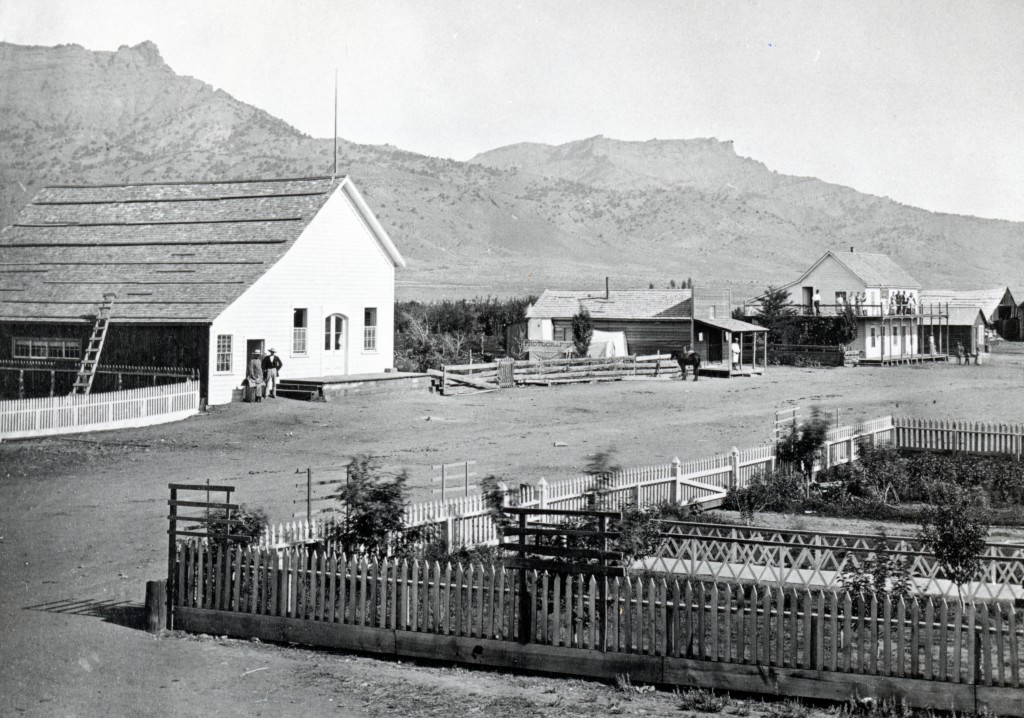
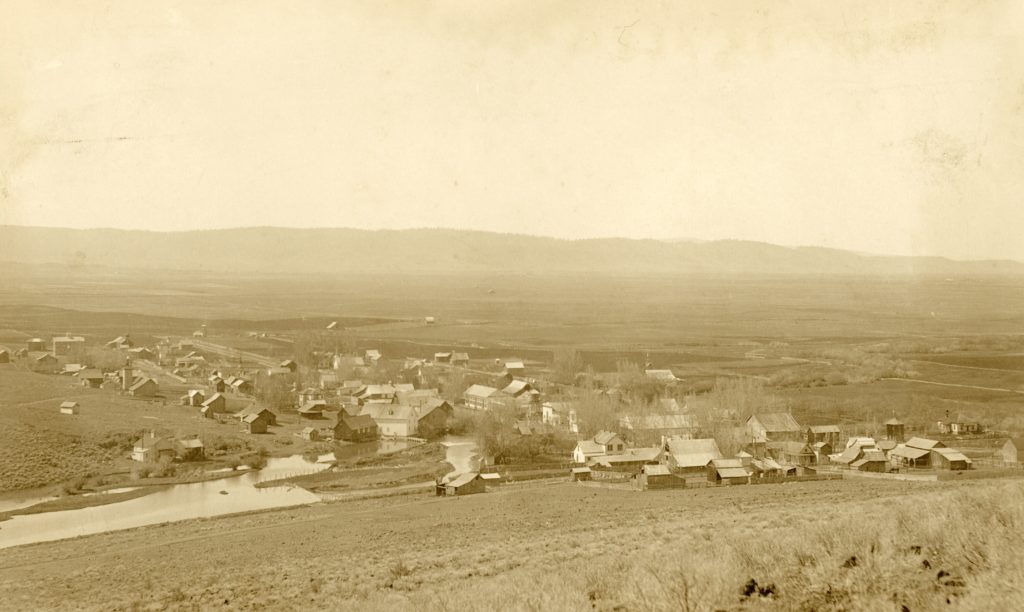
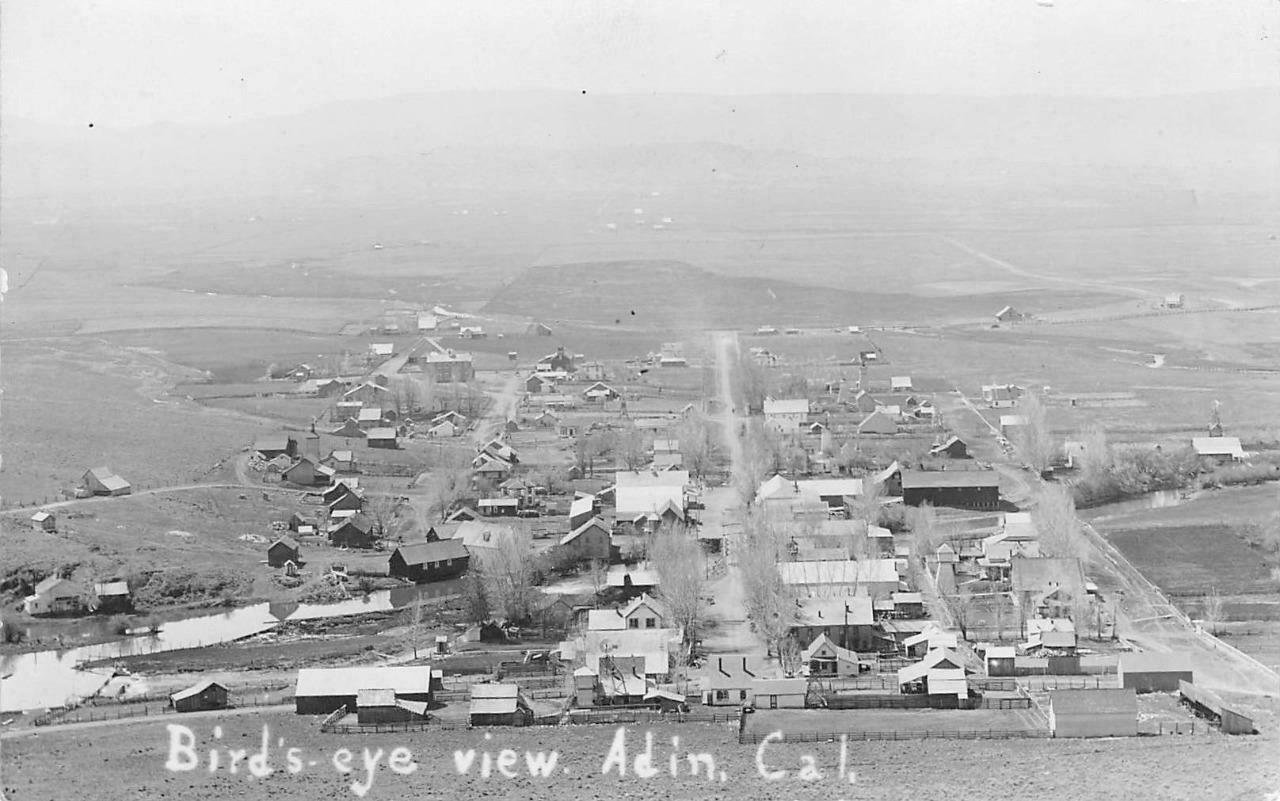
Adin, circa 1900

E Clampus Vitus, is not your ordinary run of the mill fraternal organization. Its origins began back in the gold rush days of California. It was in a sense a spoof of the more “high faltunin” fraternal organizations like the Masons. A somewhat rowdy and rambunctious  group the new members were fleeced to pay for food and drinks for all in attendance. Tee-totalers they were not.

A strange development happened along the way, E Clampus Vitus invasion into Modoc County, far from any. of California’s goldfields—especially Modoc’s mining history is somewhat meager. Whatever the case may be, by the late 1870s, E Clampus Vitus was one of the most popular lodges in Modoc, beating out the Masons and the Oddfellows. By 1880, there were E Clampus Vitus lodges in Adin, Alturas, Cedarville, Fort Bidwell and Lake City. In 1878 the Modoc Independent newspaper reported the E Clampus Vitus lodge “were holding trials and issuing occasional threats to tar and feather vile characters if they did not leave town by sun down.”

Members of the organization were and still are referred to as Clampers. As quickly they rose in Modoc, their demise was fast. Some blame it on a temperance organization known as the Young Ladies Independent Association. Whatever the case may be, the Modoc Clampers quickly disappeared. However, the entire E Clampus. Vitus organization was slowly going into  oblivion. and by 1900 no longer existed. Unlike other fraternal organizations, the Clampers were an independent group, with no core headquarters.

By 1930, there was a revival of the organization, which now has Chapters instead Lodges across the Western United States. On a final note during the 1930 revival in Alturas witnessed the formation of Captain Jack Chapter No. 7, E Clampus Vitus..

Satisfactory!

Congressman Raker’s Funeral


John Edward Raker was born in Illinois in 1863, at the age of 10, came to Lassen County with his parents. In 1885, he passed the bar examine, and moved to Alturas to practice law.  He eventually went into partnership with his father-in-law, E.V. Spencer. Raker went on to being elected Modoc County District Attorney and then Modoc County Superior Court Judge. In 1910 he decided to run for the California’s First  Congressional District seat  and won by a slim margin of 141 votes. Raker continued to serve as Congressman until his death in 1926.

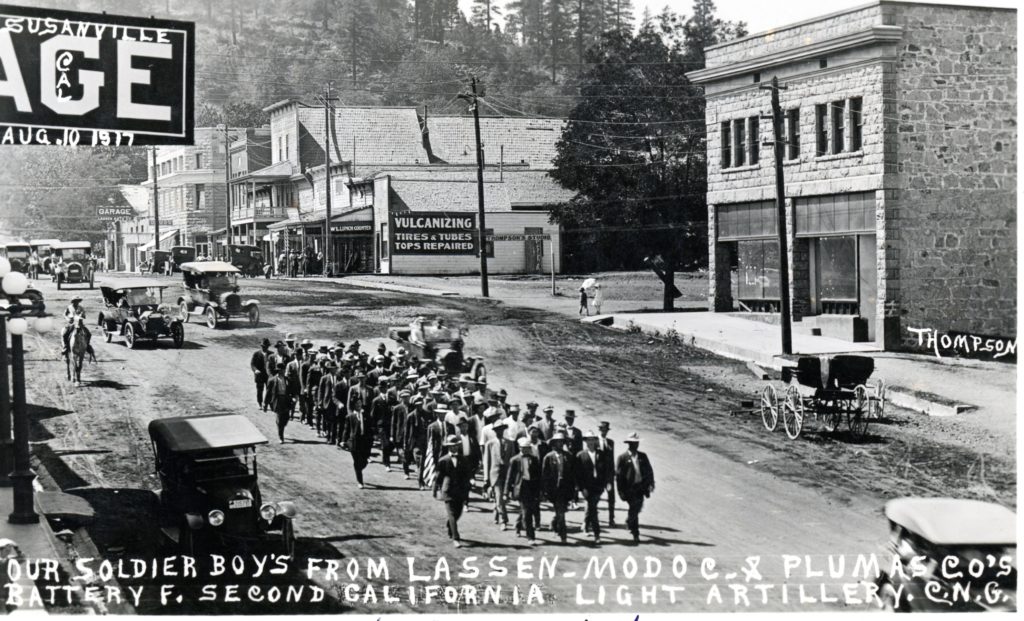
Raker was buried in the Spencer family plot in Susanville. The services were held on Sunday, January 31, 1926–an impressive. affair. The body arrived by train at noon at Susanville, which also consisted of a number of Congressmen, along with a contingent of forty-seven people from Alturas.

As the Lassen Mail noted: “The procession was an imposing one, as it slowly and solemnly wended its way along the slush covered streets. When the first automobile reached the Methodist Church, the line was still moving at the depot. The line of march was along Richmond Road to Weatherlow, north on Weatherlow to Main, up Main to Lassen and thence to the church.”

The night before the region was hit with a heavy snowstorm, making the roads a big slushy mess. Twenty-five members of McKea Post, American Legion, attended but it took them two and half hours to make the trip from Westwood. Had the weather been more favorable there would have been an even larger turnout.

Tim

Herman Brince, Photographer

Adin 1879
Adin, 1879

Herman Brince was a photographer in Lassen, Modoc and Plumas counties during 1878-79.  I have always been impressed with his photographs, though only dozen or so are known to be existence. Whatever, became of his negatives is unknown, but we do know that he died in New Zealand in 1882.

Cedarville
Cedarville, 1879

Fortunately, the Nevada Historical Society in their collections had these two Brince photographs of Adin and Cedarville. There are newspaper references of photographs that Brince took. In 1878, Brince did a portfolio of 25 scenes of what would become Lassen Volcanic National Park. One of these was Malgin’s Sheep Camp, known today as Drakesbad. However, known of these photographs have  been found.

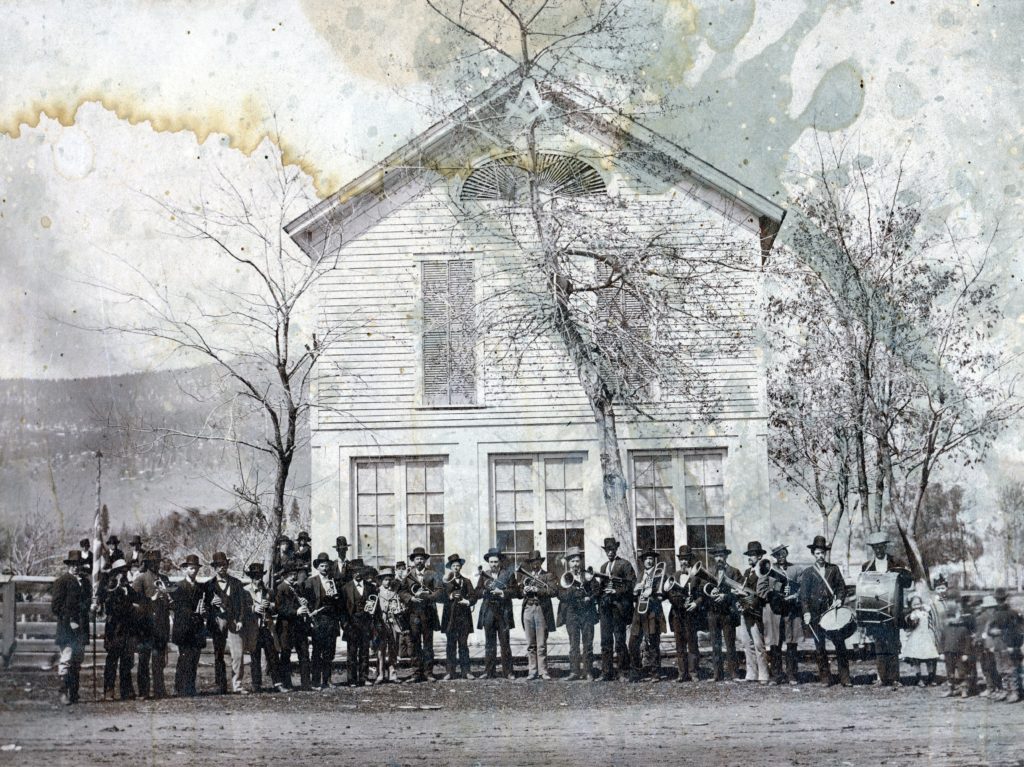
Lassen Lodge #149 F.&A.M.

This 1879 photograph of the Susanville Masonic Hall is another Brince photograph. This I found on Ebay and which I purchased for a tidy sum. I inquired with the seller how he acquired the photograph, which he informed at a yard sale in San Francisco. One never knows, where something might surface. On a final note, the above photograph is the only known one in existence of Susanville’s original Masonic Lodge.

Subscribe

The Cattleman

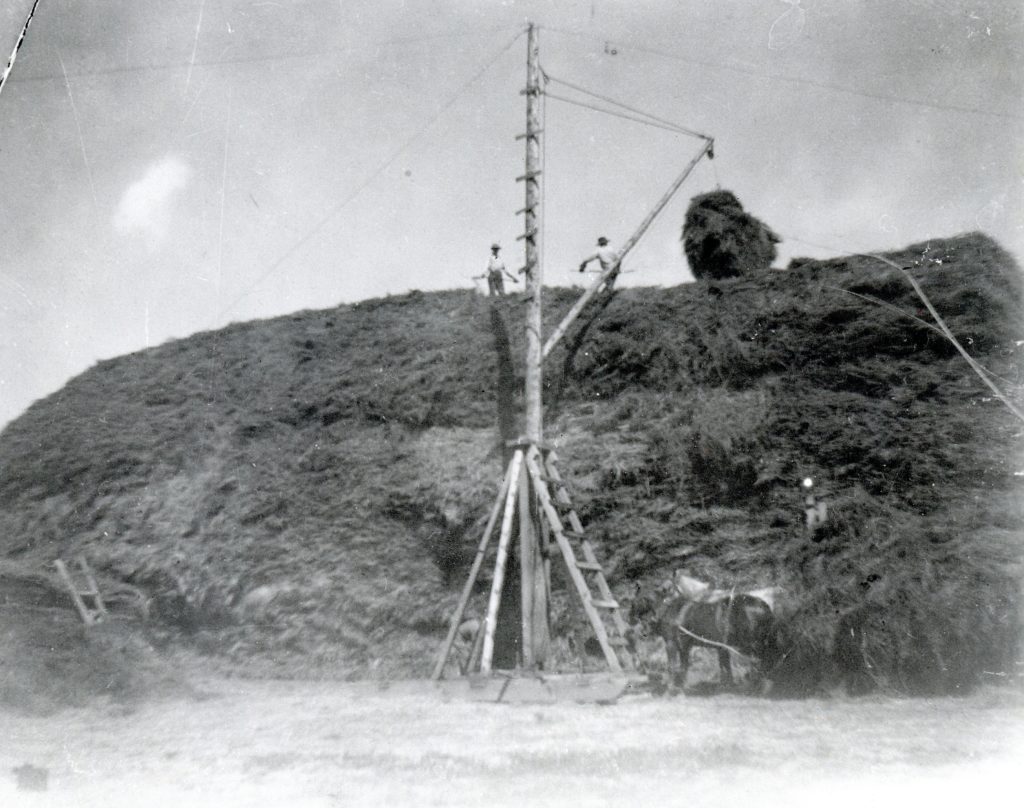
The film includes a scene of the hay derrick (above) in action. This photograph is the hay stacking at the Titherington Ranch, near Standish, 1908. Courtesy of Betty Gorbet

Lately, I have been working on my technical skills, which is always an interesting experience for me. Sometimes I succeed, and well on  other occasions I have new challenges.  My goal is put online a historic video, though viewing would only be for paid subscribers.  So if you are experiencing some technical difficulties, the culprit is probably me and working on this feature.

The particular film that I refer to is a short feature of the entire operations of the Vic Christensen ranch near Likely. It was done in 1939 as part of Encyclopedia Britannica’s educational films of the era.  Unlike the 1925 Fruit Growers Supply Company’s film, this one is narrated. Stay tuned.

Never miss a story, click here to subscribe.

Surprise Valley Railroad – Part II

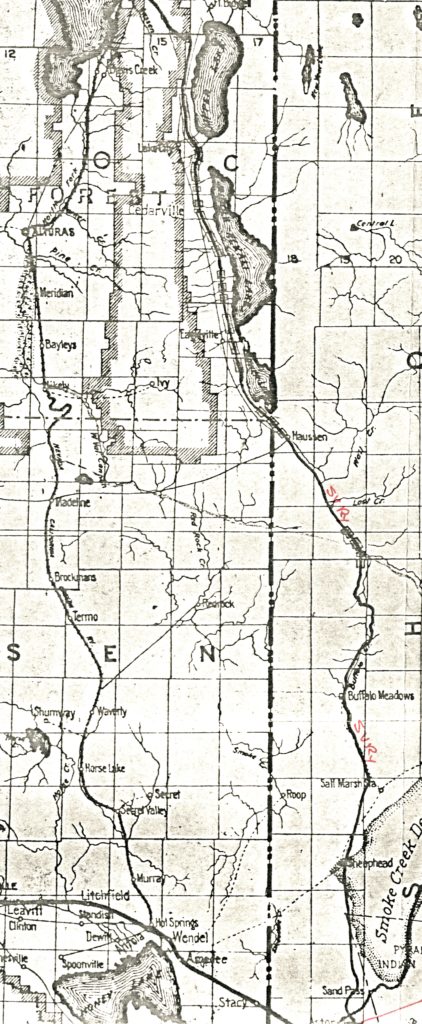
Map of the proposed Surprise Valley Railroad

In the fall of 1915, Robert Strahorn brought new life to the project. Strahorn had a reputation for developing these type of projects. One of the biggest changes was the line would start at Flanigan, Nevada, on the eastern edge of the Honey Lake Valley and its terminus at Cedarville, California. By the spring of 1916, it appeared real progress had been made with right-of-ways secured from the Department of Interior and many of the landowners. In addition, it was announced that Lakeview, Oregon would be the new terminus. For those familiar with the country the railroad now had the daunting task to to cross the Warner Mountains at Fandango Pass. First a grandiose three-mile tunnel was proposed, but was reduced to a 4,820-foot tunnel, which still alleviated 700 difference from the top of the summit. Continue reading Surprise Valley Railroad – Part II

Clampers Invade Susanville

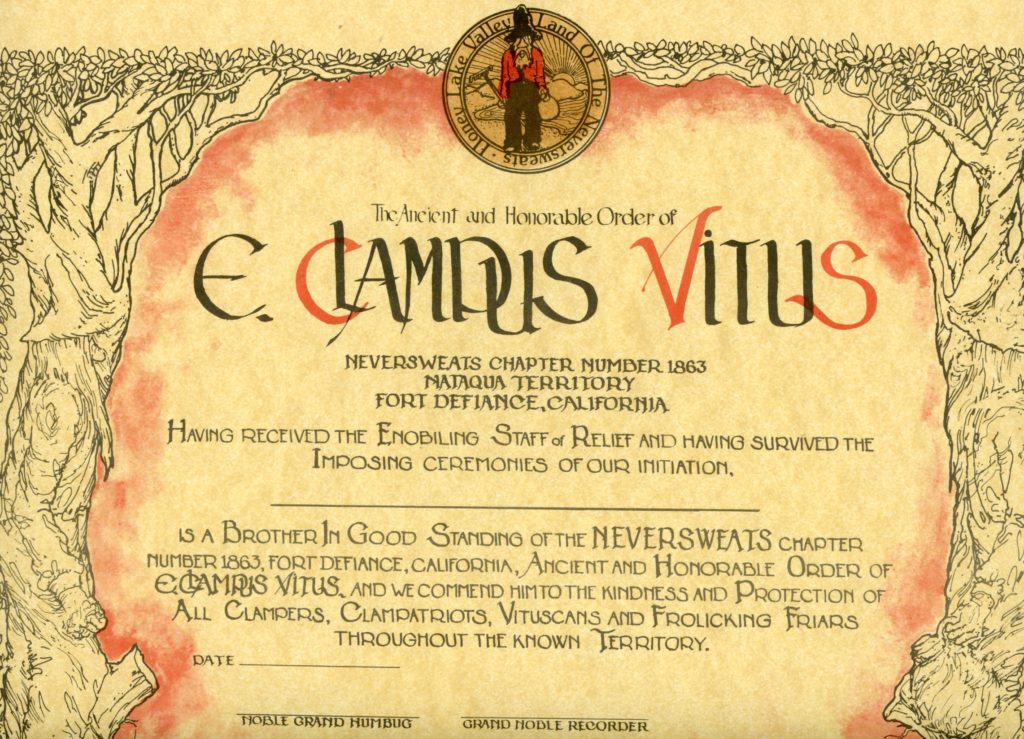
Neversweat ECV528

On August 4, 1984 some 500 members of the fraternal organization known as E Clampus Vitus descended upon Susanville. The occasion was the chartering of the Neversweat Chapter #1863 of the E Clampus Vitus and the dedication of the Pioneer, the oldest establishment in Northeastern California. The organization has been around since days of the California gold rush, and was a spoof on the more refined fraternal organizations of the day. In the 1930s it went through a revival and focused on marking historical sites and having a good time while doing so. The Neversweat Chapter was not the first for Susanville, as a lodge existed in 1868. In the early 1880s there were several lodges in Modoc County.

Back to that day at hand, the Lassen Advocate summed it by reporting, “By 7:30 a.m. most area residents were awakening for breakfast and routine Saturday tasks, the revelry at the Pioneer was already in full swing. Clampers were 3 to 4 deep at the bar, the beer was flowing and festive mood in the air. The celebrants began arriving at 6:00 a.m. and spilled from the sidewalk into the eastbound lanes of Main Street. Traffic was undoubtedly light during the early morning celebration.”

Never miss a story, click here to support and subscribe.

Lassen County Fair

logging expo
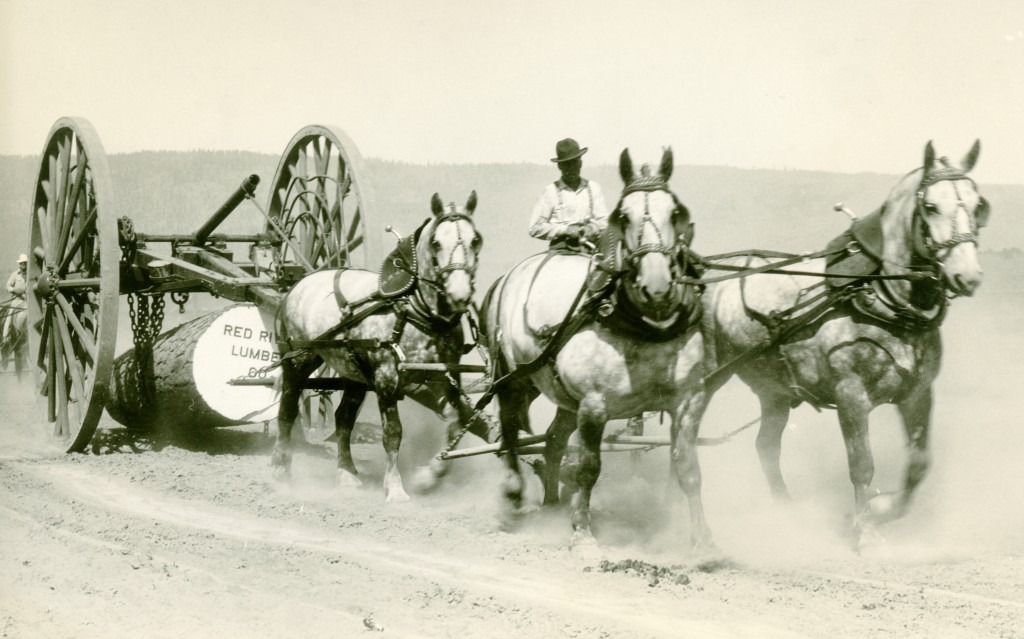
Red River Lumber Company’s 16 foot big wheels and team with a 2 1/2 ton log at the 1923 Lassen County Fair.

This being Lassen County Fair week, it is only fitting to have an article about the fair.  The first fair was held in 1878, a regional one that comprised the residents of Lassen, Modoc and Plumas Counties.  While it was desirous to make it an annual event it was fraught with financial problems.

What we consider the current Lassen County Fair was established in 1922, with five men who organized it. At that time major changes had taken place in the county with the establishment of three large lumber mills–Fruit Growers Supply Company, Lassen Lumber & Box Company and the Red River Lumber Company.  Lumber was now king in Lassen County. Besides the traditional horse racing and such, a new feature was added to reflect the community at large, the logging shows. This was a big attraction for the Lassen County Fair for over seventy years, though with the dwindling decline of the lumber industry, this feature was eventually cancelled.

However, in 1923, the first logging exhibition at the Lassen County Fair was certainly noteworthy. For many attendees it was the first time they were able to witness the current logging methods of the “big wheels.”  The Fruit Growers Supply Company won top honors in this category. It should be noted by 1927, the lumber companies began phasing out the “big wheels” for the motorized Caterpillar traction engines.

A full story how the Lassen County Fair has evolved since 1878 can be found in the latest issue of the California Traveler.

Never miss a story, click here to subscribe.

Adin, Modoc County

Adin, 1888. Courtesy of Delbert & Diane Poole.

Located just a mile north of the Lassen County line in Modoc County, Adin benefited from Lassen County’s largest mining town of Hayden Hill, located twelves miles to the south.

As a matter of fact in the same year that Adin was founded in 1869, gold was discovered at Hayden Hill. It should be noted that one of Adin’s founders and its namesake, Adin McDowell, was a member of the prospecting party that discovered the gold at Hayden Hill.

When times were good at Hayden Hill, they were even better at Adin. By 1877, Adin was the largest town in Modoc County. In addition, it was only second to Susanville in the amount of business transactions conducted in Northeastern California.

For more information about the story of Adin, see this month’s issue of the Northern California Traveler.

Never miss a story, click here to support and subscribe.


Sylvester Daniels

Sylvester Daniels. Courtesy of Jean Gorzell

Long after the excitement of the gold rush, people were still lured to California. Numerous reports published back east extolled the health benefits of the golden state’s climate. In the spring of 1874, Iowa resident Sylvester Daniels ventured to the Honey Lake Valley to visit his sister, Polly Parks, and see if the change in climate might be beneficial to him. Like many in that era, Sylvester kept a journal. His journals were different in the sense, as he kept a record of his experiences so he could send them back to his fifteen-year-old daughter, Viroqua. Continue reading Sylvester Daniels