The following is kind of daffy considering the source. In January 1964, the Lassen County Historical Society published a bulletin on Hayden Hill. Nothing to dramatic, until in a section of tidbits referred to as “Did You Know,” becomes bizarre, which the following appeared.
“When the election for County Seat was held during 1864, Susanville, Janesville and Hayden Hill were the three towns selected at the meeting held April 1. On May 9, 1864, a vote was taken and when the votes were counted it was a close choice. Susanville won over the other two by one vote.”
The author of above, also wrote the early history of Hayden Hill which appeared in the same publication. It is duly noted that gold was discovered at Hayden Hill in 1869, though the mining town was not established until 1870–six years after the county seat election!
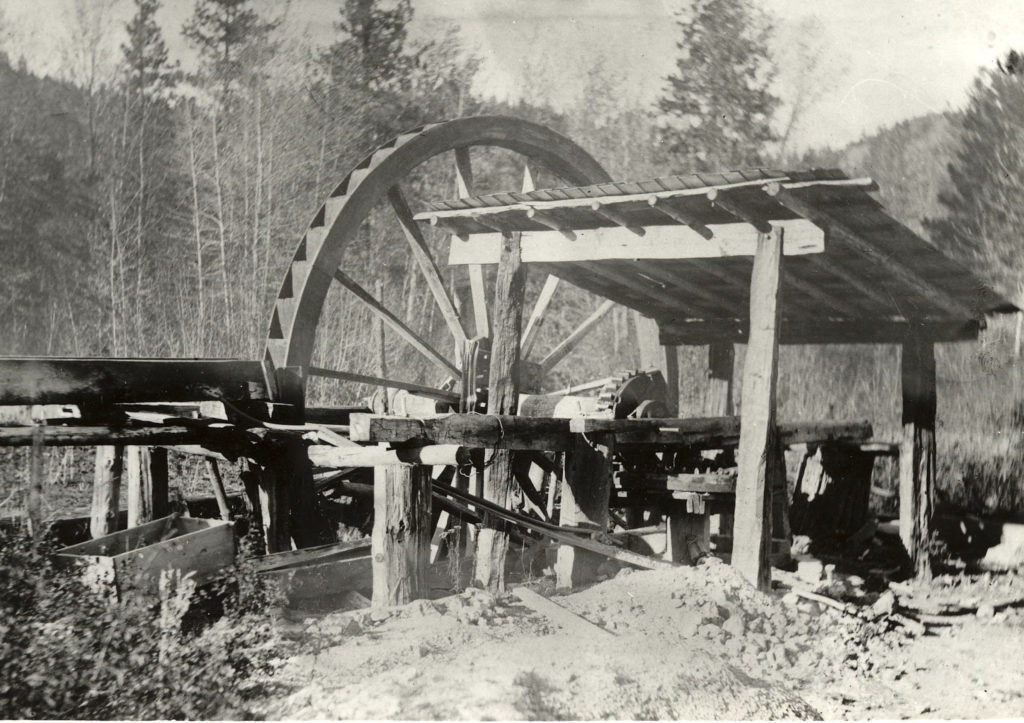
The Scottini’s arrastra mill, 1899. Courtesy of Mary Dale Folsom
First of all, if you go to the front page of the web site, in the upper right hand corner is the search feature, which you can find all kinds of things to keep you preoccupied.
As to mining along Gold Run I have addressed this some extent. Such as Scottini’s Arrastra Millwhich was located just above the Satica Ranch. Then there is the story of the Wild Horse Mines in the Smoke Creek Desert. In 1910, the stamp mill from the Lone Pine Mine located along Gold Run, near present Amesbury Drive was moved to those mines.
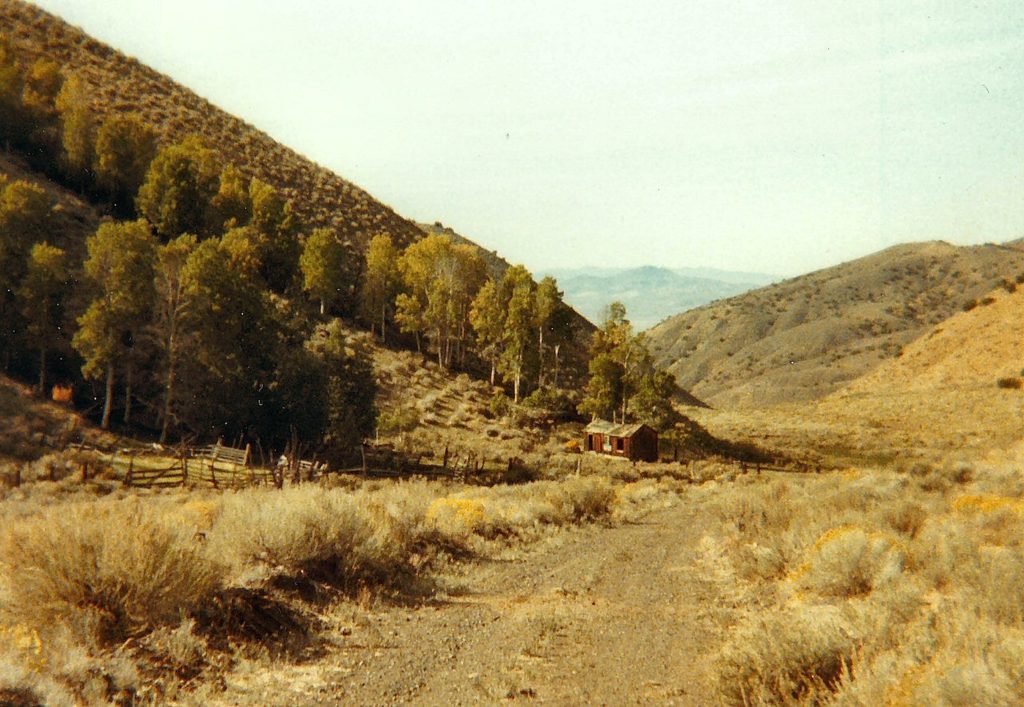
Wild Horse Canyon, September 27, 1984
Now to the mining activity on Goodrich Mountain. That one is little trickier. Anything involving Red River or Walker in searches is the ultimate nightmare. Mining claims are recorded by either name of the claimant or the name of the mine. Besides the copper belt that starts near Mountain Meadows, the other mineral located in the area, was iron ore. That is the best that I can do for now, especially the mining claims are in storage due to the Lassen County Courthouse Renovation Project.
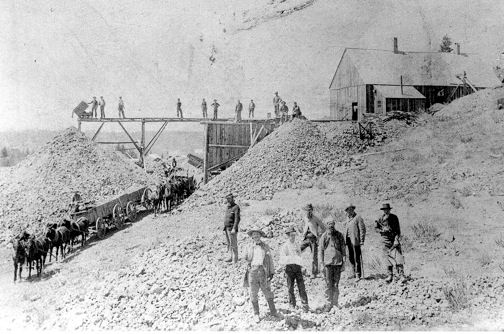
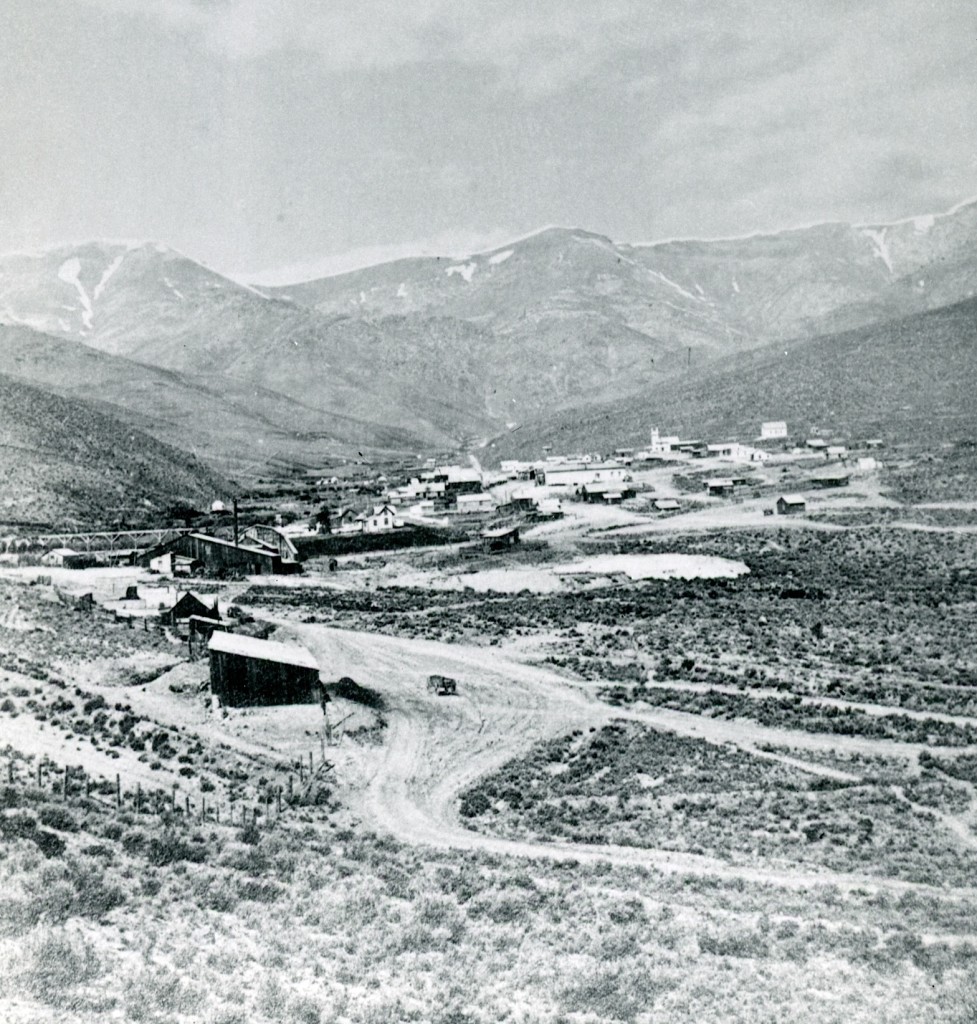
Hayden Hill, 1909. Courtesy of Dallas & Joyce Snider
During the early years of Hayden Hill in the 1870s and 1880s numerous little encampments within a three mile radius sprang up. Paradise City was one of the earliest mining camps adjacent to Hayden Hill. In 1872-73, according to the Lassen County Assessment Rolls, Joseph Miles owned a house and lot in Paradise City—though no records of any subdivision is known for that place or for that matter Hayden Hill. Paradise City was also the location of the Providence Mining Company’s quartz mill. It was the first quartz mill constructed at Hayden Hill. This mill would crush the rock so that the gold could be extracted. Incidentally, that mill was hauled to the Hill from its original location at Hardin City in the Black Rock Desert.
Subscribe today and tomorrow enjoy with daily notifications. You can also surprise someone with a gift subscription.
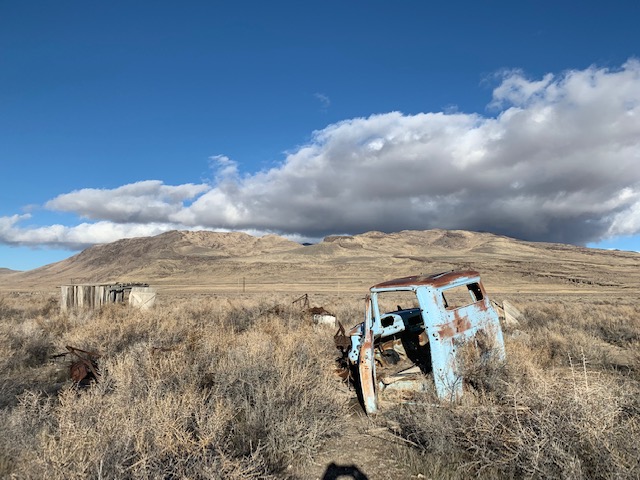
Amedee Mountains, as seen from the former town of Amedee, January 26, 2020
Amedee Mountains has a way of blending with the Skedaddle Mountains. Its best known feature is the archaeological site known as Tommy Tucker Cave. In 1907 gold was discovered on the mountain, causing a miniature gold rush where more prospectors could be found on the mountain, then gold. Whatever the case may be, there was enough activity to form the Hot Springs Mining District.
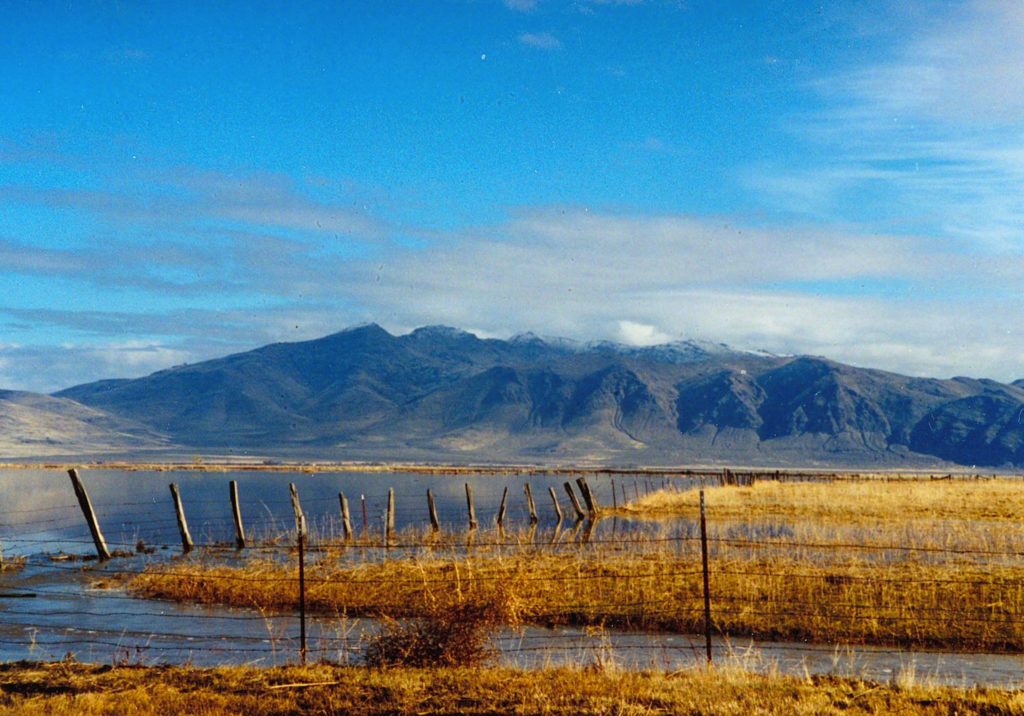
Honey Lake, with Amedee and Skedaddle Mountains in the background, 1997.
Placer mining in the Honey Lake Valley was short-lived and mainly confined to the 1850s. It should be noted that the gold discoveries of the 1850s were of placer nature—gold nuggets found in streams and ravines. When Peter Lassen and Company discovered gold in Hills Creek in 1855, they constructed a ditch to assist in their efforts. By the end of June they had to abandon their work when the creek went dry. By 1856 with a major influx of miners in the region, they would experience the same, and placer mining was a spring time occupation.
In August 1858, Quincy’s Plumas Argus reported on this condition. “We are informed that everything is quiet at Honey Lake. A silver mine is being opened there. Several companies are at work on the vein, which has been known to exist for several years, although nothing definite is yet known as to the extent or richness. Placer diggings have been discovered near the lake that are known to be good. If they had water on them they would pay from ten to twenty dollars per day to the hand, but there is no capital there to invest in ditch property.”
By 1859, placer mining in the area had ended as quickly as it began., since the easy pickings had been done. The focus would turn to lode operations, i.e., hard rock extraction.
Spread the word, and encourage a friend to subscribe
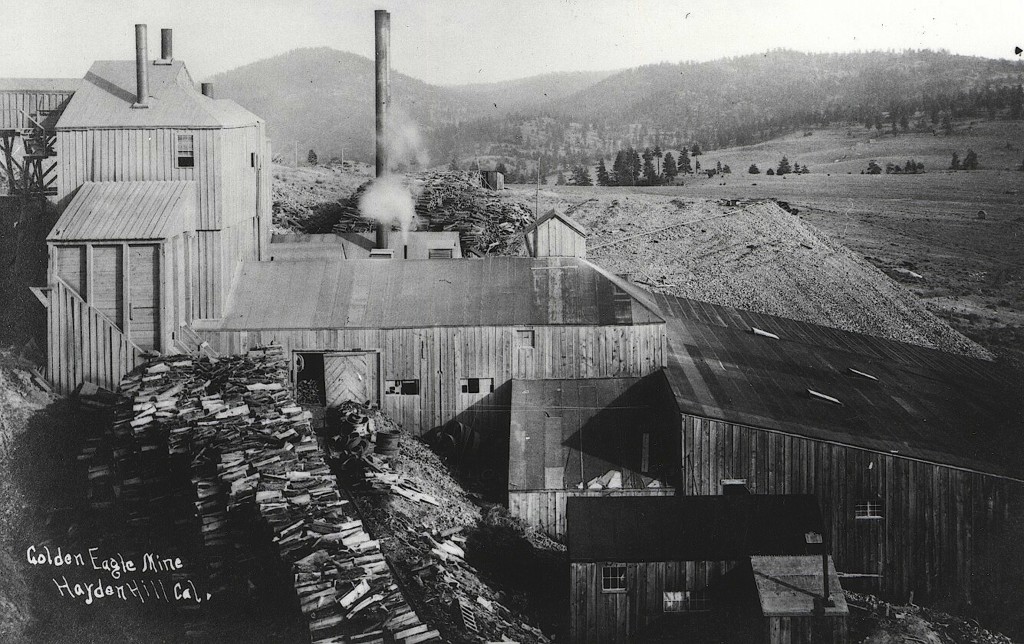
Golden Eagle Mine, Hayden Hill, 1894. Courtesy of Del & Diane Poole
Just as you can not believe everything on the internet, its true with various published accounts in all forms—past and present. The following article about Lassen County mines appeared in the San Francisco Chronicle, May 24, 1892. Two items struck me, one which is obvious the mines of Hayden Hill were located on a spur of the Sierra Nevada Mountain, which is not the case. The other which was unusual was the mining activity at Eagle Lake which usually is never mentioned.
”Lassen County, bordering on one of the best mining counties of California, being separated from Plumas county by a spur of the Sierra Nevada, has so far developed little mineral wealth, a few claims having been prospected on Diamond Mountain, near Susanville, the county seat, have yielded some gold. Veins of silver and gold ores have also been found on the southeast side of Eagle Lake, but mining as a regular business has only been prosecuted in the extreme north of the county, sixty miles north of Susanville and nine miles south of Modoc county line in what is known as the Hayden Hill Mining District. This hill, named after one of the first locators who is buried there, is one of the highest points of a spur running out of the Eastern slope of the Sierra Nevada; its altitude is given at 7500 feet. The mines were discovered nearly twenty years ago, since which time they have been more or less continuously worked yielding to the world’s gold supply. a little over $1,000,000.”
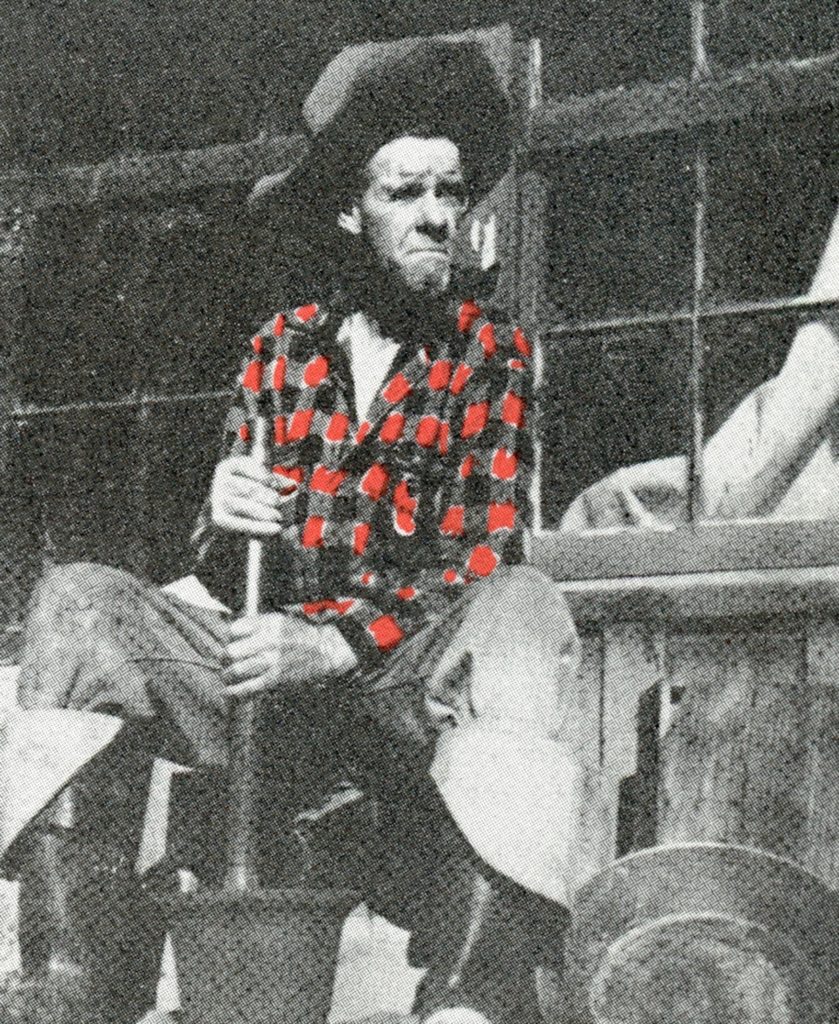
In 1964, Tex proclaimed he was the one time caretaker of Never Sweat Mine.
For whatever reason, the Honey Lakers embraced the monicker of Never Sweats. By the 1870s, visitors and new residents were perplexed by this name and some of them attempted to decipher its meaning. In 1878, one writer, who used the pseudonym of Rover, observed what a Never Sweat was not. “Honey Lakers are here designated Never Sweats.
Why not because of laziness, sickness or old age, nor previous condition of servitude, not for lack of possession of time or money; not from any physical imperfections, imaginary or real. It is no doubt a political or religious peculiarity.”
The term would drift in and out like the tides. However, when Asa Fairfield published his Pioneer History of Lassen County in 1916, he proclaimed Honey Lake Valley as the Land of the Never Sweats forever cementing the name in the area’s history. Since then, numerous organizations have used that name, and in 2000 in part of the City of Susanville’s Centennial used the slogan of Land of the Never Sweats.
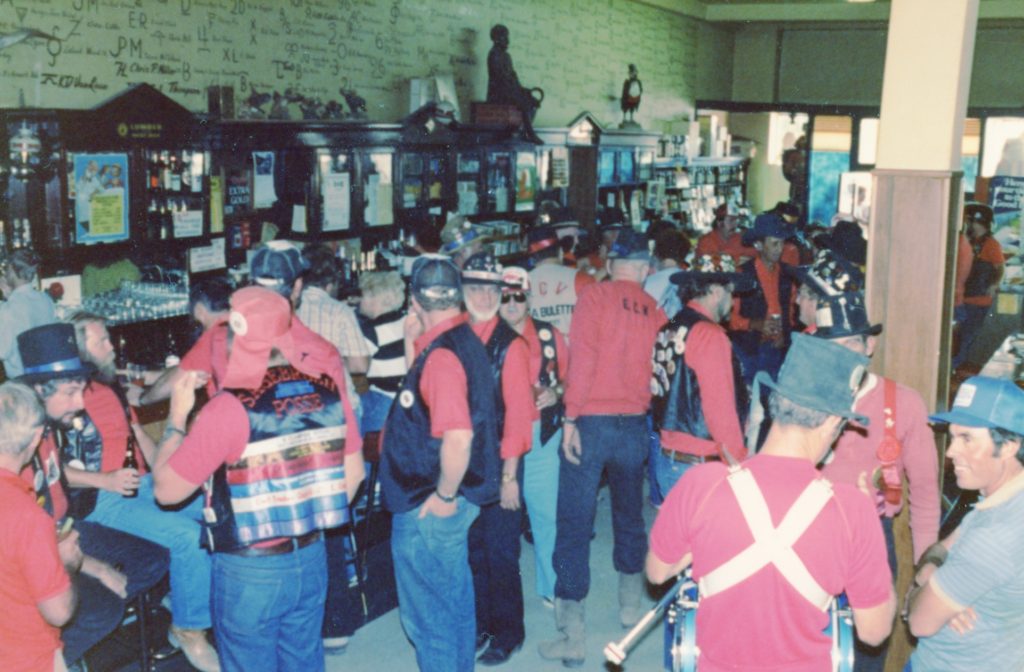
Neversweats chartering festivities at the Pioneer, August 4, 1984.
There is, of course, a landmark the Never Sweat Hills in eastern Honey Lake Valley on the Nevada side. Hopefully, one fine day I will make out there. It has best example of the lakeshore terrace effect from the receding waters of the ancient inland sea known as Lake Lahontan. Another feature near there, worth exploring again is Max’s Masoleum—another story for another time.
Spread the word, and encourage a friend to subscribe
Unionville, Nevada, 1880—Nevada Historical Society
Whether you are an old timer, or a recent arrival, Honey Lake Valley is referred to the “Land of the Never Sweats.” Surprisingly, very few are aware of the origin of the name and its meaning. So as a public service I provide you with my research findings, that a visit to a museum in Victoria, British Columbia and some library research at Twin Falls, Idaho provided the following revelation.
For starters, it was an obscure mining term of the early 1860s. To be a Never Sweat was considered to be a non-conformist. In Nevada, for instance, one could hold an interest in a mining claim and not work it. One could wait for others to prove the claim. Should the prospects be favorable, the Never Sweat could recover his interest by paying an advance on the accumulated costs. In 1865, Nevada passed an “Act for the Encouragement of Mining.” That change in laws abolished the practice of a Never Sweat and the term faded into oblivion, with the exception of the bestowment on the Honey Lakers.
It was the Honey Lakers who used the Never Sweat practice in the political arena. A perfect example was in 1860, when the Honey Lakers petitioned California Governor M.S. Latham, requesting military assistance during the Pyramid Lake Indian War. Yet, at the same time, they refused to pay California taxes, claiming they were a part of the Utah Territory.
By 1863, the Honey Lakers were designated as the Never Sweats. The Humboldt Register of Unionville, Nevada of June 27, 1863, wrote about the Honey Lakers at the Prince Royal Mining District: “It is surpassing strange that these hard working callous backed gentlemen should answer the honest inquiry with a sneer and say there was a place somewhere in the mountains by the name of Prince Royal, but so little repute they had actually forgotten it for the moment. . .Because they were owned by a parcel of Honey Lake ‘never-sweats’! Ha! Ha! What a pity.”
Tomorrow: The terms enduring legacy
Spread the word, and encourage a friend to subscribe
Golden Eagle Mine, 1909. Courtesy of Dallas & Joyce Snider
The Golden Eagle Mine was Hayden Hill’s largest gold producer. It was discovered in 1877 by William and Leonidas Hopkins and C.N. Nash. During its lifespan of operation in produced over $1,000,000 in gold, about one-third of all the gold extracted from Hayden Hill.
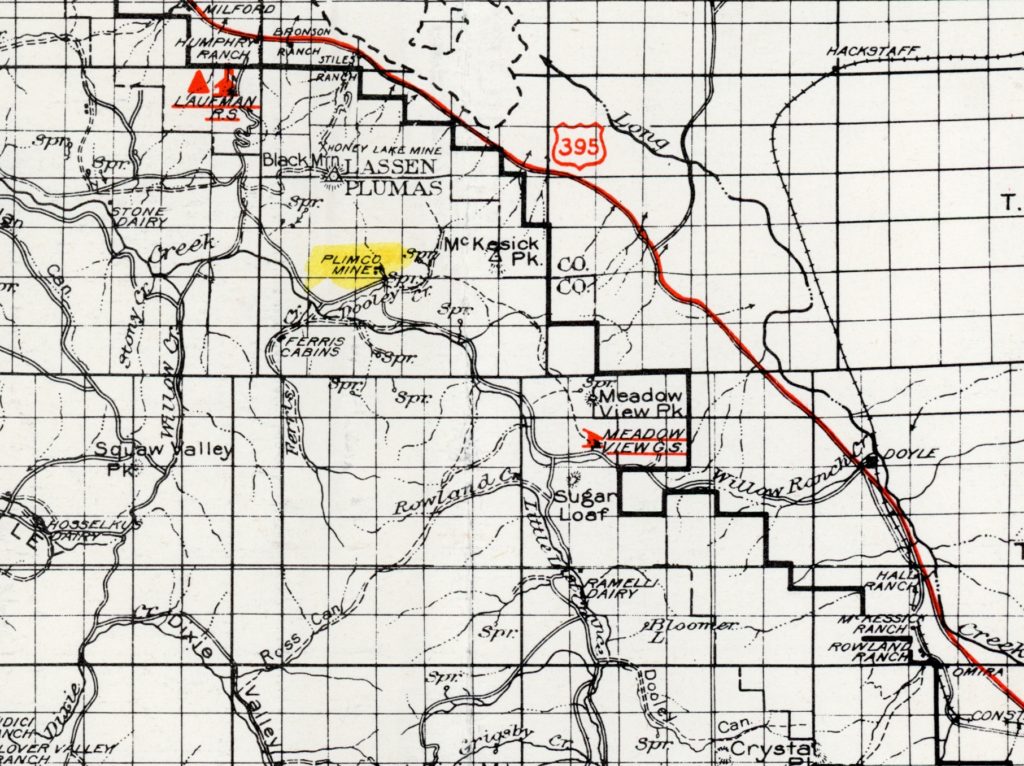
The mine appeared as a late as 1950 on this Plumas National Forest map.
The Plinco Mine was located in the Last Chance area of northeastern Plumas County. Doyle in Lassen County was in part beneficiary of the mining operations due to the access with the Western Pacific Railroad. From the mine to Doyle was approximately thirteen miles.
The initial mine was discovered in 1905 by Joseph Novak of Utah and Orlando McNabb of nearby Milford, an avid prospector. Attempts to develop the mine languished. In the fall of 1915, J.F. Cutler, a Midwest capitalist began an ambitious project to develop the Novak Mine. On November 2, 1915 Articles of Incorporation for Plinco Copper Mine were filed in the State of Nebraska. Cutler stated at that time he had ten men working on shafts and buildings investing some $16,000 in the venture. There does not appear to be much documentation about the Plinco mine. In late August 1919 a massive forest fire, to be named the Ferris Fire ravaged the Last Chance country and destroyed the Plinco Mine buildings. The operation then ceased to exist.