Subscribe!
Subscribe!

Way before gasoline taxes were introduced as a funding mechanism to maintain roads, there was a $2 a year road tax applied to all males over the age of 21. Sometimes, it was confused with the Poll tax, for often one would pay the tax when one voted.

However, one could opt of the road tax and provide labor in an exchange. Each county supervisor would appoint a road district overseer, who in turn would perform the work on in their respective districts, usually with the volunteer labor of those who did not pay the tax. Not the best system, especially in a large rural county like Lassen, but nevertheless it got the job done.
*To the far left is Satch Whitten, road overseer. The long time Janesville resident was married to Carrie DeWitt.

In January 1920, LeRoy Pollock purchased the Diamond Mountain Inn, a 22-room two story hotel, along with 140 acres at Janesville from J.B. and Katherine Rice for $6,000. The Inn, was originally just known as the Janesville Hotel and was built in 1872 by Dennis Tanner. While the transaction was noteworthy, one of residents would later become well-known in the art world, Jackson Pollock. Continue reading Jackson Pollock

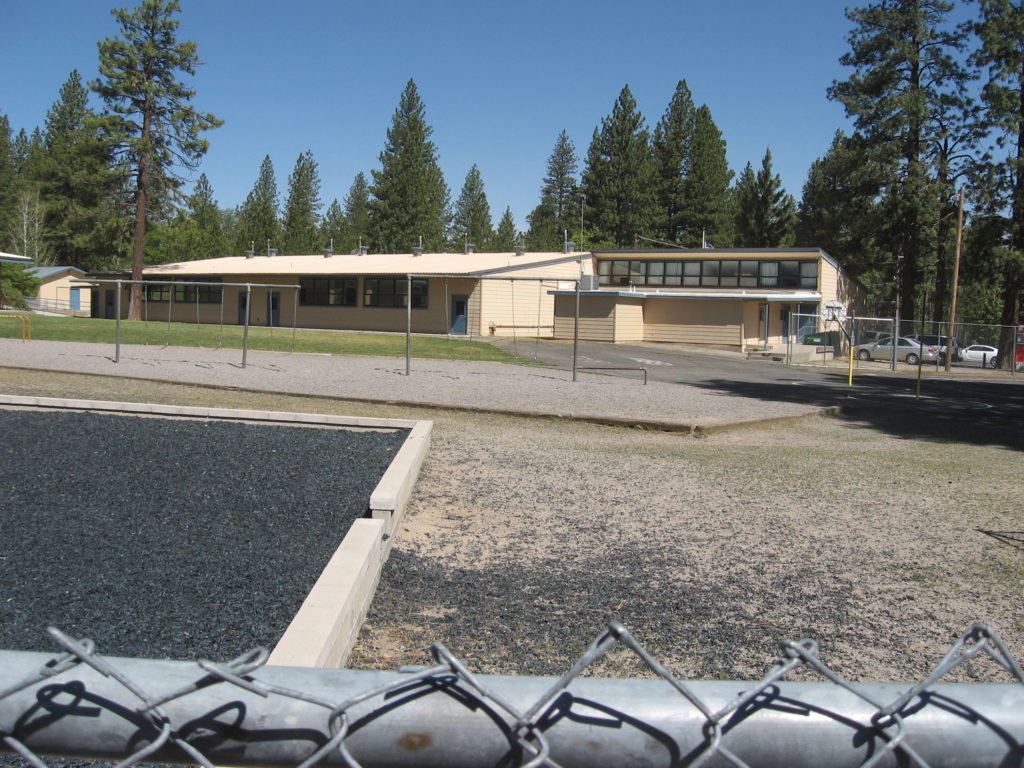
Janesville is one of the original school districts established when Lassen County was formed in 1864. On March 16, 1889, the voters approved the $1,500 bond measure to build a new school, which is featured above. In 1948, the voters were once again asked to approve a bond measure for a new school and it was approved, the old school replaced.
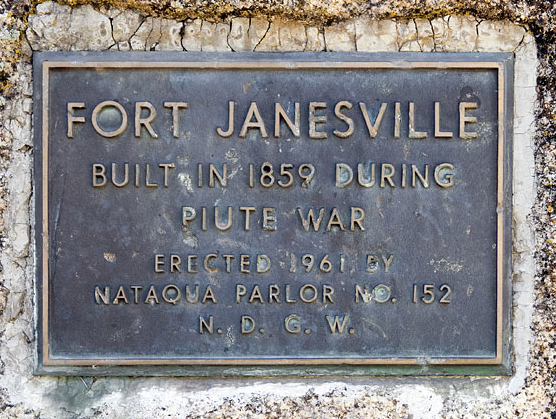
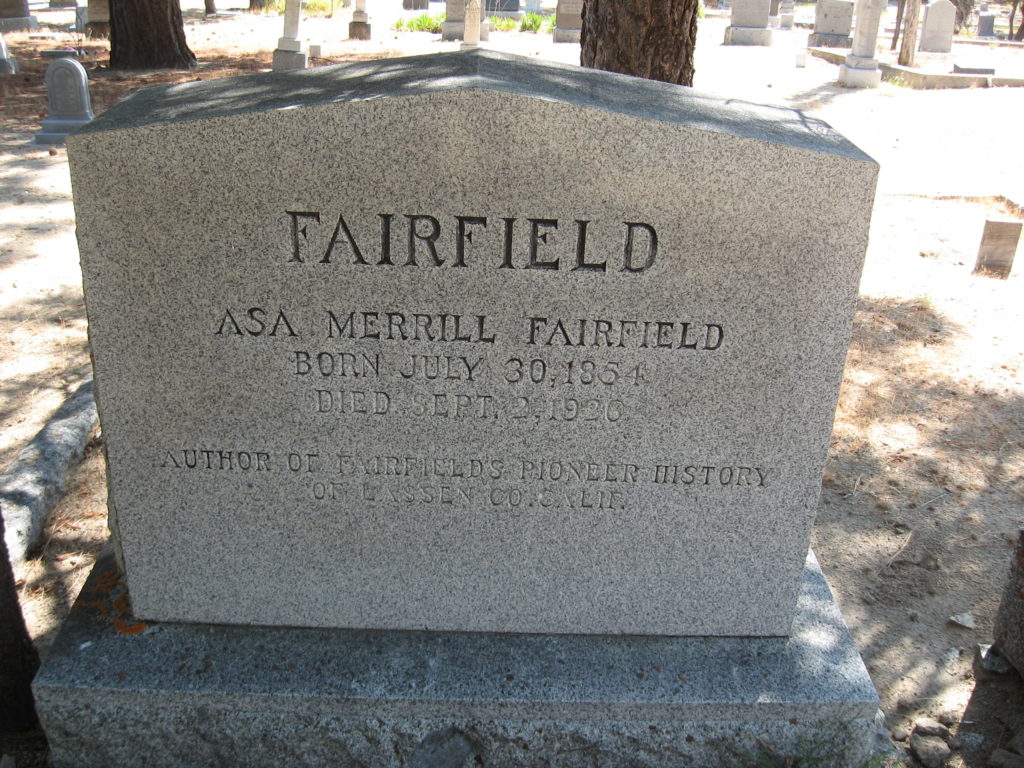
During the Pyramid Lake War of 1860, residents of the Honey Lake Valley took precautions and fortified themselves at different places. At Janesville, the residents built a stockade measuring 63’ x 90’ from pine logs that were12 to 14 feet high. After the fears of Indian attacks had subsided, the fort was used as a private school from 1861-1864. In 1865, the school was abandoned and area residents helped themselves to doors, windows and anything else they wanted. Asa M. Fairfield wrote, “The stockade stood for a good many years and fell down a log at a time.”
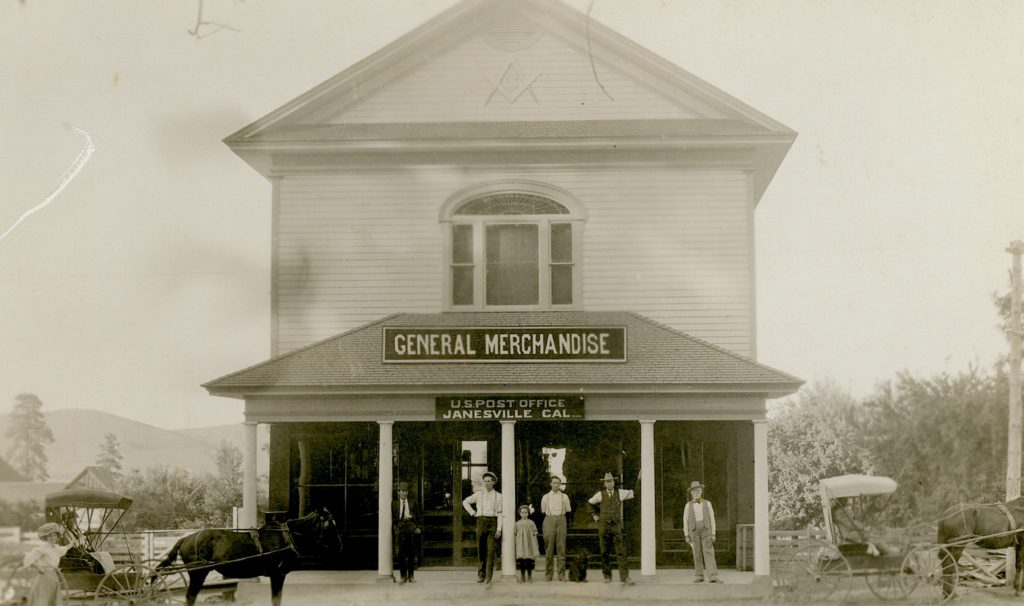
The residents of Janesville became giddy when the news broke in late August, 1910 that their local masonic lodge was to build a new hall, next to the Janesville Hotel. By September plans were underway to hold a dance in the new hall scheduled for November 4.
By early October, the skeletal two-story frame of the building had been erected. Then on Monday, October 3rd, Charlie Wilbur, the contractor told this crew to stop work, due to the poor weather conditions, especially the high gusty winds. Then out of nowhere, gust hit the structure practically demolishing it. The next day Wilbur’s crew were busy picking up the pieces and work resumed on the building. However, the celebratory dance scheduled in November had to be postponed for another time.
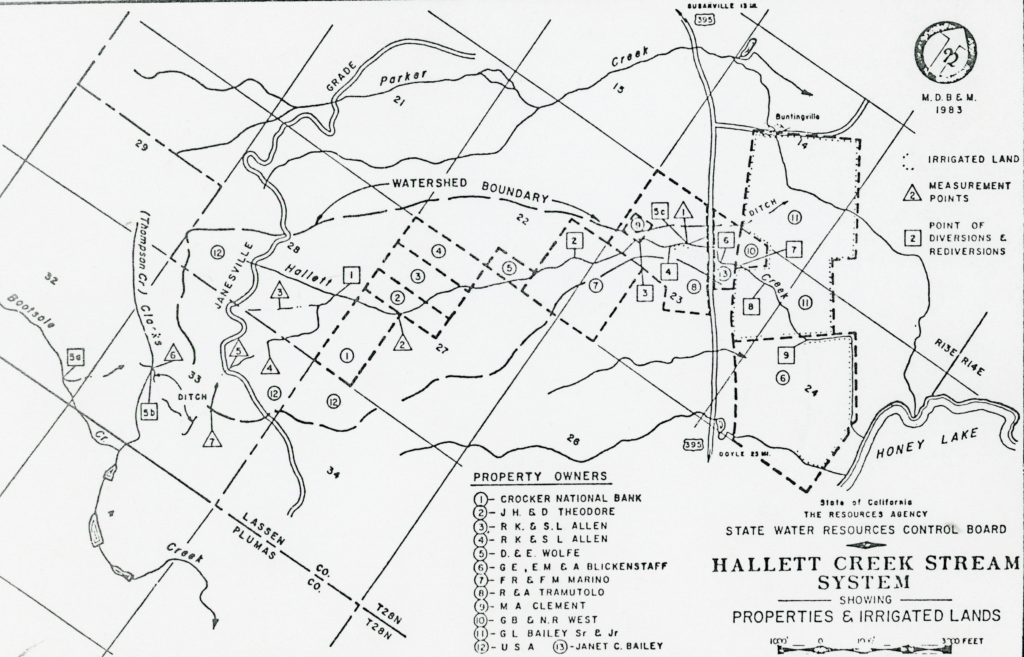
There has been a long history of water grabbing, locally, and around the West, and I am referring from taking water out of one basin, to be used in another. Take for instance, in 1906 Janesville resident Wiley Cornelison constructed a small tunnel along the Diamond Range, just past Thompson Peak. What he did was divert some water from the east branch of Thompson Creek into Hallett Creek. It should be noted the diversion was only done in the spring when there was sufficient flows in both streams. As a rule, Hallett Creek normally dries up by July of each year.
Seventy years later, things got ugly about this diversion and Hallett Creek itself and the State Water Resources Control Board intervened to prepare an adjudication. What perplexed me about the litigation, where the numerous briefs filed by outside parties such as the Sierra Club. Why such a big fight, over an intermittent stream? In 1986, I happened to be on an excursion to Death Valley and discovered the answer. I met a Los Angeles attorney who was quite familiar with Hallett Creek. The big issue was transfer out of the Feather River watershed, i.e., Thompson Creek, into Hallett Creek into the Honey Lake Basin. The outcome of course, could have an impact with the water issues of the Owens Valley.
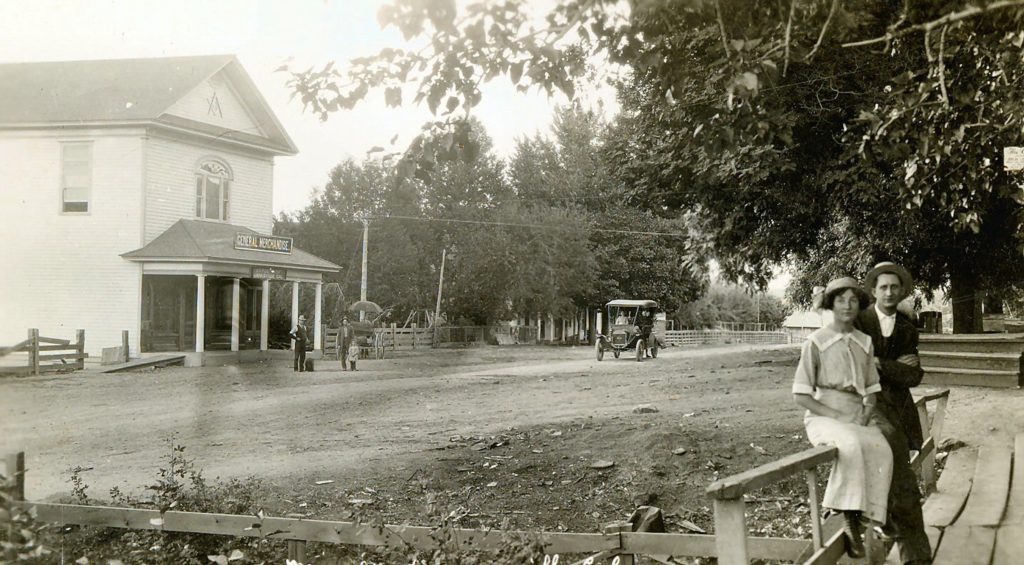
In the summer of 1856, J. Wycroft became the first person to claim the land at Janesville. In November 1856, Thomas Mitchell took possession of Wycroft’s claim, yet neither of them had made any improvements. In the summer of 1857, Malcolm Bankhead (d.1877) filed on his predecessors abandoned claims. Bankhead built a two-story log house (a substantial structure then) and offered public lodging. By the early 1860s, the nucleus of a village surrounding Bankhead’s house was evident, with the addition of Lomas & Hill’s blacksmith shop, Blanchard’s general store and saloon, and Shaffer’s sawmill on Sloss Creek. The settlement was simply known as Bankheads. It did not become known as Janesville until the post office was established on December 19, 1861. The post office was named for Jane Bankhead, wife of Malcolm, who served as the first postmaster.
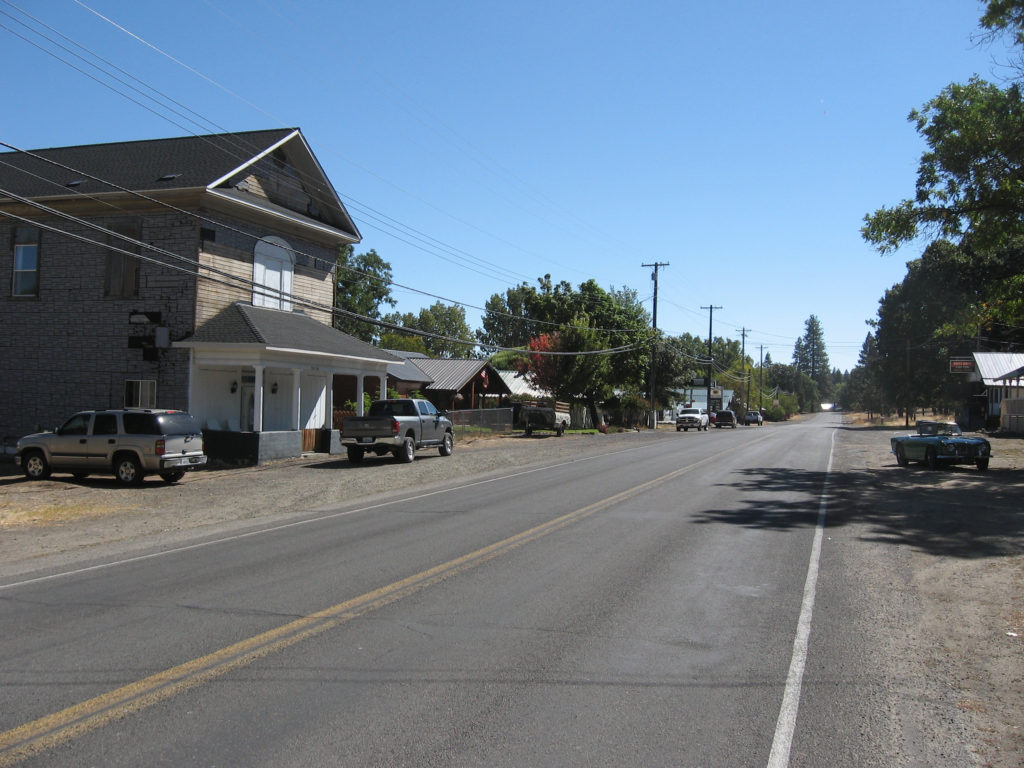
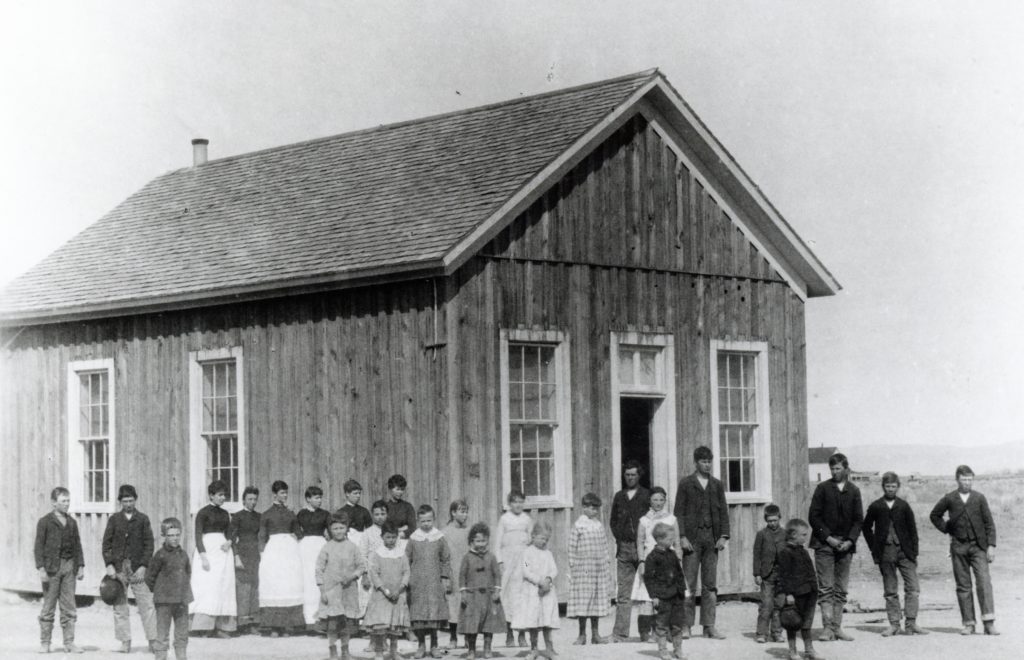
The school district was established on February 3, 1879 from the eastern portions of Janesville and Lake School Districts. Shortly thereafter, the residents built a schoolhouse without a bond measure. On May 31, 1884, Leonard Hicks donated the land for the school. On December 17, 1909, voters approved a $1,500 bond measure to construct a larger school. During the early 1950s, voters throughout the County were routinely asked for consolidation of school districts. In 1954, Missouri Bend merged with Janesville. This schoolhouse remains, and for awhile it was used as a private school, but now sits empty.
On July 2, 1914, Janesville was renamed Lassen. A group of local developers petitioned the United States Postal Service to change the name from Janesville to Lassen. They were successful. It was their goal to rid the region of towns that ended with the suffix of “ville.” They felt the suffix carried a stigma of a small village, or worse yet, brought about the connotation of Hicksville.
Many of residents were not pleased with the new name. In December 1914, over 100 residents signed a petition to restore the post office’s name back to Janesville. The Postmaster General denied it. The area suffered an identity crisis, a place with two names—Janesville and Lassen. In 1918, the Lassen Mail wrote: “Janesville or Lassen, which shall it be? It isn’t a question of which it shall be but which it is. The post office is Lassen and the rest of the town is Janesville and it would require a special act of the California Legislature to make it anything else.” The editor did exaggerate a bit on the procedure. In 1923, the town’s residents petitioned the Postal Service and requested the name of Janesville be restored and this time the request was granted on September 22, 1923.