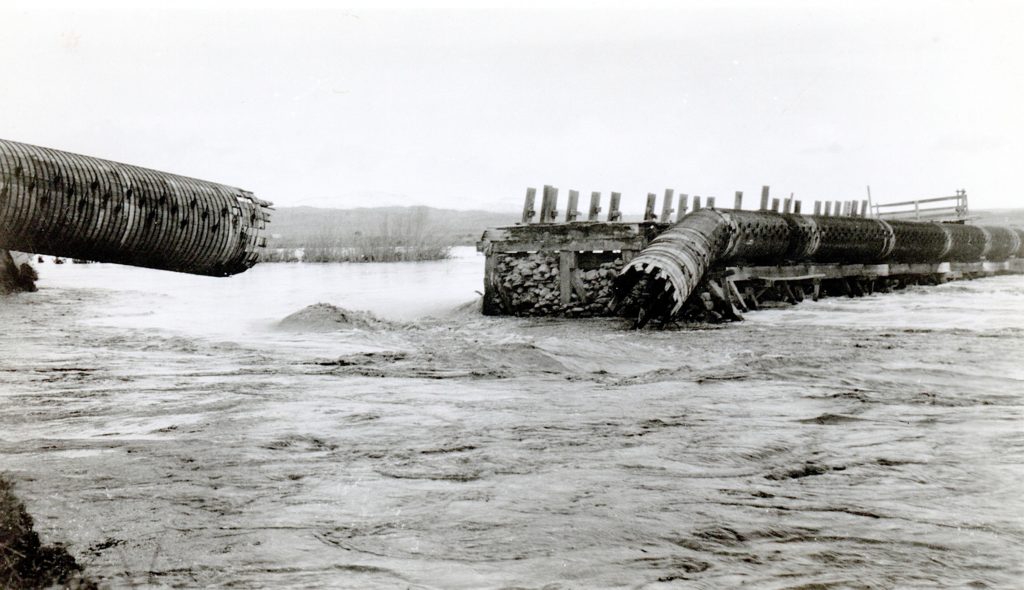
While in the past I have focused a lot on Leon Bly’s Eagle Lake project. There was an aspect that I have neglected. For the farmers of the Tule Irrigation District a lot of infrastructure was in place for the distribution of water. For those in the Baxter Creek Irrigation District it was a bit more problematic to deliver the water to the other side of the valley. A redwood siphon was constructed to carry the water from Willow Creek over the Susan River. Then a canal was constructed along Bald Mountain to Baxter Creek where a diversion dam was placed to distribute the water.
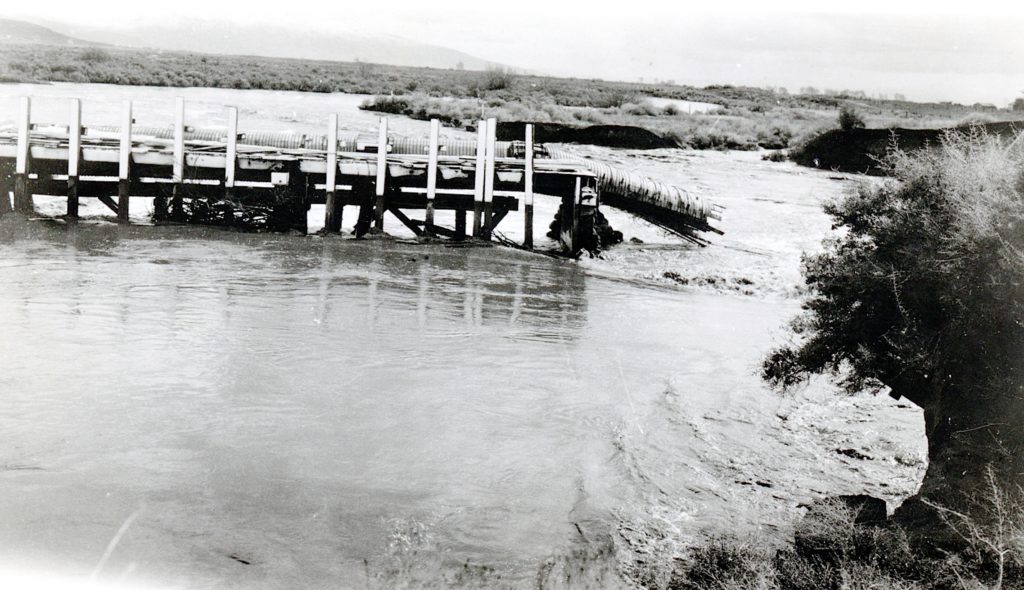
In early April 1935, over one hundred feet of the siphon broke at the Susan River crossing. It was a devastating blow to the Baxter Creek Irrigation District. Cost estimates to repair the siphon was around $50,000, money the district did not have or could not have raised. The district eventually went into bankruptcy and dissolved in 1952. As to the siphon, many of the ranchers slowly dismantled it for the wood for building and fencing.
Tim

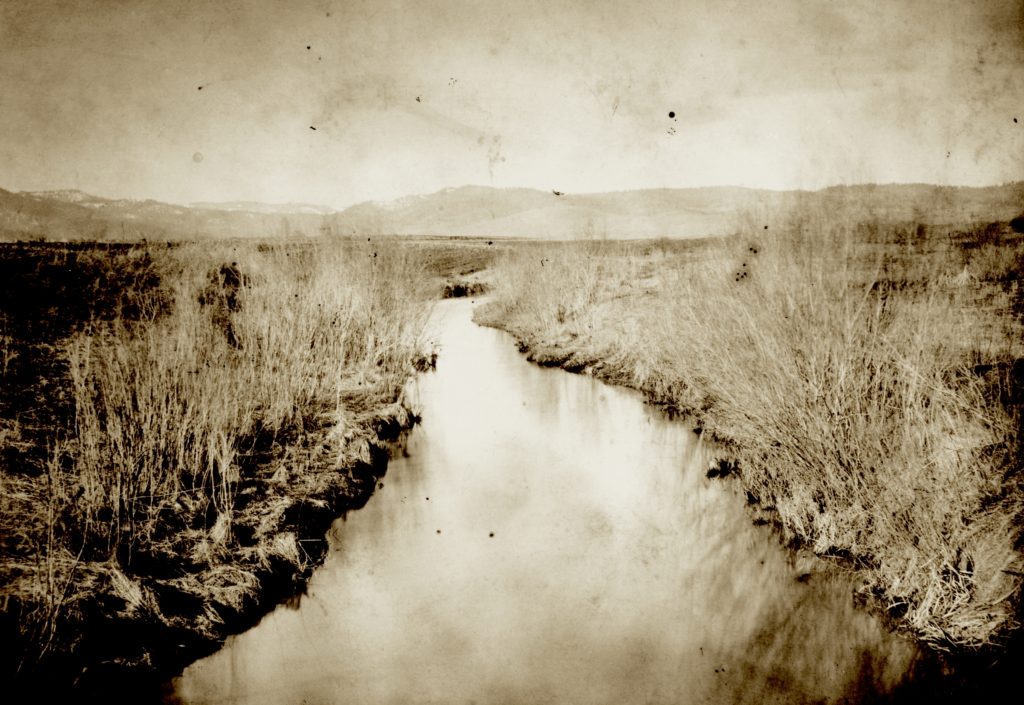
In 1916, William L. Wales, an engineer hired by the Honey Lake Valley Irrigation District, took the above photograph, as part of his exhaustive study to seek water. He proposed diverting annually 33, 962 acre feet from Butte Lake, (no one had ever filed a water right claim to it) . A canal would be constructed from Butte Creek to divert it to Poison Lake, thence onto to Pine Creek to Eagle Lake, through a tunnel there and onto the Honey Lake Valley. Very clever. However, the district was plagued with so many problems in the beginning that it never went past the initial study phase.
Spread the word, and encourage a friend to subscribe