Tag Archives: Honey Lake Valley

Skedaddle Dam Revival

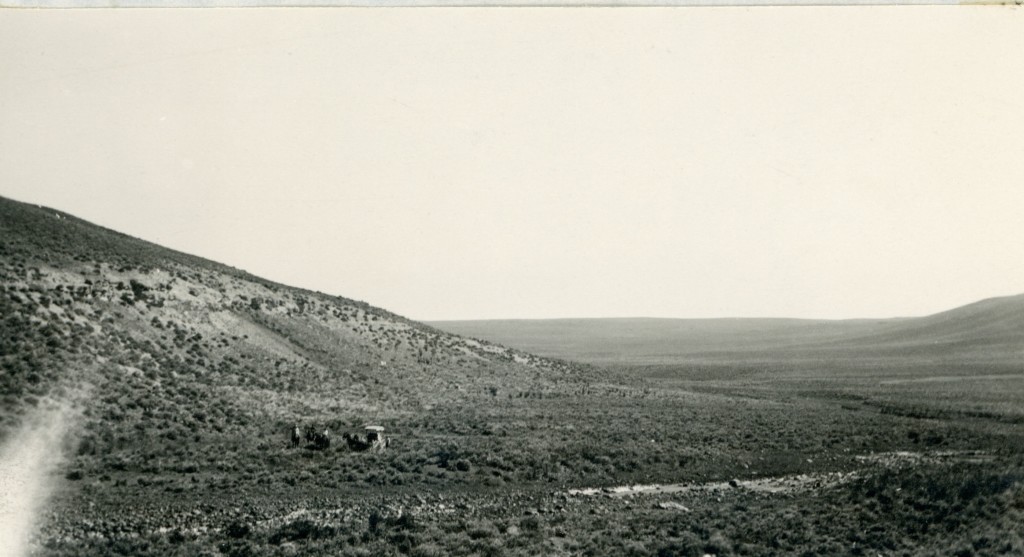
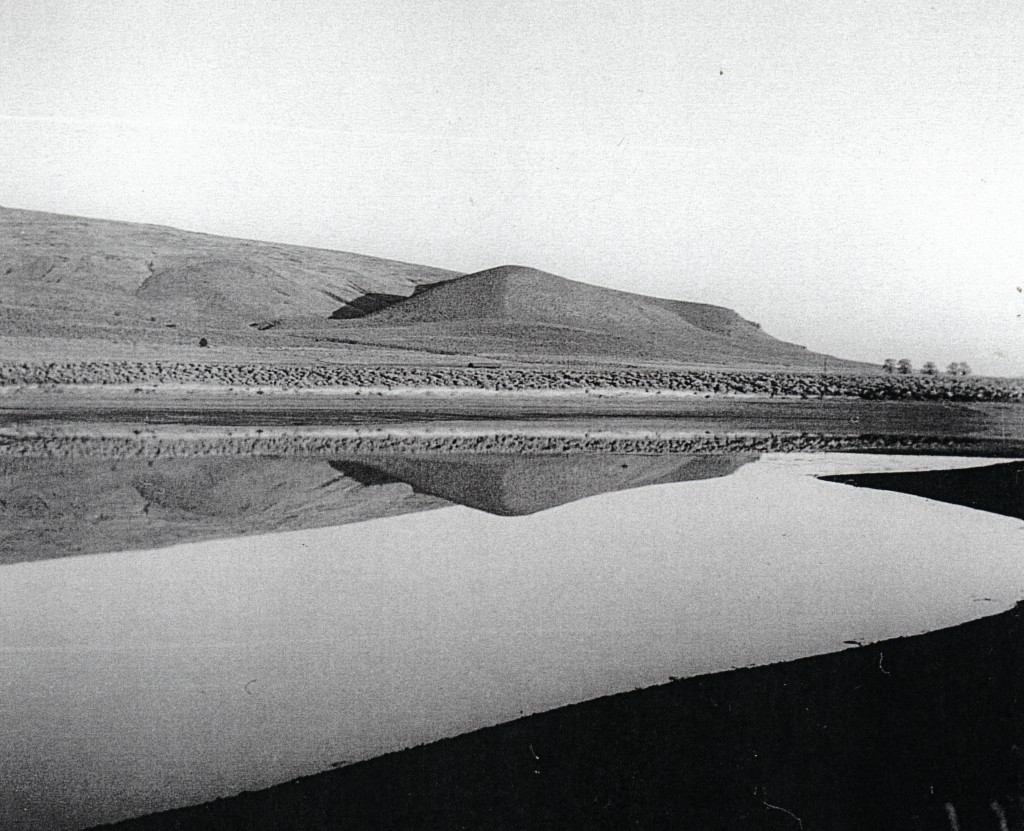
Looking north at the proposed reservoir, 1916. Courtesy of Betty Barry Deal

The Honey Lake Valley Irrigation District was an interesting creature, and one of many entities to reclaim the lands on the east side of Honey Lake. It was one of the last organizations to do so after others had tried for thirty years.

The district, like its predecessors, was faced with one gigantic problem, water. By 1916, when the district was formed, nearly all the water in the region had been claimed.  After all the district claimed water from as a far away as Butte Lake, in Lassen Volcanic National Park to be diverted to Poison Lake, then a channel to Pine Creek, to Eagle Lake and so forth.
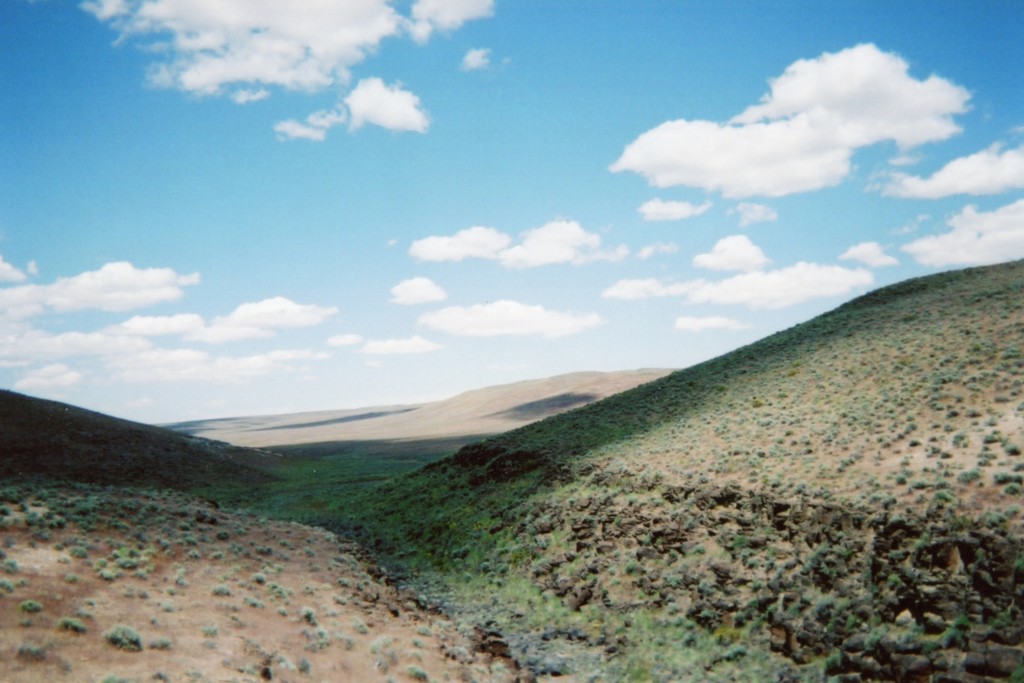
Looking north from the abandoned dam site, 2003.

In addition, they examined one of the closets sources to them, Skedaddle Creek. The district’s engineer, William Wales, noted that even though the drainage covered a relatively small area, it would be imperative to rebuild the original dam that had washed out some twenty years prior, not just as a water source, but to prevent flooding.  Wales estimated that the reservoir would cover some 231 acres and hold on the average 5,000 acre feet of water. Wales recommended a new dam be constructed of concrete, at an estimated cost of $63,631. This district, since its inception, was plagued with financial and legal problems and none of their projects materialized.
Never miss a story, click here.

Ward Lake

Ward Lake, October 26, 1969. Photo by D.B. Martin

In 1889, the Balls Canyon Reservoir Company employed surveyor, Frank Gates Ward (1857-1895), to survey a dam and reservoir site along Secret Creek where it enters the Honey Lake Valley. In 1889-90, the first reservoir was constructed. In February 1890, a flood washed out that dam. As one observer noted, the waters of Secret Creek began rising at a rate of two feet an hour and within three hours the 27 foot high structure, that measured 150 feet in length, was swept away. The company planned to rebuild but never did. In 1895, Edward T. Purser took over the project and a new reservoir was constructed, along with a twenty-mile ditch to his property near Wendel.

Never miss a story, click here.

Skedaddle Dam

The dam site, 1916. Courtesy of Betty Barry Deal

The remnants of this dam straddle the California-Nevada border, and it is an impressive historical site. On May 25, 1889, William A. Clark filed a claim to all the water of Skedaddle Creek to irrigate the sagebrush lands of eastern Honey Lake Valley. To accomplish this, Clark proposed to dam the creek at the “narrows.” The dam would span the canyon some two hundred feet and be 126 feet in height. To fund the project, Clark formed the Honey Lake Water Company, and it was incorporated on June 17, 1889. It was estimated that the dam would cost $30,000. Construction of the dam began in October 1889, and it was anticipated that the dam would be complete by the following spring. In November, Company Engineer, Alexander Center, reported that construction had progressed better than expected and that the dam’s height would be raised an additional fourteen feet. It was during that month of November that one of the severest winters on record began. The November and December snows made work difficult and by January work came to a complete halt. Blizzards blanketed the countryside and then followed bitter cold temperatures that sent the thermometer to –30  degrees. Snowstorms continued and by the end of January it was estimated that on the higher slopes of Skedaddle, the snow depths surpassed ten feet! (Normal annual precipitation at the dam site is 7 inches a year, in 1889-90 it received 22 inches). Continue reading Skedaddle Dam

Lassen County Reclamation Projects

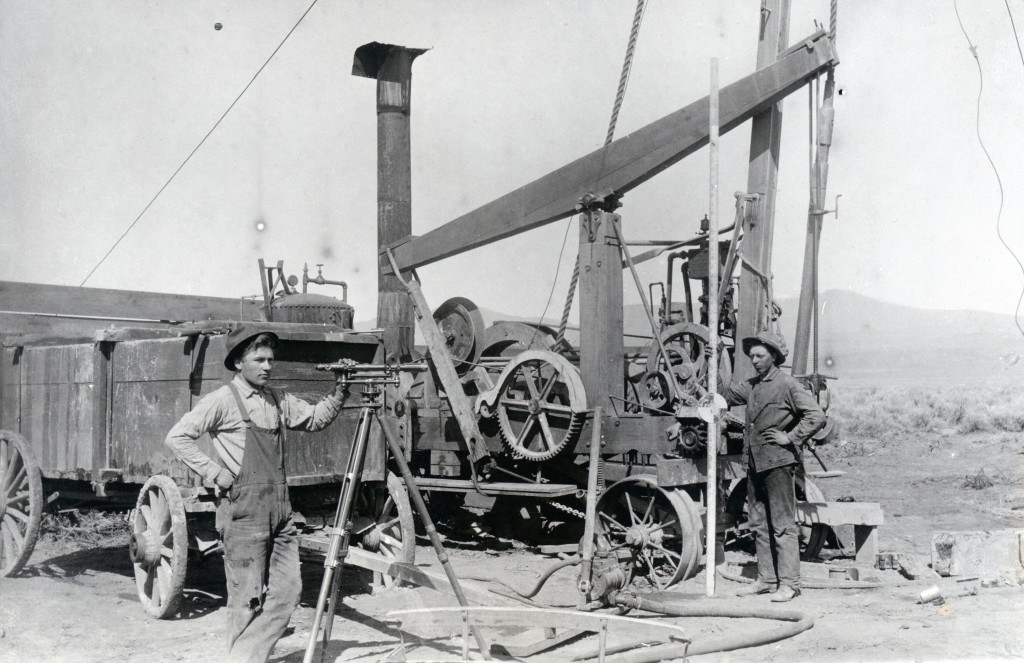
Caudle Brothers well drilling outfit, eastern Honey Lake Valley, 1910.

By the early 1880s, the hot topic that would remain for several decades was reclamation, that was eventually replaced by the lumber industry. When the NCO Railroad inched its way into the Honey Lake Valley only added momentum for the formation of a myriad of schemes. We will explore a number of these, some were successful and some were not.

On a smaller scale, improvements with well-drilling was starting revolutionize irrigation in the Honey Lake Valley. In 1888, Lassen County allocated a $1,000 for the promotion and advertisement of the benefits of well drilling to entice people to settle there. Thus, the Lassen County Chamber of Commerce was formed.

Never miss a story, click here.

Honey Lake’s Dragoon Bridge

Looking north along Willow Creek towards the site of Dragoon Bridge, April 19, 2016.

In the fall of 1856, Levi Breed set up a trading post on the Nobles Emigrant Trail where it crosses Willow Creek, just north where the current Lassen County road A-27 crosses Willow Creek.  It was second one for the Honey Lake Valley. The following year he located to Janesville and became that community’s largest merchant for a number of years.

It was the military that came along next to locate on Breed’s abandoned post. In 1859, a military station, under the leadership of First Lt Milton T. Carr, A 1 Dragoons, was established at the Willow Creek crossing. Its main purpose was to protect the travelers on the Nobles Emigrant Road.  “Dragoon” is the name for a mounted soldier or cavalryman.The following year, it was replaced by Soldier’s Bridge which was located further to the east and along the Susan River.

Never miss a story, click here to subscribe and support.

Horse Lake

Horse Lake, 1916. Courtesy of Betty Barry Deal

In 1916, William L. Wales, engineer for the Honey Lake Valley Irrigation District, looked at non-traditional water supply sources to reclaim the desert lands of eastern Honey Lake Valley. After all, other sources of water had been claimed.

Wales examined Horse Lake and wrote: “Horse Lake and it’s watershed of 115.2 square miles, laying just east of Eagle Lake, offer very good opportunities for a portion of the water supply. This lake has an area of 3520 acres at an average depth of six feet. According to a statement of a man living near the lake, it has not been dry but twice in sixty years. A shallow cut has been dug through the east rim connecting with a creek leading into Pete’s Valley. No doubt more than enough water has flowed out through this cut to offset the deficiency of the dry years.”

Never miss a story, click here.


William S. Brashear

W.S. Brashear. Courtesy of Marge Hansen

William Samuel Brashear arrived in Lassen County in an unexpected way.  In 1863, he helped fellow Southerner John M. Kelley retain his original land claim of 1200 acres. When the U.S. Government surveyed the Honey Lake Valley, one could only file claim to 160-acres. Thus, nucleus of southern sympathizers claimed property around Kelley and the region became known as the Tule Confederacy. Continue reading William S. Brashear

Herlong

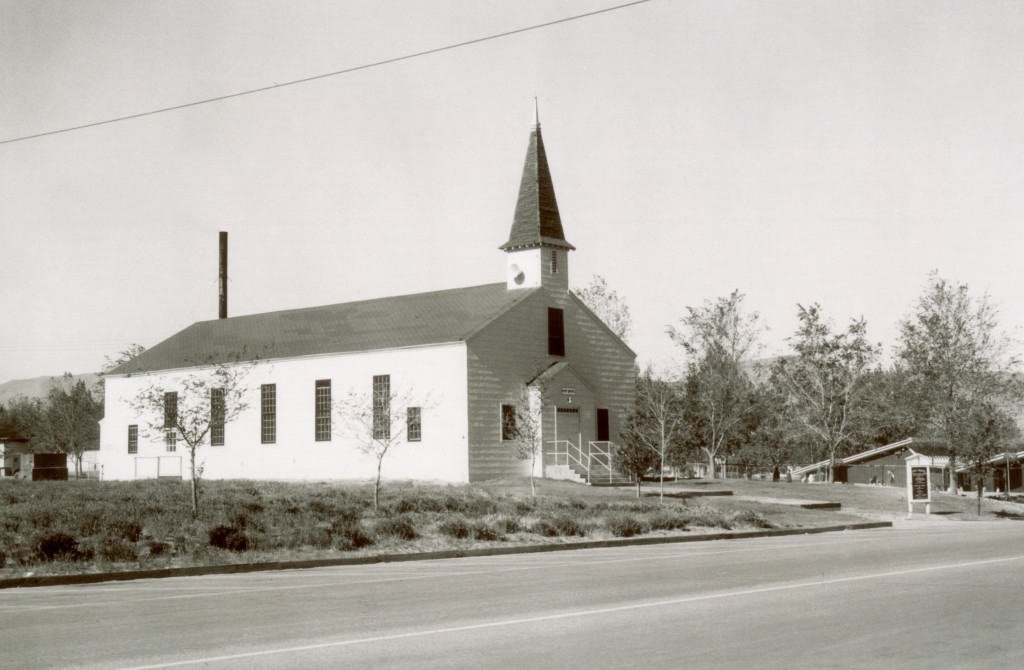
Herlong Post Chapel. Courtesy of Cindy LoBuglio

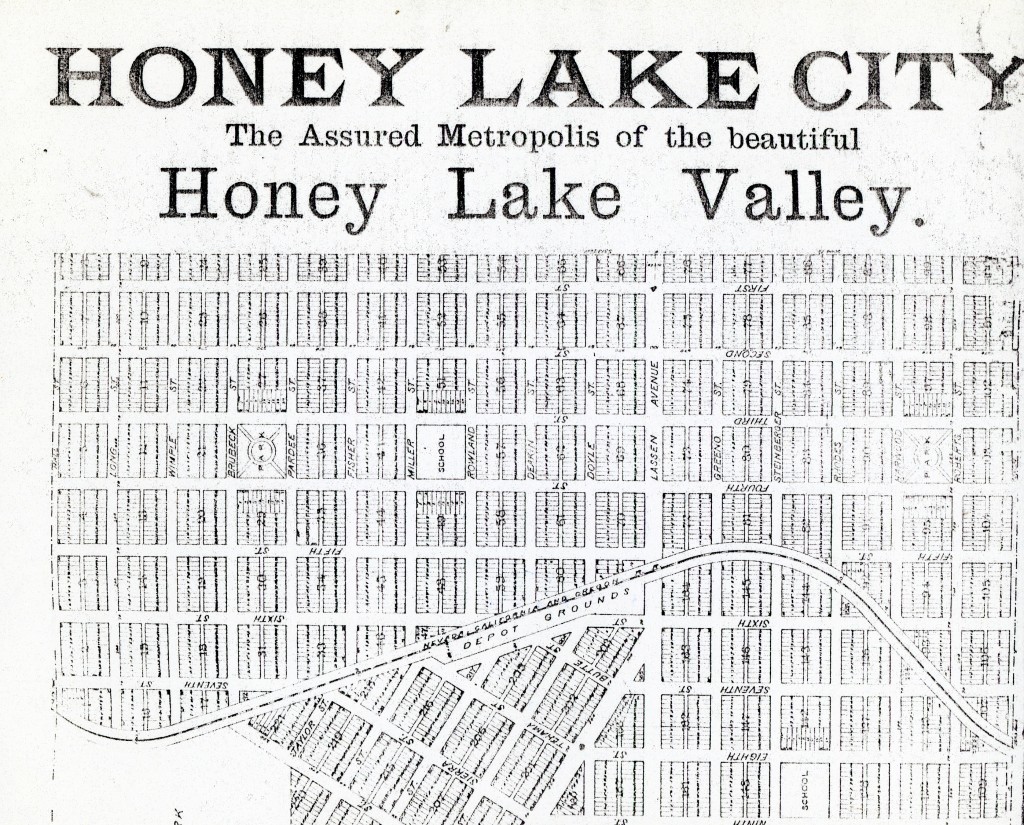
My knowledge of the history of Herlong is rather slim. On the other hand I know the history of its predecessors, such as Honey Lake City, Cromwell, Rayl and Hackstaff. If anyone has stories of Herlong they would like to share, by all means you are welcome.

Herlong came into existence on February 5, 1942, when General George Catlett Marshall, Chief of Staff, signed War Department General Order No. 9 that established the Sierra Ordnance Depot. Construction of the Depot began the following month. The community there was named for Captain Henry W. Herlong, the first Ordnance Officer killed in World War II. On November 18, 1942, the Herlong Post Office was established.

Jo Iland put together a good history of the early days of the construction of Herlong. It was published in bulletin No. 16 of the Lassen County Historical Society in 1966. However, I have no idea if it is still available.

Never miss a story, click here.