Tag Archives: Eagle Lake

Papoose Meadows Massacre – Version Three

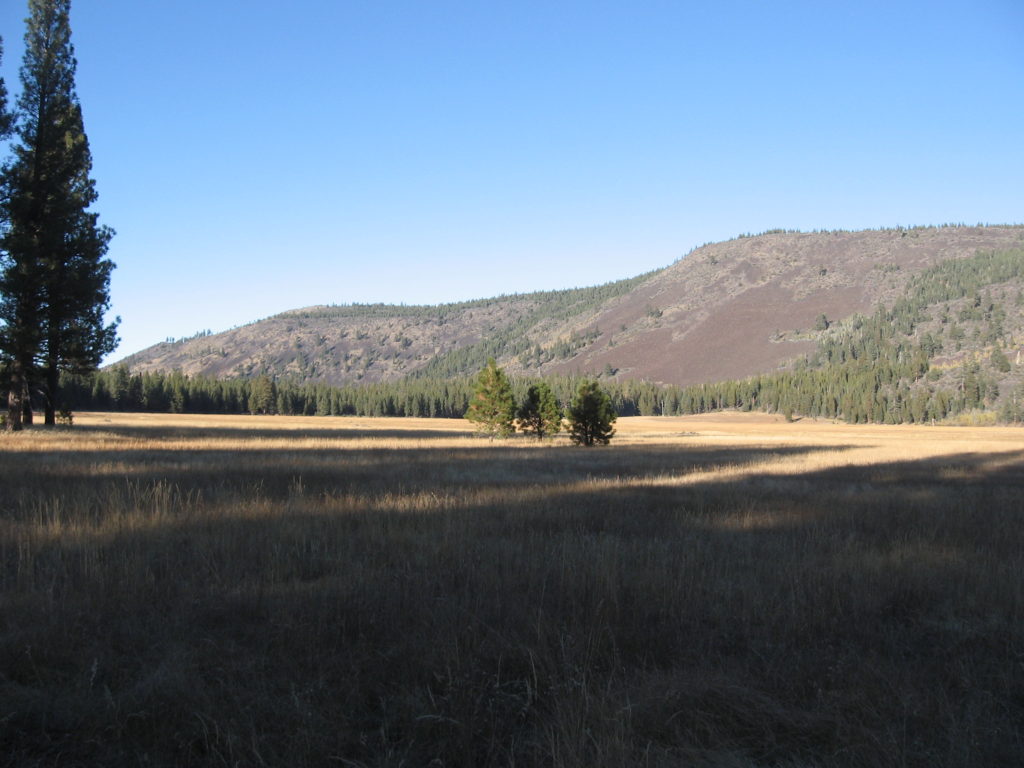
Papoose Meadows, October 13, 2017

The third version appears in Asa Fairfield’s Pioneer History of Lassen County published in 1916. Unlike Version Two they share few similarities. One important fact, Dodge in Version Two has the main instigator as Joseph Hall, when Fairfield duly notes its Joe Hale. This is important, when Hale returned to Susanville concerning the Indian encampment he encountered, he had the forum to relay the news—he was half-owner of the Pioneer Saloon. It should be noted that Fairfield relied entirely that of William Dow, one of the participants.

In June 1866, when Joe Hale went in search of stray horses some ten miles west of Susanville he spotted a number of Indians who did not appear to be local. It had been well known, especially with the Indian Valley Maidu had been providing ammunition to the renegade band of Paiutes of Northern Washoe County. It was Hale’s opinion this ammunition would be used on a attack at Camp McGarry and relayed the same to the residents of Susanville when he returned.

The next day a posse of five men—William Dow, E.V. Spencer, Joe Hale, Byron Gray, Charles Drum—organized to break of up this ammunition exchange with the Indians.They followed the Indians tracks and spent their first night at Martin Springs, near present day McCoy Flat Reservoir. The next day they went up north to Champs Flat and spent the night there. The next day they went south along the west side of Eagle Lake. By the time they reached the south shore Dow and Gray  stopped to let the horses rest. The others carried on the pursuit and came across an Indian encampment at what would be known as Papoose Meadows.  According to Dow, the posse found the camp consisted of women from Indian Valley, and that the men had left camp to hunt. That night when the posse re-grouped it would attack either at night or towards dawn.

The next morning they did. Dow stated four Indian men were killed, one injured and escaped [Joaquin] and another fled with horses. This differs dramatically from Version Two. There is no reference to what happened to the Indian women, or whether ammunition was found or seized.

Subscribe
 

Sunny Lassen

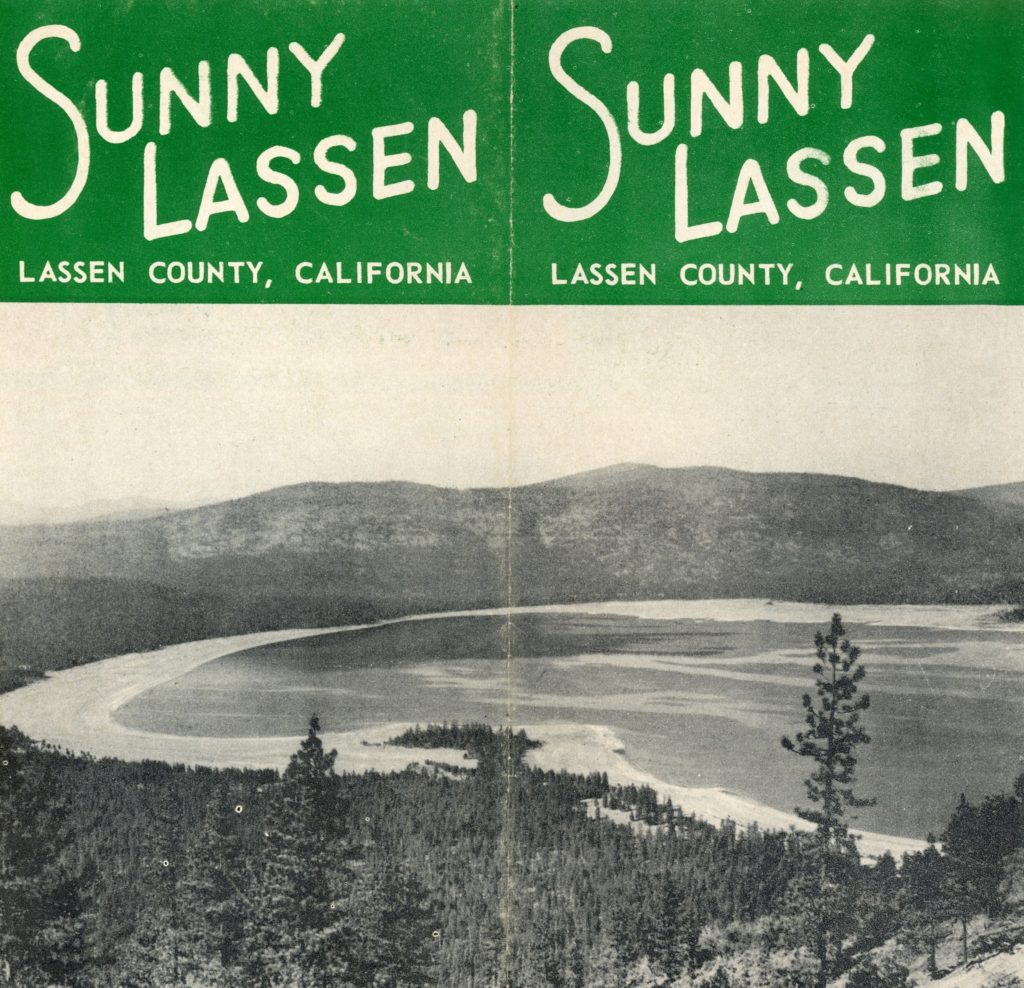
Partial Cover of the Sunny Lassen brochure

This was a small brochure of the Lassen County Chamber of Commerce published circa 1956. What caught my attention was the cover photograph. It was a view of Eagle Lake during its low water level that I had not come across before. There are a lot of Eagle Lake aficionados that subscribe, so I am sure they will enjoy it as well. Among the positive aspects of Lassen the brochure proclaimed No Fog, No Smog. One interesting aspect was that it noted that Doyle was the main railroad shipping point for uranium  mining that was being done in Long Valley.

Tim

Papoose Meadows Massacre – Version Two

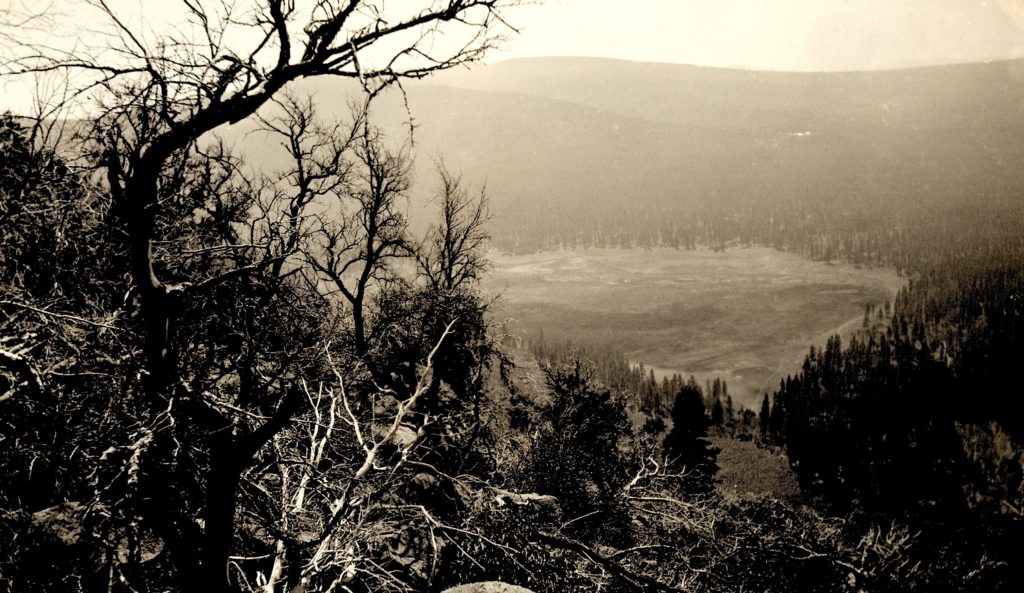
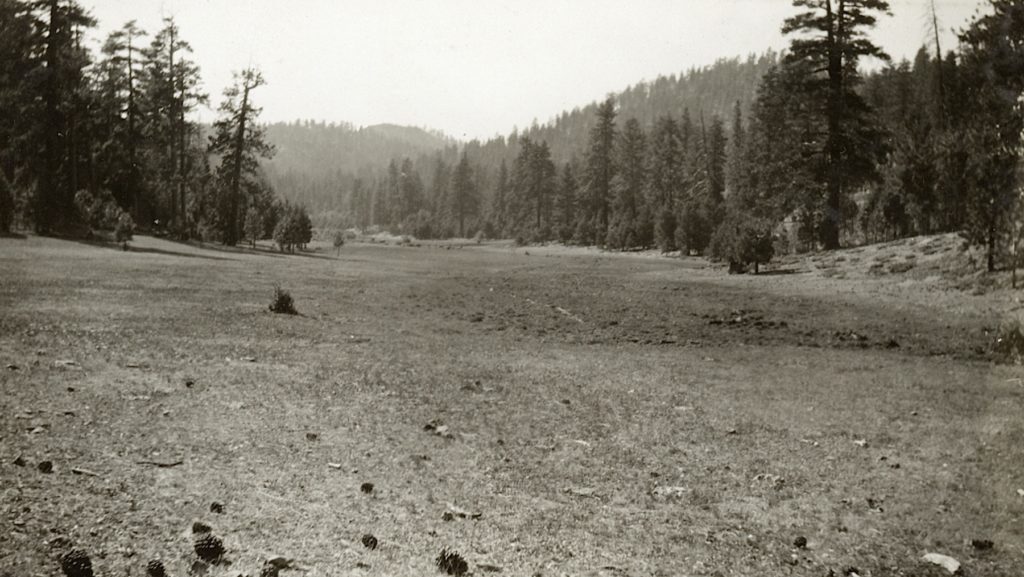
Papoose Meadows, 1914.

Version Two is the earliest published account of Papoose. It was composed by E.R. Dodge in 1881, fifteen years after the event. It appeared in Farris & Smiths Illustrated History of Plumas, Lassen & Sierra Counties—1882.

In June 1866, Joseph Hall of Susanville was looking for horses some ten miles west of town. He unexpectedly came across an encampment of Indians from Pit River, Indian and Honey Lake Valleys. It was his opinion that the Pit River Indians were selling ammunition to the latter to engage in conflicts with the settlers. Hall returned to Susanville to report what he saw. William Dow, who had been fishing at Pine Creek, noted, that he too saw an encampment of Indians. The next day, Dow, E.V. Spencer, B.B. Gray, Charles Drum and Joseph Hall left in pursuit of fleeing the Indians. After tracking the Indians for several days they found them at the south end of Eagle Lake in a little valley known today as Papoose. In being late in the day, the five men camp for the night. At daybreak the next morning they stormed the camp with their revolvers killing ten Indians, with one escaping injured. The men rounded up the Indian’s horses along with ammunition they found there and returned to Susanville.

Support


The Baxter Creek Siphon

Susan River, 1935 — Lola L. Tanner

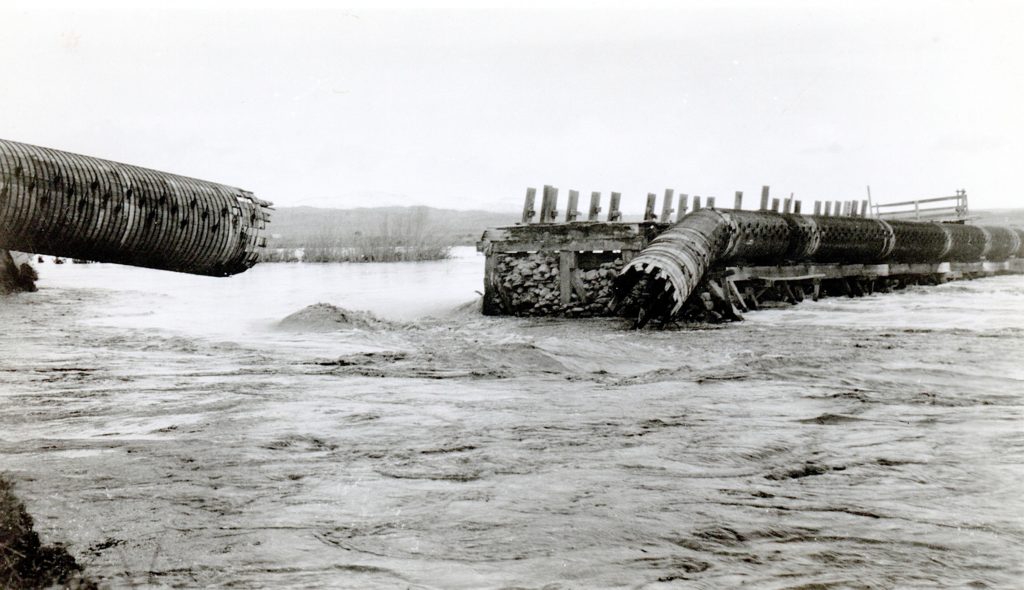
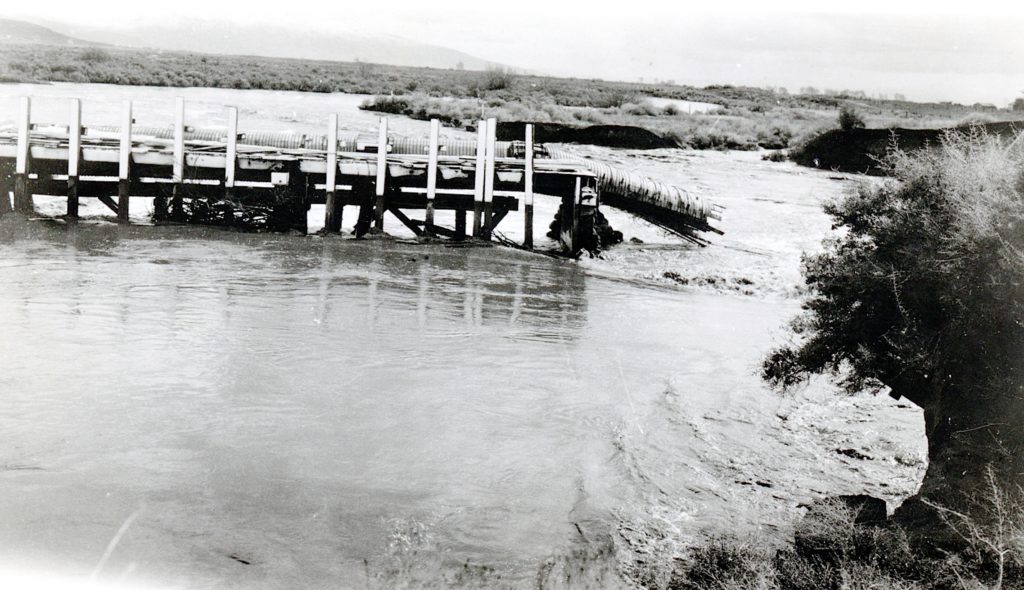
While in the past I have focused a lot on Leon Bly’s Eagle Lake project. There was an aspect that I have neglected. For the farmers of the Tule Irrigation District a lot of infrastructure was in place for the distribution of water. For those in the Baxter Creek Irrigation District it was a bit more problematic to deliver the water to the other side of the valley. A redwood siphon was constructed to carry the water from Willow Creek over the Susan River. Then a canal was constructed along Bald Mountain to Baxter Creek where a diversion dam was placed to distribute the water.

Susan River, 1935 — Lola L. Tanner

In early April 1935, over one hundred feet of the siphon broke at the Susan River crossing. It was a devastating blow to the Baxter Creek Irrigation District. Cost estimates to repair the siphon was around $50,000, money the district did not have or could not have raised. The district eventually went into bankruptcy and dissolved in 1952. As to the siphon, many of the ranchers slowly dismantled it for the wood for building and fencing.

Tim

Papoose Meadows Massacre – Version One

A 1923 view of Papoose Meadows. Courtesy of Lola Murrer Tanner

This is the first of three versions of the Papoose Meadows Massacre that occurred at Eagle Lake in 1866. During the late 1940s and 1950s Francis Riddell spent considerable time compiling the Ethnohistory of the Honey Lake Paiute. There were still older living Paiutes then, whose parents lived in the area prior to Anglo settlement. Francis spent a lot time with Kitty Joaquin Williams (1864-1954), who provided him with a wealth information, that he was able to preserve. The following is what she relayed to Francis concerning the Papoose Meadows Massacre.

According to Kittie, a band of Paiute, including her father Joaquin, went on a hunting trip to Eagle Lake. Though there is some confusion she also stated they went there to escape the soldiers, who were accompanied by members of the Maidu. Hog-die Jim, Joaquin’s uncle was afraid the soldiers and Maidu would attack them. He advised Joaquin and others to move their camp, but Joaquin felt there was no real danger. Hog-die Jim then took some provisions, and all the horses and left.

The soldiers and Maidu attacked Joaquin’s camp and killed everyone one except a baby in a cradle board, two women who jumped into the lake and swam to safety and Joaquin, too, did the same. However, when Joaquin was in the water he was shot by. soldier, John Mulroney. Joaquin was cared by the others and recovered. He was later known as Old Man Joaquin and spent the rest of this life in the Susanville area and died in 1935 at the age of 99.

Note: It is well documented that there was no military involvement. The soldiers at Camp Smoke Creek, the nearest military outpost were kept very busy with conflicts in Northern Washoe County. I also examined their daily reports, the military kept great records. Also puzzling, is the naming of Mulroney (1856-1930). Mulroney would not have been old enough to participate. He lived most his entire life in the Honey Lake Valley working on various ranches.

Support


Eagle Lake Biological Field Station Update

Eagle Biology372

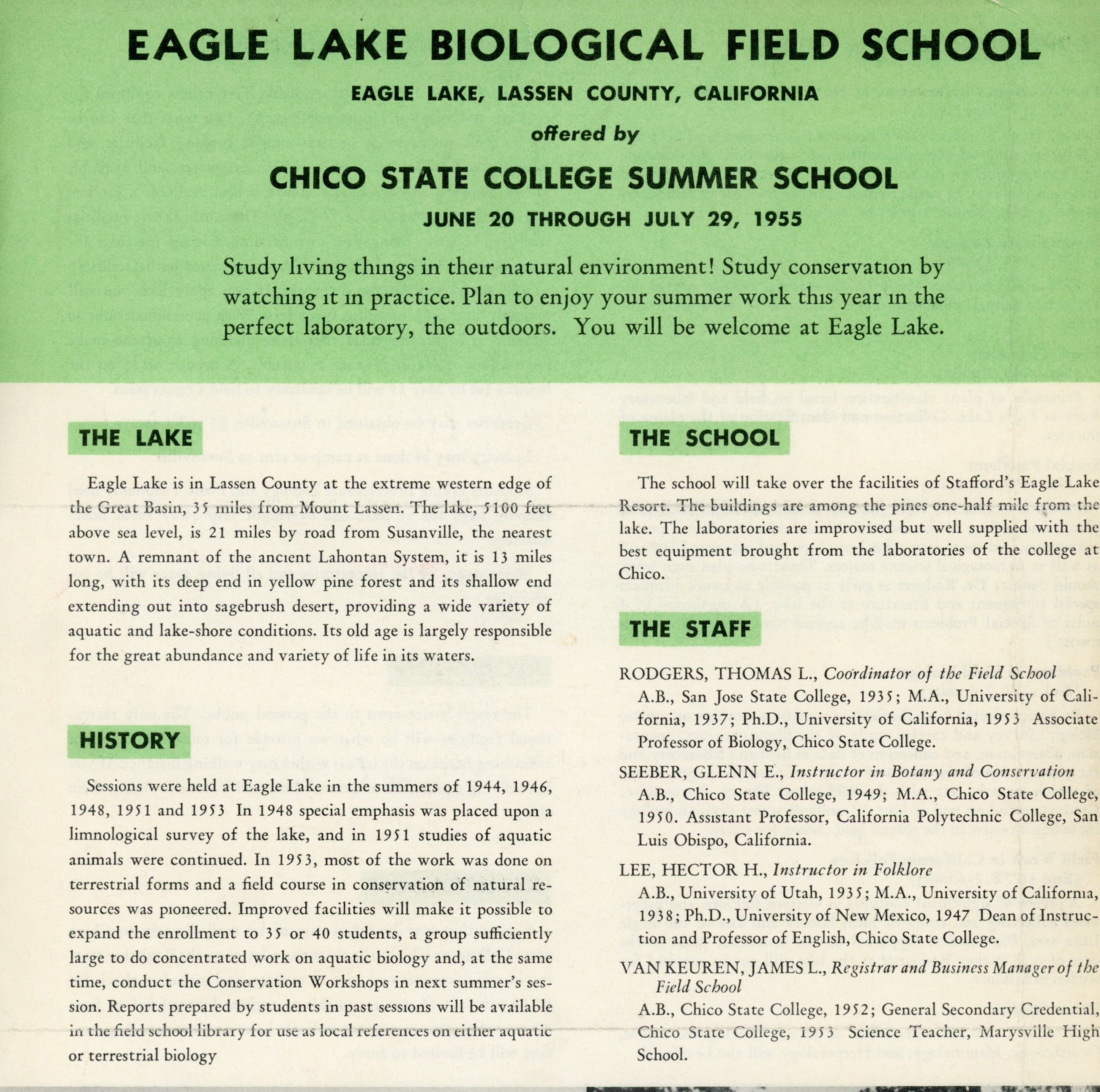
At the October 2015 meeting of the Eagle Lake Interagency Board, the Bureau of Land Management reported that Chico State University was exploring avenues to close down the facility. At that time, the Bureau of Land Management reported that they would be willing to take back the property they donated to the University back in 1964. However, they stated in order to do so, the University would have to remove all improvements, i.e, buildings etc. At the moment, from my limited knowledge on the topic, it appears everything is at a standstill, as the University does not want to be burden with the costs of removal. However, another educational institution could take it over.  When I was still on the Lassen College Board, I brought up this topic, but it has not gained traction.

The field station was the creation of biology instructor Doctor Vesta Holt. The first classes were taught at Spaulding Tract in 1945. In the early 1950s, with increased enrollment studies were moved to the south shore at the Eagle Lake Resort. After the Merrill Flat Fire of 1955, operations were moved to Susanville and Westwood and until a new home could be located. It was not until 1964, when a new home was located just north of the abandoned Bly Tunnel and in 1968 dedication ceremonies were held at the new facility.

It is never too late, subscribe.

Where Are We—Willow Creek

August 1, 2016—Annie Henriques Blank

The headwaters of Willow Creek is off the beaten path. Since the inception of tapping Eagle Lake for irrigation in the 1870s, its natural stream channel provided for the perfect conduit for the water flow from a Eagle Lake tunnel to the Honey Lake Valley. The spring located at Murrer’s Upper Meadow, a future post is scheduled on that topic, was just a short distance from Eagle Lake. The biggest obstacle, of course, was the tunnel construction. The original Merrill tunnel outlet was only a mile or so northwest of the headwaters of Willow Creek. When the Bly tunnel was completed, it was due west of the headwaters on the opposite side of the meadows.

Tim

The Legacy of William W. White

May 2, 2022—D. Willis

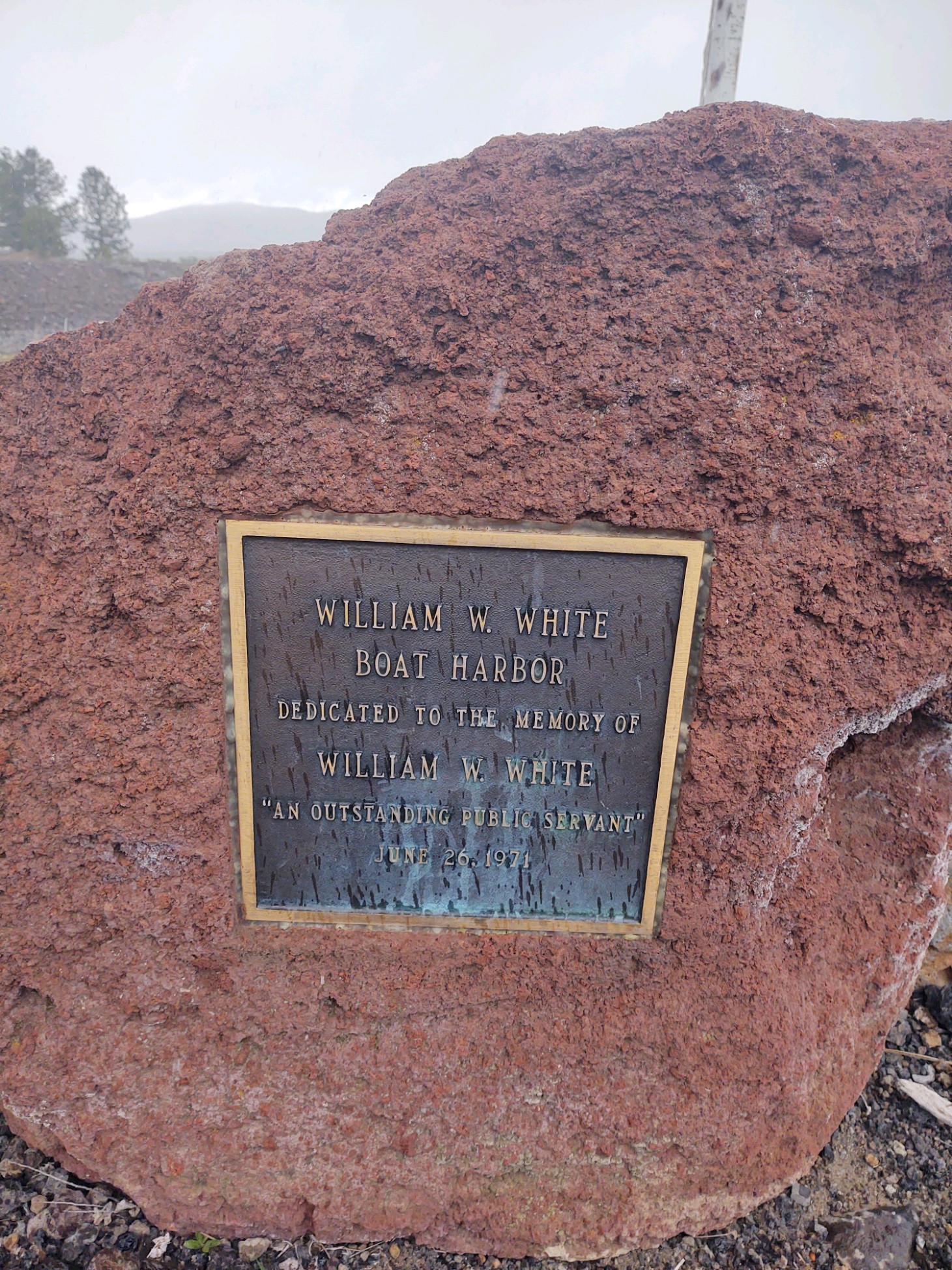
Far from a household name to Lassenites, William W. White (1919-1970) has an interesting legacy in the annals of Lassen County history. A native of Montana, he came to Susanville in 1953. In 1959, he was hired as Lassen County Planning Director. He saw the potential at Eagle Lake and was committed to the development of the marina and campgrounds. He resigned his position as planning director effective June 30, 1967  to take a new position as the Planning Director for Tehama County. He died suddenly on September 20, 1970 at the age of 51.  At the December 28, 1970 meeting of the Lassen County Board of Supervisors, they passed Resolution 1961 to name harbor at Eagle Lake after White. On June 26, 1971 a plaque dedication at the harbor was held.

Tim

Rongstock Canyon – Lassen County

Rongstock, 1923. Courtesy of Lola L. Tanner

This is a short narrow canyon between Eagle Lake and Willow Creek Valley.  The meadow is not visible from the top sides of the canyon, so it is hidden and rarely frequented. It is also a rough steep descent to the bottom of the canyon.

In the 1890s, Joseph Rongstock had a 200-acre homestead there. In 1899, Charles E. Emerson, Lassen  County Assessor, appraised it for $620. Rongstock objected and stated it was only worth $420 and requested his taxes be reduced. The County rejected his claim. Rongstock’s taxes for that year were $10.92. On May 2, 1907, Rongstock, then residing at Lake County, Oregon, sold his property to Adam Jakobs for $300.

Never miss a story, click here to subscribe.

Fishing the Lassen Country

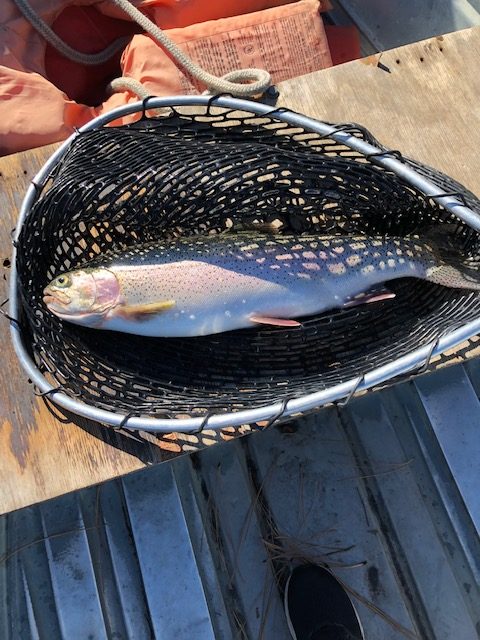
This 3.5 lb Eagle Lake Trout was caught off Eagles Nest on September 28, 2021 using an orange trolling fly—Brent Grometer

In 1977 Art Wilcox wrote a small publication Fishing the Lassen Country.  The publication’s main focus is the area surrounding Lassen Volcanic National Park. Wilcox did make an exception and included Eagle Lake and below are his tips for fishing that lake.

“Eagle Lake is not within the Lassen area, but is near enough to be appropriately included. This beautiful, natural lake, and its big, one of kind specie of trout is about an hours drive from Chester. The turn-off north from 36-44 is three miles west of Susanville. The 12 miles of this road, Highway A-1, are paved but has some 12 percent grades. They do not appear to bother those towing large trailers and boats in and out, so must be of no consequence. Four campgrounds, including the huge 204 space Merrill, are located at the South end of the lake. There is a store and full service marina, accommodating all types of boats. Some people fish by wading out and casting hardware or nitecrawlers. Trolling is far more effective. Nitecrawlers behind attractor blades to be the most popular method of rigging, but all sorts of lures and combinations of terminal gear are used. The fish are large. Three or four will usually. make up the weight limit. Tackle should be considered accordingly. Don’t fool with four pound test line here, unless you are an expert with a fish on light equipment.”

Tim