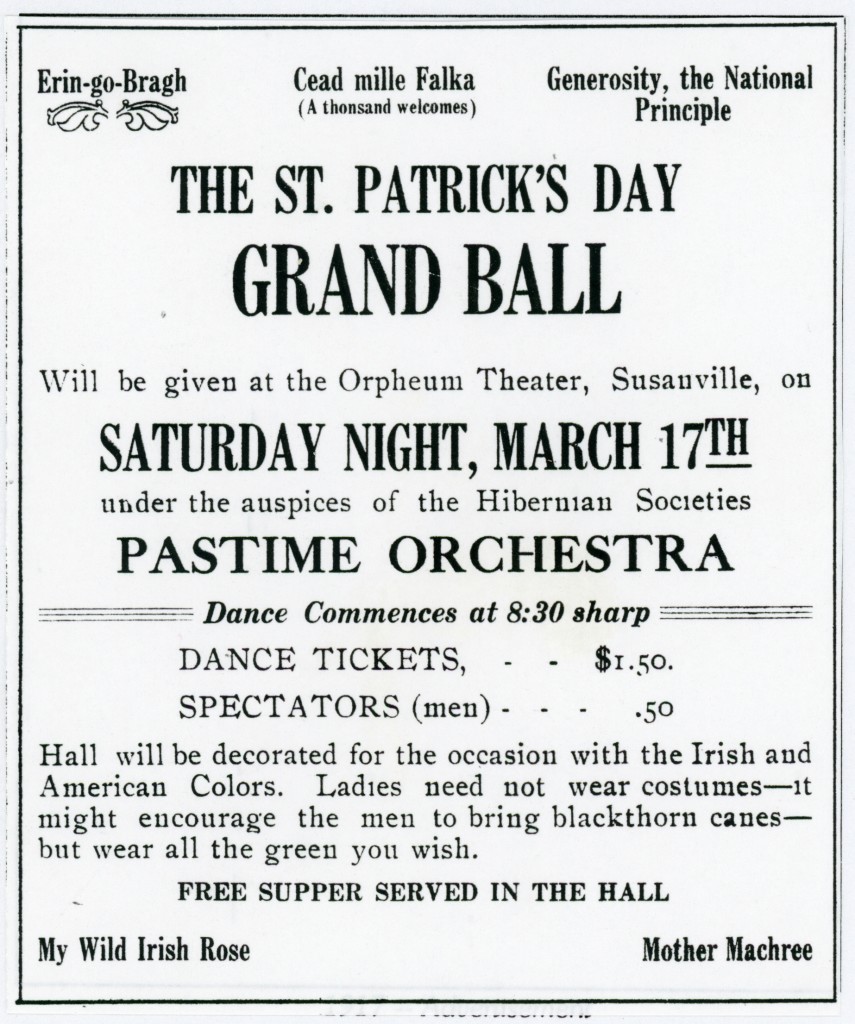
1917 Advertisement of the first St. Patrick’s Dinner
This Saturday, March 15, will be Sacred Heart Church’s annual St. Patrick’s Dinner at Monsignor Moran Hall. Did you know that it is Susanville’s oldest continuous annual event? If you were wondering what the second is, it is the Lassen County Fair established in 1922. Continue reading St. Patrick’s Dinner 1917 & 2025→
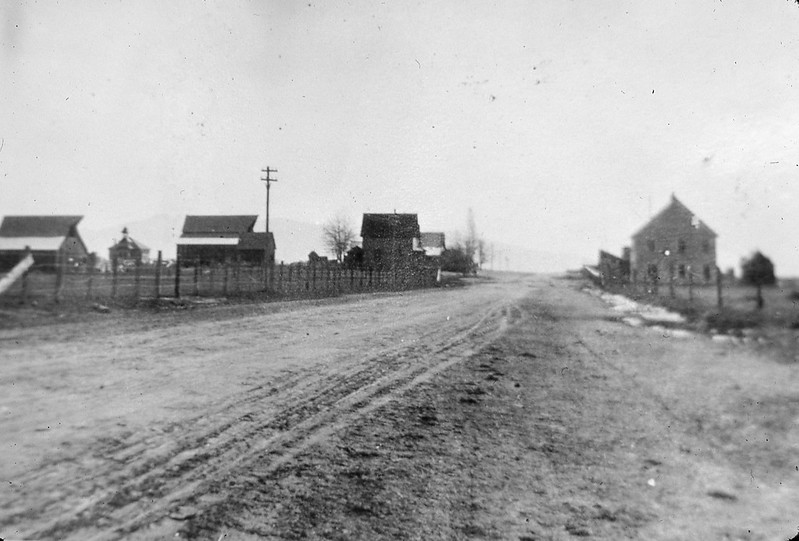
Spoonville aka Edgemont, 1905 – Courtesy of M.E. “Mel” Mulroney
Since the weather forecast calls rain and snow for the next six days , and I have a burst creativity energy, I thought some might like to know what is forthcoming.
Some of these are from events of 1925. The completion of PG&E’s Pit River Powerhouse No. 3 (Lake Briton) and its effects in Susanville. A fatal mining tragedy at Hayden Hill, that may have been the last occur to there, but do not quote me on that. The Spaulding Tract revival at Eagle Lake. The Southern Pacific’s Railroad to standard gauge the NCO line, from Wendel to Lakeview, because of a 1962 publication that of that event carried erroneous information keeps getting perpetrated. The list goes on the Williams Brothers (Morgan & William), M.O. Folsom transition from rancher to a capitalist, Fruit Growers vs Forest Service fire prevention debate, and so forth. That is a glimpse of my research activities.
The old Missouri Bend School, December 2020–Smith Properties
Oh, let I forget. The top photograph is of the former town of Spoonville located some three miles east of Janesville. It was the home of the Missouri Bend School, one of the landmarks that still exist.
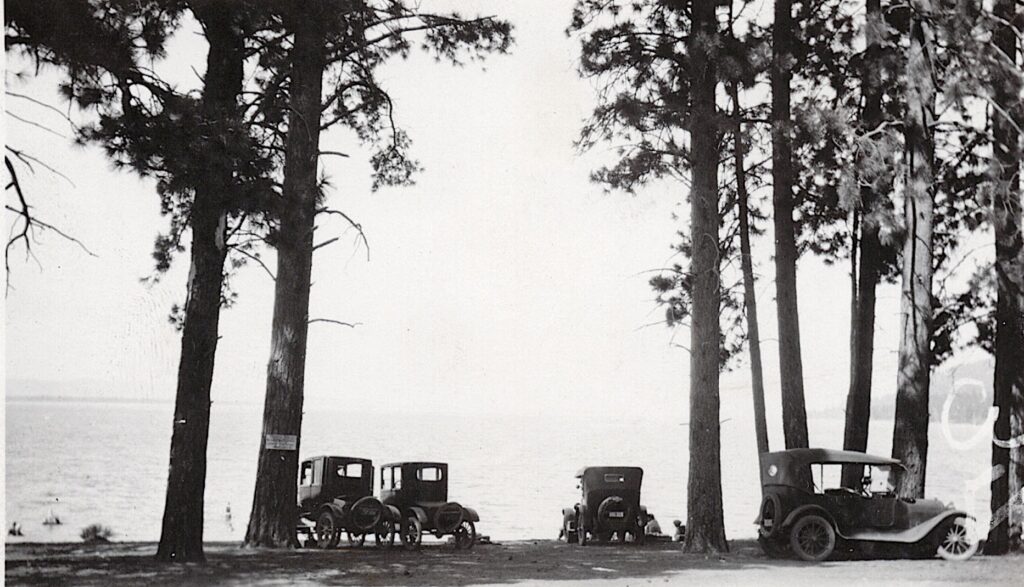
First, I happen to like this photograph taken at the south shore of Eagle Lake. Second, I do not have any knowledge about the picture. Third, in June I had a bought an Epson V39II Scanner. Last week a forced myself to use it. It has been a challenge, but slowly and surely I shall overcome the learning obstacles. Anyhow, to make a long story short, the above was the first scan.
Golden Eagle Mine, Hayden Hill, 1909. Courtesy of Dallas & Joyce Snider
It was ten years ago when I launched this site. My book sales had dwindled and the last three tanked, leaving me in the red. I decided to take a chance on the internet and thus this web site was born. Learning how to post and maintain it came with learning difficulties, and to some extent it still does. I am one of those technology challenged people.
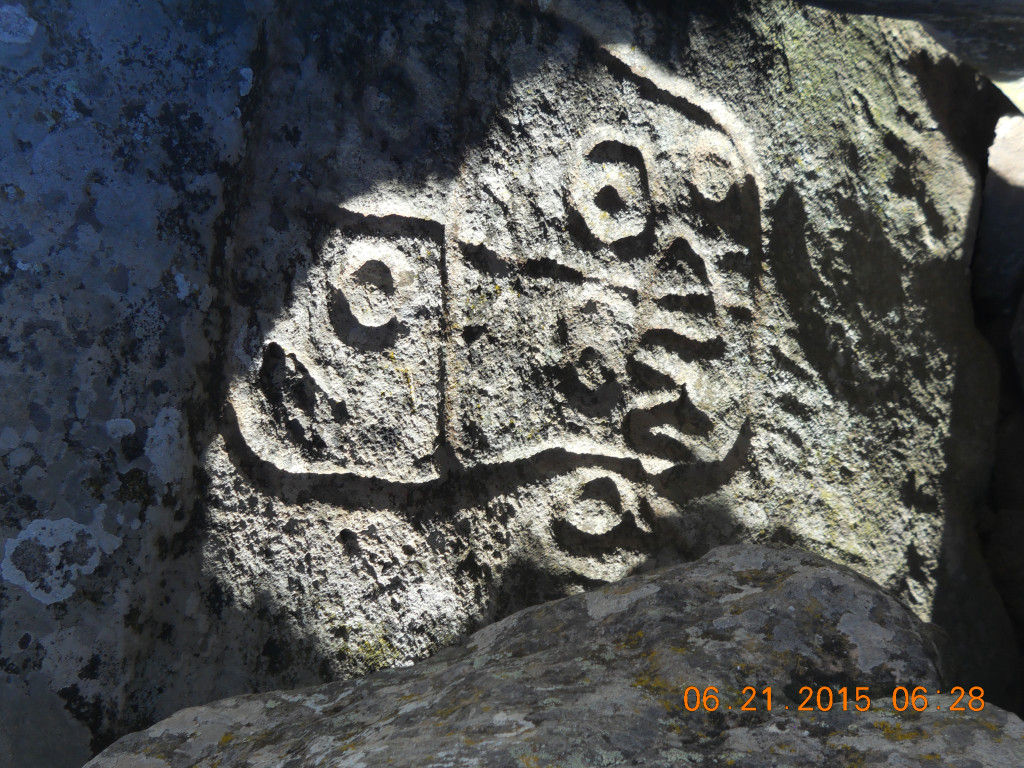
The Belfast Sunrise Chamber. summer solstice, 2025
A few weeks ago, a reader complimented me for not only the website’s content, but that it was advertising free and no annoying pop ups. While I have been approached to sell add space, I reluctantly declined. While they were quality offers and would help with the rising costs associated with the site, I just felt it was not a good fit.
Therefore, it should be noted. that I am so grateful to volunteer subscribers, that if was not your support, the site would have ceased to exist. Thank you.
On a quarterly basis, I ask you the reader, if there is something you would like to learn more about or maybe its something you heard, but question its validity. So here is an opportunity to participate. I will do my best to answer any questions. It should be noted, it may take awhile for the answer to appear as a post. The primary reason, many of the daily posts are done nearly a month in advance. So by the time you read this I am already working on posts for the middle of February, or at least I should be. Whatever the case may be, I look forward to hearing from you. Of course, it should be noted that paid subscribers requests receive priority. In addition, you can always send a request at any time.
Here it is the first day, of the first month of 2025. That is my profound statement. No revelations or grandiose goals. Actually, I wrote this brief post back in October, and a lack of inspiration.
However, today’s illustration I thought would refreshing since it is going be awhile when nature is green again in all its splendor. This corral is located north of McCoy Flat Reservoir and is a somewhat relic of past. They were once a scene of bustling activity in the fall, when livestock would be rounded up to relocated to lower elevation for the winter.
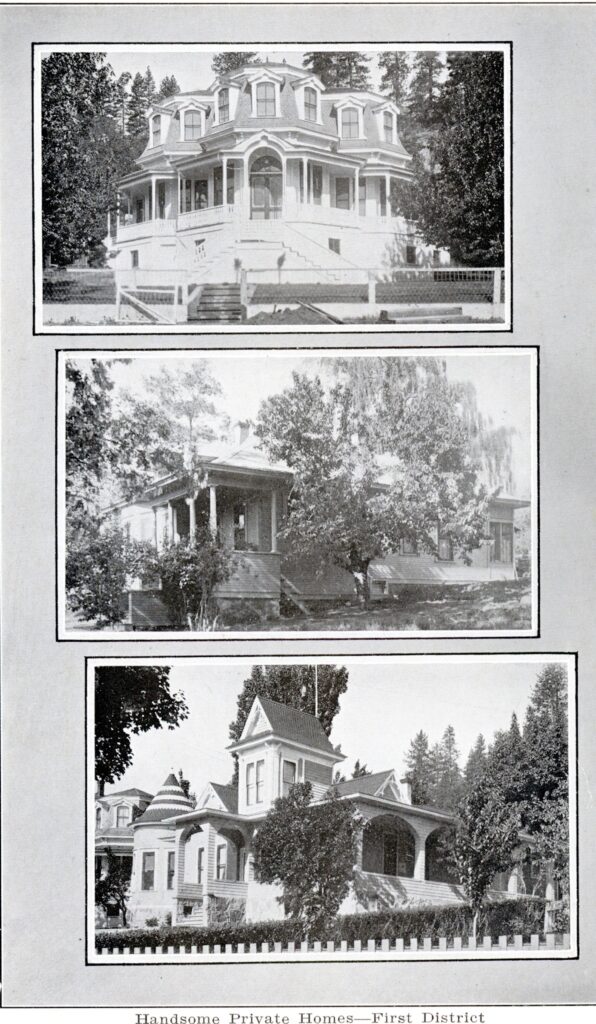
The Southern Pacific Railway in the early 1900s initiated promotion brochures, especially in the areas where it was expanding operations. These glossy booklets were subsided by city and/or county governments. This became the foundation of Sunset Magazine.
The above illustration appeared in 1908 edition of Lassen County that was published by Sunset. The three houses depicted still are in existence, though they have been remodeled through years. The new owner of the house depicted at the bottom relies on the internet search, like Zillow to find the history of the house. They inquired if the information was correct. Consider the source. This year I experienced way too many internet sleuths, who wanted me to their verify findings, especially the ones who paid search fee and then expect me to do such work for free. I am not going down those rabbit holes. A final note as to my rant of the North Pine Street house. The house appeared in a 1878 photograph at an auction site, but it was too pricey for my budget.
Christmas, 1917, in the Swain home, better known today as the Susanville Elks Lodge. Pictured are the Swain Children: Fitzhugh, Nellie, Blanche and Frances. Courtesy of Frances Swain
It is a rarity, or at unless its just me, to locate early day Christmas photographs. In 1906, J. Henry Swain who had a desert homestead at Dry Valley, located between Grasshopper and the Madeline Plains, moved to Susanville and opened at Swain’s Bar. He was astonished that the saloon business was of lucrative. His wife, Annie, was staunch tee-totolar and was not thrilled about her husband’s new occupation. On the other, she did admit about a trade off, since she could indulge in the finer things life. In 1908, Swains purchased dilapidated building at the west end of Main Street. Once renovation process was complete, it was an envy to many. In 1922, the widow Annie Swain sold to the Antlers Club, precursor to the Elks.
Note: The Monticola Club is very special to me. One of their earliest endeavors was the formation of the Lassen County Free Library. That library system opened a whole new world when I was growing up, and provided a foundation for my early historical research. Tim
Clean out your closets of extra unused shoes to make room for new shoes/slippers/boots that may be coming your way for Christmas. Monticola Club’s Fundraiser Project is nearing the end and more shoes are needed. In addition to the drop-off locations listed below, there is a large box at Susanville Supermarket.
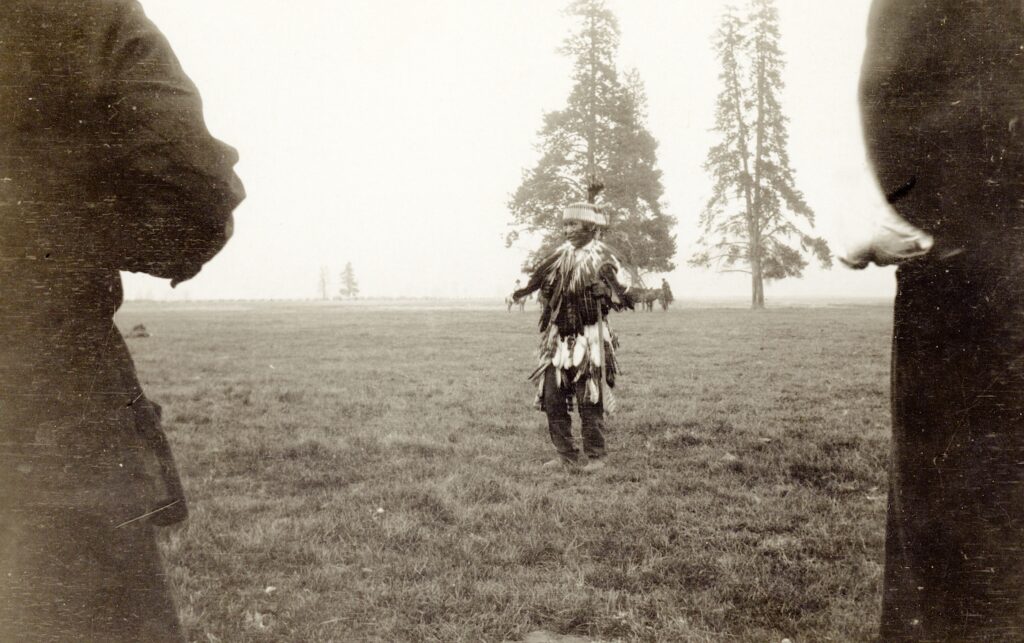
Big Meadows Mountain Maidu dancer, 1911-Courtesy of Hazel Moller
My holiday activity will be spent retrieving old research files from some cd’s. A generous friend provided me with a USB SuperDrive to do the task. I thought I had printed out a hard copy of my notes on the local Native American community dating back to record searches of late 1800s from my older computer files. There are gaps in that print out, so hopefully the full file will appear on the cd. After all I have gone through several computers, and the older ones, there had been problems of file transfers. Who knows what gems I might uncover.