Category Archives: History

Before Amedee There Was Liegan

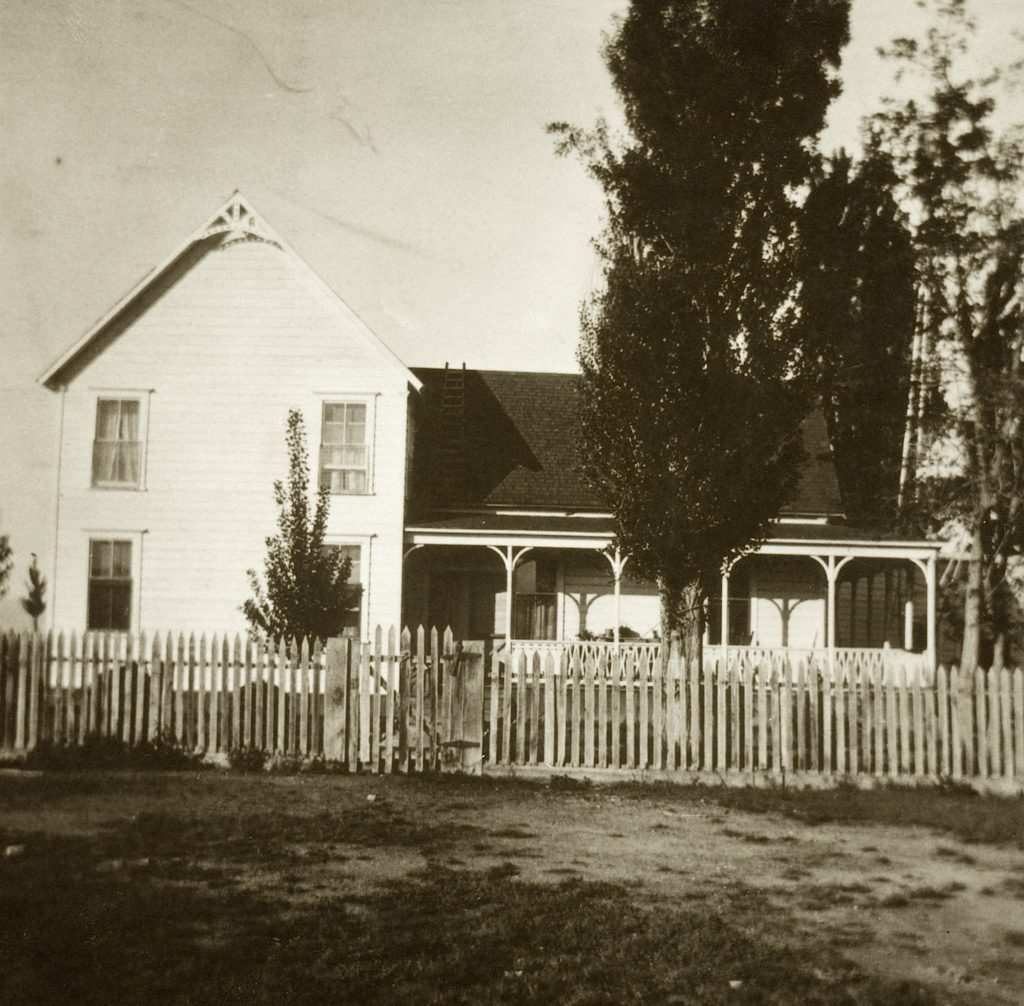
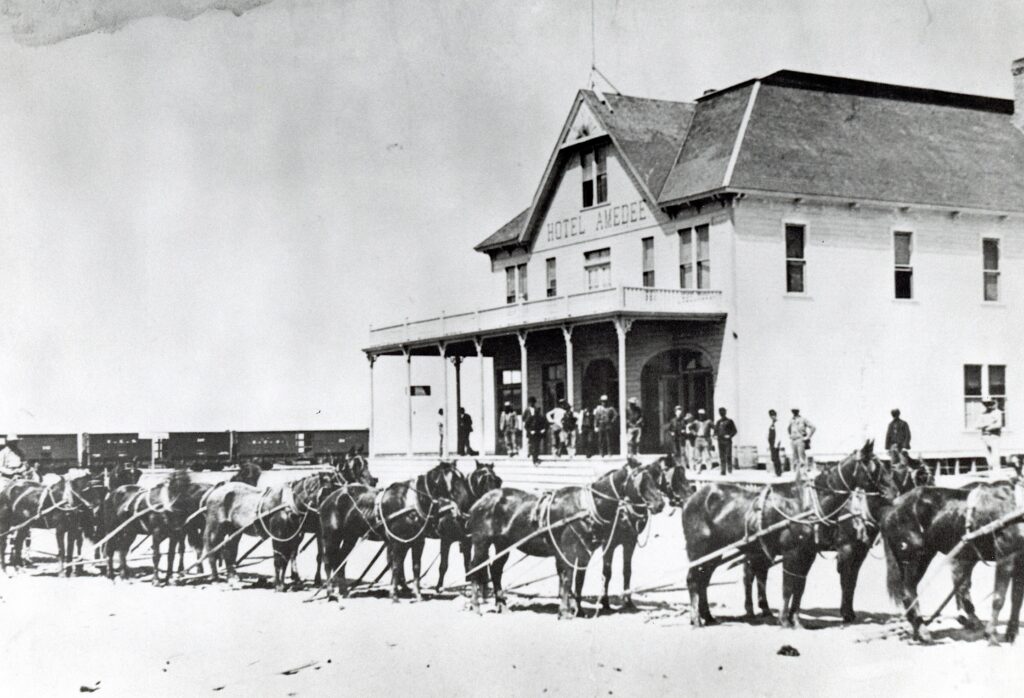
Amedee, 1890s—Grant & Lena Trumbull

In June 1891, E.W. Hayden, editor and publisher of Susanville’s Lassen Advocate made a trip to Amedee, the Nevada-California-Oregon  Railway’s (NCO) new terminus. In his mind, he was prepared to see another wide spot in the road like its predecessor, Liegan, located some ten miles to the south. Liegan was the terminus of the NCO from September 1888 to November1890. It was a remote, desolate location. There is scant documentation about this station. Hayden, before writing about the bustling activity at Amedee, provided this rare glimpse about Liegan.

“Then one is surprised, for most of us expected to see Liegan repeated, that is, a small freight house, a bale of hay, a sack of grain, a post, perhaps several posts to hitch horses to, three of four barrels of water hauled out from Doyle for drinking and domestic uses and a place in which to take meals, and which in the matter construction and value was not up to the average Honey Lake henhouse.

”This about what was comprised in Liegan, the first. Later it was much improved, but Amedee at first sight would cause ‘Old Josh Whitcomb’ to say ‘Well I be goll durned.’”

Then there a published story in which four men from Surprise Valley took the stage to Liegan bound for Reno. After nearly a week being stranded there , the men started out on foot to follow the railroad tracks to Reno. As the story goes “A week at Liegan is enough to drive almost anyone wild.”

Subscribe


A 1924 Recap of Events

Susanville Main Street, 1924.

Something a bit different but some highlights of happenings a 100 years ago during 1924.

January– After two years since the Susanville City Hall was destroyed by fire, the City of Susanville has a new quasi city/fire hall. The centennial in 2024 went ignored!

February – Great excitement was on the horizon with interested homesteaders flocking to area with the completion of Leon Bly’s Eagle Lake tunnel to supply water for irrigation to the Honey Lake Valley for reclamation.

March – Residents rejoiced when on Tuesday evening March 26, it began to snow. Up to 18 inches was recorded on Fredonyer Summit, but by Wednesday afternoon it had all melted. It had been a dry winter. It would followed by a dry summer. The next recorded precipitation would not occur until September 15.

April – News was received that the petiton for an Elks Lodge in Susanville was approved.

Courtesy of Alyce Bangham

May – The golfing craze continues. The Susanville Country Club organized and later in the year they negotiated the purchase of the former Wingfield Ranch south of Susanville.

June – A forest fire broke out at Chester Flat, the first fire of the season. It was a harbinger of things to come as it would be the worst fire season to date in California history.

July – Work commenced on the first children’s playground and park in Susanville on the north side of Fruit Growers’ Story Club and adjacent to Riverside Drive.

August – It was announced that the Nataqua Parlor of Native Daughters will sponsor an Old Timers Day in conjunction with the Lassen County Fair. It was deemed those to be eligible to have settled here by 1866 and a luncheon held in their honor.

Hat Creek No. 1
Hat Creek Powerhouse No. 1, 1921. Courtesy of Lola L. Tanner

September – Work commenced on Red River Lumber Company’s Hat Creek power line.

October – Janesville has a bear problem. A. Degiovanni and Boyd Davis had trapped three cinnamon bears, the largest weighing 300 pounds. The bears had been feasting on the local apple orchards.

November – Lassen Electric Company made arrangements with Fruit Growers and Lassen Lumber & Box to provide it with back up power when needed.

December – For the first time ever the employees of the Susanville Post Office were given Christmas Day off.

Tim


2024 Most Searched Post

Mapes Ranch, circa 1900–Madelyn Mapes Dahlstrom

This was a quite surprise, the feature of Interesting Saga of the Mapes Ranch that was published in 2022 was the most searched of all articles for 2024.

Its been nearly a half a century since the Mapes family sold their well known ranch located east of Litchfield to the Five Dot Land & Cattle Company. Like the Dodge Ranch on the Madeline Plains, the Mapes Ranch still retains its name, even though no longer owed by the family.

Mapes Ranch
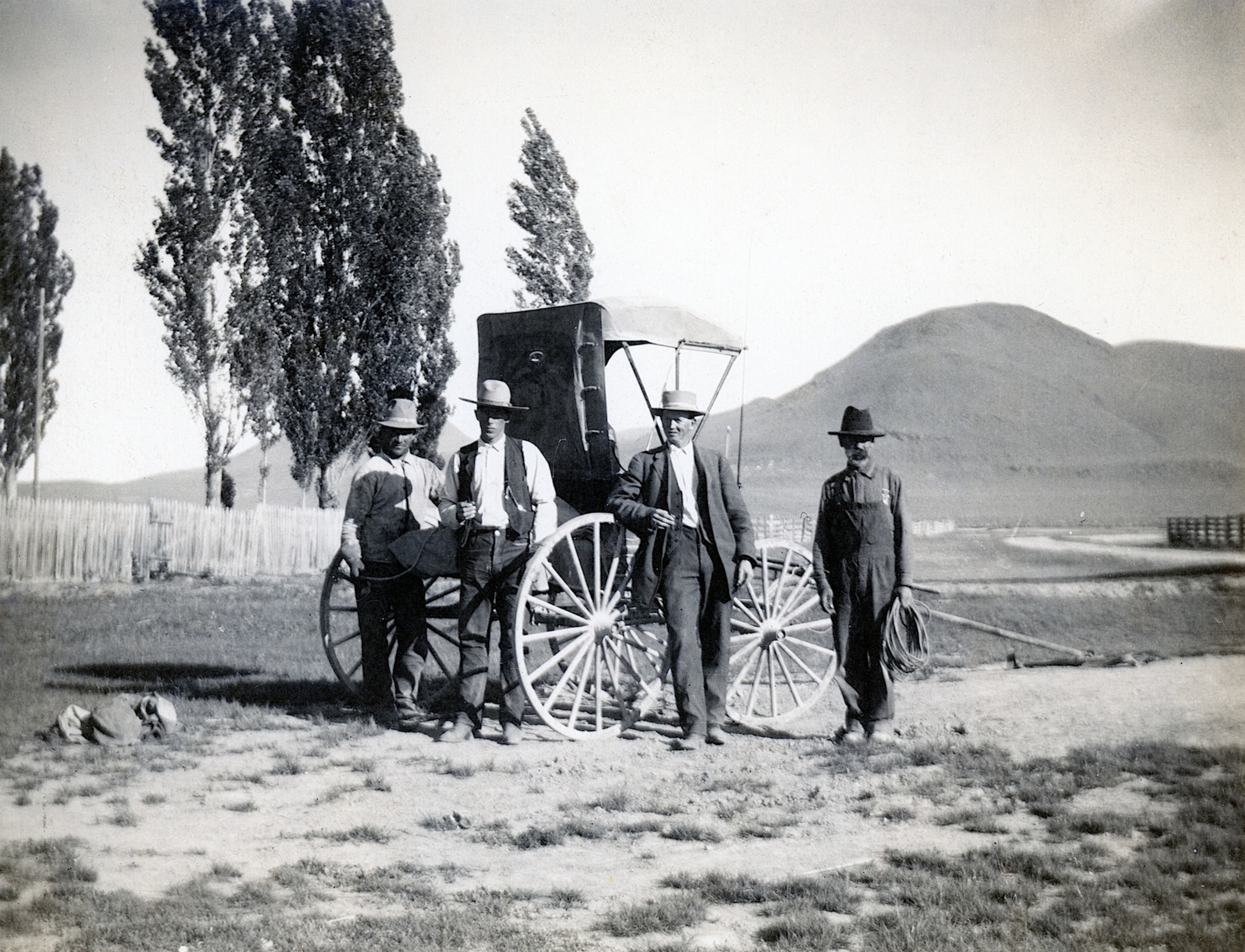
Mapes Ranch, with Shaffer Mountain in the background, 1906. Left to Right: James Riley, John Conlan, James Mapes and Charlie the blacksmith. Courtesy of Madelyn Mapes Dahlstrom

The ranch’s early history is interesting, once owned by the Shaffer Brothers in the 1860s—hence the origin of the name Shaffer Mountain. For a time it was owned by John D. Kelley and Hiram Winchell.  Dissolving their partnership was a bitter dispute that required litigation in the Lassen County Superior Court. On June 30, 1885 the ranch was sold at public auction. It was purchased by Sierra Valley rancher, George W.  Mapes for$11,000. The sale included all the livestock and farming equipment.

George hired his brother, Ira C. Mapes to manage the ranch. George was involved in a variety. of affairs including the Washoe County Bank. When the 1893 financial crisis hit, to protect his interest he transferred the Honey Lake property to Ira. It would take years for the economy to recover and in the meantime Ira passed away. Ira’s family refused to deed back the ranch to George. End of story.

Tim

Those Monickers Explained

Col. Ben H. Leavitt-Betty Bary Deal

It was some what prevalent in the late 1800s, that titles were bestowed to individuals–after all San Francisco had Emperor Norton.

Take case that Susanville’s namesake, Susan Roop Arnold (1841-1921). She came there in 1862, and in 1864 she married Alex Arnold. While she kept a low profile,  it was her benevolence to others of the community that she was affectionally known as “Aunt Susie.” At Janesville, there was “Uncle Johnny” Baxter (1812-1880), whom Baxter Creek is named for and shared same traits of Susan Arnold.

The title Colonel is a perplexing one. In 1864, Benjamin Leavitt (1835-1915) who settled in the Honey Lake Valley. Through years someone applied Colonel to  his name and it stuck. Captain William Weatherlow, (1814-1864 ) a self-proclaimed Indian fighter, was not affiliated any military institution. The same with Captain C.A. Merrill (1838-1901) who spent his life attempting to tap Eagle Lake  as a supply of irrigation a reclamation project he had dreamed. Oddly enough yours truly has been called Captain and even Doctor, though the latter appellation is an amusing tale.

Tim

Old Fashioned Rabbit Drives

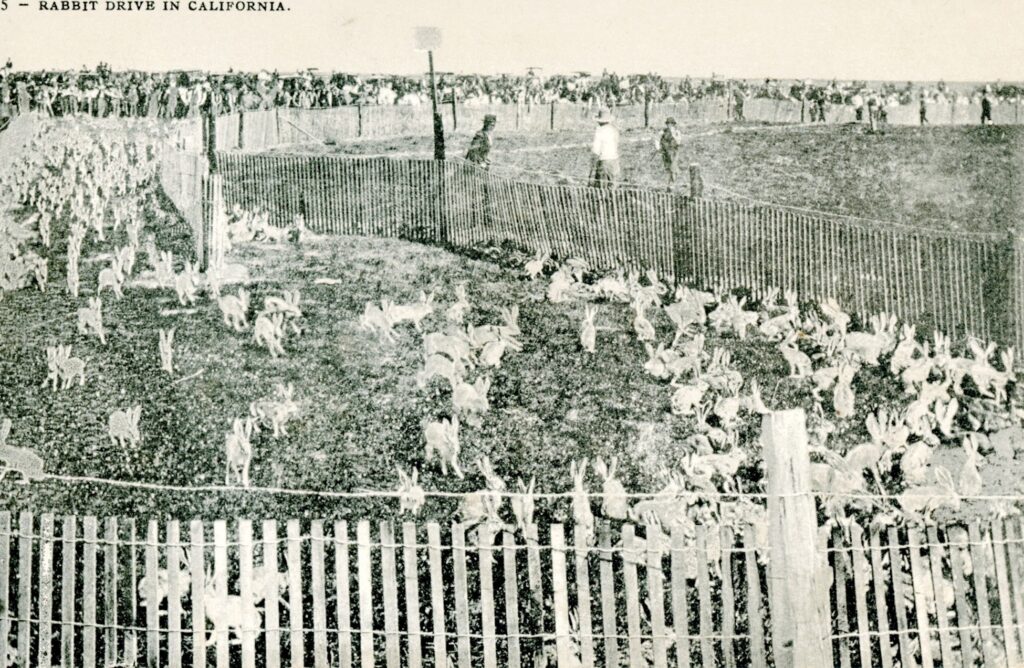
! 1908 California Rabbit Drive postcard-David B. Martin

While I have addressed this topic before, a reader sent the above 1908 postcard. He was wondering if this ws how the Russian immigrants of the Madeline Plains conducted their rabbit drives.  There were several methods, many with common theme or driving the rabbits into a fence enclosure. The rabbits were either clubbed or shot to death.

In 1920, the residents of the Madeline Plains requested aid from their Congressman John E. Raker, to help them with the jack rabbit problem. A study sent to Raker reported: “As soon as the crops are up and making good progress the rabbits begin work on them. The heaviest damage is done in August. One rancher reported losing 100 acres of wheat last summer. They take this crop in preference to oats and rye. It was reported that 70 tons of rabbit meat [to make tamales] had been shipped to the San Francisco market. It appears that the animals cannot be killed fast enough in this region to furnish relief to the ranches.”

A coyote scalp receipt

One of the reasons for the proliferation of jack rabbits was that in 1891 California passed a bounty on coyotes at five dollars each. Thus, one of the rabbits predators was eliminated.

On March 10, 1932 a rabbit drive was held at Milford and an observer wrote: “Blooey! and another jack rabbit bit the dust! In fact 1200 rabbits pulled this little trick as some 30 marksmen armed with shotguns blazed away continuously all day in a big rabbit drive. The drive was one of the most successful ever held in the valley. The drive started at the Harwood ranch and covered about a two-mile area. With the termination of the drive, a lunch was served to the hunters by various ladies of the community.

“Smoking gun barrels and black and blue arms were quite apparent throughout the day. Those participating were thoroughly pleased with the results and voted the occasion as most enjoyable form of hunter’s sport.”

Support


Susanville – Smith Hotel

Smith Hotel, circa 1880. Courtesy of Verna M. Wood

The Smith Hotel, I have found intriguing in the sense of the lack of records. Yet, it was one of the more substantial buildings in Susanville during its day.

The founder, Jacob Smith, a German immigrant whose true spelling of his last name was Schmitt, arrived in Susanville, in the fall of 1864.  Records about his early activities conflict.  According to Fairfield’s history, Smith operated a brewery from 1865 to 1872.  Yet in December 1868 the Lassen Advocate reported that Smith and Doctor R.F. Moody were partners in a drug store. Moody filled the prescriptions and Smith sold them. The Advocate in April 1869 reported that Smith sold his drug store to Dr. Z.N. Spalding and had returned to brewing beer.

In the summer of 1877, Smith hired Henry Tunison to construct his “fire-proof” three-story hotel on the south side of the 800 block of Susanville’s Main Street.  However, only the first floor was made of stone. It was never revealed how much structure cost, but in October 1877 Tunison filed Mechanics Lien for $628.25 against Smith for the construction work.

So much of fire-proof,  as it was destroyed in the big fire of 1882. Some records state that Smith, along with his wife, Sophia, remained in the hotel business and others he continued as a brewer. Dick Harrison, a great-grandson was under the impression that Sophia operated a boarding house, but not a full-fledged hotel.

Tim


A Sad Christmas Day

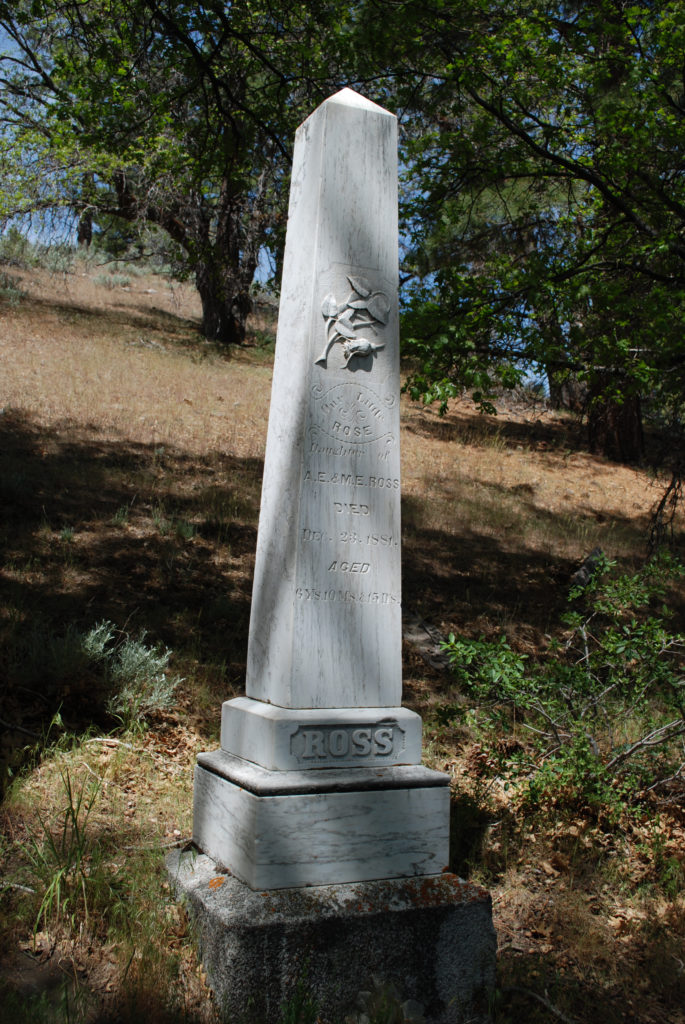
Rosie Ross’ grave, 2008. Courtesy of Lawrence Meeker

For many Christmas a special time year to spread happiness and joy. Yet, for some the Christmas cheer is not. Usually, but not always, a tragic event has happened, and a family member passed away during the holidays.

This happened to Long Valley residents. Albert and Mary Ross. On December 23, 1881, they lost six year old daughter, Rosie Arrowsmith Ross. Her death announcement included the following statement: “Rosie the bright flower of the flock is gone. She died of the dread disease typhoid pneumonia. She was buried near her home on Christmas day, in a shady nook of oak trees overlooking the valley, where a mother’s hand will care for it. Many kind friends assisted and attended the funeral.”

It should be noted that Ross Ranch would later became known Constantia.

Tim

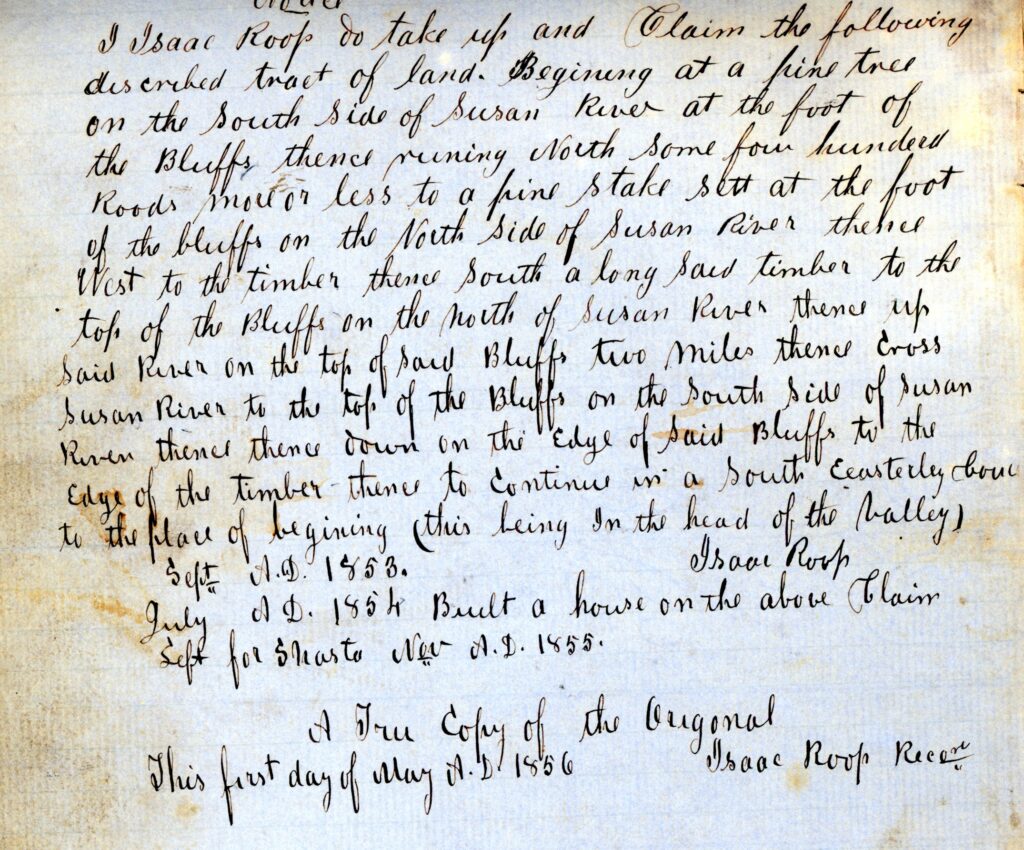
Roop’s Land Register

Isaac Roop’s land claim, the first entry in the register.

It is nearing the end of year, so I can wrap up dumpster diving tales. This is a peculiar tale. In the late 1970s and early 1980s the Lassen County Clerk’s Office was discarding historic records left and right. While I expressed my displeasure to the powers to be, it was a fruitless effort.  Instead of being confrontal, I was passive. It worked wonders. By the early 1980s, that office have discarded over 70% of its archives dating back to 1864, but I was able to salvage most of them.

In 1912, Susan Roop Arnold donated her father’s land register to the County Clerk for safe keeping. Isaac Roop’s Land Register is the oldest document of the area, where individual in 1855 began to file their land claim. The book had been tucked away in a drawer and ignored. In fact, no one knew in the office, of its historical significance. For over forty years I have been the custodian this register. Ultimately, much of my archives, this included, its future home will be lodged at Special Collections, University of Nevada, Reno, there being no safe and secure facility in Susanville.

Tim


Buggytown Revisited

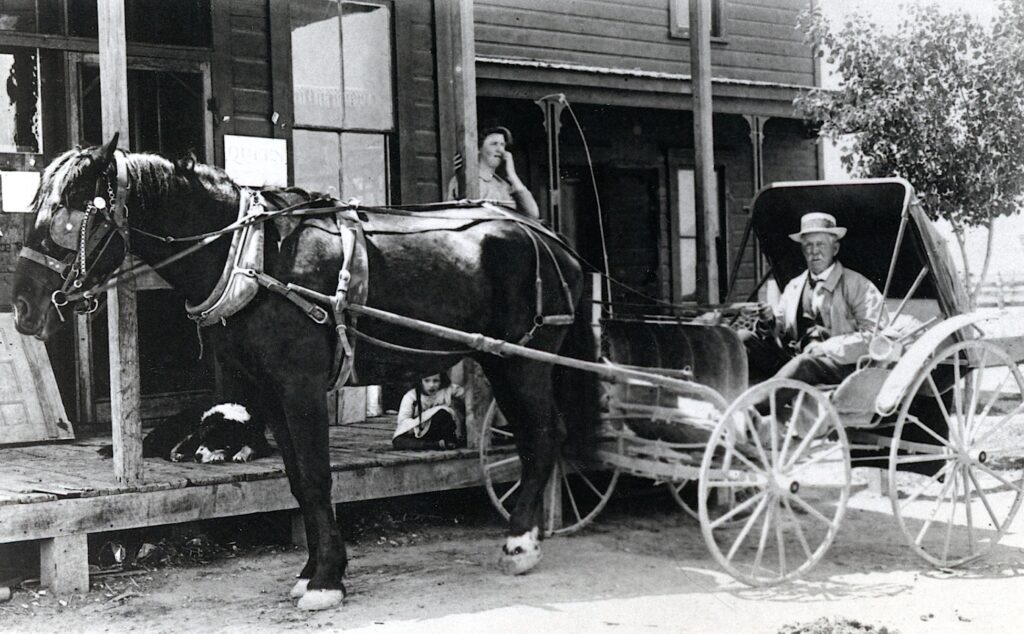
Ben Leavitt in his buggy in front Vic Perry’s store Standish, circa 1908. Leavitt was one of the first settlers Buggytown–Betty Barry Deal

Note: This post originally appeared 22 February 2023. At that I time I used the 1889 photograph of the Buggytown Ditch, because I misfiled the above buggy photograph.

No doubt you never heard of it. It was not named for pesky insects or pushy people either. An irrigation ditch was named as such, too. Buggytown, in its unique way was not even a town, but more like a sprawling affluent neighborhood in the late 1800s, located to the west of Leavitt Lake.It was so named as one of the first settlers possessed a buggy when such luxuries were rare on the frontier. It would later become known as Clinton, which consisted of a store, post office and the Riverside School. In 1973, it was transformed when the first phase of the Leavitt Lake Subdivision began.

Buggytown Ditch
Survey crew to enlarge the Buggytown ditch near Johnstonville, 1889. Courtesy of Betty Barry Deal

Tim

The Proposed All Weather Highway

The Association’s letterhead.

In essence this is one of those instances where history repeats itself. During the 1850s, Congress passed several bills for a transcontinental railroad and wagon road to connect California to the Union. Numerous routes were surveyed, though most ended at California’s eastern border, with the assumption the State of California would decide the best route. The Honey Lake-Fredonyer-Deer Creek route was deemed one the best, since there was no high elevation summits to cross, thereby reducing  the problems associated with winter, i.e., Donner. In 1859, with the discovery of the Comstock Lode in Nevada was a game changer. Politics and the influence of money the Donner Pass route was selected, a costly one at that.

Fast forward a hundred years later. In June 1956 Congress approved the Federal Highway Act, also known as President Eisenhower’s Interstate and Defense Highways. In 1957, Susanville resident F.W. Loosley saw an opportunity and proposed the Isaac Roop Low Pass All Weather Highway, as a viable alternative to Donner Pass. One of the most obvious was it would reduce construction costs and even more importantly annual maintenance, especially where snow removal was a concern. The proposed Roop Highway would go from Winnemucca, Nevada to Viewland, Lassen County, California via Gerlach. There it would merge initially with U.S. Highway 395 to Johnstonville and then connect with State Highway 36 over Fredonyer to Red Bluff. (This should not be confused with the Winnemucca to the Sea Highway.) It received widespread support in California and Nevada. The wheels of commerce, those along the then Highway 40 put pressure because the proposed interstate would bypass them, and they won.

Never miss a story, click here to subscribe.