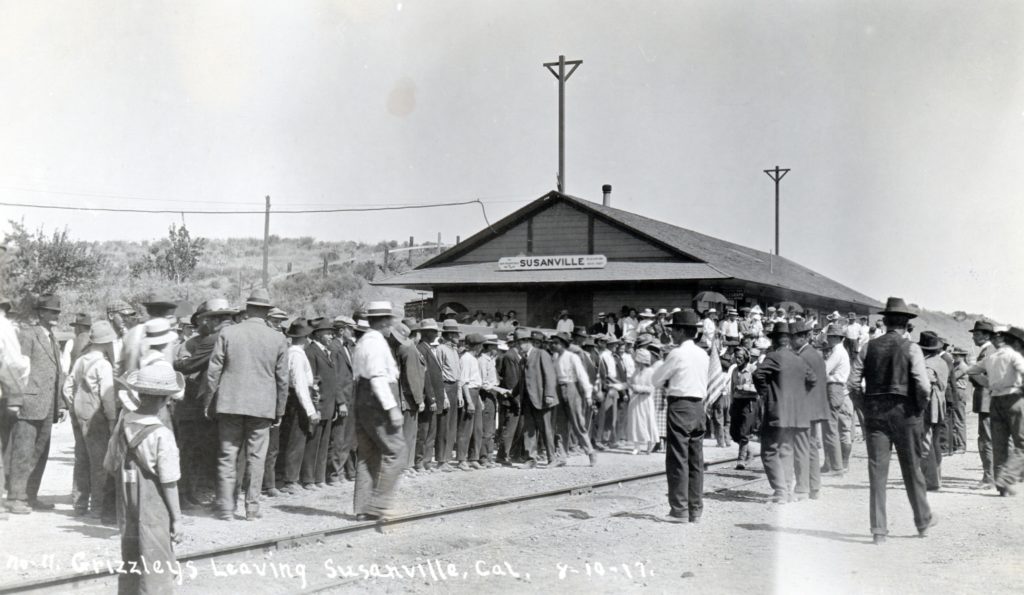
The send off at the Susanville Depot of the first volunteers from Lassen, Modoc and Plumas Counties, August 10, 1917.. Courtesy of Lola L. Tanner
This being Veteran’s Day it is only fitting to acknowledge the fallen soldiers of Lassen County from World War I. Initially, a monument was to be placed at Inspiration Point, but that never materialized. In 1922, the highway entrance into Susanville’s west end was constructed, saw the placement of a bronze plaque with the names of Lassen County men who perished in World War I. In 1966, the highway was realigned and the plaque removed. Continue reading A Remembrance→
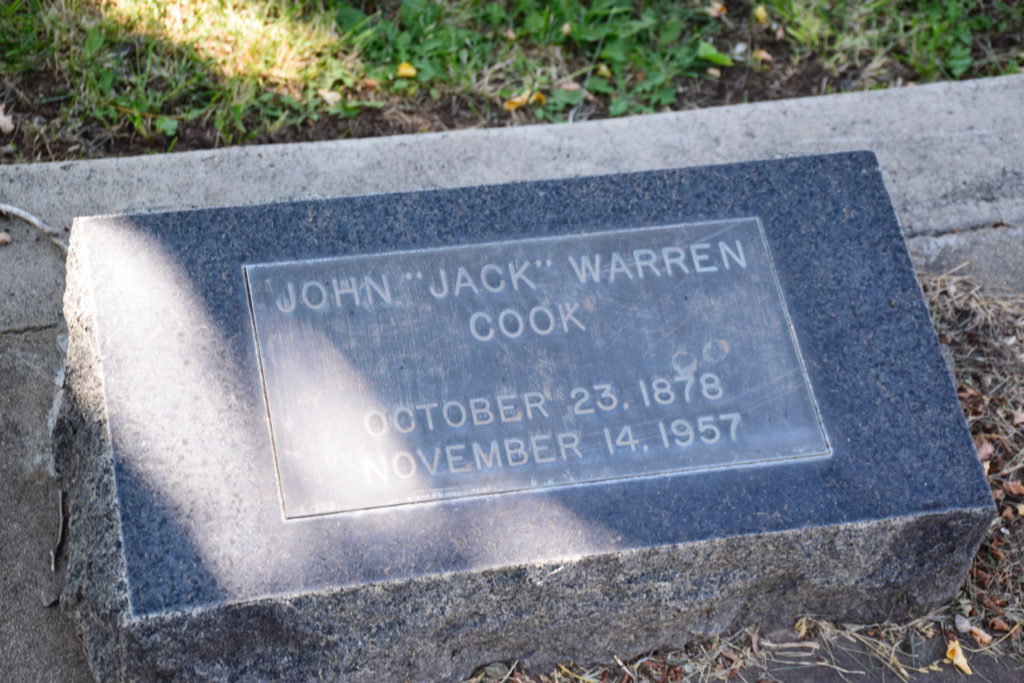
Jack Cook’s grave, Lassen Cemetery, July 29, 2016. Photograph by Annie Henriques Blank
While many of the city street names have links to families from the pioneer era–Alexander, Brashear, Lassen, etc.–that is not the case with Cook Street in the Inspiration Point neighborhood. Continue reading Susanville – Cook Street→
The Westwood Grammer and High Schools. Courtesy of Hank Martinez
For nearly twenty years, the Red River Lumber Company’s town of Westwood operated differently than other communities. Even the public Westwood School District was an unusual creature in the beginning. Under normal circumstances a school district would issue bonds to finance school construction. Not so in Westwood. Red River built the schools, and leased them to the Lassen County Superintendent of Schools at a nominal cost. Continue reading Westwood’s First High School→
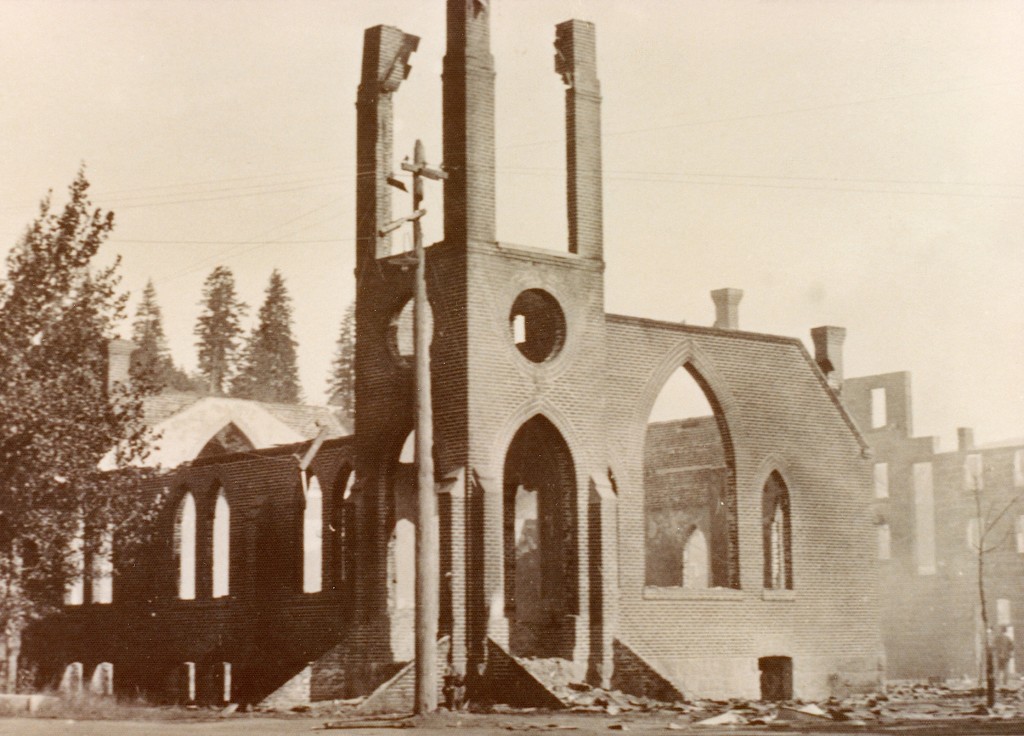
One of the more disastrous fires in Susanville occurred in August 1915, when a large portion of the block containing the Emerson Hotel, the Hyer House Hotel and the Methodist Church were destroyed. The losses were heavy, none of the buildings were fully covered by insurance.
Members of the Methodist Church were determined to rebuild their church that was constructed in 1901. The skeletal walls were deemed fit for re-use. While insurance covered a large percentage of costs to rebuild, more funds were needed. It was decided to hold a Kirmess Festival. Those not familiar with the term, is of Dutch origins. While it has several meanings one is that it involves an outdoor fair/festival for charitable causes, usually affiliated with a church.
In early March 1916, members of the church announced a four day Kirmess festival to raise funds to rebuild their church. The kirmess was scheduled for March 28-31. On the first day, it took on air of Mardi Gras with a parade that included the majority of the community. Entertainment was held every night at the Orpheum Theater. On Thursday night Guy P. Johnson won the election and was crowned Kirmess King. A good time was had by all and nearly $1,000 was raised for the Methodist Church.
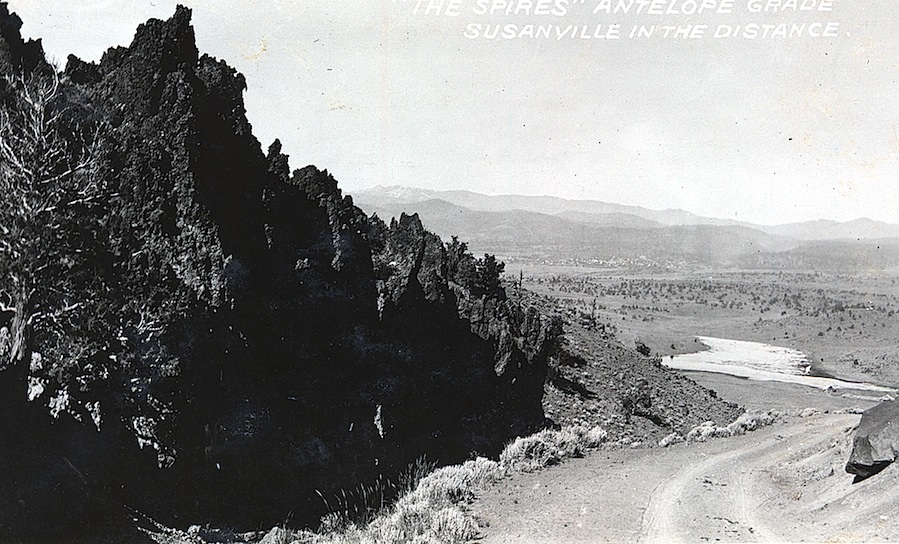
The Spires, Antelope Grade. In 1947 when Highway 139 was constructed it bypassed this feature.
While the bulk of mining was south of Susanville, along Diamond Mountain, there was a bit of mining activity to the town’s north. Some of you may recall the piece about Grabel’s hole that appeared back in September.
For some odd reason, by the 1890s considerable prospecting was done on Antelope Mountain. If one looks closely on Highway 139, one can see small mine tailing piles. At a place call “the spires” there is a small spring. It was a popular rest stop back in the horse and buggy days, to stop and give the horses a rest. Charley Carpenter thought it was the perfect place to call home, and built a small cabin there, while he was search of the next mother lode. He had a nearby counterpart, Sandy Crawford, better known as Round Valley Red, who staked out claims in nearby Round Valley. By the mid-1930s, the two old bachelors, were getting along in age and finally abandoned mining in the area.
Spread the word, and encourage a friend to subscribe.
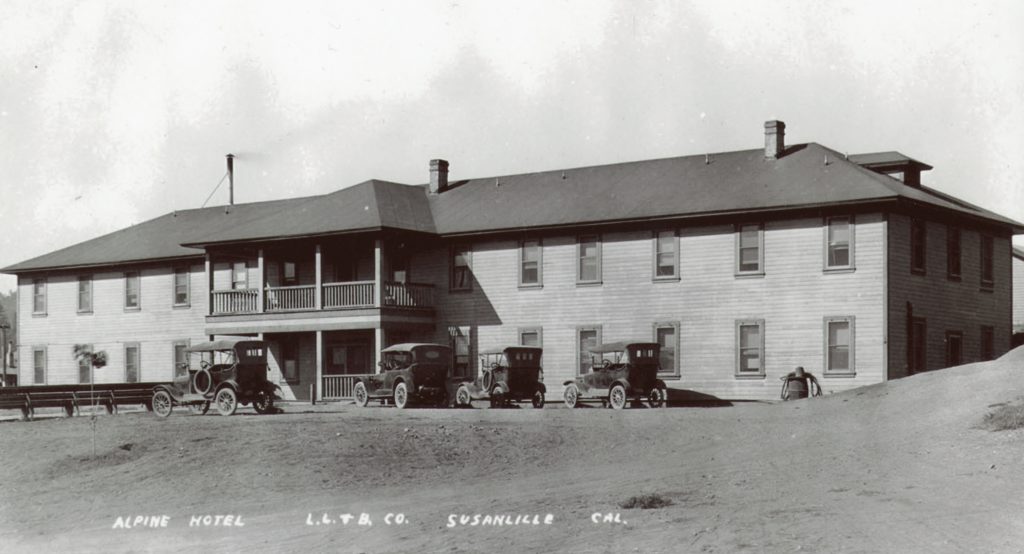
Alpine Hotel, Alexander Avenue, Susanville, which in a sense became the college’s first dormitory.
Once upon a time, Lassen College had a very popular forestry program. This was back in the day, with three large lumber mills in Susanville, another one in Westwood, along with the Lassen National Forest provided a lot of job opportunities. It was because of these factors that there was need for some vocational training in this field, and especially for the community. Continue reading Lassen College’s Forestry Program→
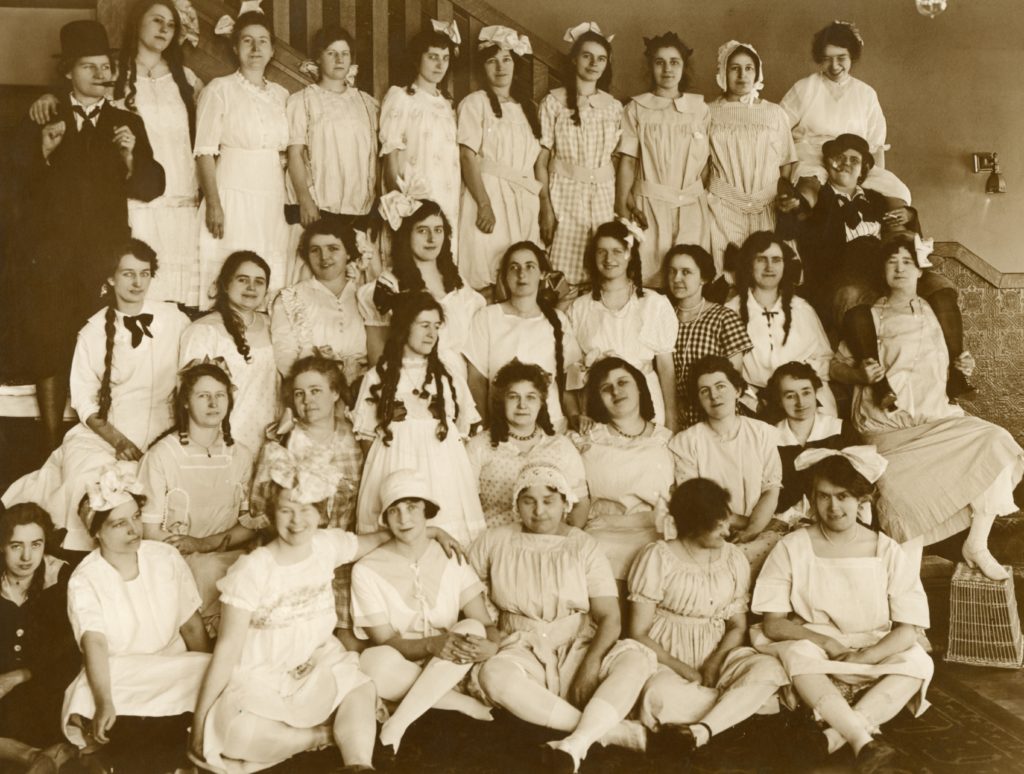
If you recall for Halloween last year, I posted a story about Freak Parties. Before television, folks did a pretty good of entertaining themselves with all kinds of parties. These, of course, were quite the social event. Unfortunately, I do not know what the occasion for above photograph. It was taken at the residence of 700 Mill Street, Susanville. The following is a listing of those identified:
First Row: Unknown, Harriet Bangham, Gladys Emerson, Hazel Doyle, Unknown, Unknown and Unknown.
Second Row: Unknown, Anna Sharp, Eleanor Byrant, Lillian True Bangham, Sadie Jacobs, Unknown, Mrs. Church.
Third Row: Grace Bridges, Lucille Pierce Nash Mathews, Dudie Ramsey, Flora Neuhaus, Marie Emerson Hallowell, Unknown, Unknown, Unknown, Fannie Winchester.
Back in 2002, I received a request from the Lassen County Administrative Office seeking a particular historic photograph. I submitted the above, and it was what they wanted. The scanned image was widely distributed. From that brought about my initial steps of moving information online.
Fast forward to September 2, 2015 during my first visit to Reno Orthopedic to have the staples removed from my hip surgery. The various rooms and hallways are all adorned with historic photographs. In the room that I was in, had the same above picture. It is the only other time I had seen it. The only thing I know about it, it was in one of my grandmother’s photograph albums.
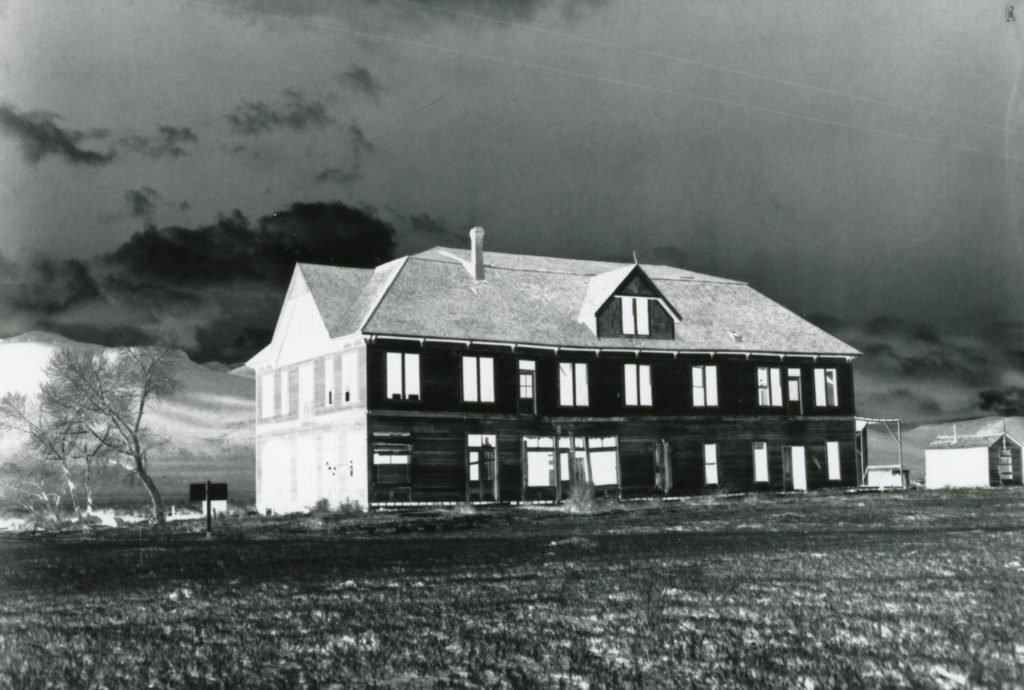
Longville Hotel, circa 1915. Courtesy of Plumas County Museum
Humbug Valley is located a bit south and west of Lake Almanor. It is an interesting locale, and worth the trip if you have never been there.
In 1855, B.K. Ervine and William B. Long used the valley for stock-range. Two years later, gold was discovered and set off a flurry of mining operations. Long and his father-in-law, Allen Wood, built a hotel there, and a sawmill mill, too, and thus the town of Longville came into existence. In 1862, Long came to Susanville and purchased William Weatherlow’s ranch, known today as Susanville Ranch Park.
Longville continued to flourish, and then came along World War I and everything changed. Like so many places Longville would slowly become de-populated and residents never returned after the War. The Longville Post Office that had been in operation since 1861, closed in 1918.