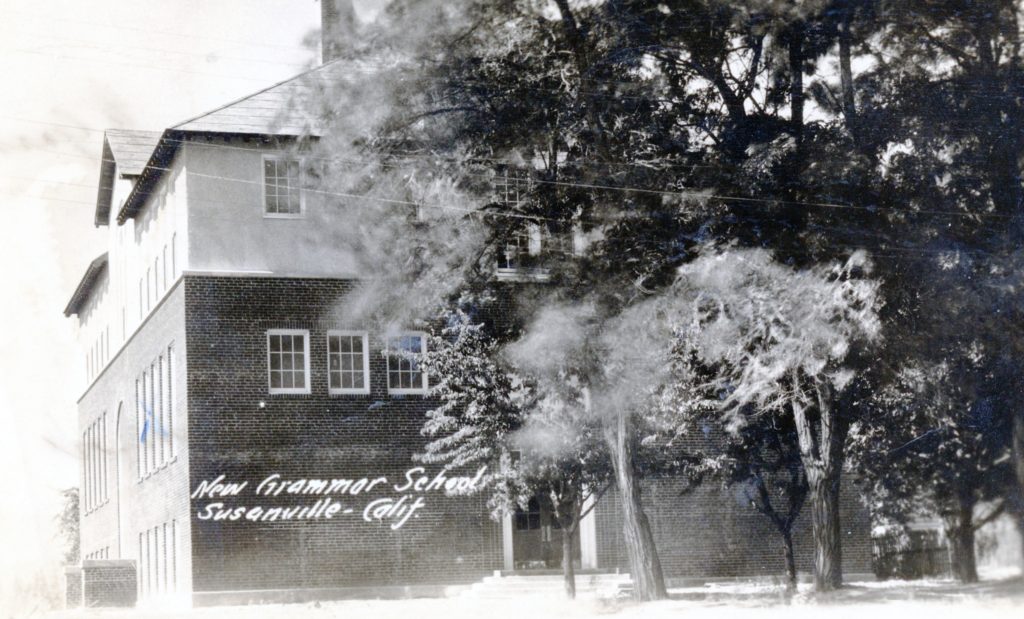
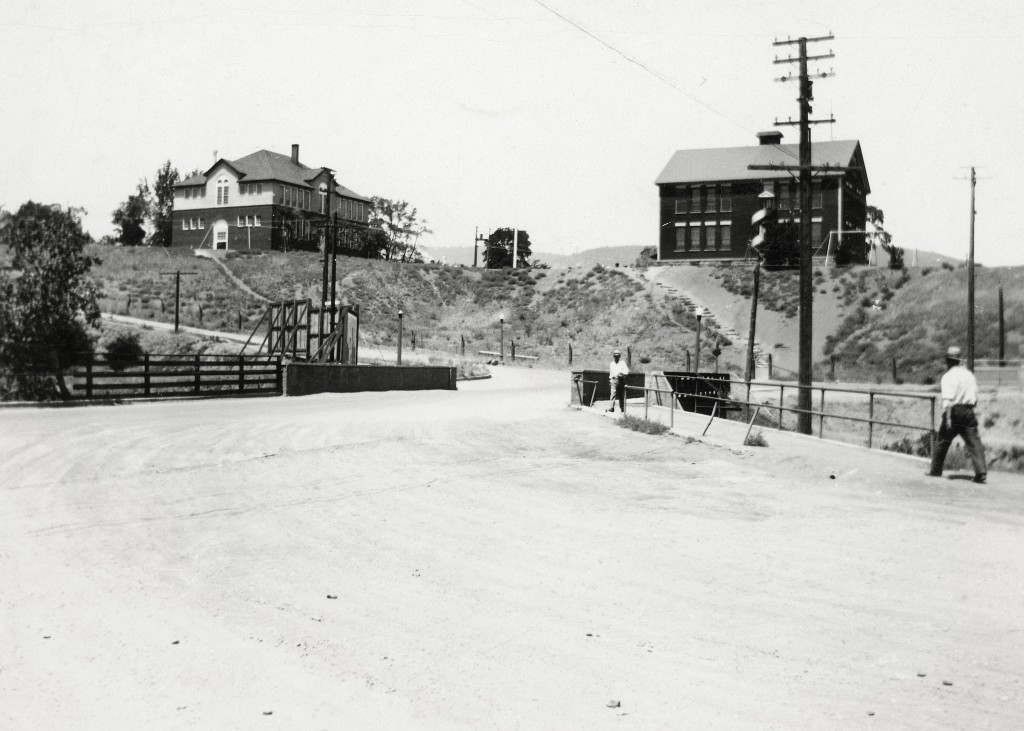
Most people assume that McKinley School has always been located on Fourth Street, but that was not the case. First a little background history. By 1920 the growth created by the arrival of the railroad and subsequent establishment of the lumber mills was more than Susanville’s one school could handle. That year the voters in the school district were asked to pass an $83,000 bond measure to build a second school. The school district trustees were stymied on the issue of where to build the second school. It was finally decided to build next to the current school. The district bought the Nathan residence on the corner of Cottage and Gay Streets and the house was moved across the street, which is now Elise’s Barbershop. In 1947, the Susanville Grammar now known as Washington was condemned and officials thought it was a matter of time McKinley would suffer the same fate. In 1950 a new McKinley school was built at the Fourth Street location.
McKinley School (left) and Washington School (right) as seen from Richmond Road, 1935.
On January 5, 2005, Susanville’s uptown district lost one of its iconic buildings from fire. For seasoned residents, they will know the place as Spalding Drug—where many recall having their first “cherry coke” at the store’s soda fountain. What many people do not know, is that six months prior to the fire, I resided on the second floor of that building. Had I not moved, a large portion of my historical photographic archives would have been destroyed among other priceless documents. Among things in the basement, not being able to retrieve anything is my cross country skis for a future archaeologist to discover.
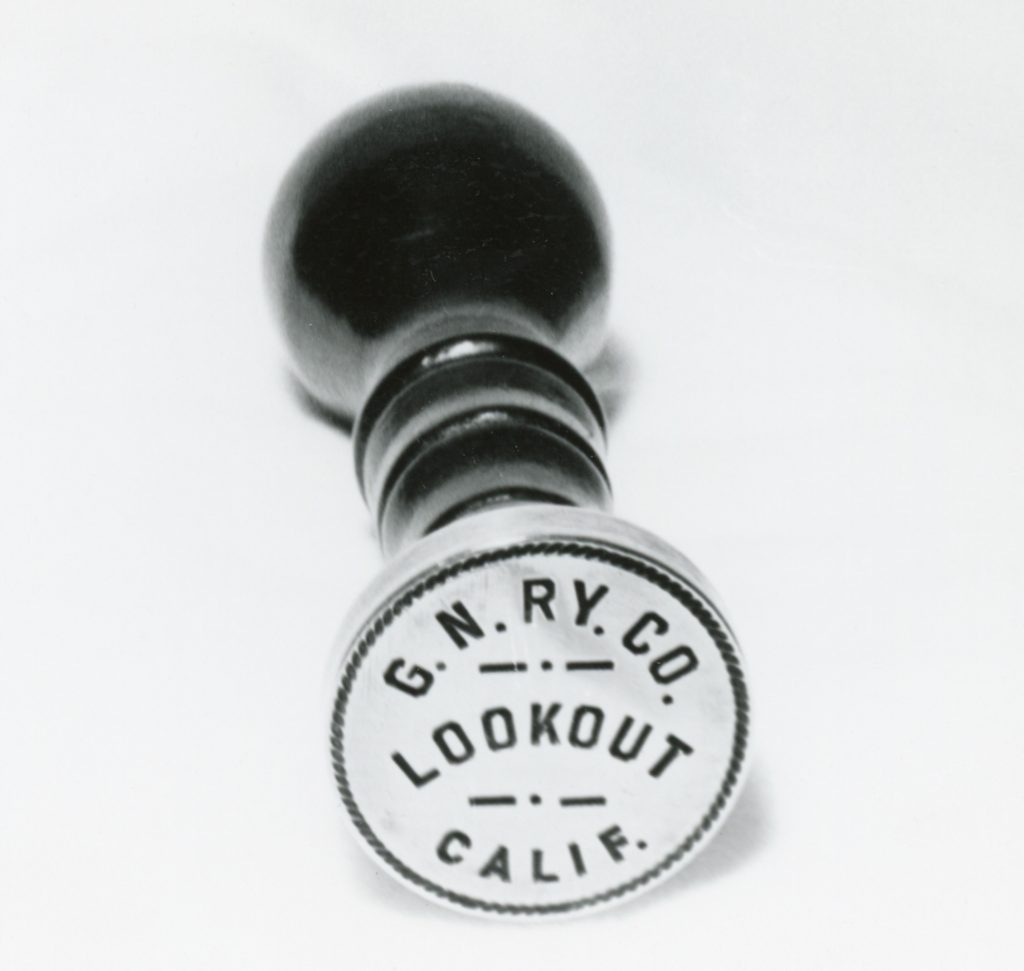
Lookout Junction, was located in southwestern Modoc County that connected the McCloud River Railroad to the Great Northern Railroad. The station opened in November, 1931 which handled freight. B.J. Neal served as the only agent from 1931 to 1959. I recommend Jeff Moore’s book “The McCloud River Railroads,” as it is a wealth information and there is a great deal of material about the Red River Lumber Company.
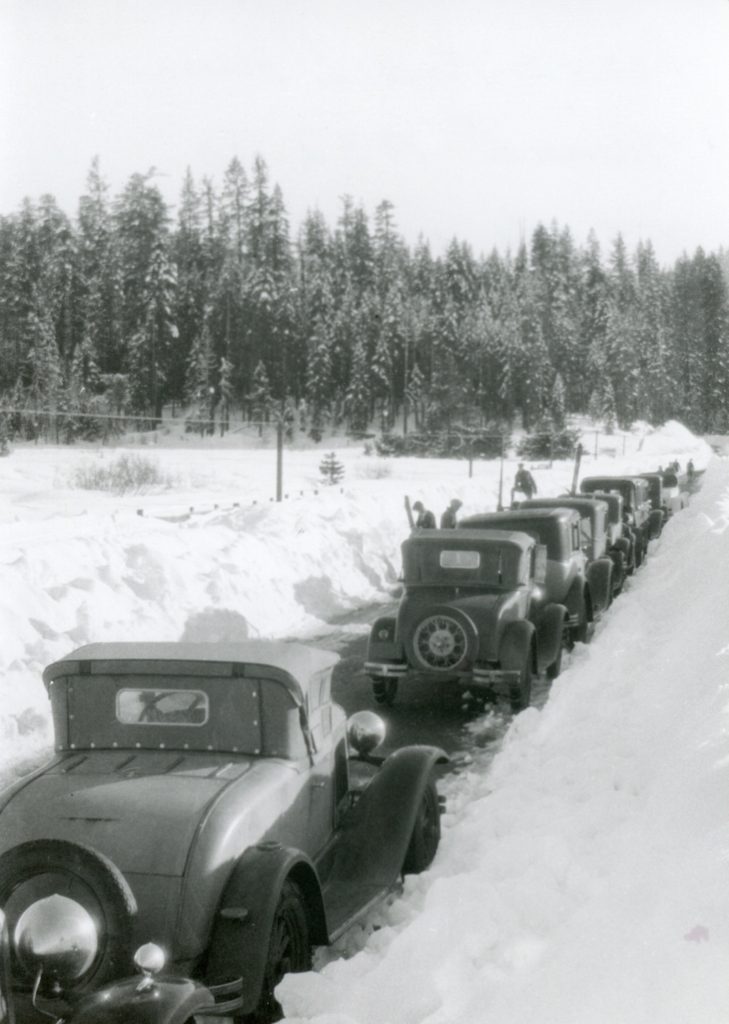
First of all, I have not a clue about the background of this photograph. It was taken by my grandmother, Margaret A. Purdy. All she wrote was “On our way to Mineral to check out the snow, 1932.” Whatever the case may be, wishing everyone a Happy New Year, and that you experience some interesting journeys during 2020. Lest, we forget as an extra bonus, it is a Leap Year.
In 1985, the Neversweat Chapter #1863, E Clampus Vitus restored the Viewland monument.
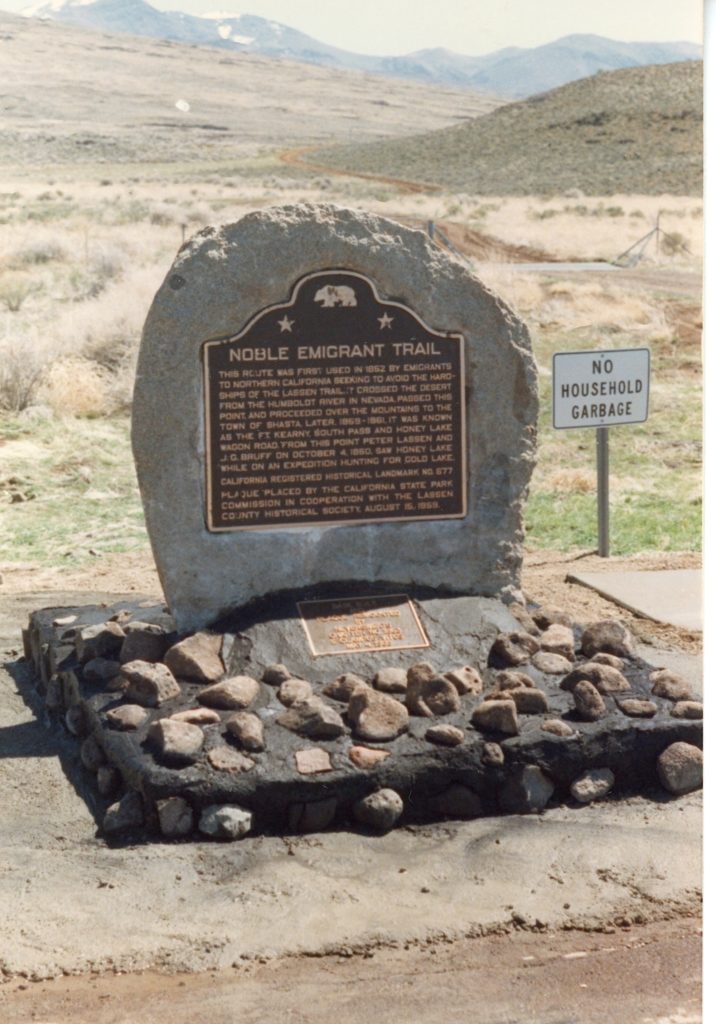
The Nobles Trail gained attention as part of the possible route of the nation’s first transcontinental road to California. (This not is confused with the transcontinental railroad; think of it as an early day highway.) Shasta County was eager to promote the Nobles route. In fact, in December 1853, Major P.B. Reading was willing to take a group of surveyors in the middle of the winter to survey the road. In 1855, R.T. Sprague of Shasta estimated that it would cost $10,000 to develop the Nobles Trail into a first-class wagon road. Appropriations for this and other roads were submitted to the California Legislature, but languished due to that body’s inaction.
During the late 1850s, various roads were established in Northern California and traffic diminished on the western segment of the trail between Susanville and Manzanita Lake. For reasons unknown, in the fall of 1859 the trail had an unusual spike in usage. In a two-week period, 375 individuals, in sixty-seven wagons, along with about 100,000 head of livestock had crossed the plains and used the Nobles route into Shasta County. The eastern segment from Susanville through Nevada faired much better with heavy use during the late 1850s and most of the 1860s due to the mining activity of southern Idaho and northern Nevada. This traffic ceased in 1869 with the completion of the Central Pacific Railroad and many segments of the Nobles Trail were abandoned. In 1975 the Nobles Trail was listed on the National Register of Historic Places.
This sign was located for many years in Lassen Volcanic National Park.
Those who made the overland journey for the California gold rush were faced with many obstacles. One of which was that there were no direct route to the gold fields of Northern California. There was the short-lived Lassen Trail, which had many drawbacks and was quickly abandoned.
In the summer of 1850 William H. Nobles arrived on the scene with the quest to locate a route to California’s northern sector. In the spring of 1851, Peter Lassen guided Nobles to the Honey Lake Valley. Nobles and Lassen parted company, Nobles then made a thorough evaluation of the country. He found a direct route from Lassen’s Meadows (known today as Rye Patch Reservoir, Nevada) that went in a westerly direction across the Black Rock and Smoke Creek deserts to Honey Lake Valley. From there the course went in a northwestern direction to Pine Creek Valley, making a turn to the west to Butte Lake. Leaving Butte Lake, the trail went along the base of Cinder Cone toward the northern base of Lassen Peak and Manzanita Lake. From that point it continued its westward journey into the Sacramento Valley, to its final destination, the mining town of Shasta. It is interesting to note that Highway 44 parallels the western portion of the Nobles Trail.
In February 1852, Nobles led a party that included Lassen over the route. Nobles hoped they would join him in forming a partnership to develop the new route, but they were not interested. On April 21, 1852, Nobles addressed the citizens of Shasta, informing them that he had indeed discovered a direct route across the mountains. This, he said, would be a great benefit to Shasta and the northern mining communities. Nobles requested a $2,000 guide fee. If the Shasta business community found the route unacceptable, he would decline his commission. On May 3, 1852, Nobles and a group of nine men left Shasta to travel the route. When they reached the Humboldt River at Lassen’s Meadows, the Shasta delegation declared that the new route had more than met their expectations. Nobles received his fee and parted their company.
Never miss a story, click here to subscribe and to read about tomorrow’s second installment on this topic.
Times change, and what was once useful has served its purpose—old agricultural barns being one. Gone are days when hay bales were stacked in barns by hand—one summer of that was enough for me and went back out in the woods logging. Anyhow, with new equipment for haying and baling, also witnessed new metal barns eliminating the need of manual labor.
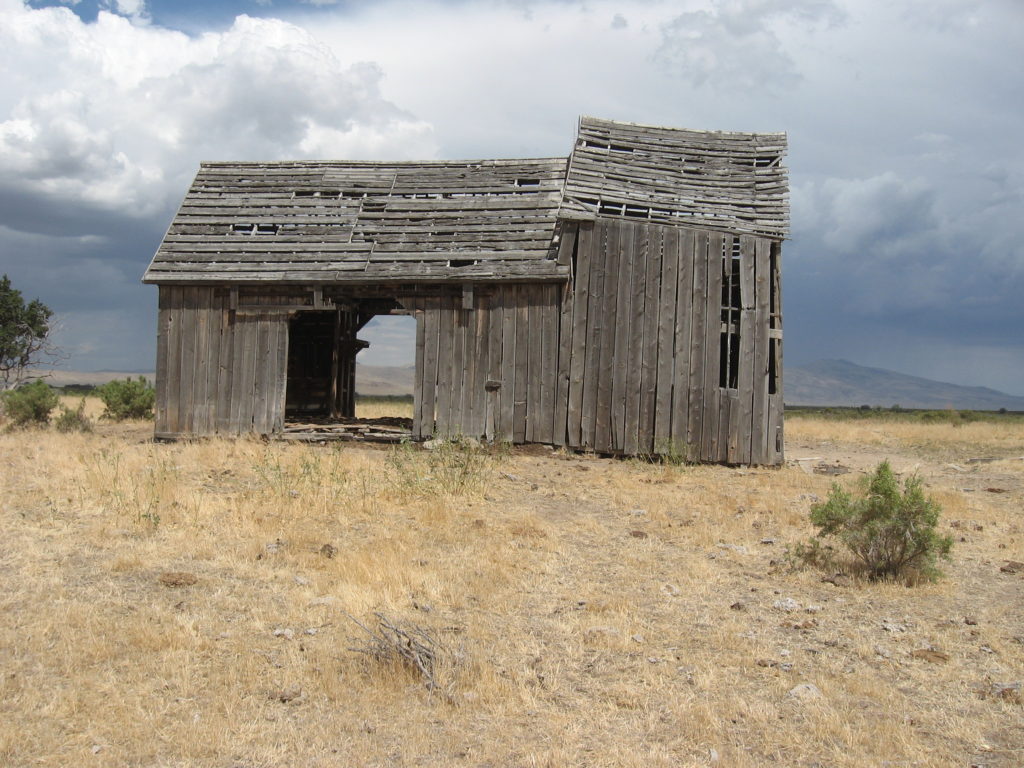
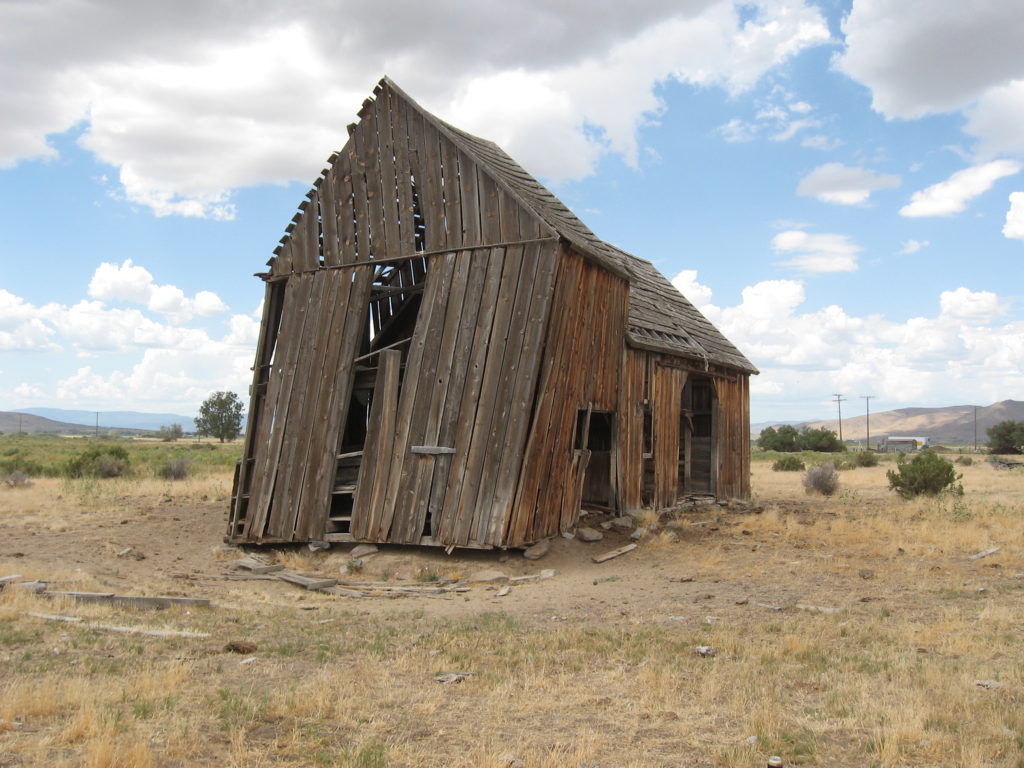
The Hartson barn depicted is adjacent to the Dakin Unit of the Honey Lake Wildlife Refuge. Built in the mid-1880s it is distinct from other barns with its breeze way. The southern end, whether it was an add on, is not known. What is interesting the lumber is twenty feet in length, no doubt came from the Cornelision sawmill at Janesville.
Hartson Barn, July 26, 2019
As one can see from this view, the foundation on the south side of the barn has eroded. It is just a matter of time when this relic of the past is no longer.
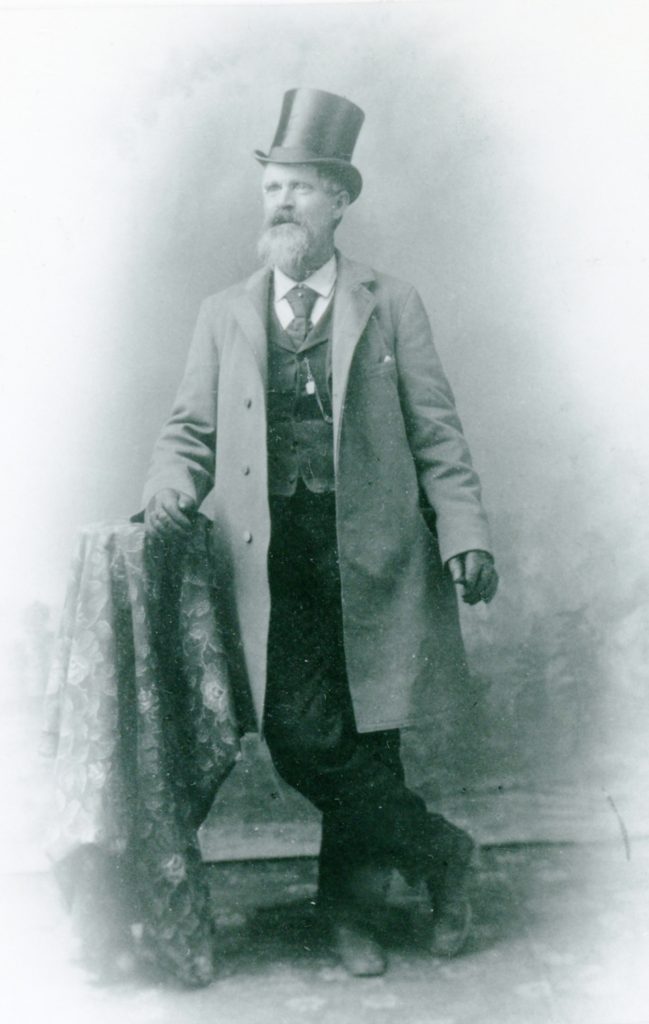
Benjamin Hanson Leavitt – Courtesy of Betty Barry Deal
In what seems like another life time, when I began my research, I interviewed many people on a regular basis. When I look back, there were quite a few individuals who were born in the 1880s. One of those was Alphozene Perry Terril, a granddaughter of Ben Leavitt (1835-1915). Leavitt is considered the father of the Susan River Irrigation System, best known today as Lassen Irrigation District. It began, in 1875, when Leavitt constructed a small reservoir, east of Johnstonville, known today as Leavitt Lake. One of the interesting anecdotes Alphozene relayed to me about her grandfather, was on occasion she made him breakfast—it consisted of two raw eggs put in a glass of rock & rye whiskey.
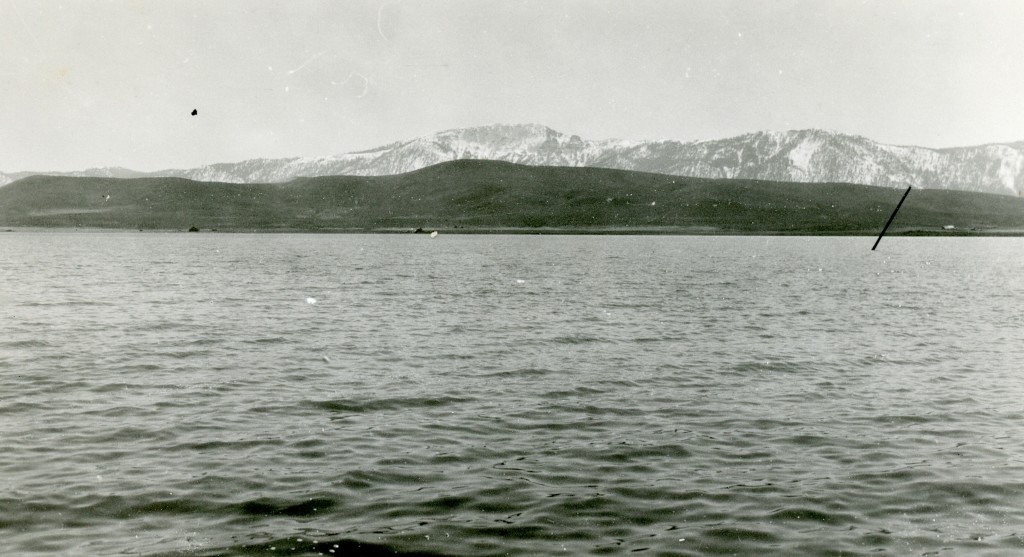
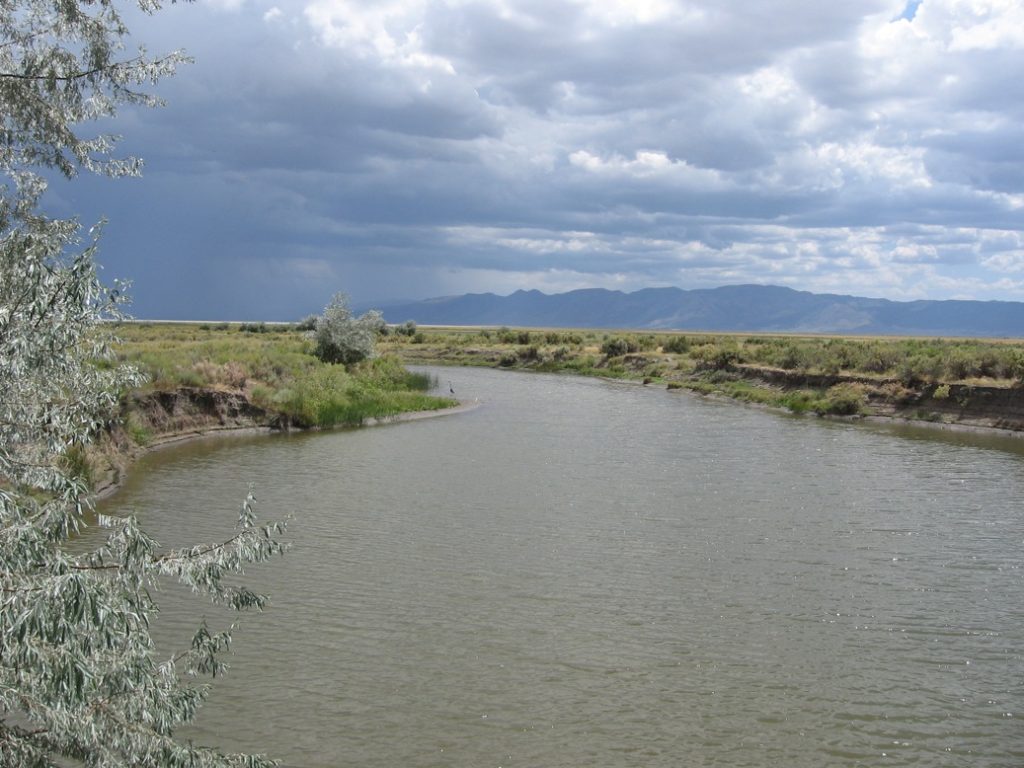
Whitehead Slough, with Honey Lake in the background, July 26, 2019
After the Susan River passes near Standish it breaks up into sloughs, some are natural and others man-made like Hartson Slough. The Whitehead Slough was named for John Wesley Whitehead (1845-1939) who relocated from Pyramid Lake in 1886, and settled along the banks of this slough, which is located between the Dakin and Fleming Wildlife Units. In 1920, he retired to Pacific Grove, California, which was also known as Honey Lake Heaven, since so many people from the Honey Lake Valley retired there in the early 1900s.
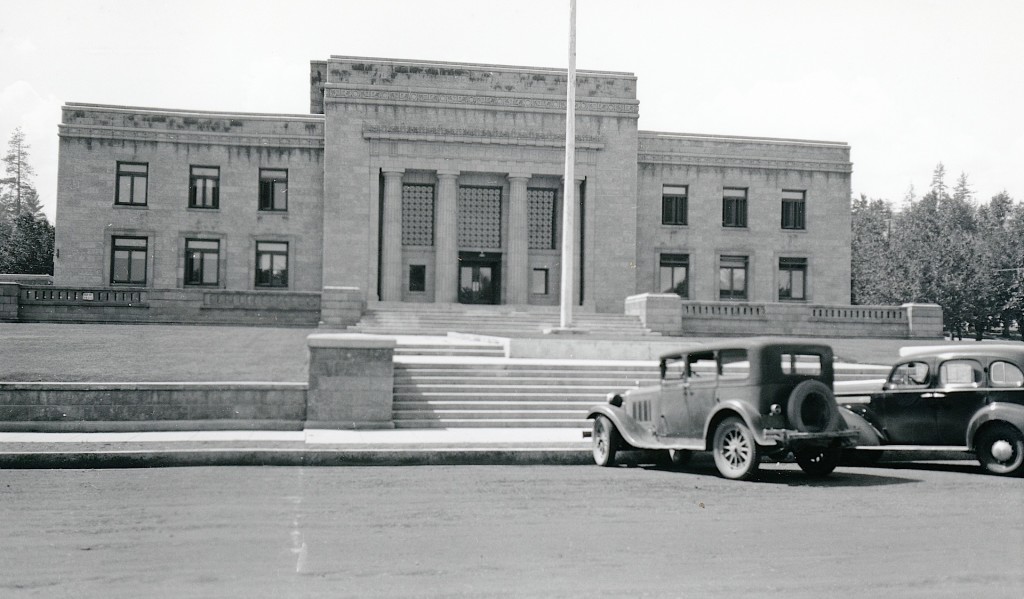
Lassen County Courthouse, 1938. Courtesy of Jere Baker
This being the day after Christmas, I am checking to see if I have anyone’s attention. One of the questions I am asked from time to time, is where I received my education after graduating high school. After all, that is a turning point in a young persons life, with a variety of options—community college, university, trade school or the school of hard knocks. I accidentally stumbled on an entirely unique venue for a very different kind of education and enrolled at the exclusive Menopause Manor housed in the second floor of the Lassen County Courthouse. In my initial quest to research the local history all paths led to the courthouse to examine the original documents. One of the main repositories is that of the County Clerk’s Office. Little did they know that on fateful first visit, that I would return daily like the proverbial bad penny. After awhile they finally took me under their wings, while for several years they put up with my relentless questions. What I learned from these wonderful women, how the court system functioned, county government and a myriad of things in between one cannot obtain through the traditional educational system. My thanks to Jackie Fuller, June Nelson, Betty Hibbs, Sue Farstad, June Moller, and, of course, the Manor, had to have male token, my old side-kick Bruce Dyer.