Category Archives: History

Julius Howells—The Father of Lake Almanor

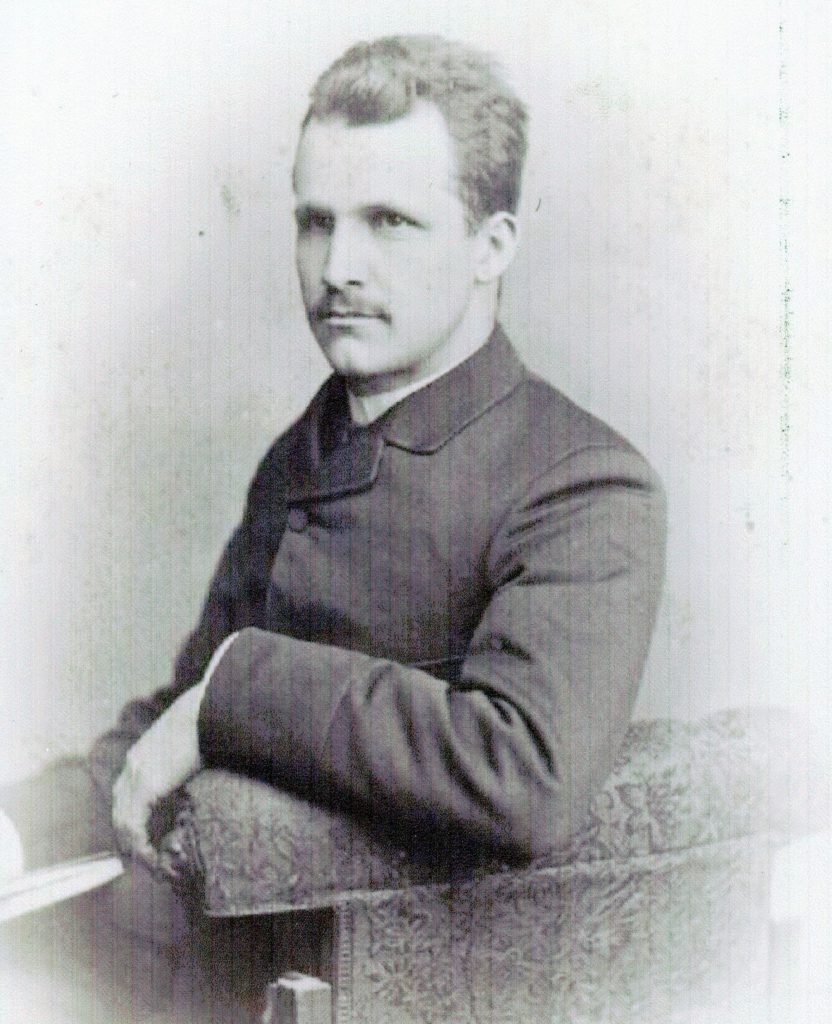
Julius M. Howells—Gus Howells

In 1882, Julius M. Howells, a civil engineer for Agassiz & Shaw, was hired to study the geological features of the Feather River country. The region left a lasting impression on him. First, there was the abundant watershed found at Big Meadows (now Lake Almanor). Then there was the dramatic elevation once the Feather River left that basin, descending some 4,350 feet in a distance of some seventy miles.  Two years later, Howells left the region to work on other projects.

In the 1890s hydroelectric power was coming to the forefront. In 1895  his brother-in-law, J.J. Seymour, was a co-founder of the San Joaquin Electric Company in Fresno. In 1899 Howells accepted the position of consulting engineer for that power company to construct the Crane Valley Dam.

In 1901, in Los Angeles, Howells affiliated himself with noted engineer James Dix Schuyler.  In November, Howells returned to Big Meadows to compile facts and figures for the potential development of a hydroelectric system utilizing the Feather River. Upon his return, with data in hand, Schuyler arranged a meeting between Howells and Edwin T. Earl—the latter had done very well in the citrus packing industry and was branching out into other endeavors.

Earl consulted with his brother, Guy C. Earl, an Oakland attorney.  They concluded that Howells’ venture was worth pursuing. It was deemed that secrecy was the order of the day, so as not to alert the competition, as Plumas County resident George Cornell had a similar proposition in the works, but lacked financial capital.

Nevis Dam under construction, that was later abandoned, and the dam moved upstream to today’s current location.

Fast forward to the spring of 1913, after numerous hurdles and one failed dam attempt, Julius Howells went to work for the Earl Brothers who had formed the Great Western Power Company. By the summer of 1913 work was in full progress and the newly constructed reservoir known as Lake Almanor was completed in the summer of 1914.

Due to financial issues the original proposed dam was scaled back by half. In December 1924, Great Western Power announced its intention to raise the dam by forty-five feet. Julius Howells was brought back as consulting engineer.

In December 1926, the raising of the dam was complete. On April 22, 1927, Julius Meriam Howells passed away in San Francisco.
Subscribe

An Insane Decision

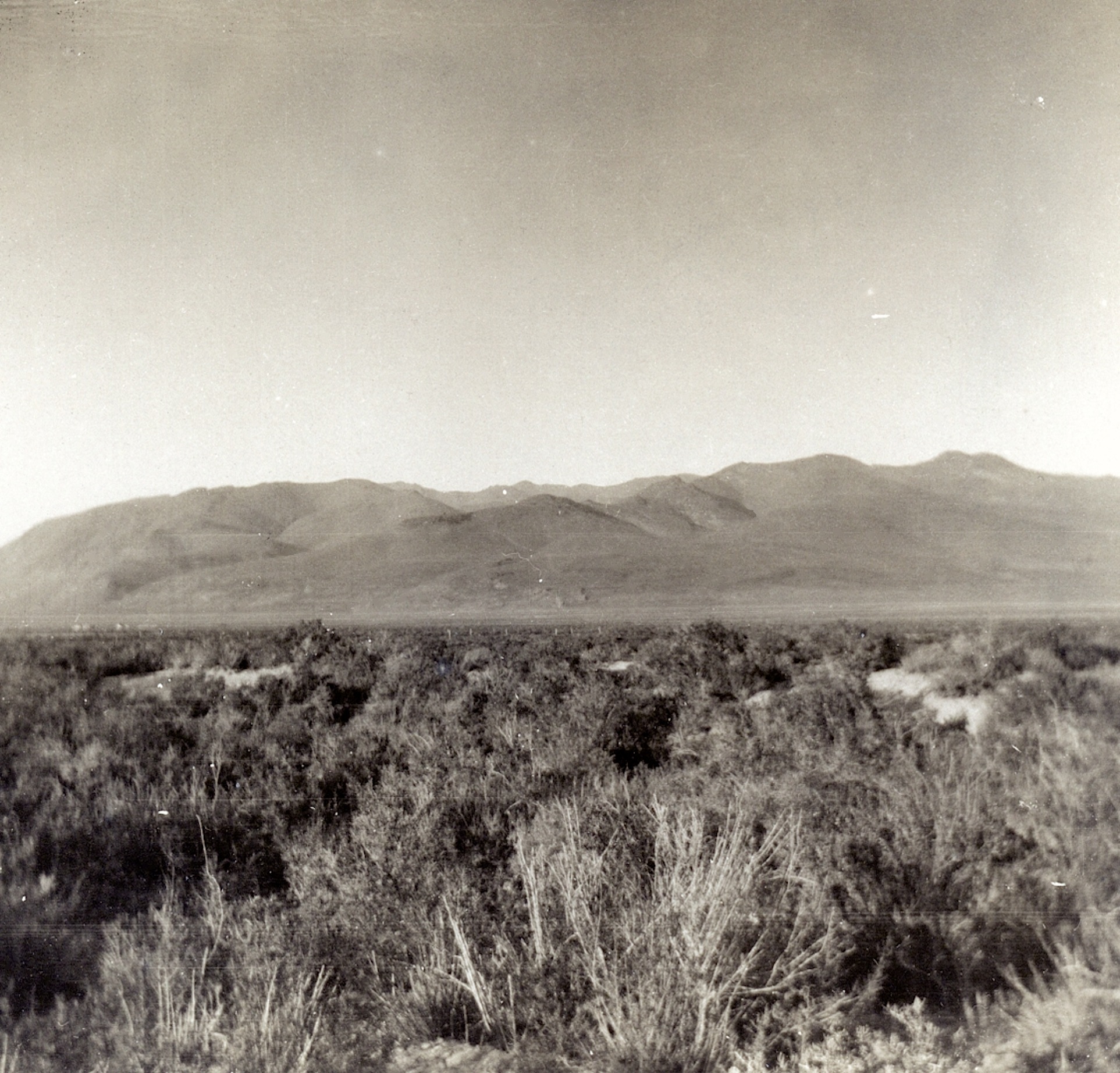
Eastern Honey Lake Valley , near  Stacy, 1911—C.R. Caudle

The Nevada-California-Oregon Railroad (NCO ) was such a colorful enterprise and how it managed to exist for nearly a half of a century is mind boggling.

In 1884, the NCO’s line extended thirty miles north of Reno, at the old Antelope Ranch, and they named it Oneida.  At the same, Edgar Heriot was brought in as general manager and under his leadership made numerous beneficial improvements.

At the end of 1884, the NCO extended its line five miles north to Junction House (near present day Hallelujah Junction.  Heriot had ambitious plans. On March 31, 1887 Heriot announced that work would commence on a 45-mile extension from Junction House to Brubeck’s Ranch at Lower Hot Springs on the east side of Honey Lake. This did not set well with Susanville or the communities on the west side of the valley. However, there were delays due to litigation with landowners over rights-of-way in Long Valley. This was a considerable expense and Moran’s owners of the NCO fired Heriot.  He was replaced with the cantankerous Erasmus Gest.

No matter how hard Susanville lobbied the Morans, dealing with Gest was an exercise in futility. Gest had made up his mind. He was determined to build the line as quickly as possible to the Oregon border, on the most direct route. Gest feared competition from the north, and it was his desire to have the railroad built to eliminate rival lines. Gest informed the Morans of his decision to stay with the original plans. Gest stated it was a waste of money to build to Susanville, referring to it as a “no place.” Later management called Gest’s judgment to bypass Susanville as “ . . . one of the most monumental blunders, I have ever known a sane man to commit.”

Subscribe

Susanville’s Ordinance No. 17

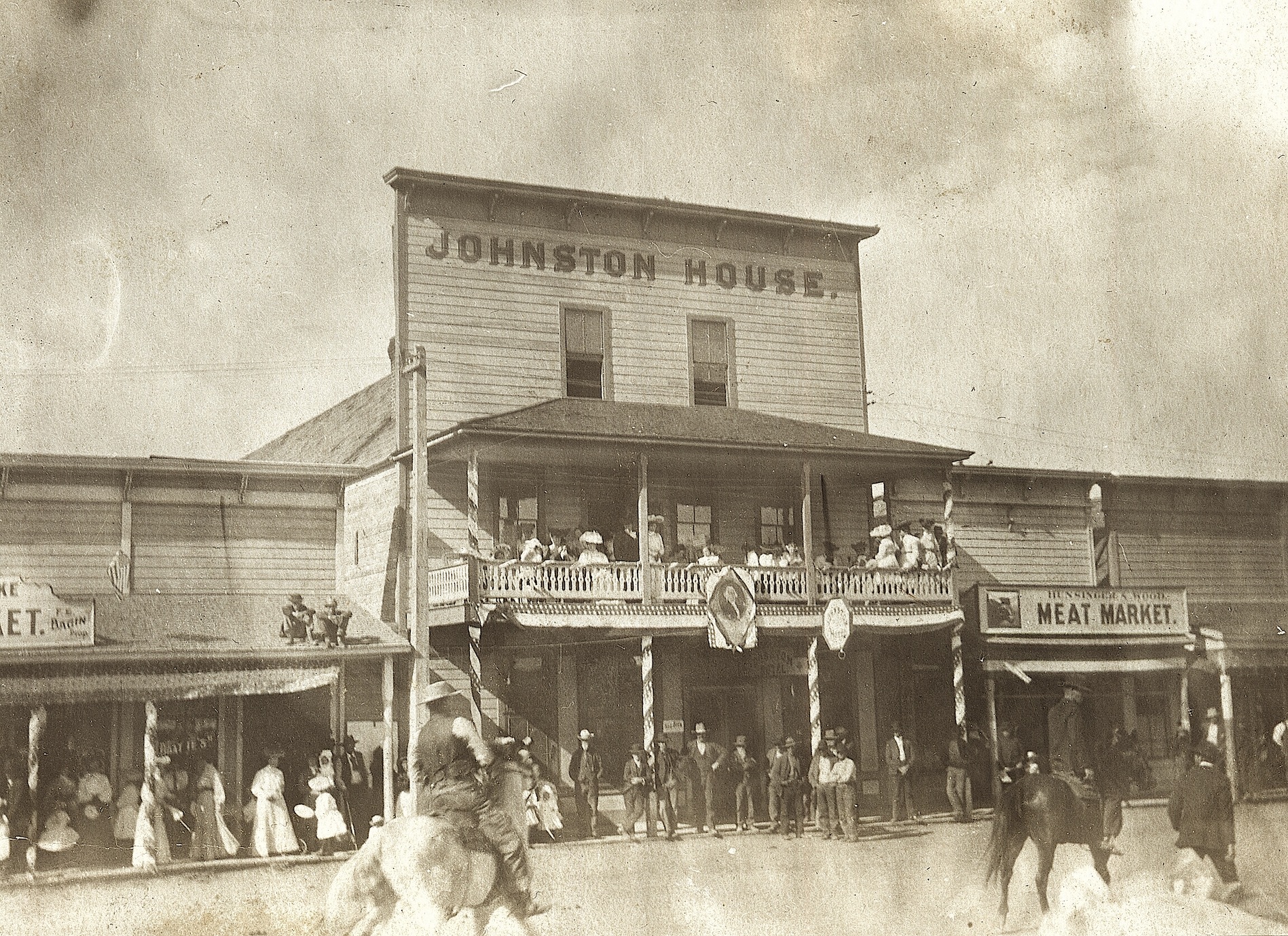
The Johnston House, circa 1909. It was located on the north side of the 700 Block of Main Street, and  the wooden buildings on that block were destroyed by fire in 1919. Courtesy of Betty Barry Deal

One of Susanville’s first ordinances, was a real attention getter and would dramatically change the town’s business district. Adopted in 1902, Ordinance No. 17 prohibited the construction of wooden frame buildings in the heart of the town’s business district—the four blocks on Main Street between Roop and Gay. It required building plans be submitted to the city clerk and to designate whether the building materials were brick or native stone. Roofs were required to be metal, slate or tile. This it was deemed to reduce fire, something that was dominate issue in the town’s history. In 1912, the ordinance was amended to include the block from Gay to Weatherlow.

In 1914 the ordinance was challenged in court. O.M. Doyle who wanted to build on the southeast corner of Roop and Main Streets, but thought the cost of non-flammable building materials was prohibitive. The judge in the case upheld the city’s ordinance. Doyle then had a two-story property constructed on the property in question, that became known as the Del Mar, which still stands today.

Subscribe

Tuesday Tidbit—C.C. Cramer Dairy

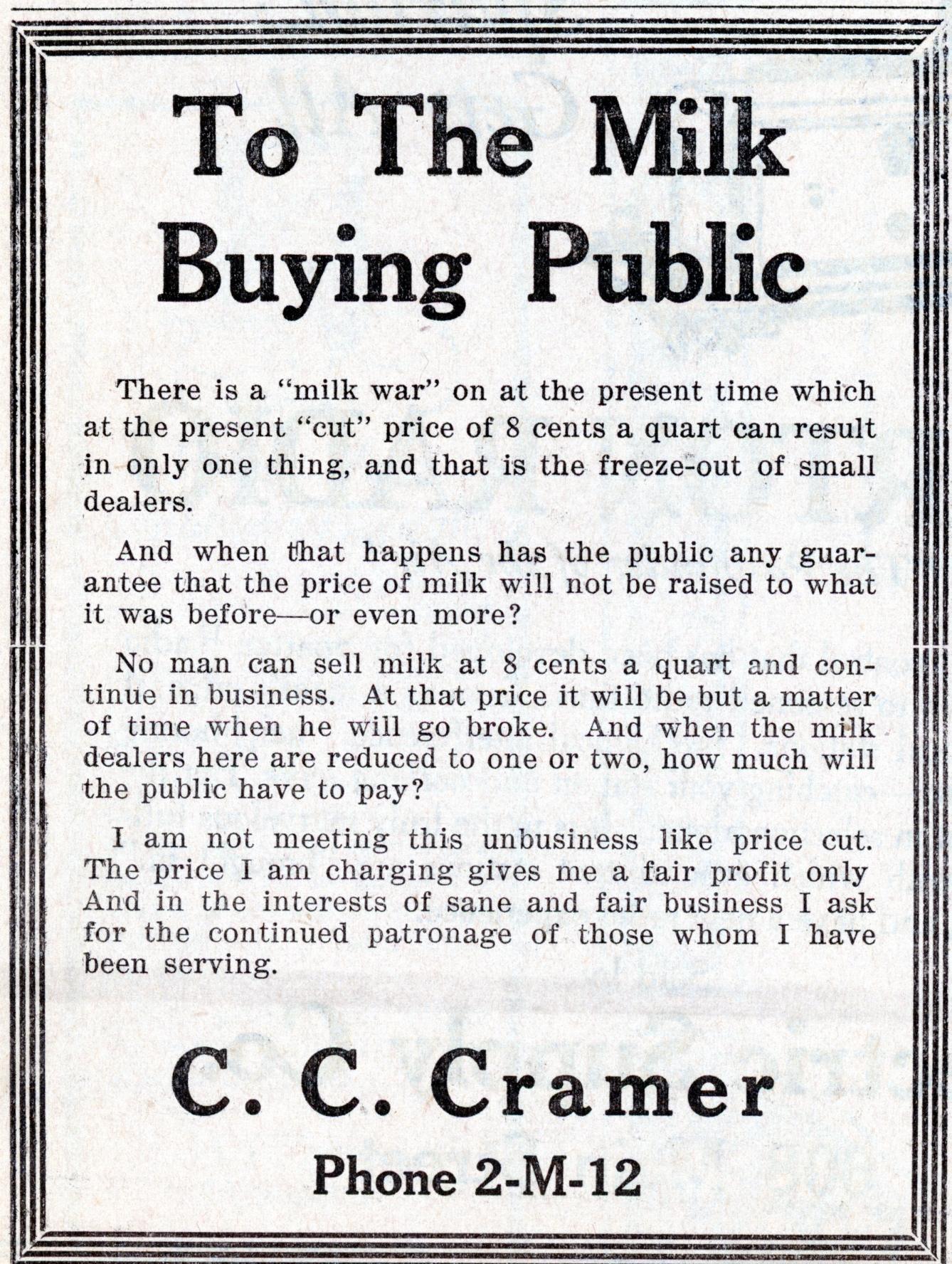
Lassen Mail Advertisement, March 9, 1928

This 1928 advertisement caught my attention, and was something I wanted to share. The dairy was located near Johnstonville, though I do not know much about it. I do, however, have a Cramer milk bottle which are rather rare. After all, those who knew Leroy Cramer, a collector of everything, did not even have one.

It should be noted one of my Mother’s past times was going to yard sales, which at one she found this milk bottle.

Tim

Old Pete Lassen

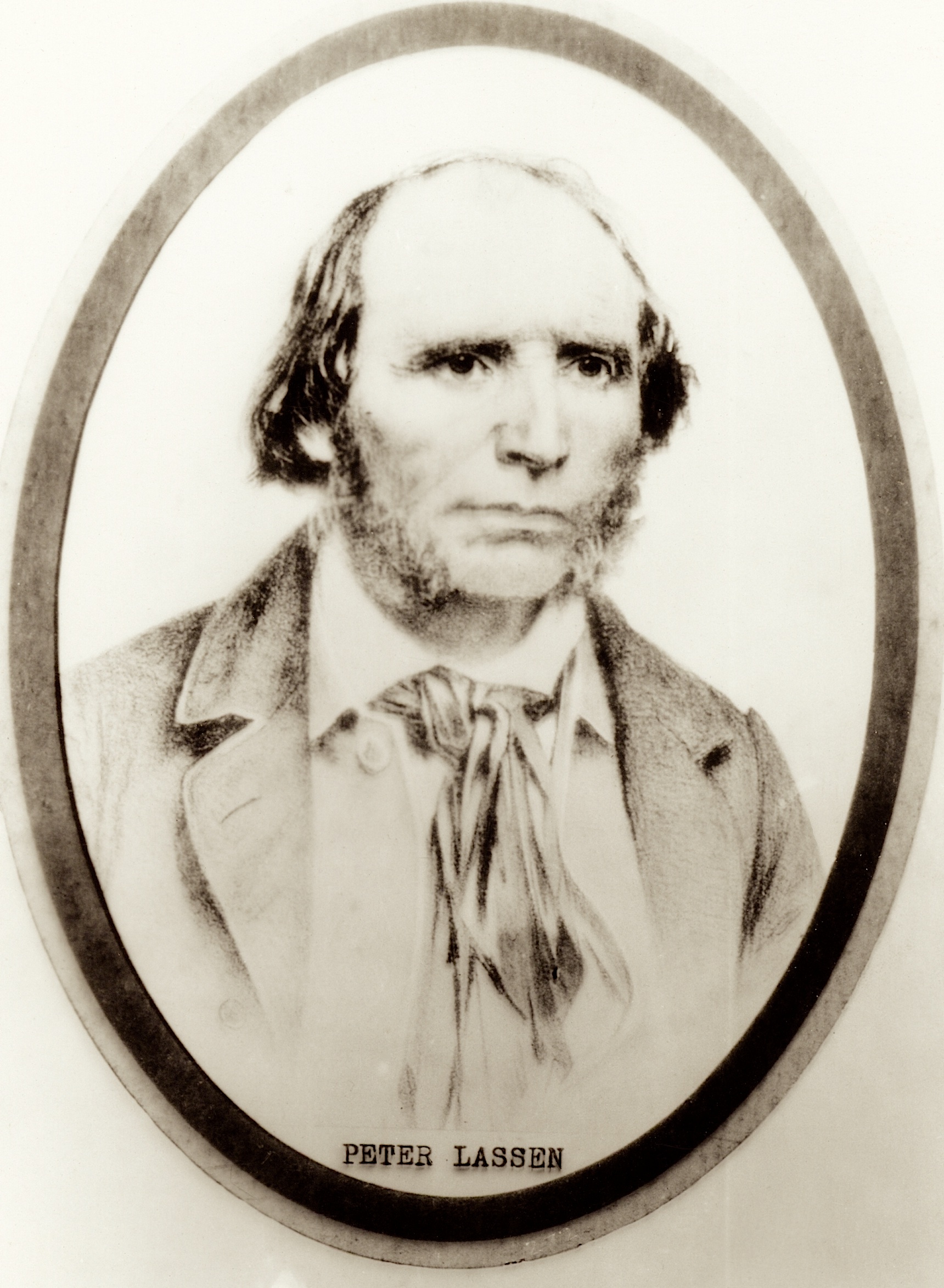
The infamous Peter Lassen, a name well known throughout Northern California

Today, Peter Lassen born on this date in 1800. So, I thought some might be interested in some of the little known facets about him. Lassen arrived in California on July 14, 1840 at Bodega Bay by sailing down the Oregon coast. There was no welcome mat, as he encountered Mexican officials there to prevent foreigners from entering.  Luckily, a Russian commandant was at hand and invited Lassen and his companion William Wiggins to stay at Fort Ross. Their stay at the Russian settlement was brief, and once outfitted with supplies and horses the two men went John Sutter’s compound, known today as Sacramento. Lassen was impressed with Sutter’s hospitality, but after a two-week stint sailed to Yerba Buena, known today as San Francisco. Lassen’s next stop was San Jose where he spent the winter of 1840-41 applying his trade as a blacksmith. His wanderlust next found Lassen at Santa Cruz. He would bounce around a bit, until 1844 when he received his Mexican  land grant in what is known as Tehama County.

Lassen’s outpost at Deer Creek was not only the northernmost settlement in the Sacramento Valley, but in time became one of the best known interior settlements of Northern California. This was, of course, the best of times for Lassen. By 1850, with bad business ventures and such, it was time to move, he having lost nearly everything relocated to Indian Valley, Plumas County. In 1855, he moved over the mountain to Honey Lake Valley, where he is buried at the location where he spent his first night there.

Subscribe

Longville, Plumas County

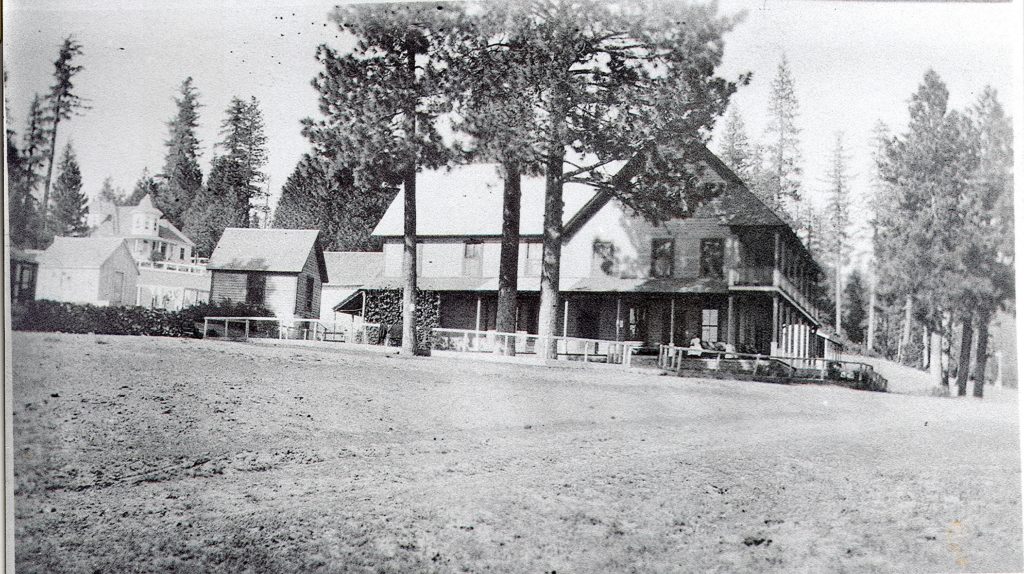
Longville Hotel, circa 1915. Courtesy of Plumas County Museum

Longville was one of many Plumas County mining communities, some of which have connections over the mountain in Lassen County.  One of those forgotten places was Longville located in Humbug Valley. This valley is located a bit south and west of Lake Almanor. It is  a picturesque meadow surrounding by pine trees.

The settlement began there in 1855, when B.K. Ervine and William B. Long used the valley for stock-range. Two years later, gold was discovered and set off a flurry of mining operations. Long and his father-in-law,  Allen Wood, built a hotel, and a sawmill mill, too, and thus the town of Longville came into existence.  In 1862, Long came to Susanville and purchased William Weatherlow’s ranch, known today as Susanville Ranch Park.

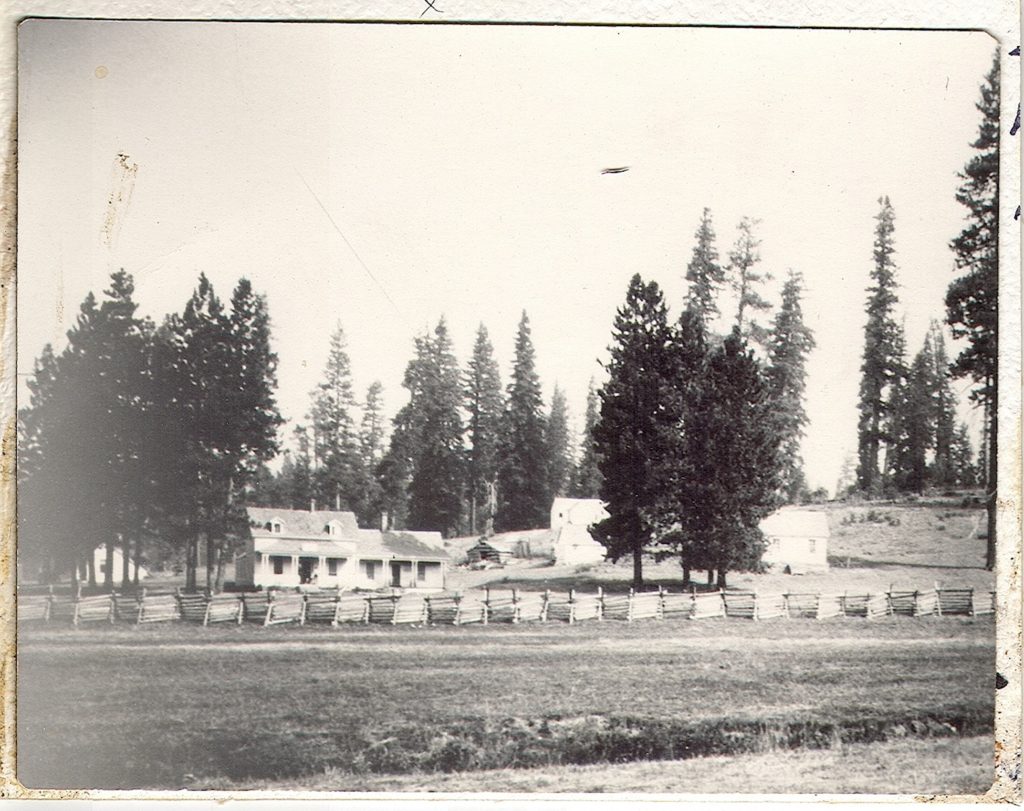
Longville—Plumas County Museum

In 1856, Andrew Miller made a permanent home at Humbug Valley,  He did stray on occasions.  In 1863, he ventured over to Susanville for awhile and with Rufus Kingsley constructed the first native-stone building, the site being the current location of Margie’s Book Nook. After his brief stay in Susanville he returned back to Humbug. However, in 1874, he was appointed Receiver of the Government Land Office in Susanville, and remained in that position until 1886. The Government Land Office was the only federal office in Lassen County, and today is known as the Bureau of Land Management. Miller once again returned to Humbug where he remained until his passing in 1903 and is buried in Susanville.

Longville, like so many rural communities, suffered from the effects of  World War I, and it quickly depopulated. Its post office, which Andrew Miller established in 1861, closed in 1918.

It should be noted that Long and Miller descendants still reside in the Susanville. It was Miller’s grandson, Claude Heard, who established Heard’s Market, a focal point for decades in Litchfield, but now closed.

Never miss a story click here to subscribe.

Honey Lake Oranges

McKay Residence
McKay Residence on Alexander Lane, Standish circa 1915. It is still there in a modified state. Photograph courtesy of Jessie Lowe

Back in the 1970s, when I first doing my research, I came across real estate promoters literature of the 1890s about the balmy climate around Amedee and it being ideal for citrus production. Of course, we know that is not true, but there was a lot of deceptive literature just waiting to fleece some strangers hard earned money.

While doing research on the Standish book, that I will never do, for lack of interest, one of the area’s residents came up with a unique marketing plan to sell his crops. Frank B. McKay needed to come up with a ploy to make his produce stand out from the others. Word spread that he had a new specialty of oranges, when it fact that large orange orbs he offered for sale, were known to many as the standard pumpkin.

Support this site and subscribe for as little as $5.00 a month.


Bassett Hot Springs, Lassen County

Bassett Hot Springs, circa 1908.

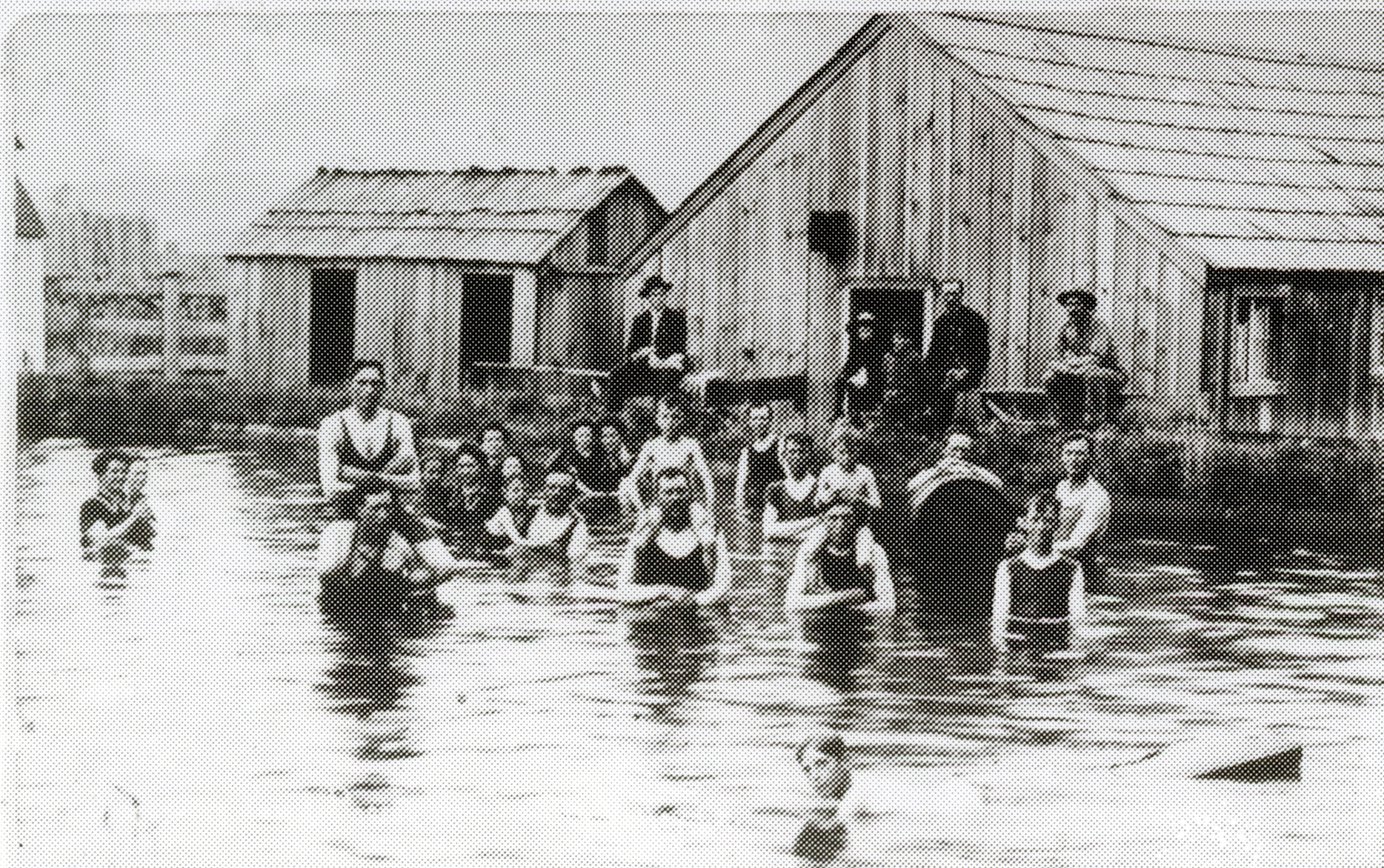
In the late 1870s, Isaac Wilson Bassett developed the hot springs near Bieber, first by excavating a swimming hole where water was diverted because the springs were too hot. Later a bathhouse was constructed that contained wooden tubs. If the water became too cool, a wooden spigot could be turned into the tubs to add additional hot water so that optimum temperature was maintained in the pool. As Frances A. Gassaway recalled, “For twenty-five cents, one could go into the plunge and bathe. For a dime more one could be furnished a swimsuit. It was quite a treat to go to the springs.” In 1928, under Barney Fillingim’s management, the wooden pool was replaced with a concrete swimming pool. The Bassett family continued to operate the springs until 1945 when it was sold to Gerald and Birdie Packwood for $17,500. The Packwoods continued operations for a short period of time. Due to health regulations, maintenance, and insurance the Packwood’s deemed it too costly to operate and the facility was closed.

It is never too late, subscribe today and enjoy tomorrow with daily notifications.

Flumes

Milford Flour Mill
The abandoned Milford Flour Mill as it appeared in 1901. Courtesy of the A.J. Mathews family

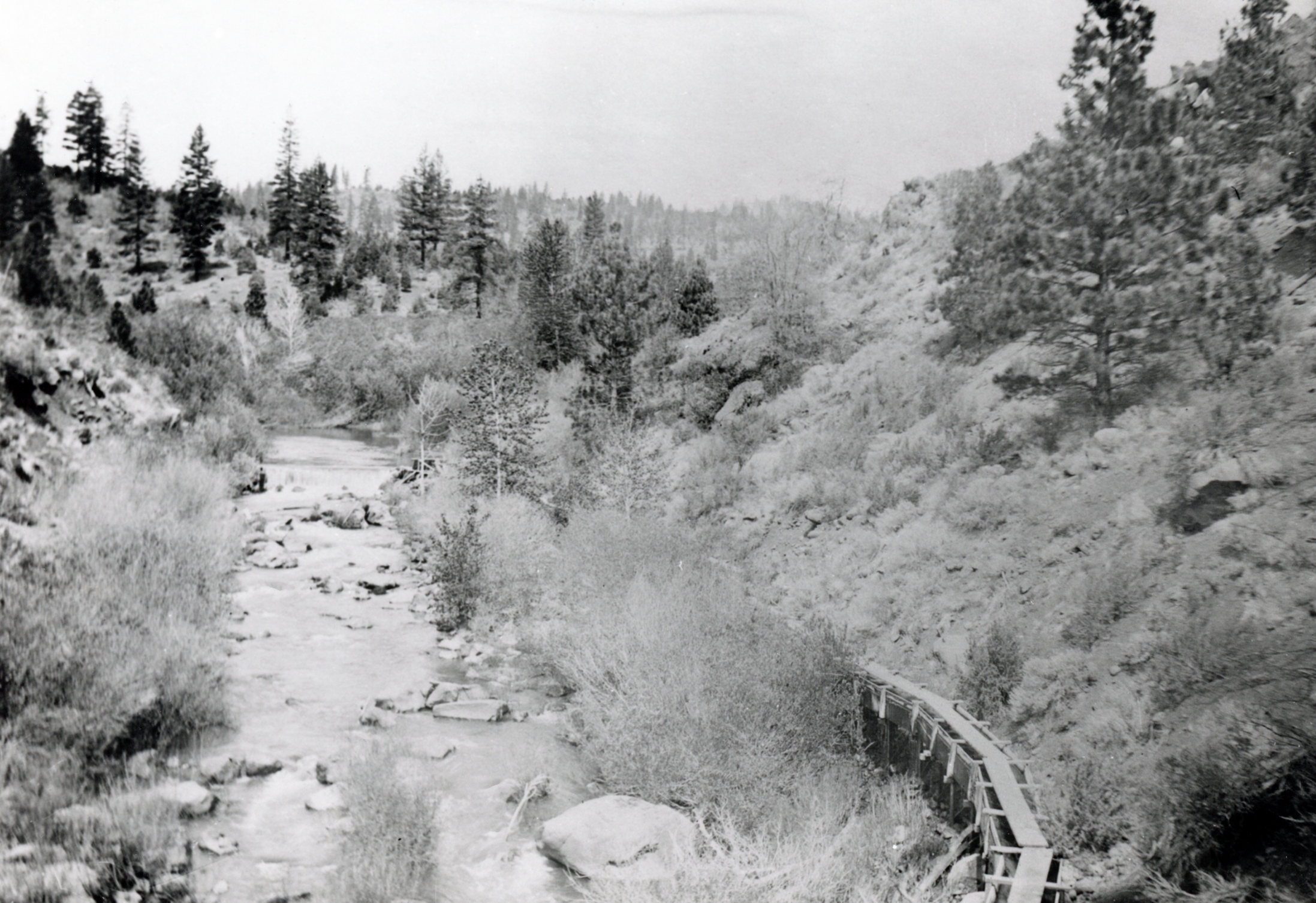
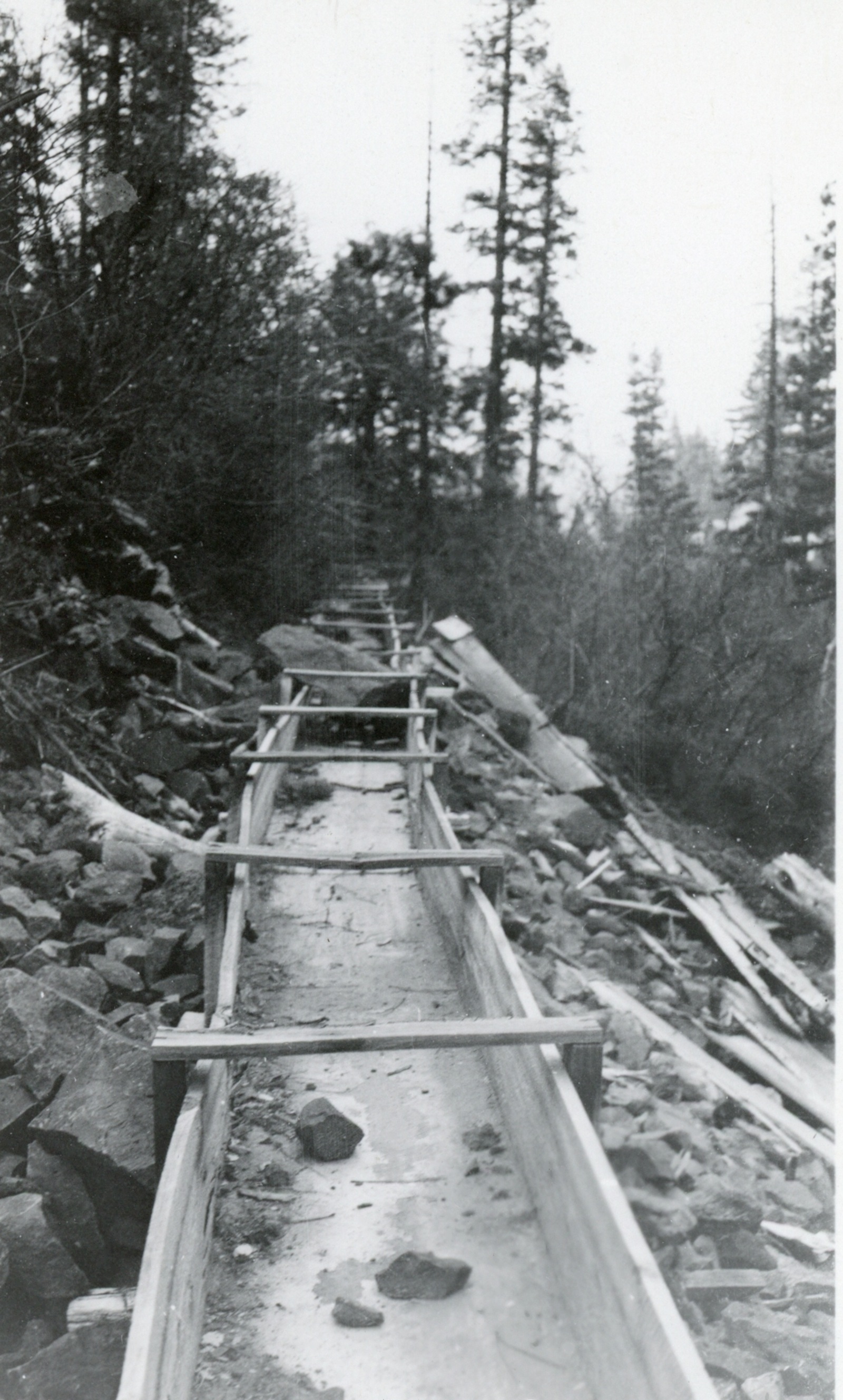
During the late 1800s with all the proposed irrigation/reclamation enterprises in the Honey Lake Valley, flumes to convey water was not considered. On the west slope of the Sierra, flumes were numerous used primarily for logging and mining.

The first flume in the region was built in 1861 to furnish water power for the Milford Flour Mill. One of Captain C.A. Merrill’s grandiose plans for Eagle Lake called a for flume to transport logs to his proposed town of Belfast.

Susan River, 1899 below Hobo Camp showing a portion of the Branham Flume—Mary D. Folsom

In 1895, James Branham built a flume on the north side of the Susan River just below Hobo Company to convey water to power his small electric plant. It was a short-lived operation that shut down in 1910.

Lassen Mining Company’s flume, near Hayden Hill, 1927.

Up north to the mining community of Hayden Hill, saw the use of flumes. The town had problems with the lack of water, though on the other hand some of the mines had problem with water in their diggings. The Lassen Mining Company built a flume to divert water from Willow Creek to Hayden Hill.

Donate

Chappuis Lane, Lassen County

Ed & Nancy (Johnston) Chappuis, 1906–Betty B. Deal

Someone recently wanted to know who Chappuis Lane was so named. The Chappuis family operated a ranch along the Susan River, where the lane passes through.

In 1890, Frank Johnston filed a 160-acre homestead at that location and in 1893, moved his family there. In 1906, his daughter Nancy married Ed Chappuis. For many years it was known as the Johnston & Chappuis Ranch. After the passing of Frank Johnston in 1909, his Fred Johnston, along with Ed & Nancy Chappuis carried on. In 1951 the ranch was divided, with Nancy Chappuis retaining her father’s original ranch. Nancy and her sons—Evan, Ray and Leo—carried on for many more decades. (It should be noted that Ed Chappuis passed away in 1943).

Tim