Stacy

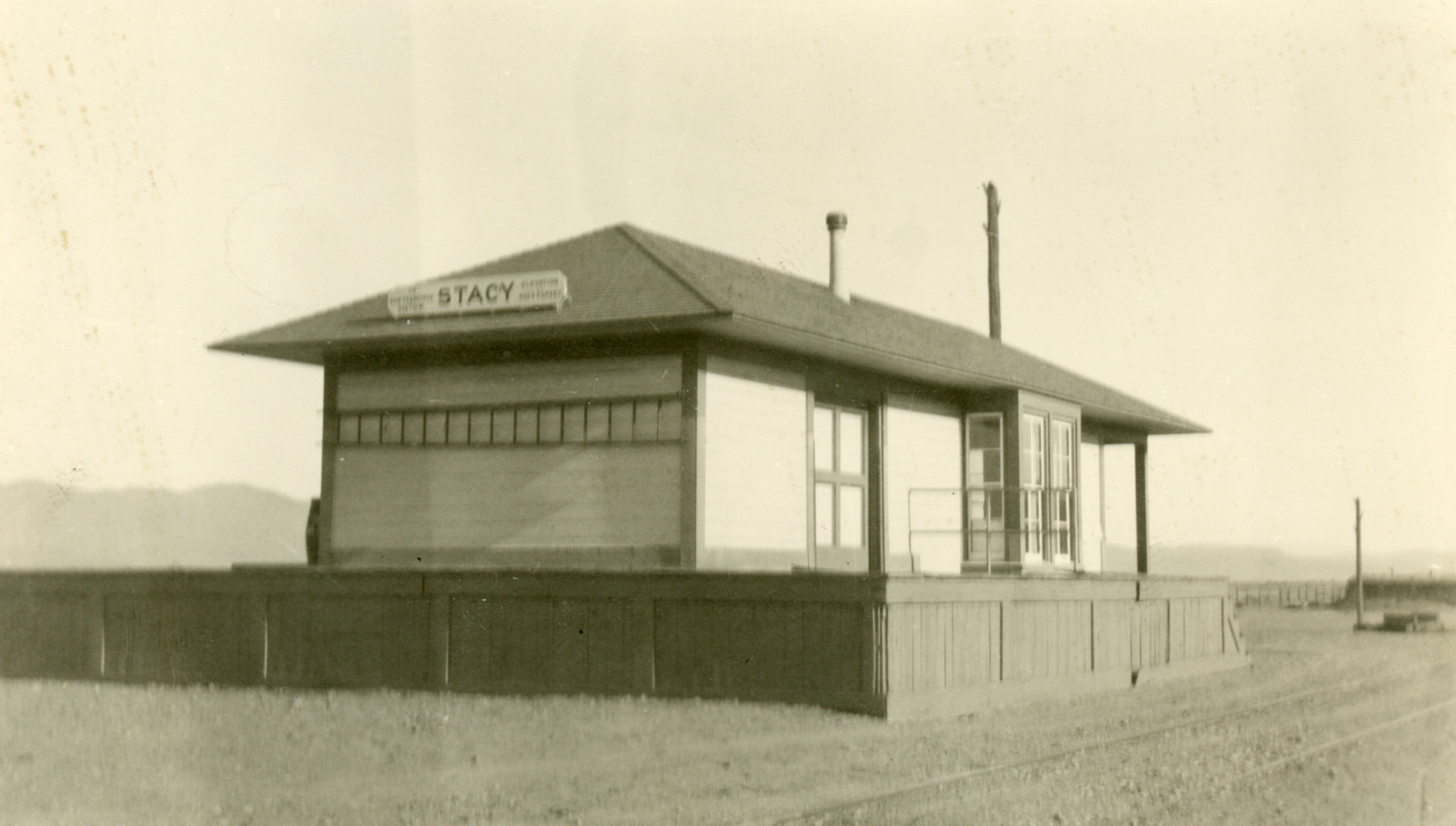
Stacy Depot
Stacy Depot. The town was named for Stacy Yoakum Spoon, wife of Grover Franklin Spoon, one of the town’s developers and its first postmaster.

Once it became known that the Fernley & Lassen Railroad would be constructed through the Honey Lake Valley, it made the region a virtual paradise for real estate promoters. Three towns were plotted out—Leavitt, Litchfield and Stacy, the latter being in the eastern part of Honey Lake Valley between Amedee and the Nevada Stateline.

On April 19, 1913, the Lassen County Board of Supervisors approved the Stacy townsite. The town’s founders, the Spoon Brothers—Frank and Andrew—and Doctor B.B. Bolton envisioned great possibilities, such as the development of a major shipping facility for the region’s start up sugar beet industry. Prior to the railroad development, numerous homesteaders had arrived in part of the dry farming experience, and that of the Standish Water Company’s reclamation plan to use water from Honey Lake to transform the area into a major sugar beet region.

Support this site and Subscribe today!

Lincoln School

Lincoln School
Lincoln School, 1924

In 1920, voters of the Susanville School District passed a bond measure to build a second school. The trustees indicated, however, that with the accelerated growth another school would be needed. What they had not bargained for was just how quickly the need would arise. On January 14, 1922 the District held another bond election for a new school. The voters approved the $50,000 measure by a vote of 140 to 5. In March, the District purchased a lot on the south side of Main Street at the intersection of Hall Street. In June local contractors Woodward & Grebe were awarded a $35,000 contract to build it. The school was completed and placed in use during the first week of February 1923. The Lincoln School closed at the end of the 1966-67 school year.

Support this site and Subscribe today!

Auntie Irene

Irene and James
Irene Bengoa and James Purdy’s 1949 wedding picture taken at the Lassen Junior College Auditorium. It may have been the only wedding to occur at Lassen College. This was due to the fact that both were members of the Sacred Heart Church and the new church was under construction. It should be noted that decades later, Irene served on the Lassen College Board of Trustees.

On Tuesday, May 12, my dear Auntie Irene nee Bengoa Purdy Trout passed away at the age of 90. As a nurse her entire life, it was only fitting she went to heaven on the same date when Florence Nightingale was born.

Irene was involved in the Susanville community throughout her entire life, and leaves a great legacy. For me, and this many do not realize is in her own way contributed to my documenting the region’s history. When I was twelve-years-old, she gave me my first camera, which she told me, “You will be a teenager soon, and you need to record your life.” Did I ever and my surroundings as well. Little did I know then her gift would be history in the making. Of course, the first photograph I ever took was Auntie at her home on View Drive, which I will cherish forever.

Never Sweats

Unionville306
Unionville, 1880. Courtesy of Nevada Historical Society

An obscure mining term of the early 1860s. To be a Never Sweat was considered to be a non-conformist. In Nevada, for instance, one could hold an interest in a mining claim and not work it. One could wait for others to prove the claim. Should the prospects be favorable, the Never Sweat could recover his interest by paying an advance on the accumulated costs. In 1865, Nevada passed an “Act for the Encouragement of Mining.” That change in laws abolished the practice of a Never Sweat and the term faded into oblivion, with the exception of the bestowment on the Honey Lakers. Continue reading Never Sweats

Technology

Telephones
Lassen Advocate, November 28, 1977

I could not resist to scan and post this article that appeared in the Lassen Advocate. In the era of cell/smart phones, this seems so quaint with the introduction of push button phones. And to think, a century ago operators were known as “hello girls.”

P.S. – Some may not be aware, but if you click on the image, you will see a larger one.

Support this site and Subscribe today!

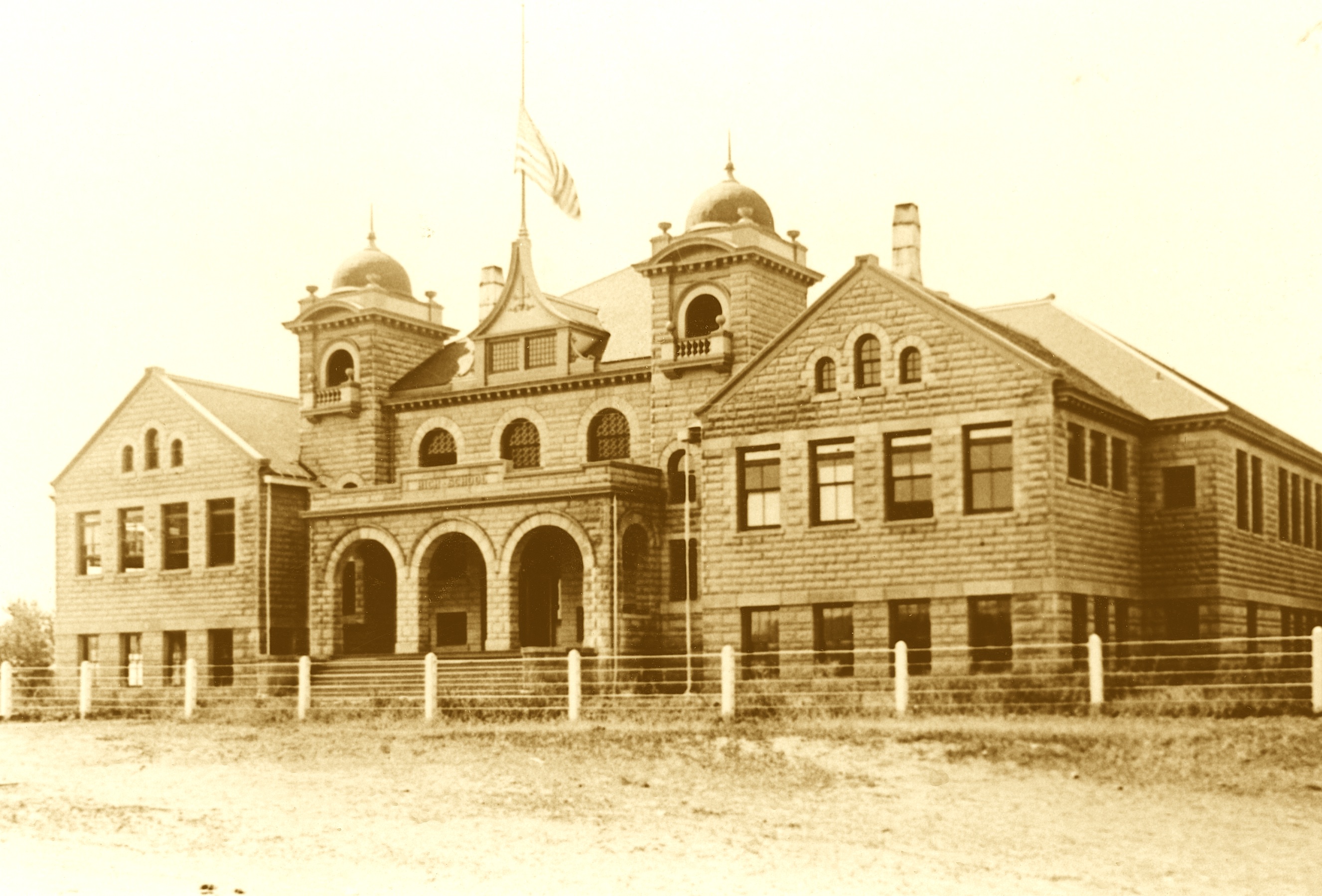
Lassen High School

Lassen High 08
Lassen High School, 1908 courtesy of Phil Hall

Construction of the high school began in the fall of 1905 and was ready the following year. The school was constructed by Granite Rock Company for $25,670.

The photograph depicted above was taken in 1908, when the school grounds was fenced, not to keep the students in, but to keep roaming livestock off the school property.

Don’t forget you can still get the complete DVD collection of the Lassen High Yearbooks from 1904 to 2013. However, I only have about fifteen left.

Support this site and Subscribe today.

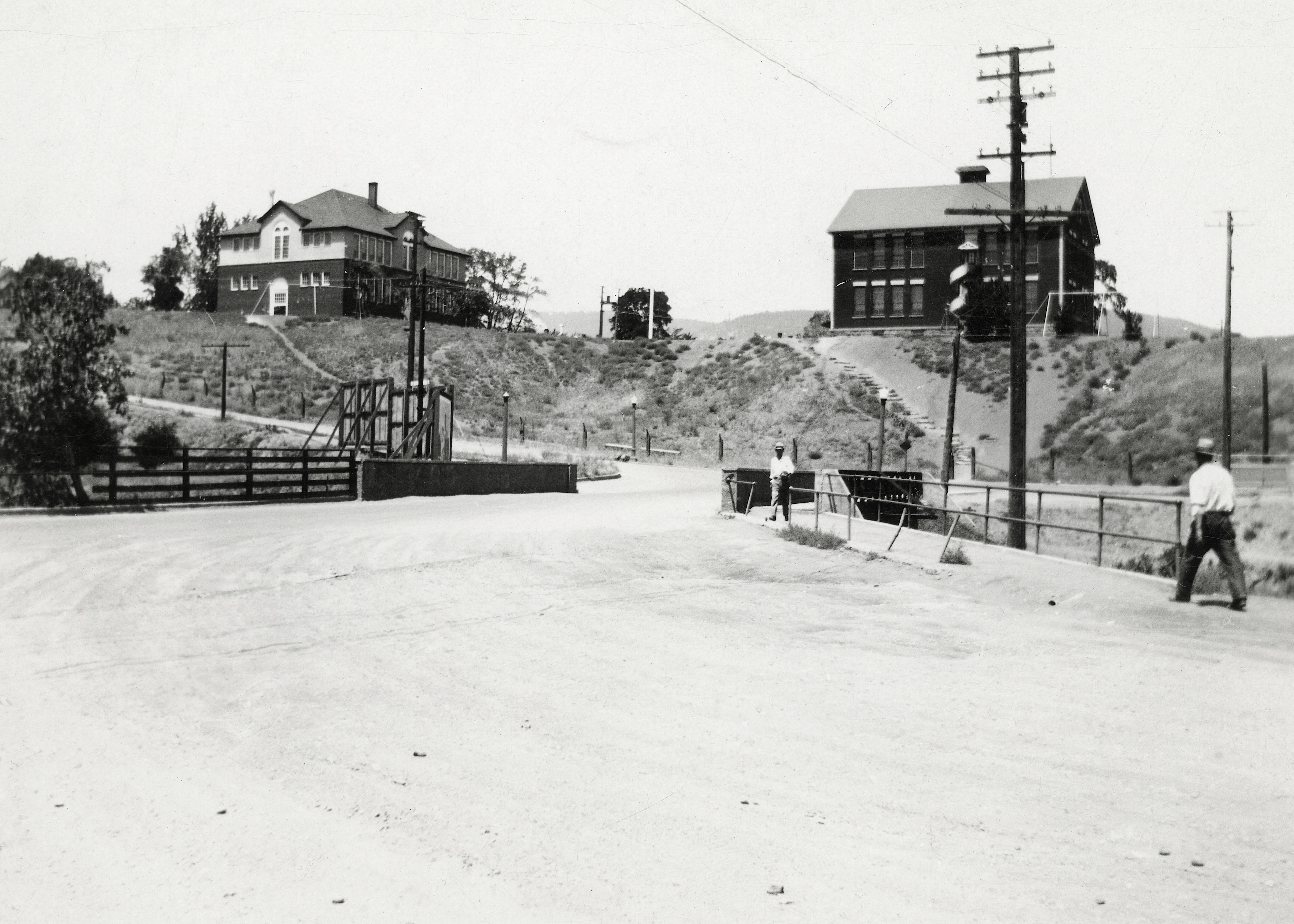
Susanville School Names

Schools
McKinley School (left) and Washington School (right) as seen from Richmond Road, 1935.

When the Susanville School District was established in 1864, the town had only one school, located on Cottage Street. This remained the status quo for nearly sixty years.

With the arrival and the lumber mills, the town experienced a huge population surge.  In 1920, a second school was needed and it was also constructed on the Cottage Street property. The growing pains of Susanville continued and a third school was built, this time in the Milwood District in 1922. Another three years went by, and yet another school was constructed, this time on Richmond Road.

With four schools in operation the district, decided to give them names, which they honored past United States Presidents. The first school was named Washington; the second McKinley, the third, Lincoln and the fourth school Roosevelt.

In 1967, when it was decided to build a middle school to replace Roosevelt, a more generic name was given–Diamond View.

Support this site and Subscribe today!

Toll Roads

Devil's Corral
Devil’s Corral Bridge, 1918

The establishment of toll roads in the frontier West was difficult and not usually a feasible business venture—unless you were strategically located at a bridge, mountain pass or narrow canyon where possible toll users could not make a detour and thus not pay the toll fee. On several occasions toll road companies were formed for various routes through Lassen County, but were never successful enterprises. Continue reading Toll Roads

A Quiz


Hanson ad

Have you ever wondered who has had the most impact on Lassen County? One hears Peter Lassen and Isaac Roop’s names bandied about all the time. Their influence was rather minor in the scheme of things. Captain C.A. Merrill’s Lassen County Desert Land Act of 1875, which was revised to the Desert Land Act of 1877 had a huge impact on the Western United States and the current groundwater export from the Nevada side of the Honey Lake Valley is a result of that. In addition, it was Merrill that opened the door that led to Leon Bly’s tapping of Eagle Lake, but his work, still pales into comparison. Then there is A.J. Mathews who came to Susanville in 1910 and built the telephone system we know today. Mathews had major political clout in Sacramento and the only Lassen County resident to serve as the Speaker of the California State Assembly. We should be thankful for Mathews’ endeavors, yet he is not the influential person I am thinking of.

A month from today, I will reveal the identity. In the meantime, I will work on an appropriate prize for the correct answer. Only a subscriber can win the prize.

Don’t forget to look at the Subscribe feature.

Exploring Lassen County's Past