As the old saying goes the first generation makes it, the second uses it and the third loses it. Only 13 percent of family owned businesses make it past the third generation.
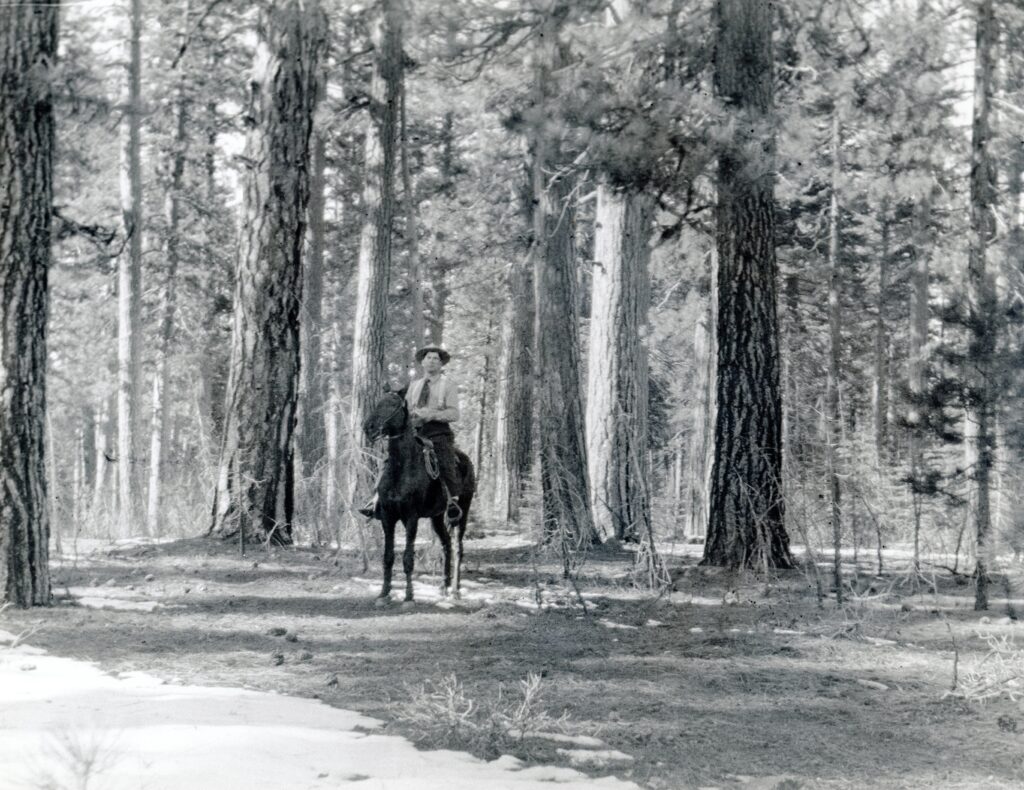
In the late 1890s and early 1900s, Red River Lumber Company’s founder, T.B. Walker relied heavily on professional timber cruisers during his westward expansion. It should be noted that this new endeavor once established would be operated by his sons. It might have looked fine in concept, but the personality clashes between the brothers painted a different story.
After Westwood was established in 1912, Fletcher Walker would manage the mill operations and town. Willis Walker would handle the forests and logging operations. By 1913, Clinton Walker was disgusted by his brothers’ antics resigned from the company. The other two brothers, Archie and Gilbert remained in Minnesota.
Whenever a Red River forester moved on his position was not replaced. This would take a toll on Red River’s timber resources. During Red River’s financial crisis of the 1930s, Clinton Walker returned to the company. He lamented about the conditions. On August 10, 1935, Clinton Walker wrote to his brother Archie,:
”It is regrettable that the house of Walker has no forest man. Kenneth [Walker] covers the nearest, but he seems to be absorbed in the performance of log contracts; our annual fire and insect losses are staggering. A systematic annual light burning at the right season of the year would reduce an ultimately eliminate these sources of loss and the cost would be insignificant as compared to the loss and yearly fire hazard conditions in the forests. Burning by means of power burners on or dragged behind tractors could be done very cheaply and the prospective danger of injuring hollow hulled trees could be eliminated by following the burning with a few shovelers. For the entire period of the Walker family timber operation we have centered our attention exclusively to lumber operation. We are doing nothing but slash down that wonderful forest and letting the fire and beetles burn and eat us down year by year without raising a hand to afford protection from these annual staggering losses.”