Tag Archives: Western Pacific Railroad

Omira, Lassen County

Omira351
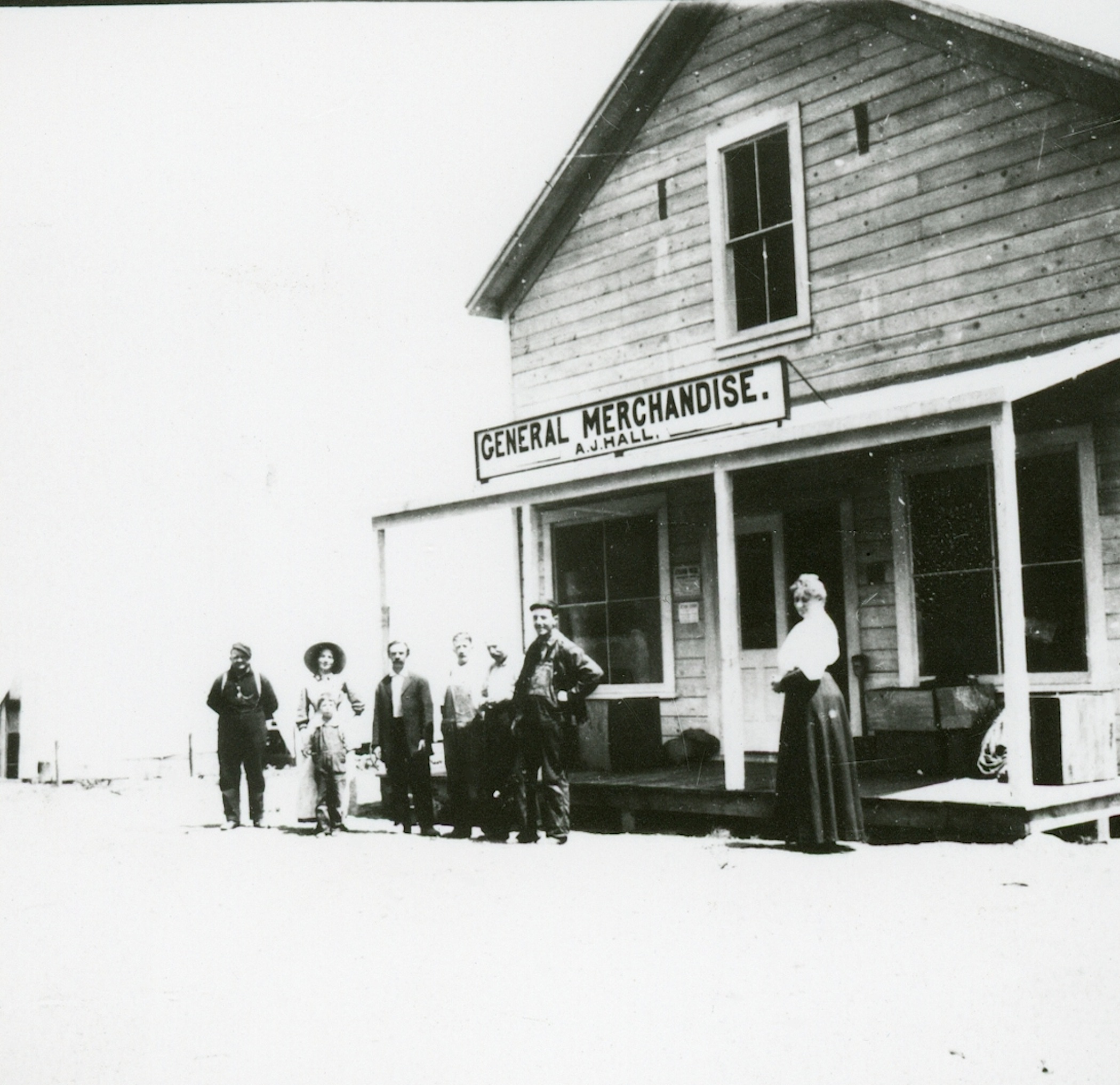
Omira. Courtesy of Philip S. Hall

Omira was located two miles or so south of Doyle and came into being as a station on the newly constructed  Western Pacific Railway.  On April 12, 1909, the townsite was recorded on land owned by R.E. Rhodes, property later known as Rowlands.. The railroad named the town after a woman who promised to build a church there. Originally, the plan was to make this a division point for the railroad. Grading for the yards and turntable was done and that was the extent of the development as the Western Pacific decided to change the division point to Portola. The town consisted of section houses, water and fuel tanks, and a two-story store with a restaurant—rooms were rented on the second floor. In addition, that building housed the post office that operated from 1910-1918 with Stella Stiles as first postmaster. In 1926, the Western Pacific consolidated many of its smaller stations, Omira Station was closed and operations moved to Doyle.
Subscribe and support this site for as little as $4.17 a month.

Doyle versus Portola Update

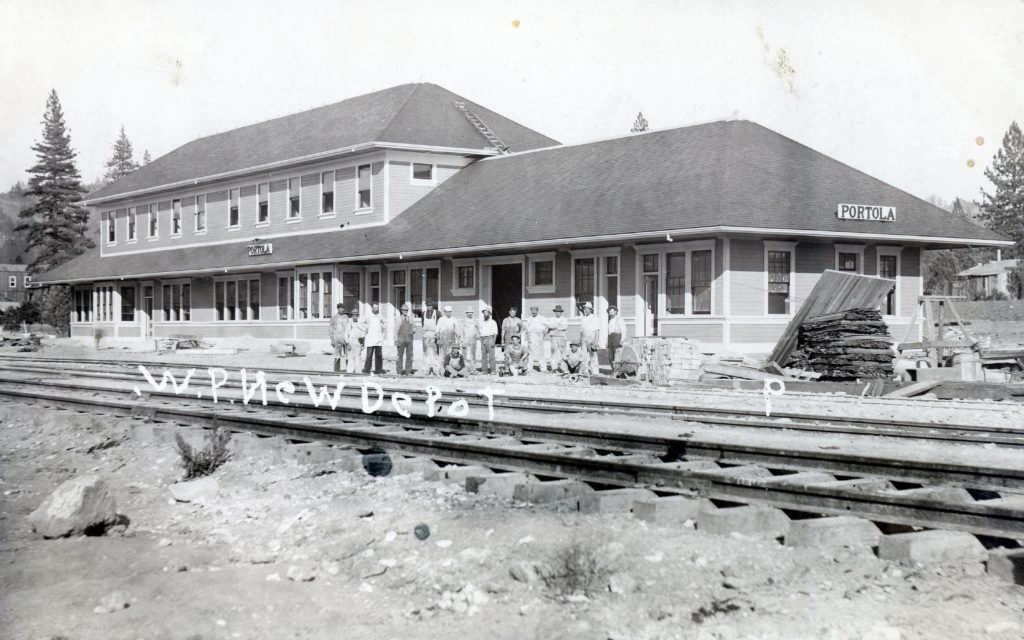
The Portola Depot. Notice the rails had been recently laid, no ballast.

Back in August 2018 I wrote about how Doyle and Portola were in competition to become the division point for the Western Pacific. A reader recently questioned a comment that I stated the Western Pacific Railroad built the line, and wanted clarification that it should be the Western Pacific Railway—in their opinion two different companies.

In 1903 the Western Pacific Railway was incorporated to build a railroad from Salt Lake City, Utah to the San Francisco Bay. This was accomplished. The Western Pacific struggled financially, since it had no capital to build its proposed feeder lines that would increase freight traffic, thus increase revenue. In 1916, on the brink of financial collapse the Western Pacific Railway reorganized to become the Western Pacific Railroad—same company just a change in semantics.  Now back to the  original question, technically  it was the Utah Construction Company that did the physical work to construct the railroad, under a contract with the Western Pacific Railway.

Support

A Burney-Little Valley Railroad?

Burney, circa 1940

During the 1930s, Red River Lumber Company’s, Westwood Operation was going through tumultuous times. The one bright spot, and its biggest asset was the Burney Tract of eastern Shasta. It consisted of 83,000 acres with an estimated 2 billion board feet of timber. That’s a lot of wood.

The problem with Burney it was not accessible by rail. In 1936, a proposition was floated internally by Red River management to correct the situation. There were, of course, two obstacles the distance and the natural barrier of Hat Creek Rim. To bypass Hat Creek it was suggested to branch off the Western Pacific Railroad at Little Valley (in northwest Lassen County south of Bieber). Problem solved, or some thought. Then a family feud ensued that logs would be shipped all the way to Westwood to be milled. There were two train of thoughts, one to keep Westwood going and the other Westwood had run its course and time to shutter. Neither side prevailed. Sheer economics won, when it would cost to pay Western Pacific toll fee to haul the logs from Little Valley to Westwood was thirty cents per car mile—way too expensive. The project would be resurrected again, with a different, and closer departure point, which will be examined in a future post.

Spread the word, and encourage a friend to subscribe

A Winter Wonderland Mecca?

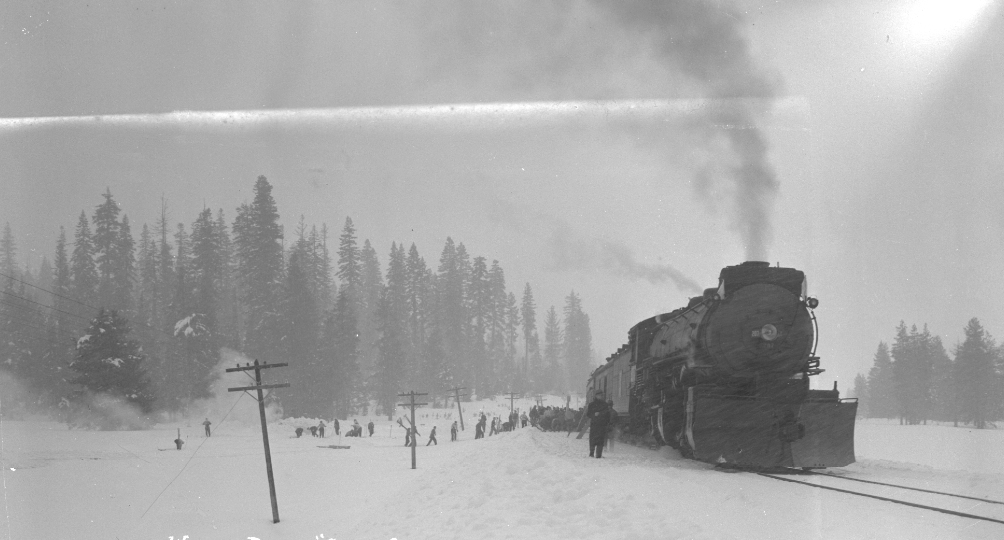
The Snowball Special at Norvell, 1938.

The Susanville progressives of the late 1930s were an active bunch. By February 1938 major progress had been made with ski runs at Coppervale and Willards. Then, the Western Pacific Railroad started running a special “Snow Ball Express Train” from Oakland, picking up passengers on various stops with the final destination at Norvell, just north Westwood. The passengers then embarked and spent the day frolicking in the snow.

Then Eric Hebbe and Leslie Mastolier* set their sites on developing a ski area on Diamond Mountain, just south of Susanville. With tremendous snowfall that winter, a number of ski enthusiasts would spend five hours hiking to the summit of Diamond, to ski down in less then two hours. However, no development occurred, though over the years, the topic surfaces.

*Mastolier was best known as the founder of Susanville’s Leslie Jewelry. During the 1930s and 1940s he made films of these episodes. His son, Gary, years later offered to me, but it never materialized.

Never miss a story, click here to subscribe.