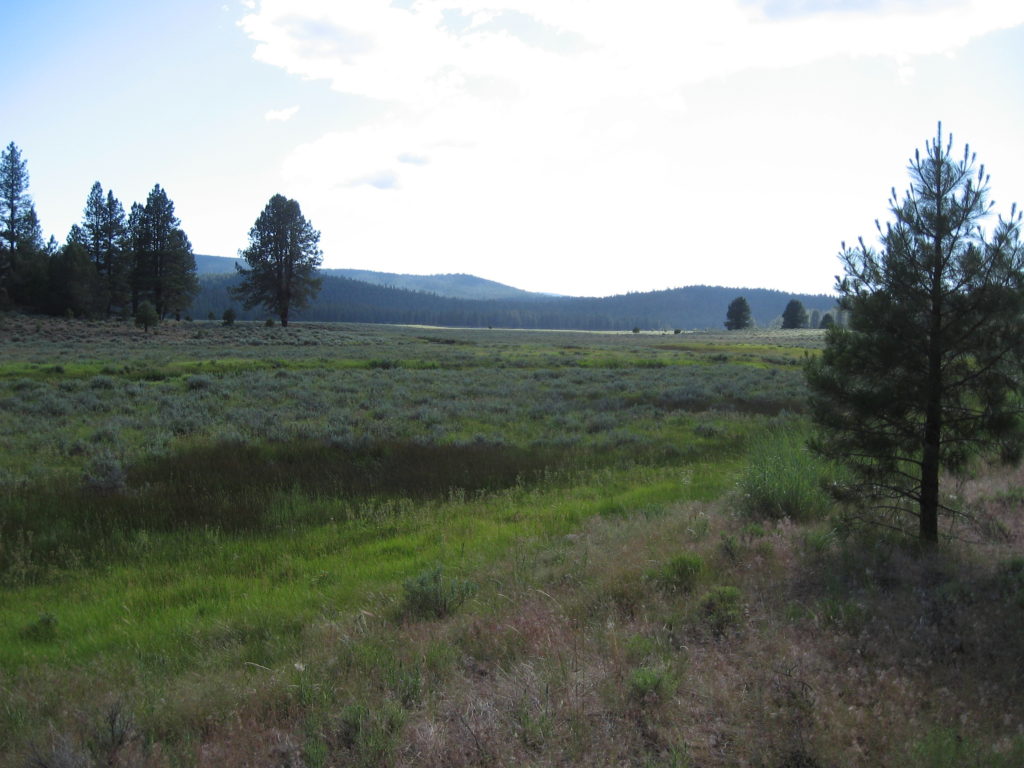
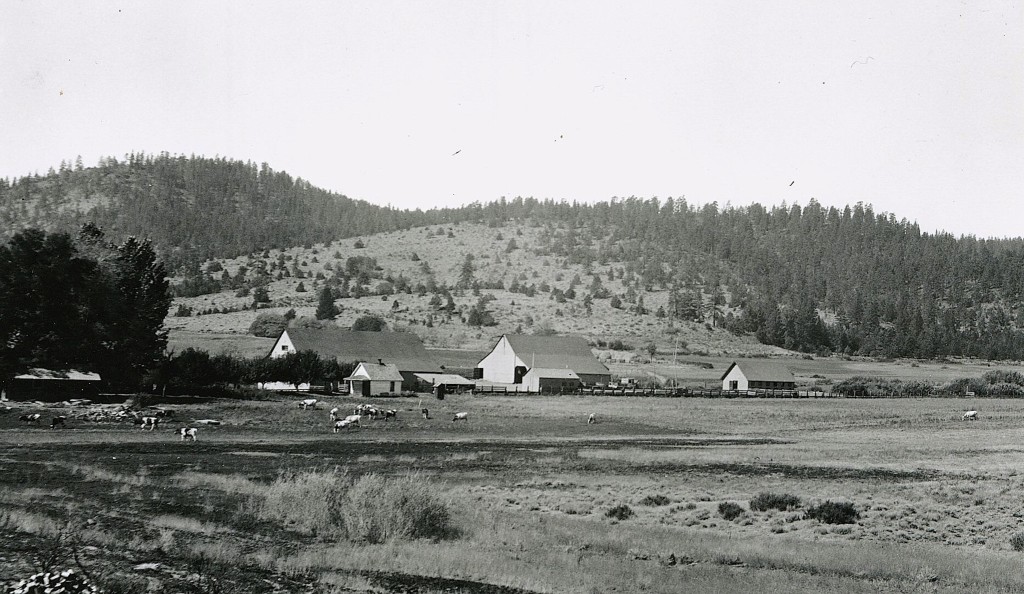
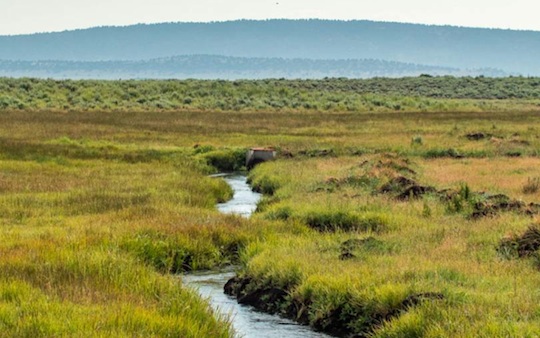
Swains Hole is a small shallow water basin in far western Lassen County. It is located approximately three miles northwest of Poison Lake, near Highway 44. In 1881, Tehama County rancher, Theodore S. Swain, began using this territory for summer grazing. He continued to do so until his death in 1906.
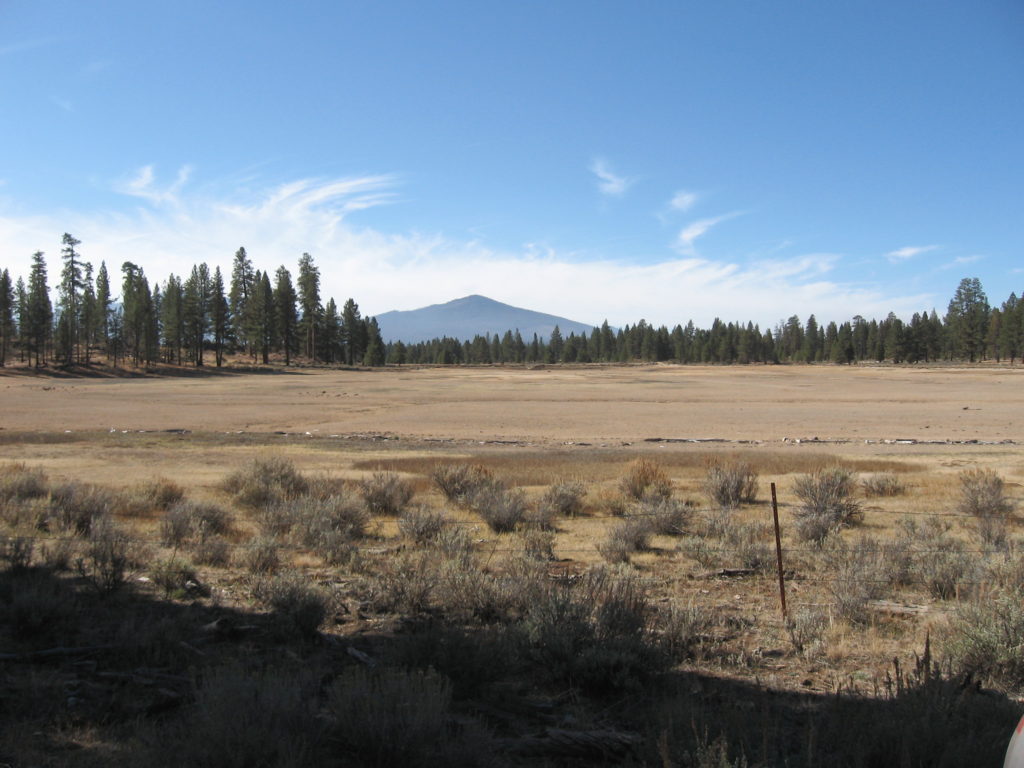
There are three McCoy Flats in Lassen County. Today’s feature is the McCoy Flat located approximately three miles west of Spalding Tract. It was named for Tehama County rancher Leo Lewis McCoy who used this area for summer pasture from 1874 to 1913.
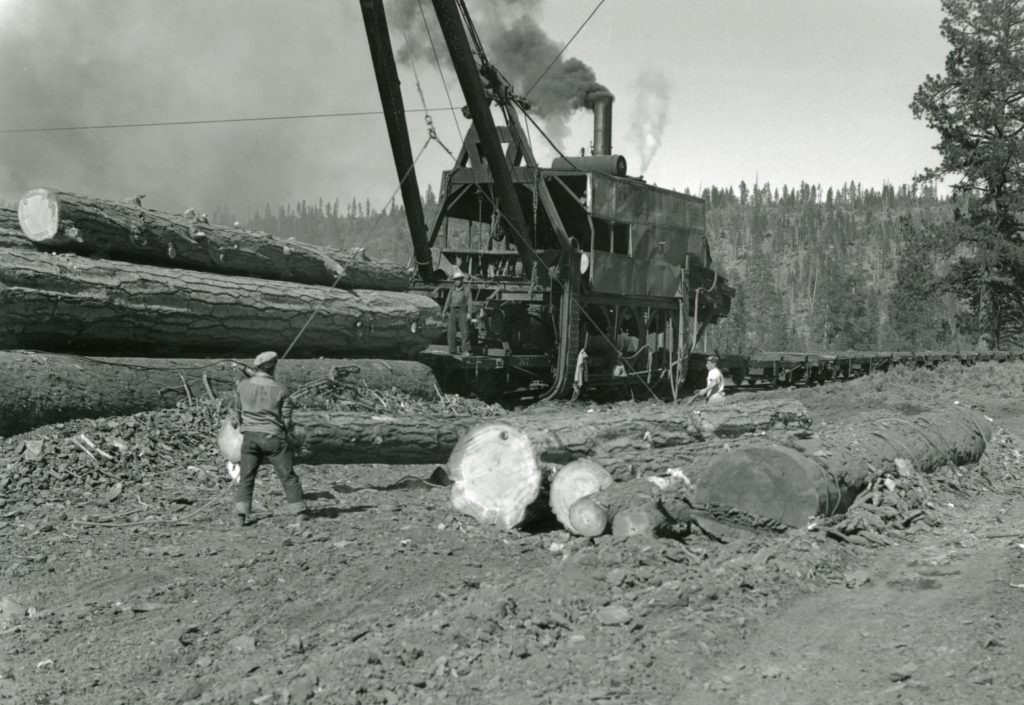
In 1951, there was a lot of activity at McCoy Flat when the Fruit Growers Supply Company logged the region.
Log landing at McCoy Flat, 1951. Courtesy of the Fruit Growers Supply Company
That was the front page headline of the Lassen Mail of January 31, 1936. the newspaper reported that L.E. “Gene” DeForest purchased the Ramsey Ranch south of Susanville (Many people know this day as Les Allen’s Ranch on Richmond Road. Also included in the sale was the 1,400 acre Swain Ranch on the Madeline Plains.
The other big transaction was Fruit Growers Supply Company sold the ranch north of town along Piute Creek to the Republic Electric Power Company for $35,000. (The property today known as Susanville Ranch Park). Fruit Growers had acquired it in 1919, for Bagwell Springs that they intended use for the mill operation. The company spent several thousand dollars to build a pipeline from their to their mill adjacent to Riverside Drive (that later became Sierra Pacific). Not a drop of water flowed the pipeline. The downstream water users object and through the court obtained an injunction. After that Fruit Growers leased the ranch. Republic Power wanted to water rights to the spring since they also owned the existing Susanville Water Company and local electric company.
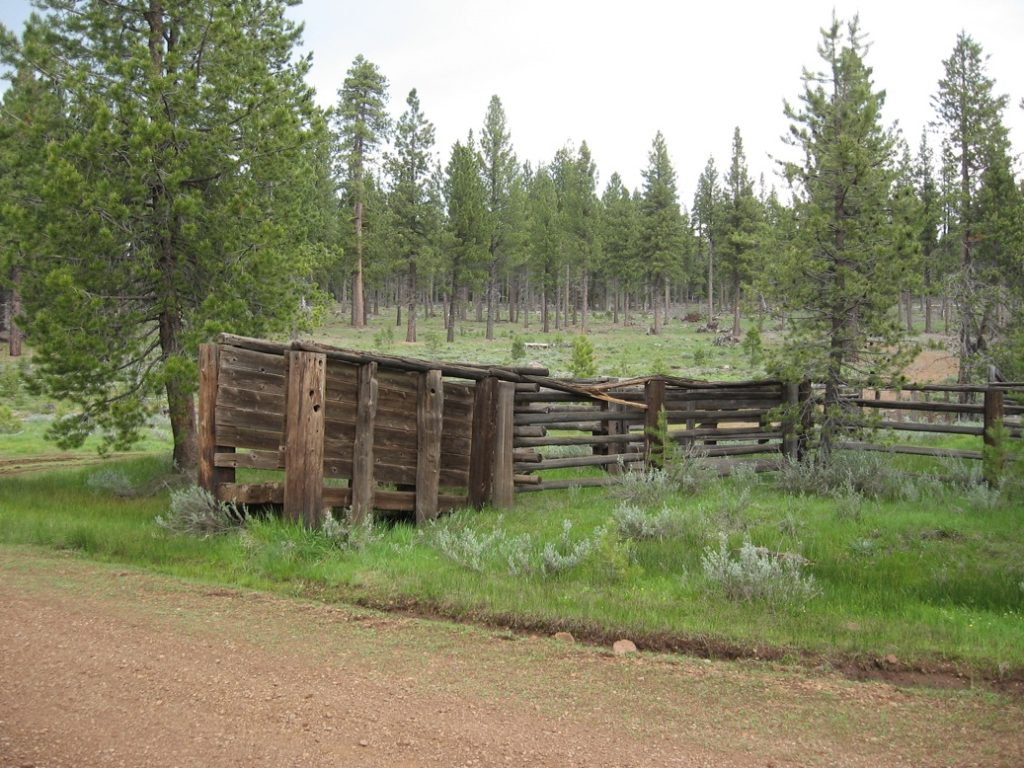
These stock corrals with their loading chutes are becoming relics of a by gone era. According to a 1971 Lassen National Forest Service has the corral featured as Coyote Corral about two miles north of McCoy Flat Reservoir. It was built in the 1960s by DeBragas and Roney.
Large portions of western Lassen County was the summer range for ranchers of the Sacramento Valley, with those from Tehama County who were predominate. Many of the geographical features there are named for them: Bogard, McCoy, Logan, Cone, Campbell, and Willard to name a few.
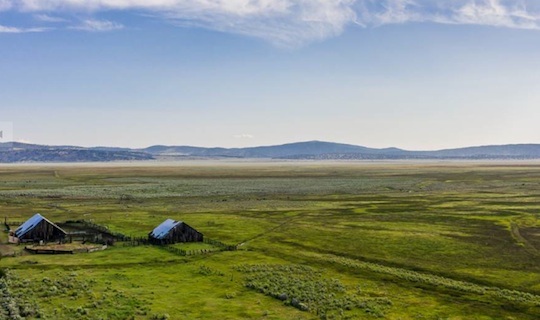
The Heath Ranch in Grasshopper Valley, north of Eagle Lake is on the market for $10.9 million dollars. Included in the deal is some 16,000 acres, two reservoirs—Cleghorn and Heath—two historic barns and corrals. If you want to live there, you are going to need some additional funds, since there is no house on the property.
High Rock Ranch in eastern Honey Lake Valley was a popular gathering place for rodeos in the late 1800s. Courtesy of Madelyn Mapes Dahlstrom
Three days later, June 22, 1874, Daniels was able to witness his first rodeo and wrote: “They take wild colts, throw a rope over their neck and choke them down. Then they put a blind on them. They use a halter called a Hackamore, with a long rope to it. They don’t put on any bridle and the blind is a broad piece of leather with strings to tie it on so they can slip it down over their eyes or up so they can see. After these two things are on, they are let up. Then they slip the blind over their eyes and put the saddle on. The rope is tied so as to make a rein to hold on to. Then they are taken out of the corral and there is three to five men mounted to ride at each side and behind to keep them from running into the fence or any other bad place. One has a big whip, when the rider mounts the blind is raised and the show begins and it is a considerable show. One would think the horse would be tired out before the rider gets on, after all the horses had all ready been run through a round up and all. But they buck, pretty tall, and it takes a good rider to stay on. It jolts a man awful. The men did well today, none got thrown. They make them buck all they can. When they quit that, the fun is over. It is broke and turned out and another caught and the same performance again, with but little variation.”
It was interesting to note Daniels final observations. The reason for his attendance was his brother-in-law, Elisha Parks, was in search of stray livestock. Daniels noted that Parks’ three colts had been separated in the corrals, but never broken. Parks thought they could just drive them home. Daniels, wrote that did not happen, and the scenario was like driving deer, and the animals fled to the mountains.
Finally, Daniels was amazed about the difference in hospitality between Honey Lakers and those in Iowa. He noted the host of event fed everyone for free, and he recokened there were nearly forty men there. In summation, Daniels wrote, “Not many would do that in Iowa.”
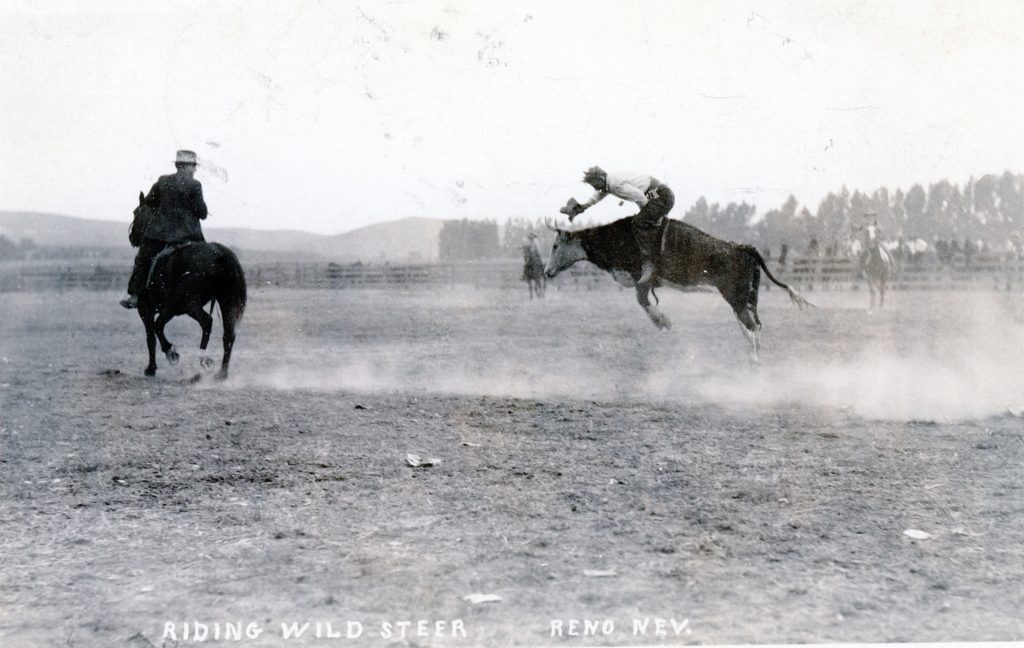
Rodeos, like so many other events have evolved over the years. For instance, in this region, during the late 1800s, they usually occured in late spring to round up livestock that were allowed to graze freely during the winter months.
In May 1874, Sylvester Daniels arrived in the Honey Lake Valley from Iowa, to spend time with his sister, Polly Parks and her family, to see if the change of climate would be beneficial to him.
Daniels kept numerous descriptive journals during his stay. When one journal was finished, he would send it back to his family in Iowa to provide them with insight of what life was like on this new frontier.
On June 18, 1874, Daniels wrote: “Jerry Leaky came here and stayed last night. He is herding stock on the other side of the valley. It seems they have a great time every spring, Rodeoing, they call it. A lot of men having stock out together, camp out, sometimes as many as 150 men. They go around from one to place another and have all the stock gathered together that are in reach. Separate each man’s stock from the rest, get them in the yard (or corral as they call every place that they yard cattle or horses). They mark all of the calves, colts and stock that has changed owners. They have their Buccaroes, men with the Lasso to catch and hold the stock while they operate with hot irons. I should like to go and see the thing done, then I could tell more about it.”
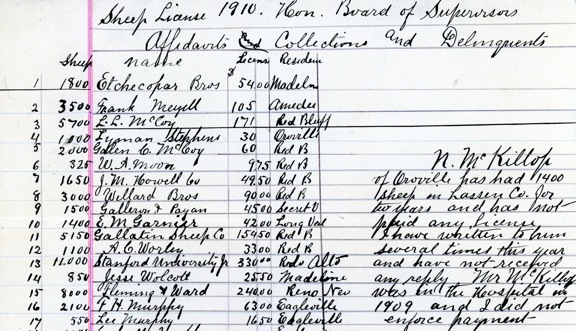
In the early 1880s, California’s mountain counties lobbied the California Legislature for the implementation of a migratory sheep license tax. It was their contention that seasonal movement caused damage to the roads, thus the counties should be compensated for the road maintenance. Of course the sheep industry fought hard against. Even when legistation was passed to implement the tax, it was challenged in court, but lost. In 1910, Lassen County assessed a tax at three cents per head. One of the largesgt sheep operaters in Lassen County at that time was Stanford University that grazed 11,000 head of sheep just west of Eagle Lake. In the 1920s, the sheep industry collapsed, but with other factors in play the sheep license was repealed.
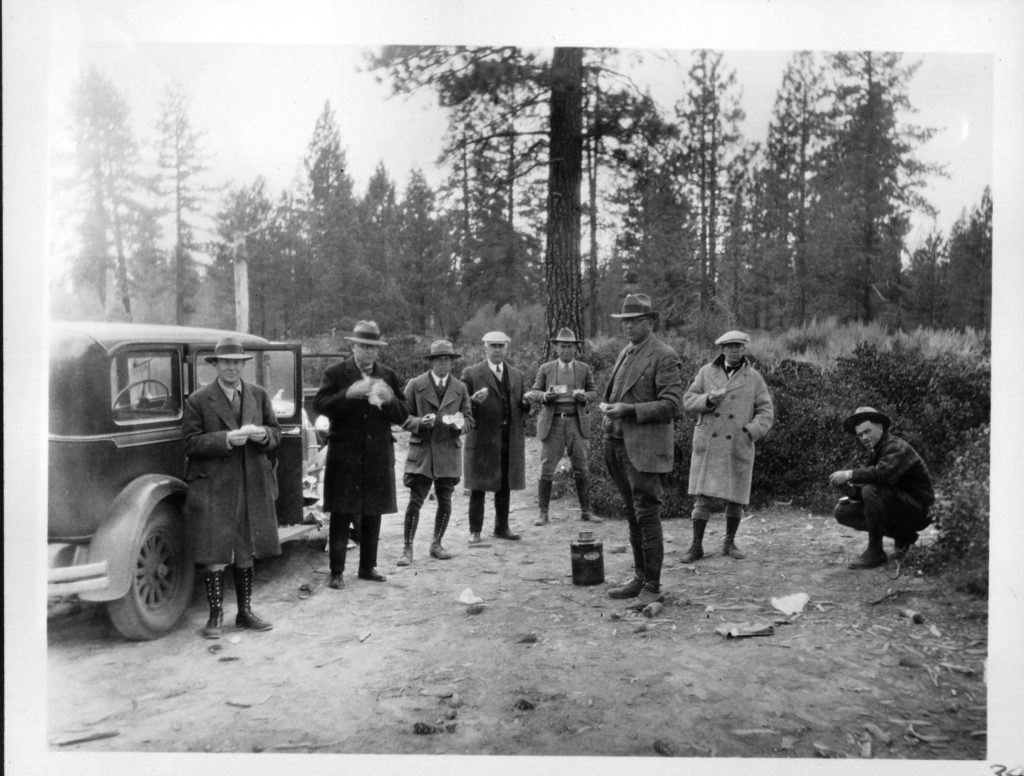
Lunch break of park and Western Pacific Railroad officials, 1930. Courtesy of the National Park Service
For the casual observer who decides to make a detour off Highway 44, near Poison Lake in western Lassen County, to travel the dirt road north to Pittville, one will see a variety of sights along the way. One of the first encounters is that of Halls Flat, a small non-descript sagebrush covered flat surrounded by pine trees. Nothing to get excited about, but like watching one of those late night infomercials, there is a lot more in store!
In the late 1910s, Tehama County rancher, Walter Davis Hall (1886-1960) used this area for summer grazing and on April 29, 1926, he was granted a 160-acre land patent—hence the name Halls Flat. Little did he know, that not to far in the distant future, this spot would be an amazing hub of activity.
It first began, in 1930, when the Interstate Commerce Commission approved what many refer to as the Highline or Inside Gateway that connected the Western Pacific Railroad from Keddie, California with the Great Northern Railroad at Klamath Falls, Oregon. This just happen to coincide with the development of Lassen Volcanic National Park and this future railroad line would come close to the park’s eastern boundary. Customary at the time, Lassen Park and Western Pacific had a courtship—the park seeking a concessionaire, while the railroad hopefully would see increased passenger service among other amenities.
This is where, Halls Flat could have played a pivotal role. Western Pacific would develop a resort at Manzanita Lake in the park. At Halls Flat, or maybe Poison Lake, where a railroad station would be built, there would a stop. At this point, passengers would disembark and be shuttled by bus through the northern section through the park to their destination at Manzanita Lake to spend days recreating. To build the lodge at Manzanita along with other amenities was estimated at $275,000. Due to outside legal issues, the Western Pacific had to suddenly withdraw from the proposal.
The stage was set, for different reasons, and Halls Flat became a major hub of activity during the 1930s and 1940s that we will explore in future installments.
The Round Barn, Little Valley, Lassen County, prior to it being moved to Fall River Mills. Courtesy of Tom Glunt
The livestock industry has always played prominent role in the region’s economy. However, with time, everything evolves, horses and sheep no longer play a prominent role as they did in the past.
Recently, I came across an interesting statistic. During World War I eight million horses perished in the variety of the conflicts—1.8 were German horses! A staggering figure. It was after all a transitory time, motorized equipment was still in its infancy stage. The Caterpillar tractor company made so many experimental changes during the war, that locally, after the war would revolutionize logging methods.
An interesting Lassen County landmark was constructed in Little Valley tucked away in the northwest section of Lassen County. In 1916, R.L. “Bob” Johnson constructed what became known as the “Round Barn.” Johnson needed a structure where he could train horses during the winter months, as they were in great demand in World War I. Over the years, the elements, etc., took a toll on the building. By 2004, the Fort Crook Historical Society had started a movement to relocate the barn to their museum complex at Fall River Mills. It was a slow process, but they succeeded, and is now restored to its glory.