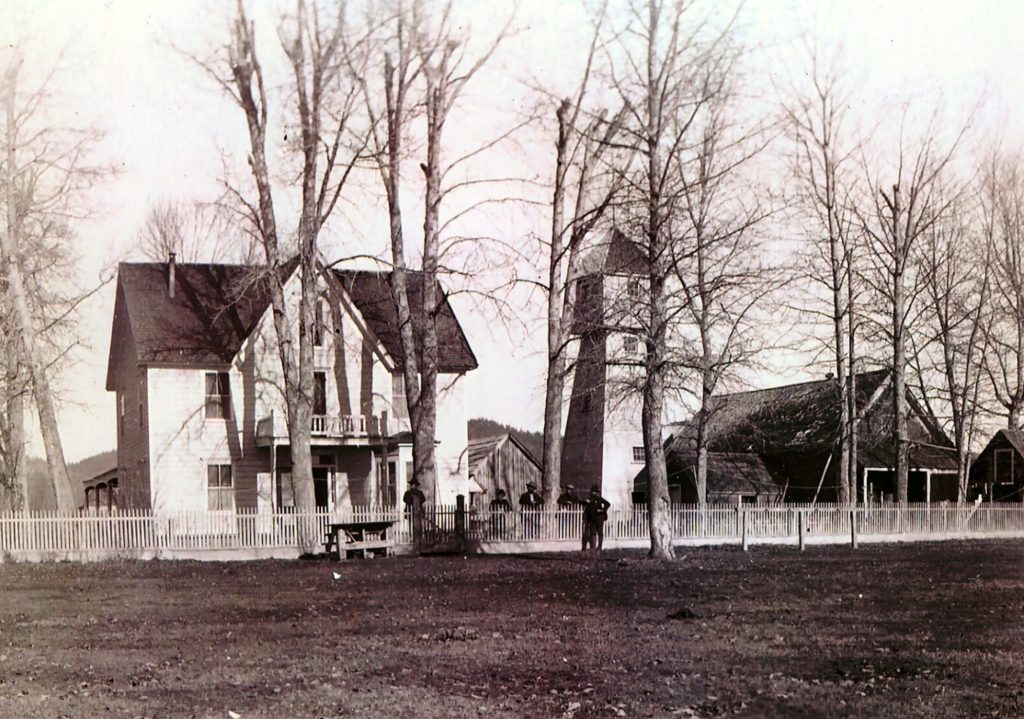
By the late 1930s, the Red River Lumber Company had exhausted most of its timber tributary to Westwood. Red River officials consulted with the Lassen National Forest about a possible exchange of cut-over lands for timber rights on Forest Service lands, which could be done under the accordance of of the Land Exchange Act of 1922. The Forest Service considered the exchange program beneficial in the long range for future recreational aspects for the public and also for the re-growth of the forests. A deal was struck and on January 21, 1941, Red River deeded over some 50,000 acres adjacent to Lake Almanor and Butt Valley to the Forest Service in exchange for 50 million board feet of timber in the Moonlight district, east of Westwood.
Camp 38, Red River Lumber Company, 1922. It was located on the east shore of Lake Almanor. Courtesy of R.S. Pershing
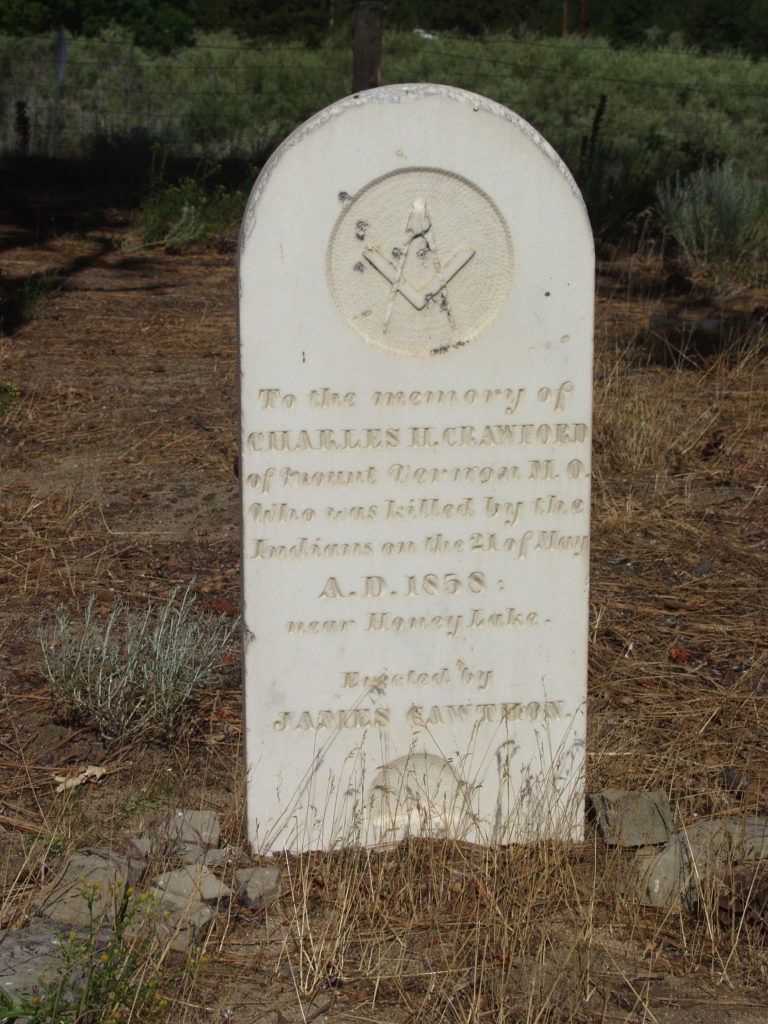
The grave of Charles Crawford, July 1, 2020—Larry Plaster
During the spring of 1858 relations between the Maidu and Washo tribes and the Anglo settlers were tense due to the Indians driving away the Anglo’s livestock. In May 1858, the Indians drove a yoke of oxen from Manly Thompson, near Janesville and for whom Thompson Peak is named for. The oxen were driven over the mountain. A posse of nine men formed to search for the animals. Eight traveled on foot, while Charles Crawford, a very heavy set man, rode a mule. Once over the mountain near Last Chance, they encountered an Indian camp, but there were no signs they had anything to do with oxen. Later they encountered another group of Indians, who fled, and a pursuit ensued. Crawford had a encounter with one, who shot him with a arrow, that deeply penetrated his chest to the extent, it nearly went through his body. In the end, the other men made a make shift of stretcher to carry Crawford back over the mountain to Janesville. It was an ordeal for them due to his weight. There was little that could be done to aid in his recovery and he died three days later on May 21, 1858, and his grave became the nucleus of the Lake Cemetery.
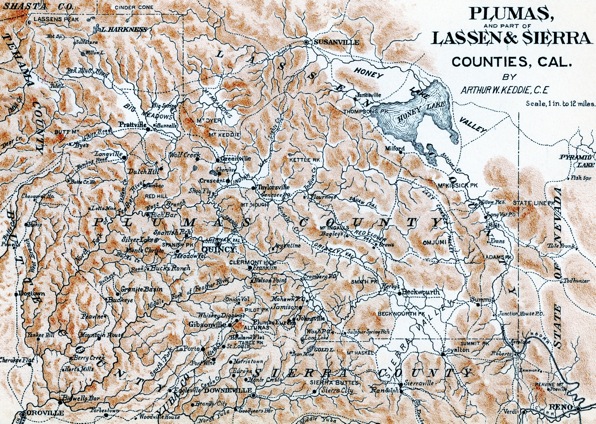
The original map has color, the reprint of the book does not.
In 1882 saw the publication of one of the first histories of the area—Farris & Smith’s History of Plumas, Lassen & Sierra Counties. It was subsidized by selling biographical sketches for $75 to be included in the book. It should be noted the Lassen County segment was done by E.R. Dodge. Dodge remained in the area after the publication and even obtained a law degree. He was a major figure in the Eagle Lake Land & Irrigation Company of the early 1890s, that among other things was successful to pump water out of Eagle Lake and flowed all way to Amedee on the east side of Honey Lake.
Anyhow, I thought some might enjoy the map that appeared in the book. Of course, a lot of changes have occurred and notice the absence of man-made lakes such as Lake Almanor.
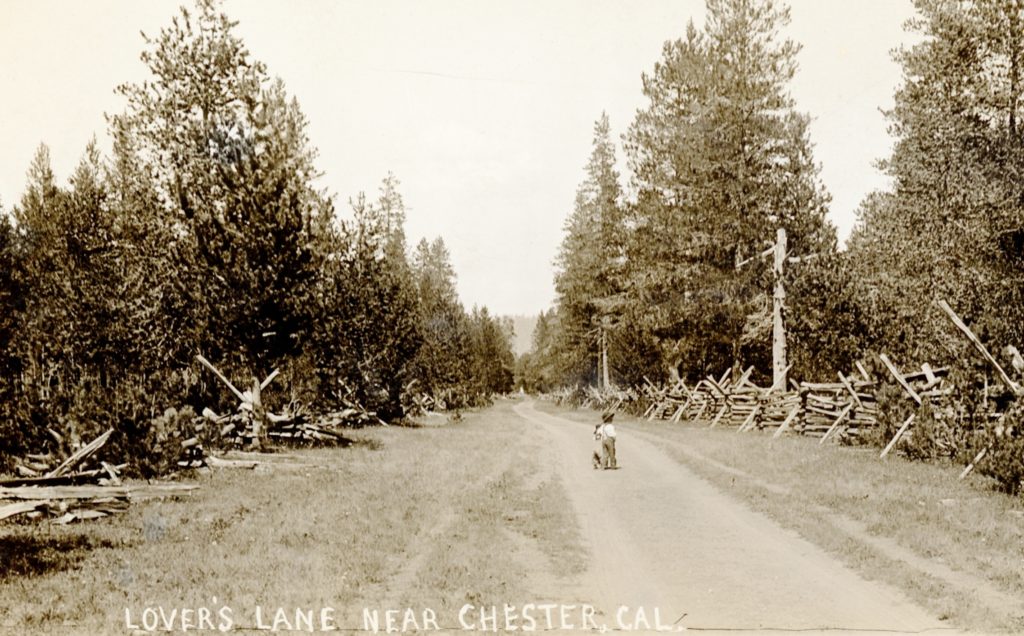
Lover’s Lane, near Chester, circa, 1914–Hazel York Moller
When I penned this, it was before the Covid 19 pandemic. Normally, Chester’s Fourth of July parade draws big crowds, making it the largest community in Plumas County. This year’s festivities have been cancelled.
Today’s photograph, however, back in the day, never witnessed a whole lot of folks at once. The postcard given to my by the late Hazel York Moller was taken circa 1914. Where Chester’s Lovers Lane was back then is up to speculation, and whether Chester has a Lovers Lane in 2020, I do not know that either. Its a big holiday weekend, so enjoy, but be careful at the same time.
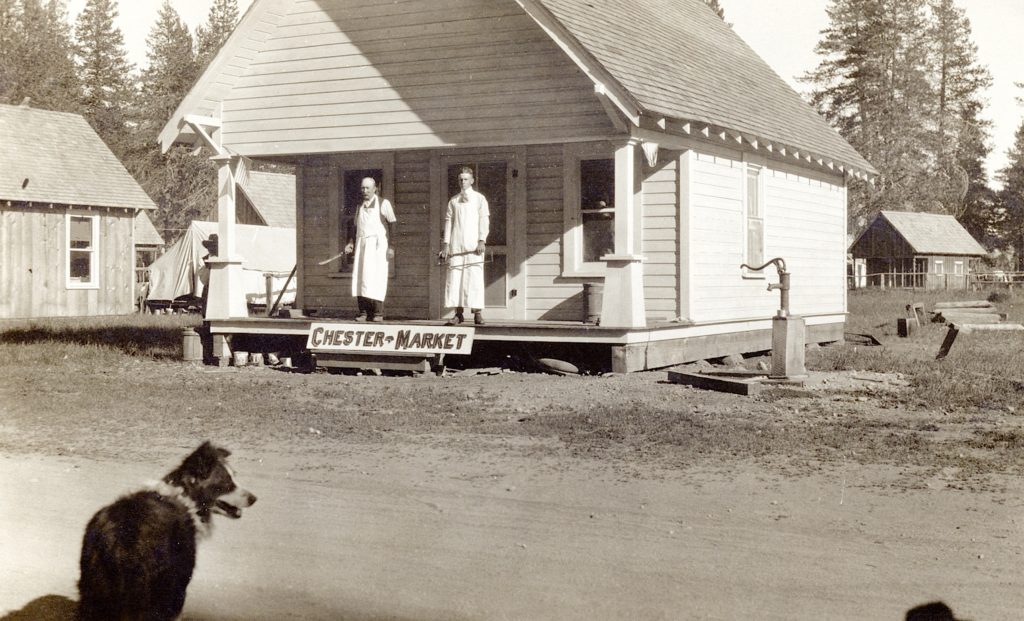
Chester Market, circa 1915. Courtesy of Hazel York Moller
“The worst snow was in 1895 and 1896. On January 4, 1896 it snowed four feet in 24 hours, with a total depth of18 feet for the month of January. Up until March there were 11 feet of snow on the level on the streets of Chester. On an earlier occasion in 1880, the winter was extremely mild until April when during that month it snowed six feet.
“In 1900 the first logging company arrived, which was known as the Sierra Flume and Lumber Company. Then in 1910 “Hi” Browne working for the Red River Lumber Company arrived to survey the surrounding country, but it was not until 1914 that operations for this company commenced.
“In 1910, also, the Great Western Power Company started buying land in this vicinity which ultimately led to the construction of Butt Lake and Lake Almanor. The first water was stored in these two lakes in 1915. Many local people were of the opinion that this rise in the water was cause of the eruption of Mt. Lassen on May 22, 1915. Science, however, discredits this theory.
“There were no fires or other damage in the vicinity of Chester as a result of the eruption, although smoke rose five miles high and the noise was tremendous.
“Chester has grown in fame as a resort town. Surrounded with good deer hunting country, with Lake Almanor in the foreground and with many trout fishing streams and lakes at nearby distances the Chester community has continued to thrive.”
Chester, California, 1914. Courtesy of Dolores Gasperoni
In 1943, George Olsen, who was born in 1871 at Big Meadows, now Lake Almanor provided a presentation to the Chester Lions Club about the history of the area. I thought some might enjoy.
“The first people to arrive in the Big Meadows country were Pete Olsen, Rube Stover and Thad Stover, about 1850, looking for better summer range land. Native grasses was found in the valley belly deep to a horse. These lands were used during the summer months for four years and in 1854 they settled down and built their homes in the valley. Previously they had been commuting from Oroville via Humbug Valley.
“Their means of livelhood was sheep, cattle and dairy products which were sold in Chico, Oroville, Susanville and later Westwood.
“I was born in the valley in the vicinity of Chester in 1871 and have lived there ever since. About the time of my birth the valley commenced to grow. Several families from the Sacramento Valley moved in, including Bert Johnson. Johnson was responsible for the naming of Chester which was named for a small town of the same name in Missouri.
“The Chester post office was opened in 1896 and was located at the north end of the causeway, near the present fish traps. Johnson was the first postmaster.
“From the beginning Chester was considered a resort town, depending almost entirely upon tourists and sportsmen for its livelihood. It was even considered a resort by the Indians who came there in bands of 300 and 400 to hold their powwows and to play Indian football. The local Indians in this valley were known as the Big Meadows Indians. Their most frequent visitors were the Hat Creeks from across the mountain.”
In late January, an out of town friend came to Susanville, with a possibility of cross country skiing, or to see if I was able enough to try snowshoes. Those options did not quite pan out, so off to do some sight seeing and exploring. While my intent was to see Taylorsville and Genesee Valley, I thought our visit was going to brief, since there was one area I wanted to check out the snow conditions, before sunset. Anyhow, the old Genesee Store has been restored and converted into a restaurant. I was under the impression that they were closed in the winter. My friend, whose inquisitive nature, noticed activity and went and knocked on the door, as they were closed. They would be open that evening and if we came back at five, they could fit us in, as they were booked with reservations. It was a great dinner and highly recommend it.
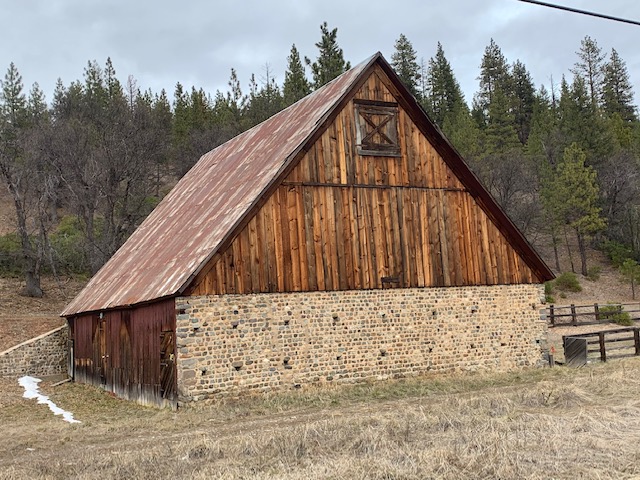
One of the barns adjacent to the Genesee Store. January 25, 2020
Here is some background about the place. Edwin D. Hosselkus (1828-1892) was a native of New York but grew up in Illinois. It was at the latter where he worked as a clerk in a general mercantile store, and a good experience for him. In 1852, like so many before and after him, was lured to California. In 1854, he opened a store in Elizabethtown, Plumas County. In 1856, he relocated to Taylorsville, where he went into partnership with I.J. Harvey in a general store. 1862 was a pivotal year for Hosselkus. At the time, he purchased land in Genesee Valley. In another bold move, Hosselkus & Harvey relocated their store to Susanville. For a time, it was the largest store of its kind in the Honey Lake Valley. In 1865, Hosselkus and Harvey parted company, with Hosselkus moving to his property at Genesee Valley. There he opened a store and established the Genesee Post Office on September 19, 1865 and served as the first postmaster—he remained in that capacity until his death. The Hosselkus ranch remained in the family until the 1950s, the store having been closed years ago. Several years ago, the old store was brought back to life as a restaurant, and its worth trip for the food and see the country if you have never been there.
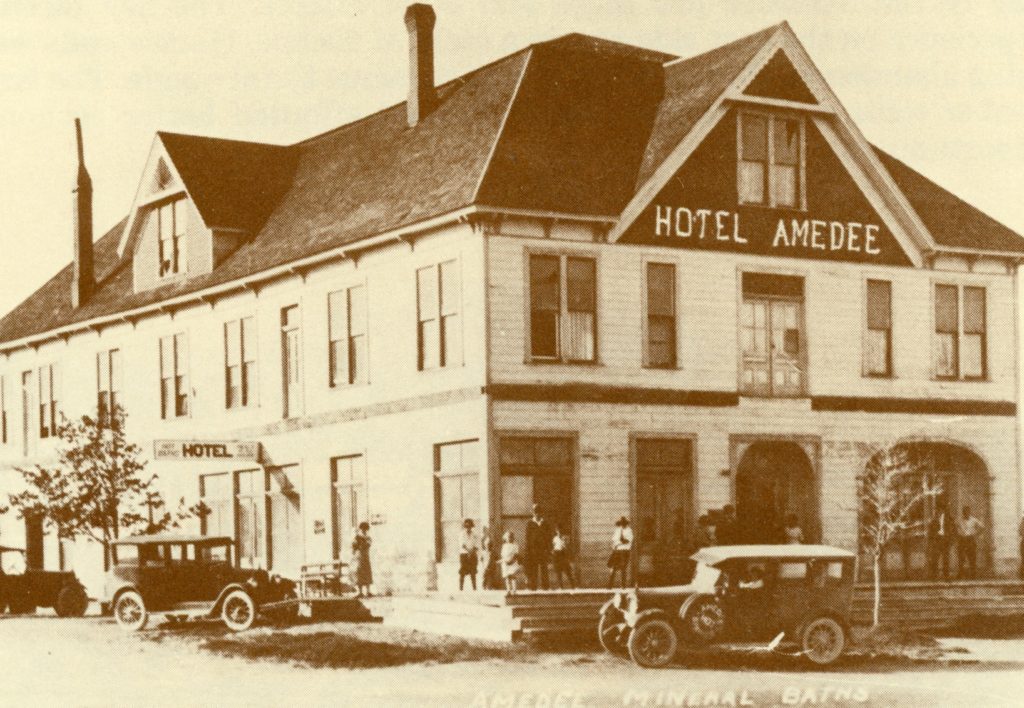
Hotel Amedee, after 1922–Courtesy of Modoc County Museum
Law enforcement officials from time to time come across some interesting episodes that challenge the mind. One such occurrence was in June 1931 when the Lassen County Sheriff’s Office received a call that the bar from the old Amedee Hotel had been stolen. The hotel it should be noted had been abandoned for some time. Of course, law enforcement officials were intrigued with this development, it being prohibition. Who would want a bar? After all local bootleg joints could get by with a cheap pine table.
A month later, the bar was reported to be in Chester, Plumas County at the residence of O.D. Irwin. It was his contention to use the wood from the bar to make furniture. Irwin was charged with a misdemeanor, paid a $50 fine and was ordered to return the bar to Jim Humphrey, who the Amedee Hotel. When the story made news, Marion Larrea who at the time was operating a pool hall in Susanville, contacted Humphrey, purchased the bar and put in his establishment on South Weatherlow Street, where it remained for many years. It should be noted, that after prohibition, Irwin operated a bar known as the Red Feather Inn in Chester.
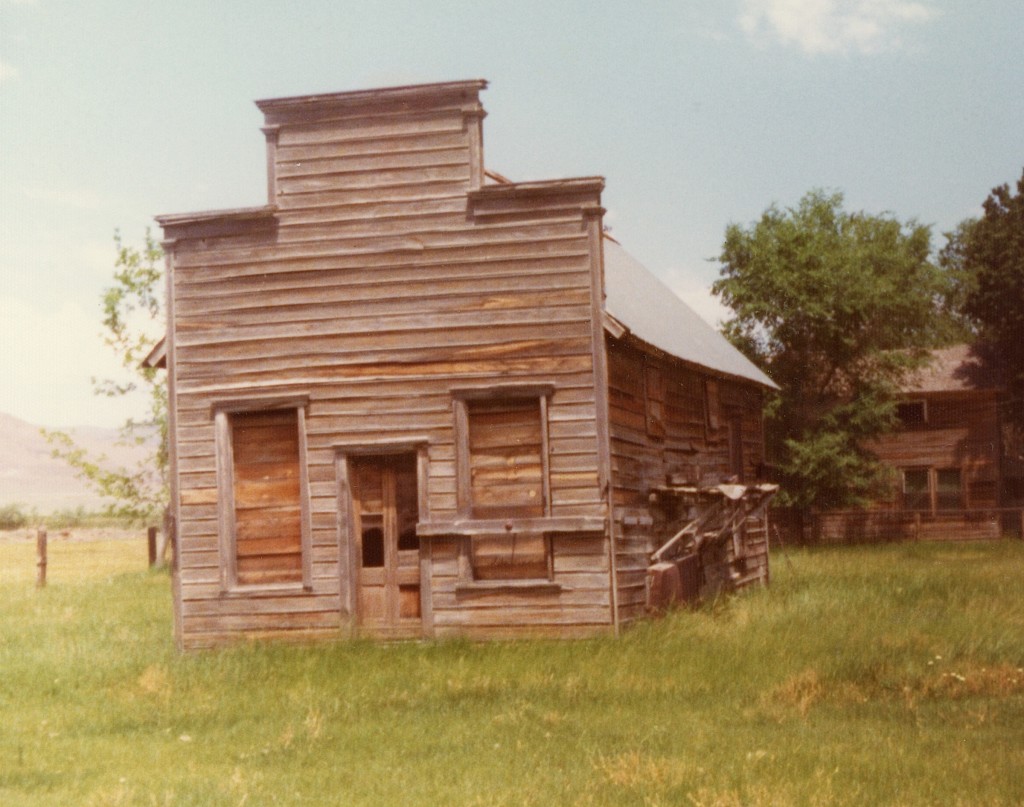
Byers’ old Baxter Creek general store that was later moved his Tule ranch and operated by his nephew, Jim McClelland, May 1975
Today, is Lassen County’s birthday, it being created on April 1, 1864. Many people may not realize but the original proposed name for Lassen County, was Byers County. So who was Byers, and why was he to be honored? In 1858, James Davis Byers (1825-1902) purchased some property along Baxter Creek near Janesville. However, he remained a Quincy resident for sometime. In February 1863, Byers served as a Plumas County Deputy Sheriff, and played a significant role in the Sagebrush War. The final result of that conflict led to the creation of Lassen County the following year. Plumas County Assemblyman Robert A. Clark introduced the legislation to create the new county. Clark proposed to name it Byers County, but Byers declined. Byers suggested that it should be named after Peter Lassen, and thus the Lassen name was applied to the new county.
More about Byers in a later post, though by 1880 he was one of the ten wealthiest people in Lassen County.
In 1860 Reuben Stover located at Big Meadows, known today as Lake Almanor. He established a dairy operation near the present site of the town of Chester. Stover died in 1897 and his son, Charley, would eventually take over the family business.
Charley Stover looked at every situation through a variety of angles. The dairy business fluctuated with good and bad times. With Great Western Power busy buying properties at Big Meadows for its Lake Almanor project, it reduced places for summer visitors to stay. Charley saw an opportunity to diversify. The ranch house became an impromptu hotel. During busy times, family members slept in the nearby bunkhouse. Stover next ventured into cattle ranching, and it turned out to be a profitable move. By the mid-1920s with developments at Chester with more accommodations available, the Stover Hotel reverted back to a ranch house.