Tag Archives: Nevada

Red Rock Ranch & Rancho Haven

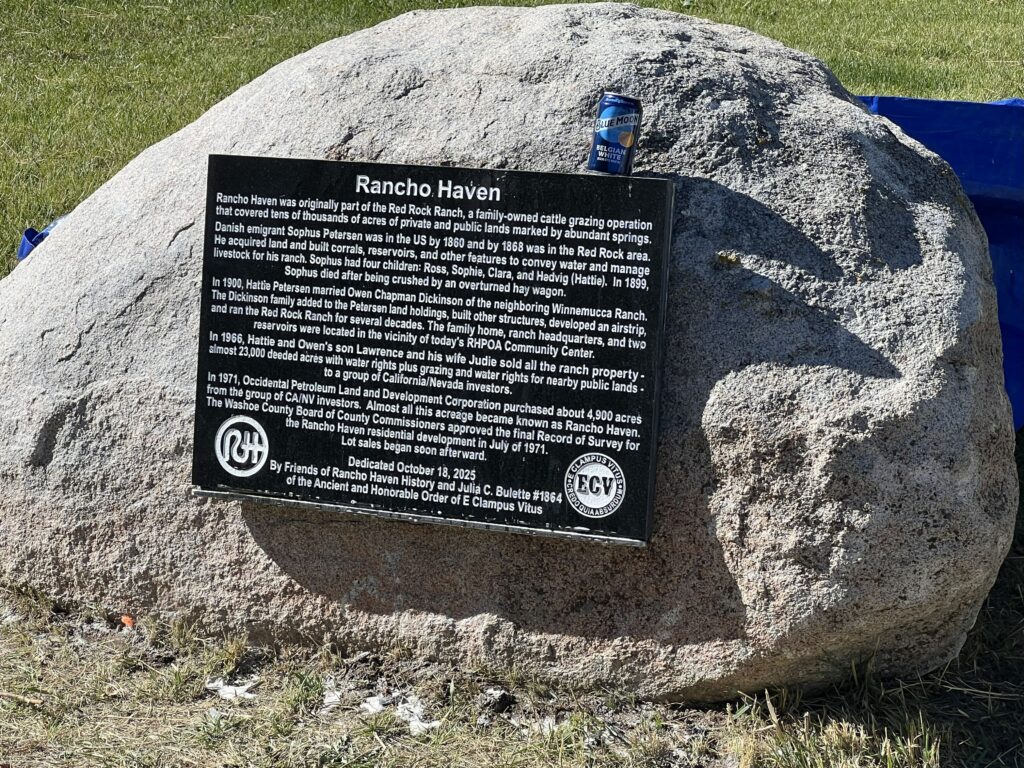
Rancho Haven Historical Plaque Dedicate, October 18, 2025-Courtesy of Pat Davison

Red Rock is a common name for landmarks in the American West. Today’s featured Red Rock is located in Washoe County, Nevada, north of Reno and south of Doyle. In 1867, Thomas Pearson and John Sutherland left Red Rock to relocate to Lower (Amedee) Hot Springs on the east side of Honey Lake. The following year, they planned to return to Red Rock, but were victims of what is known as the Pearson Massacre.

Sophus Petersen who had been in the Long Valley area, located on the abandoned Pearson & Sutherland property. Petersen, it should be noted was first married to Barbara Ross, whose father William and his brother Albert Ross ranch would eventually become Constantia.

On October 18, 2025 a historic plaque dedication was held at Rancho Haven Community Center to commemorate the history of the Petersen family and Red Rock. The pace reads as follows:

“Rancho Haven was originally part of the Red Rock Ranch, a family owned cattle grazing operation that covered tens of thousands acres or private and public lands marked by abundant springs.

“Danish emigrant Sophus Petersen was in the US by 1860 and by 1868 in the Red Rock area. He acquired land and built corrals, reservoirs and other features to convey water and manage livestock for his ranch. Sophus had four children: Ross, Sophie, Clara and Hedvig (Hattie). In 1899, Sophus died after being crushed by an overturned hay wagon.

“In 1900, Hattie Petersen married Owen Chapman Dickinson of neighboring Winnemucca Ranch. The Dickinson family added to the Petersen land holdings, built other structures, developed an airstrip an ran Red Rock Ranch for several decades. The family, ranch headquarters, and two reservoirs were located in the vicinity of today’s RHPOA Community Center.

“In 1966, Hattie and Owen’s son, Lawrence and his wife Judie sold all the ranch property almost 23,000 deeded acres with water rights, plus grazing and water rights for nearby public lands to a group of California/Nevada investors.

“In 1971, Occidental Petroleum Land Development Corporation about 4,000 acres from the group of CA/NV investors. Almost all this acreage became known as Rancho Haven. The Washoe County Board of Commissioners approved the final Record of Survey for the Rancho Haven residential development in July of 1971. Lot sales began soon afterward.

“Dedicated October 18, 2025 By Friends of Rancho Haven History and Julia C. Bulette #1864 of the Ancient and Honorable Order of E Clampus Vitus”

Support

Gerlach, Nevada, 1910

Gerlach, 1914

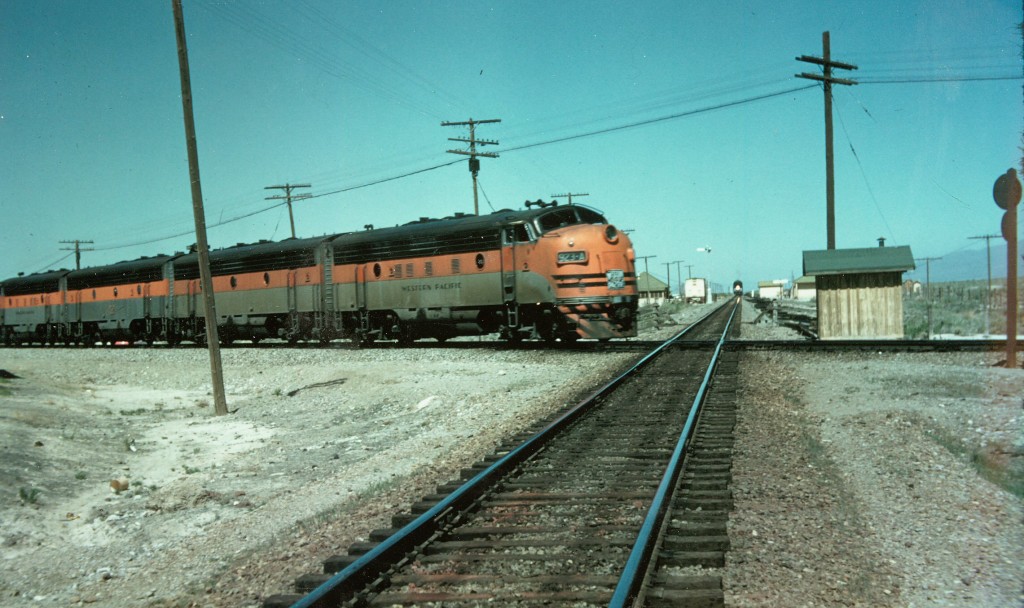
Gerlach which straddles the Black Rock and Smoke Creek Deserts is a unique community. Its latest notoriety is that it is the closet community of the annual Burning Man event. I thought some might be interested in this September 2, 1910 article about Gerlach that appeared in the Lassen Advocate.

 “Gerlach is Becoming a Metropolis. The town of Gerlach on the end of the Western Pacific is already the metropolis of northern Washoe County and is growing so rapidly that it will have a voting precinct of its own this fall.

“It will be the old Salt Marsh precinct, but a change will be made of the polling place to that point. The Buffalo Meadows farmers are kicking about the additional twenty mile drive to the polls, but as they previously had to go thirty-five miles, it is thought that the extra distance will not hurt them.

“There is a strong attraction possessed by Gerlach, which now boasts four saloons and more coming.

“Long Valley, some forty miles to the north, is also settlig up rapidly. There is a reclamation scheme in progress there and it is forecasted that the valley will be thickly settled and prosperous before many years pass.

“Gerlach is now the freight division point for the Western Pacific and is the shipping place for the southern end of Surprise Valley, California, to which place a county road was recently constructed.”

Tim

Smoke Creek Cross

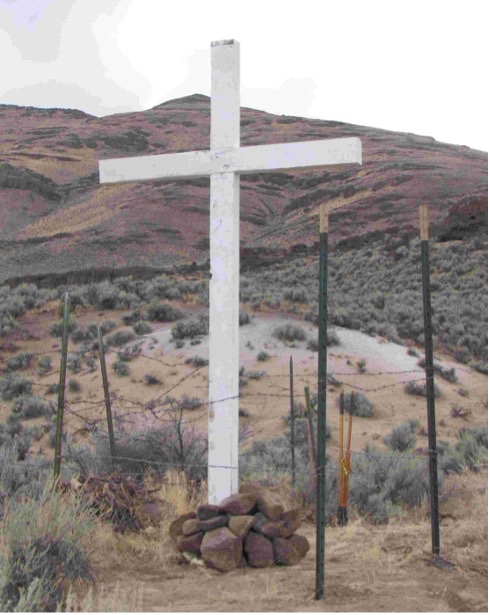
Smoke Creek Cross, October 11, 2025 Courtesy of David Davis

Note: The following information was provided to me by David Davis, who graciously allowed me to share with the readers herewith.  We previously explored the Smoke Creek Cemetery. In 1968, a cross was built on the hillside by members of the Lassen County Historical Society. By the early 2000s the foundation of the cross rotted away and the cross toppled over. Here is a history of the topic and the cross replacement.

HISTORY AND MEMORIALS REPORT

October 19, 2025

David A. Davis, General William Passmore Carlin Camp 25 Camp Commander/Historian/Civil War Memorials Officer.

SMOKE CREEK CROSS

October 11, 2025

For background, the following is modified from my report of August 13, 2023: Camp Smoke Creek was located at the old Smoke Creek Station near the Nobles Emigrant Trail. It contains a burial plot that contains the grave of four soldiers:

Pvt. John Smith; Co. C, 2nd CA Cav., d. Jan. 18, 1863, shot by Lt. Williams at Deep Hole

Pvt. Gustavus W. Plass; Co. C, 2nd CA Cav., d. Nov. 9, 1863, typhoid at Smoke Creek

Serg. William McCoy; Co. D, 1st NV Cav., d. Jul. 3, 1864, unknown causes

Pvt. David O’Connell; Co. B, 2nd CC Cav., d. Nov. 17, 1865, Killed by Indians at Pine Forest

Following the history would take some doing. Co. C, 1st Nevada Cavalry was stationed there in late 1863; Co. A, 1st Nevada Infantry was stationed there July through October 1864; and Co. D, 2nd California Cavalry was stationed there July 1865 through April 1866. Co. B, 2nd California Cavalry was mainly stationed at Dun Glen June 1865 through April 1866. They made an incursion into the Black Rock Mountains in the Pine Forest District in November 1865 where O’Connell was killed. It does not say where he was buried. Detachments of other Nevada and California units were probably stationed there or passed through. Deep Hole was a station located about 20 miles east-northeast of Smoke Creek and a Nevada Cavalry detachment was stationed there in April 1865. 2nd Lt. Henry W. Williams of Co. C, stationed at Smoke Creek, shot Smith at Deep Hole and then deserted his command because of it. He was dishonorably discharged Jan. 27 9 days after the shooting.

Cross
Smoke Creek Cross 1981-Tim Purdy

The Smoke Creek Ranch 7.5′ quad has the ruins and a grave marked. The public land urvey location is T31N, R18E, Sec. 16, SW/4 of the NW/4. The Lassen County Historical Society located the graves in 1964 and placed a large wooden cross there in June 1868. The site is on property owned by Jackrabbit Properties.

In the intervening years, this cross rotted off and fell over. On October 11, Commander David A. Davis, JVC Donn Dalton, Don’s nephews Sonny and Heath Victor, and Jay Carter who helps with restoration work at the Hillside Cemetery made a trip to the site and erected a new cross.

The cross was made by Donn and SVC David Perdue from 4” by 6” redwood boards taken from a demolished deck and painted white. The boards were bolted together on site, and the cross was cemented into the ground with rocks piled around the base. Commander Davis made a temporary metal marker with the Camp name and dated punched into it that was nailed to the cross.

Tim


A Flanigan Railroad Tragedy

Flanigan—Robert M. Hanft

On September 2, 1931, a fifteen-year-old boy while hopping on a Western Pacific freight train at Flanigan fell under the wheels and was horribly mangled at the scene.  Reports from the Coroner’s Inquest and newspapers accounts were sketchy.

Accordingly, 15 year old Paul McArthur left on a Southern Pacific freight at Reno. The Southern Pacific train stopped at Flanigan to allow the Western Pacific to travel through. At the point McArthur got off the Southern Pacific train and tried to hop on the moving Western Pacific train slipped and fell. After the Western Pacific passed through, Southern Pacific employees noticed the boy lying on the ground. They gave him first aid and took him to Wendel where the Allen & Edenholm ambulance was summoned. McArthur was apparently in a state shock and he told Edenholm, the ambulance driver, where he was from, and that he did not appear to suffer.  He died shortly after his arrival at Riverside Hospital in Susanville.

When the Coronoer’s jury was summoned the next day, it deemed not necessary for the trainmen to testify, since no one actually saw what happened. When Edenhom concluded his testimony he stated, “McArthur was just his beating his way, and he didn’t have a cent to his name and he hadn’t eaten for several days. It is a pitiful case and very unfortunate.”  The Coroner’s verdict” Shock from injury in railroad accident. He was a trespasser on freight train (Western Pacific R.R.) and accidentally fell under train. Train crushed both thighs.”

Tim

Reno’s Wingfield Park

Wingfield Park, 1936–C.H. Bennett Collection

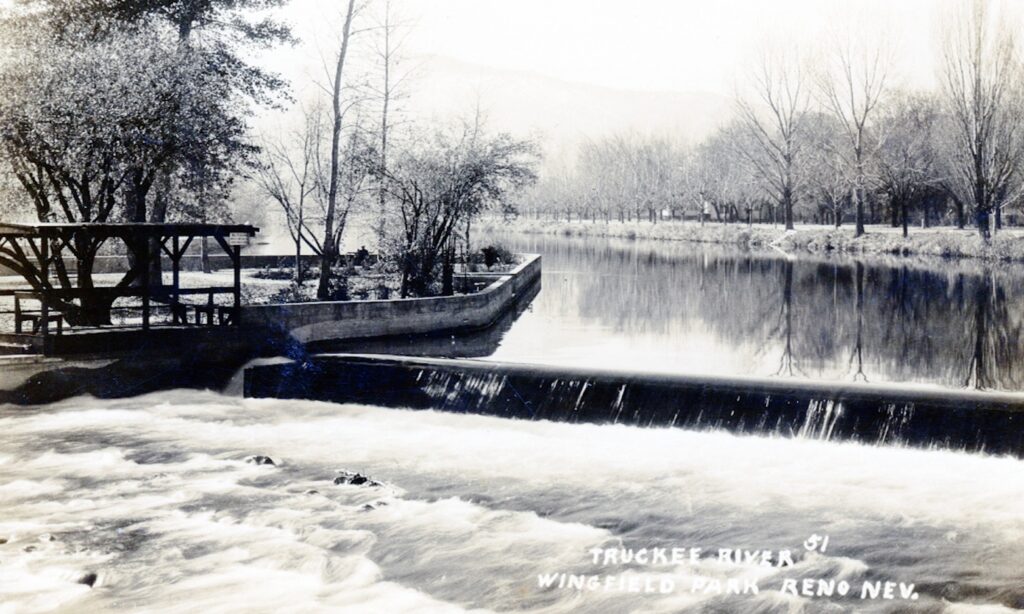
This three-acre natural island on the Truckee River in the heart of downtown. Reno has an interesting history. In 1911, Reno attorney Lewis Hinckley began to develop it for an amusement park. He dubbed the location as Belle Island. In time, the island boasted a dance hall, a 700-seat open air theater among other things. The enterprise went bankrupt in 1916. In 1920, influential miner and Nevada banker George Wingfield purchased the property and donated it to the City of Reno. In turn the City of Reno’s named the property  George Wingfield Park.

Contrary to local folklore, when Wingfield sold his Honey Lake Valley summer home in 1924, he transported four buffalo that he had there to Wingfield Park. Wingfield did relocate the buffalo, but not to the park.

Tim

My Tuesday Question

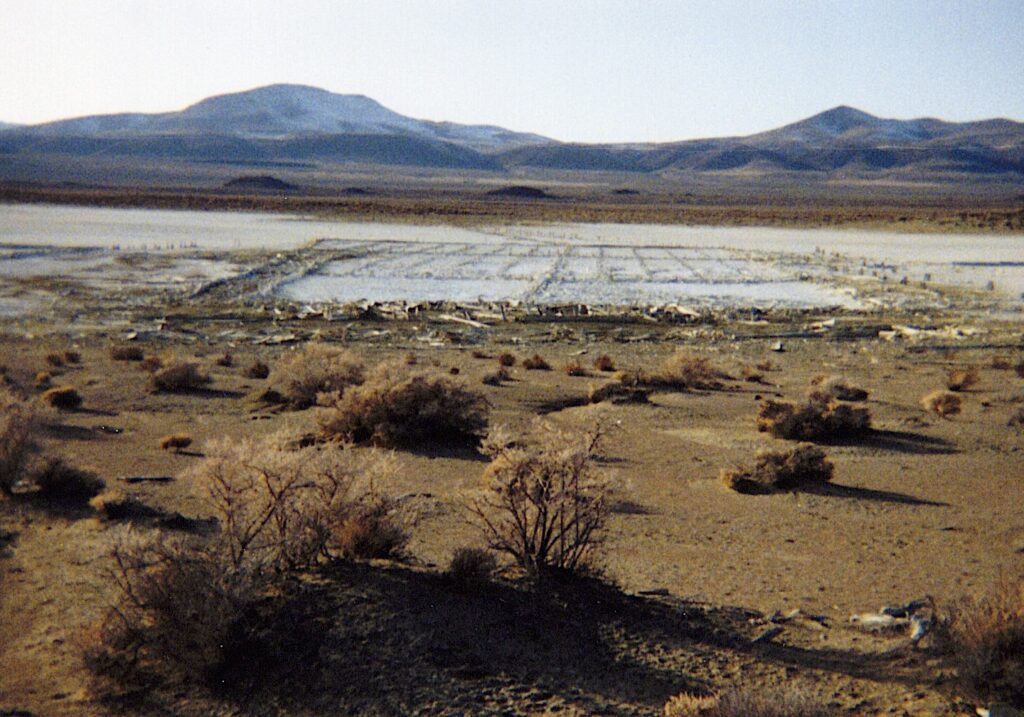
Remants of one of vats for drying salt at Buffalo Meadows, January 1980

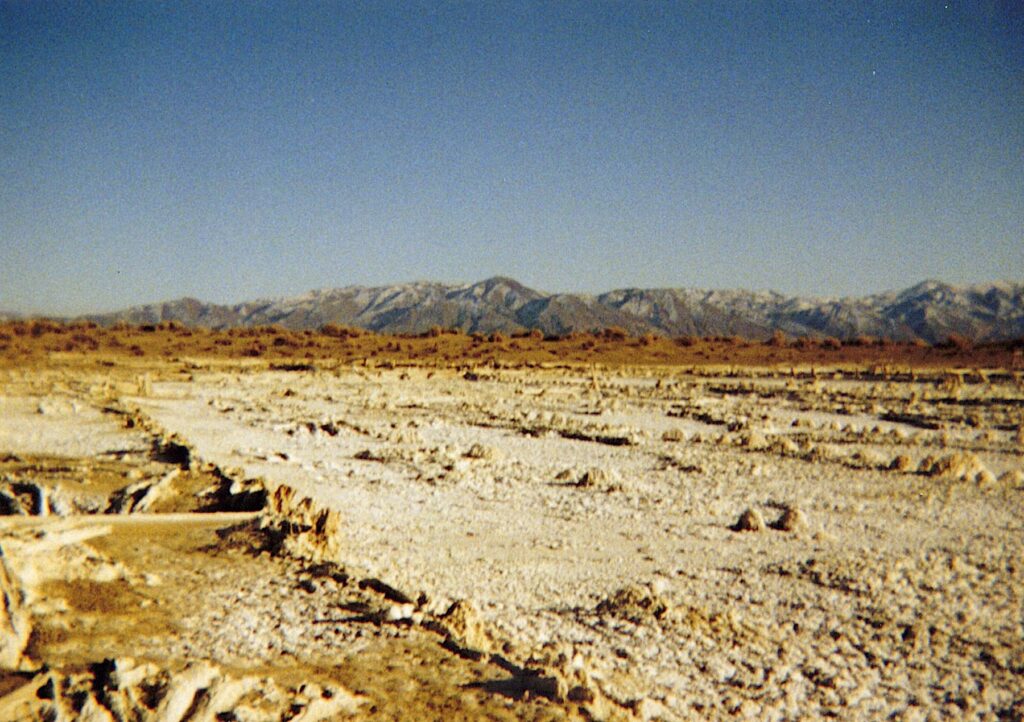
I only visited the Buffalo Salt Works once that is located in the Smoke Creek Desert. That was in 1980. One of vats used to drying salt was  fascinating. The salt had disfigured the wooden foundations creating an unusual landscape. My question is has any one gone to the  site in the last twenty years and if so, what remnants still exist?

More remnants of the Buffalo Salt Works, January 1980

Tim


Pyramid Lake Trout Controversy

Pyramid Lake, 1915. Courtesy of the Otto Kratzer Collection.

Nevada’s Pyramid Lake is known for many things. The lake is home to the Lahontan Cutthroat Trout. In 1859, Nevada’s Silver Discovery, i.e. the Comstock, changed the landscape forever.

While the U.S. government granted the Paiute tribe Pyramid Lake and the surrounding territory into reservation. It is a stand alone story.  Members of the Paiute tribe capitalized on its prized asset the Lahontan Cutthroat Trout. The fish were plentiful and  trout not were only abundant, but a single fish weighing over twenty pounds was common. The enterprising Paiutes realized that there was market in Virginia City, Reno and surrounding territory. One of those markets was Susanville, and which the  Lassen Advocate  duly noted on May 5, 1892 5;3 – A load of Pyramid Lake trout arrived in town by a couple of Indians today and were disposed of on short notice.

The good times would not last forever. First, there was a complex beaucracy between State of Nevada and Pyramid Lake Reservation, that the former wanted protect the lake’s fishery. The. commercial fishing by the Paiutes had greatly diminished the stock. Second, the other blow was in 1902 with Newlands Project that diverted water from the Truckee River (Pyramid’s water source)  to form the agricultural district of Fallon. One of the side effects was decreased inflow water to Pyramid resulting in lowering lake levels.

By 1910, Nevada authorities had legislation in place restricting commercial fishing of Pyramid. While it looked on good paper, it was not easily enforced. By the early 1920s, Pyramid Lake trout could no longer be transported out of state.

In the Honey Lake Valley that ban went largely ignored. In 1921, C.O. Fisher, was made Lassen County Fish & Game Deputy and he was to enforce the law. On January 27, 1925, Gee Hong, the proprietor of Susanville’s Republic Grill pled guilty of fish from out of season.  Hong stated he purchased the Pyramid Lake trout from Indians, who are allowed to fish commercially. but he did not know they could be sold only in Nevada. Hong was fined $25.00. Fisher issued a warning that even local anglers who fished Pyramid Lake would be fined too, as well the Indians who transported them.

Local anglers were not pleased that they could not  bring their catch back home from Pyramid Lake. In 1935 the local sportsmen petitioned the Lassen County Board of Supervisors to lobby the State of California Fish & Game Code Section 623 to exempt Lassen County residents from such. The petitioned stated “Whereas, a great many sportsmen in Lassen County, California, do considerable fishing  in Pyramid Lake, and believe that they should have the privilege of bringing their entire catches into Lassen County, California.”  The Board approved a resolution, but the State did not budge, and it would decades later before  the restrictions were lifted.

Support by subscribing.


Pyramid Land & Stock Company

Patrick Flanigan — Wren’s History

Patrick L. Flanigan was one of those rags to riches to rags stories. In 1877, at the age of 17, he came west to Reno where he found employment milking cows. Five years later he obtained a loan from the Washoe County Bank to purchase 1500 sheep. Thus, like many before and after him became an itinerant sheep man and moved his sheep from place to place where ever he could find feed and water. (When the Taylor Grazing Act came into effect in 1934, put an end to this practice.) Flanigan, like so many others, lost over 50% of sheep during the harsh winter of 1889-90. Continue reading Pyramid Land & Stock Company

Did Weatherlow Murder Lassen?

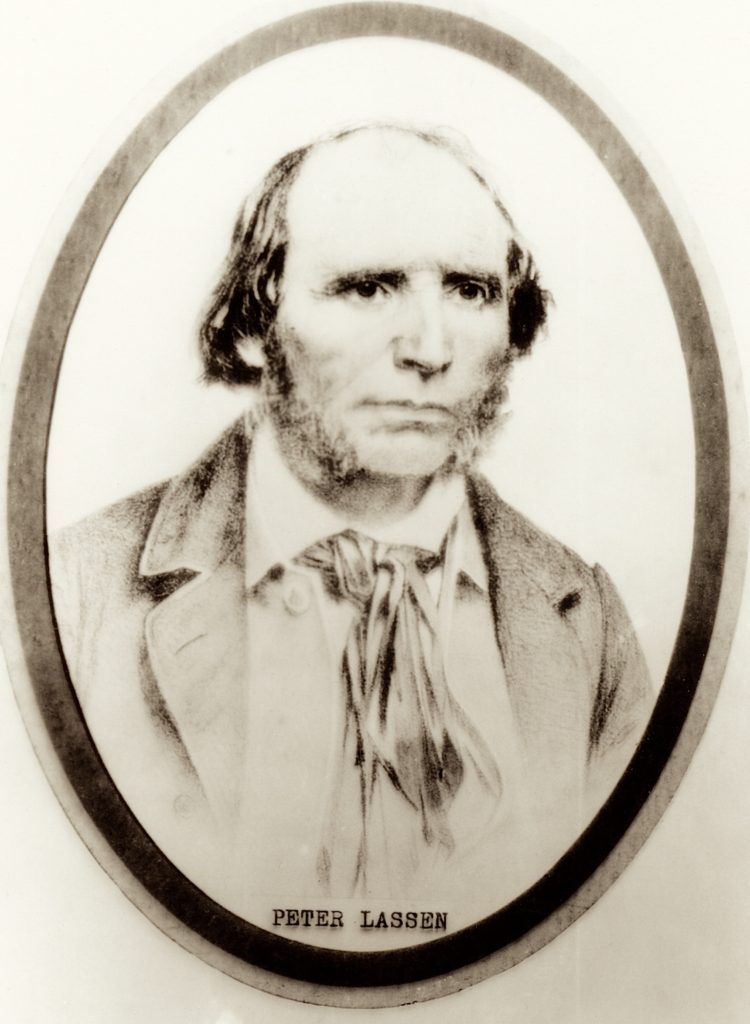
The infamous Peter Lassen, a name well known throughout Northern California

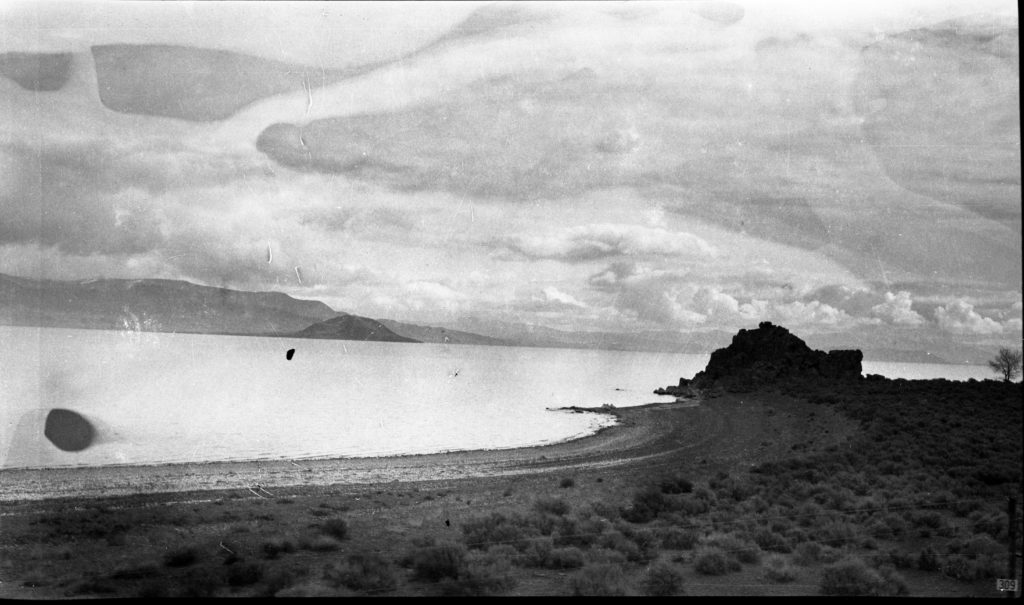
It was interesting question posed shortly after Peter Lassen and Edward Clapper’s death on the morning of April 29, 1859 in the Black Rock Desert. Their prospecting companion, Lemircus Wyatt escaped riding a horse without a saddle or reins some 120 miles back to Susanville to relay the news.

A little background. In late April 1859 a prospecting party from the Honey Lake Valley set off for the Black Rock Desert. The first group consisted of William Weatherlow, Joseph Kitts, George Lathrop and a man named Jameson. The second group consisted of Peter Lassen, Edward Clapper and Lemircus Wyatt. They agreed to rendezvous at Black Rock Springs, which did not happen according to plan, though the two parties were in close proximity of each other.

When Wyatt relayed the news in Susanville, a posse of twenty men was formed to bury Clapper and Lassen. The posse found the encampment and noticed something odd–it had not been disturbed. Among the items they found were two sacks of flour, some dried beef, blankets and part of a keg of whiskey.

Weatherlow’s headstone, 1978

During this same time period the U.S. Government appointed Major Frederick Dodge, the first U.S. Indian Agent for the West to oversee the welfare and future reservations for Paiute and Washo tribes. Dodge consulted with Paiute Chief Winnemucca. The Honey Lakers had a peace treaty with the Paiutes, and there had not been any problems. Winnemucca informed Dodge that the Paiutes had nothing to do with Lassen’s death.

In May 1859, Major Dodge had his findings of Lassen’s death published in the Sacramento Union newspaper. It was Dodge’s opinion, especially that the Lassen camp was not ransacked by Indians, concluded the dastardly deed was done by four white men, i.e. Weatherlow and Company.

Clapper Canyon/Creek, Black Rock Desert. Courtesy of D. Dickerson

In a strange turn of events, Weatherlow waited a year to deny Dodge’s allegations. In his statement Weatherlow asked Dodge to make public retraction, though it does not appear Dodge did. By the 1880s there was still some of a certain mindset that Lassen was not killed by the Indians. In 1917, when a second Lassen Monument was dedicated, the issue was still being debated. It should be noted that the two  Lassen Monuments have carved in stone “killed by Indians”.

Wyatt, who was the only eye-witness died two years later in Susanville at the age of sixty-two. Weatherlow died in 1864. Kitts, Lathrop and Jameson eventually left the region to parts unknown.

To Support, Please Donate or Subscribe 

Virginia City’s Famed Piper’s Opera House

The grave of Earl Conkey, died 1879, Susanville Cemetery, October 1976

This notable landmark in one of Nevada’s premiere mining towns has a connection to Honey Lake Valley. It should be duly noted Virginia City’s existence no longer has nothing has much ado about mining for gold and silver, but what is does best these days is mine the pocketbooks of tourists.

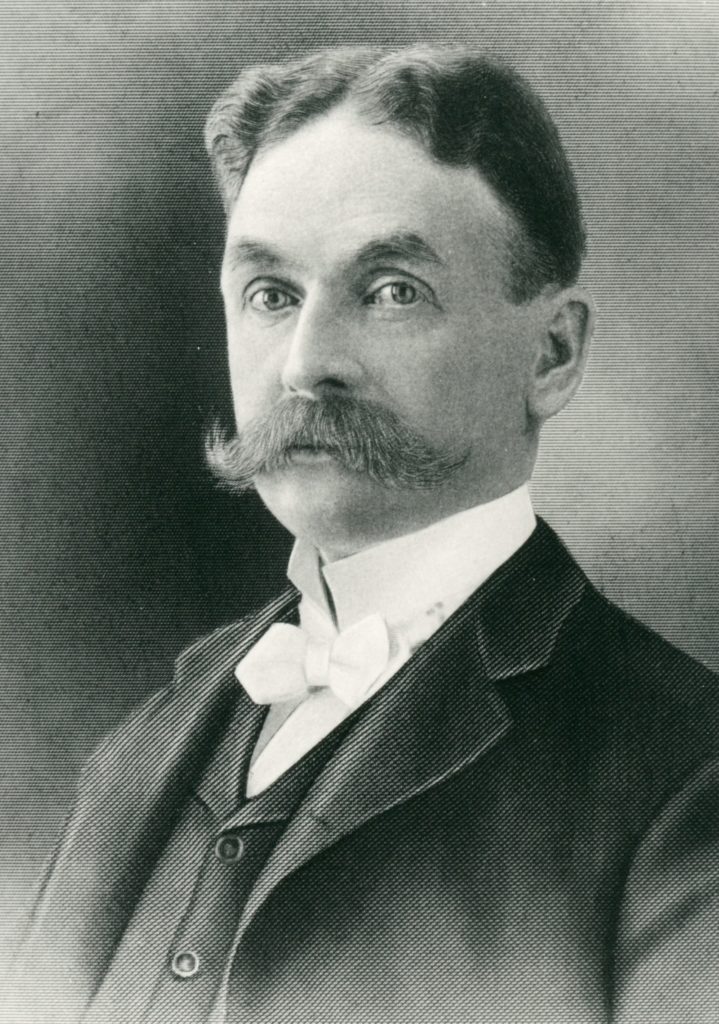
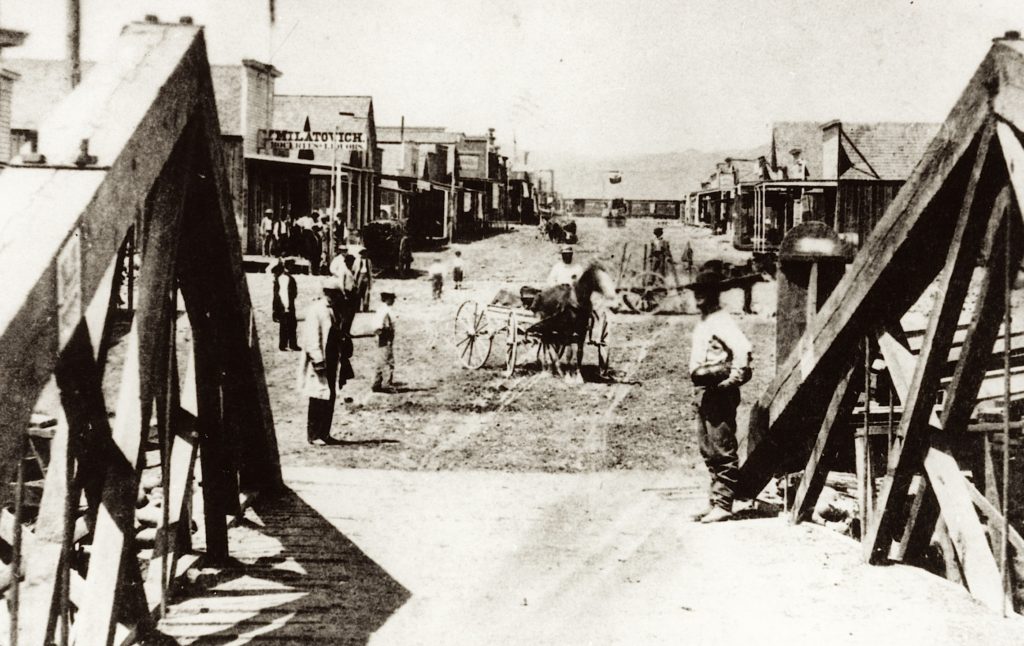
For those not familiar with Myron Lake, he is considered the founder of Reno. In 1859, C.William Fuller located along the Truckee River in the Truckee Meadows and built a toll bridge and small hotel there being nothing else. (Today, that location is known as the Virginia Street bridge). Business would soon be brisk with the discovery of the Comstock and the establishment of Virginia City. In June 1861, Fuller traded his enterprise for land in the Honey Lake Valley to Myron Lake. Lake continued acquiring more property in the Truckee Meadows and timing can mean so much. In 1868, the Central Pacific Railroad was approaching the Truckee Meadows as part of the nation’s first transcontinental line.Lake sold the railroad 160 acres for  depot and town and Reno was born.

Virginia Street Bridge, Reno,—Nevada Historical Society

In 1862, the widowed Jane Conkey Bryant with her three children—Florence, Seymour and Lillian—came to the Honey Lake Valley upon the urging of her parents—Sylvester & Betsy—along with various siblings.   (The Conkeys resided on present day Wingfield Road known as Nagel’s Happy Valley Ranch). It should be noted Lake, prior to  his move to theTruckee Meadows was a neighbor to the Conkeys. It is unclear how Lake courted Jane, but the two were married in Janesville in 1864. To make a long story short, Jane’s daughter, Florence married William Thompson. The Thompson’s daughter, Ethel married Ed Simmer owner of Piper’s Opera House in Virginia. City. The property remained in the family for years, though for a time in a neglected state. In the 1960s, Louise Zimmer Driggs restored the Opera House in the 1960s and eventually donated ti to the non-profit organization that operates it today.

Subscribe