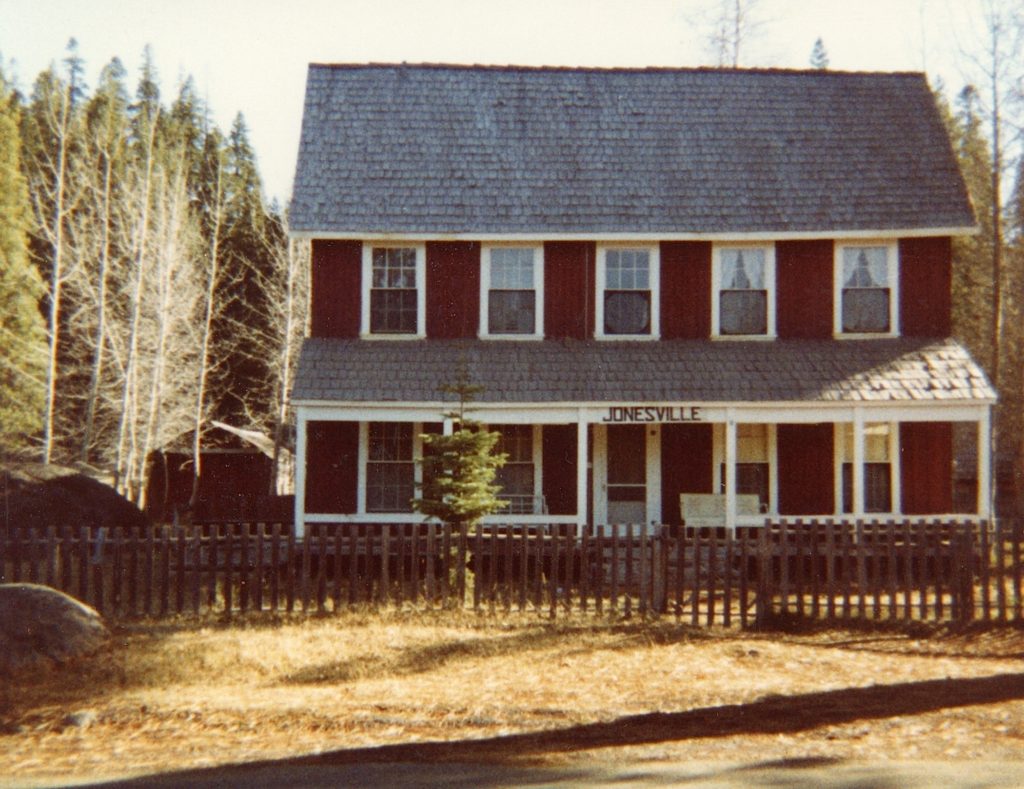
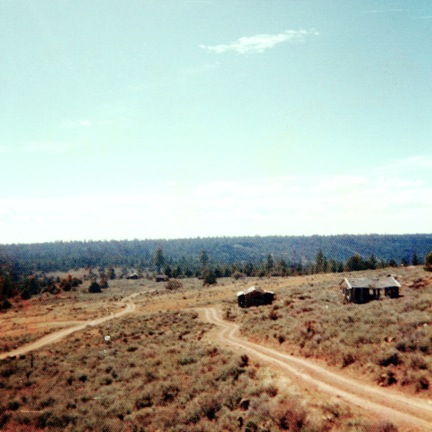
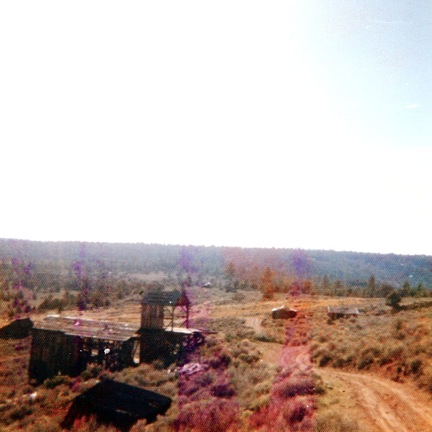
Fall is a great time of year, if you can or the conditions permit to get out and about. A worthwhile sightseeing trip is Jonesville on the old Humboldt Wagon Road. One of its unique distinction is that it is the only intact stage-stop on that road. The Humboldt Road came into existence in the early 1860s. It originated in Chico, then to Big Meadows (Lake Almanor) to Susanville with a final destination of the Humboldt mines of Northwestern Nevada. The line later extended to the mines of Southwestern Idaho.
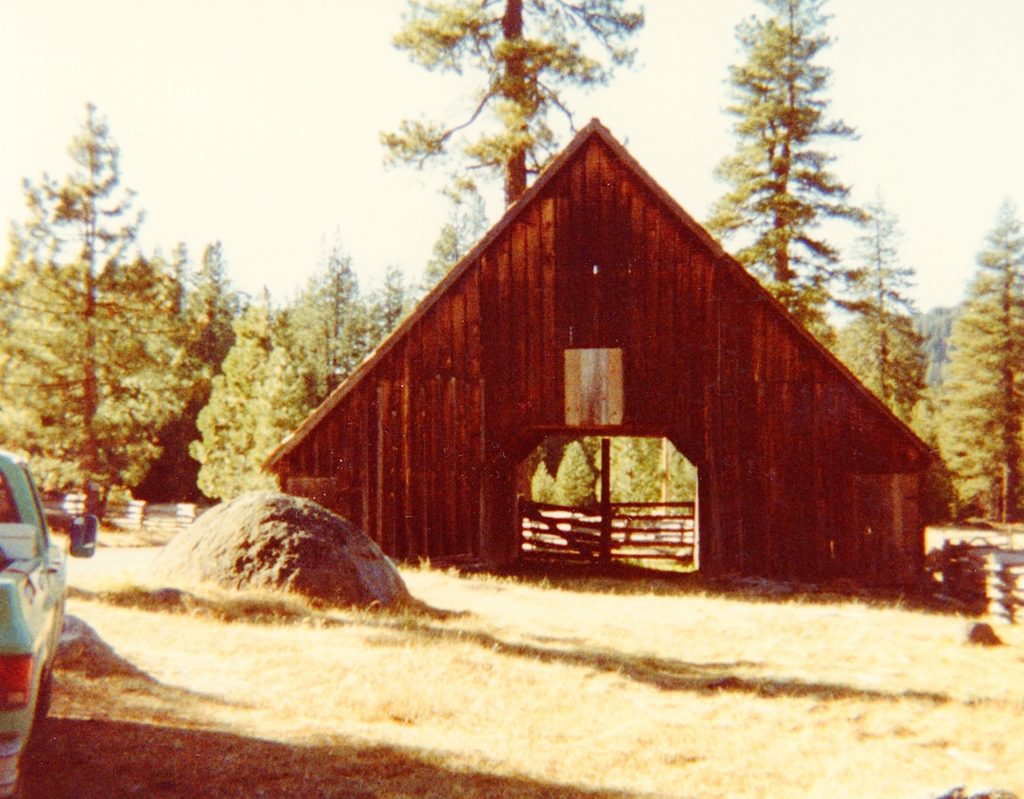
The Jonesville Barn, November 25, 1980
To make the jaunt take a forest service road west of Lake Almanor which will take you to Jonesville. From there the next destination is Butte Meadows which you can connect to Highway 32 and make a loop. Enjoy!
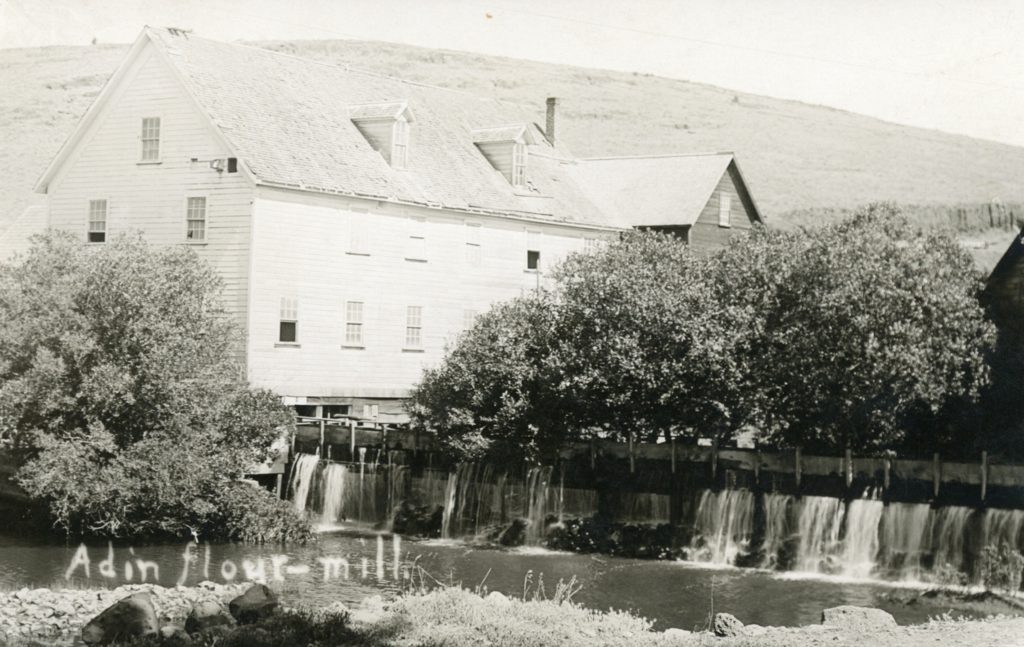
First of all, it is interesting to note that the founder of Adin, Adin G, McDowell, was a member of the prospecting party that discovered gold in what would become known as Hayden Hill.
In the summer of 1870, once the word spread of the gold discovery at Hayden Hill, it was reported over 500 prospectors rushed there. Adin, located twelve miles north of Hayden Hill was the nearest community and this influx accelerated Adin’s development. Of course, Hayden Hill, went through many boom and bust cycles, and that too had an effect. on Adin. One of those glory times occurred in 1878 with a bustling Hayden Hill. This allowed Adin to flourish and for a period it was Modoc County’s largest community.
Another way Adin benefited from Hayden Hill was during the winter months. Winters can be harsh on Hayden Hill and many sought comfort at Adin, which was not only substantially lower in elevation, but was more protected from the wind, than the exposed Hill..
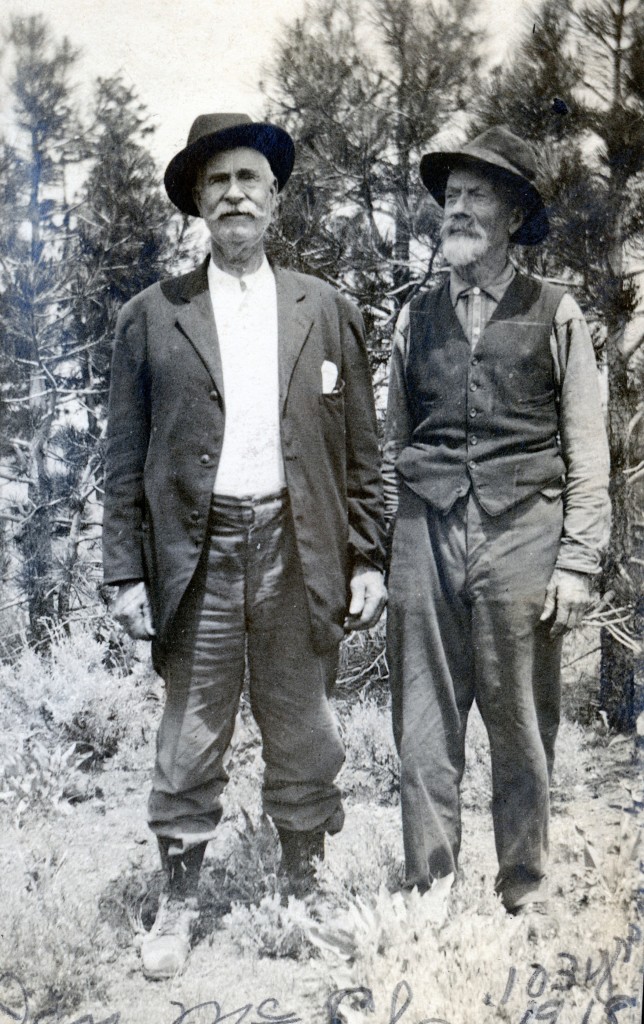
Dan McClane (left) and J.S. Underwood, Juniper Mine superintendent, at Hayden Hill, 1918.
Dan McClane was one of many interesting characters to inhabit the mining community of Hayden Hill. McClane was born in 1815 in Scotland, making him the second oldest miner there—the town’s namesake Joseph W. Hayden was a year older.
McClane’s first career was the open seas traveling much of the world. In early 1850s he came to California and settled in Solano County, where he first developed an interest in ranching, then in time mining.
Reports when he came to Hayden Hill vary, though most place it in 1877 during the town’ second mining boom. At that time, there was a large influx of prospectors from Napa and Solano counties. It should be noted he married Mary Shepherd in Modoc County in 1874. The following year, at the age of 59 he became a father, and from this marriage a total of 11 children were born to them. Some of the children were born at Hayden Hill and others at Round Mountain, Shasta County.
Round Valley Reservoir, and the surrounding terrain that McClane traversed in 1916..
In the late spring of 1916, Dan McClane and Clarence Williams set off on horseback on a prospecting trip. It does not appear on the face that remarkable, until you examine the ages of two men–Williams, 36 and McClane 101. That is correct a hundred year old man prospecting on horseback. The duo left the Williams Ranch in Willow Creek Valley, now owned by Five Dot and first ventured to look at the abandoned mines of adjacent Round Valley. From there they went all the way to the top of Green’s Peak looking for the fabled “Grabel’s hole.” The Grabel was a rich lode, that falls into the category of the lost mine tales. They then ventured down to Rongstock Canyon, back up and over to Papoose Meadows and numerous crooks and crannies along the way. Then back over Gallatin Peak and back to Willow Creek Valley. In all, Williams estimated they traveled nearly forty miles that day.
McClane kept up with his forays and he passed away in 1920 at age of 119 in San Mateo County.
Spread the word, and encourage a friend to subscribe
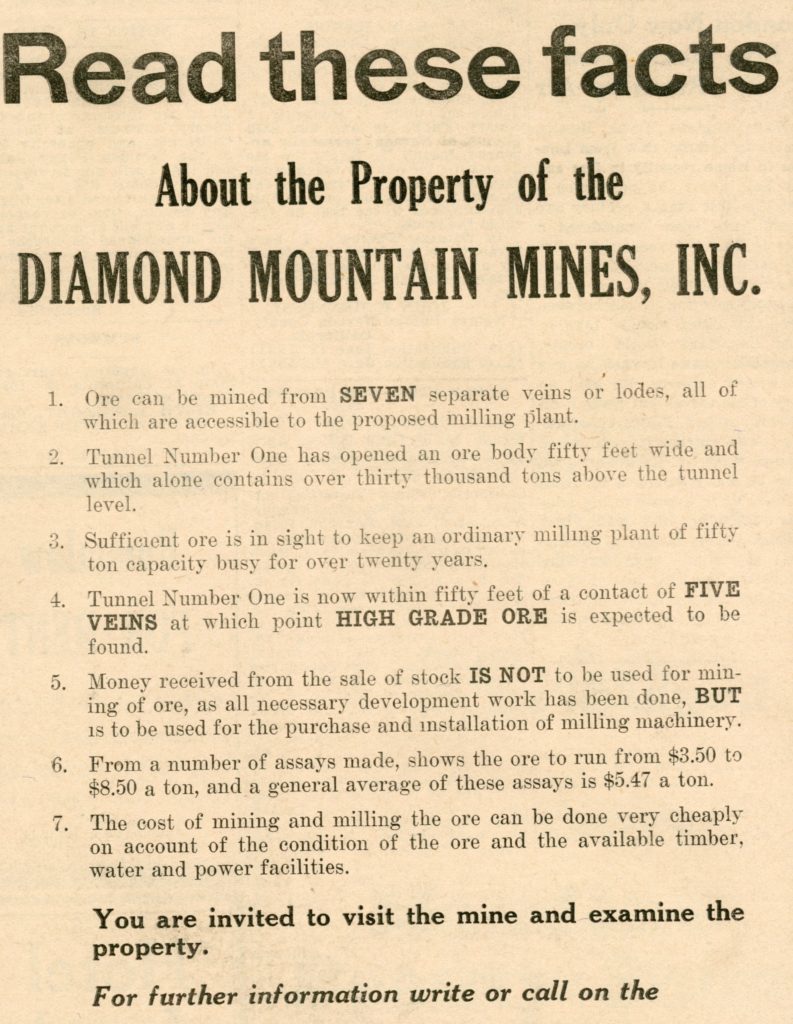
Mining goes through cycles, especially prone to boom and bust episodes. Gold mining on Diamond Mountain was no exception. Very little activity was done from World War I through the 1920s. During the depression of the 1930s, jobs and money were scarce. An interest in the abandoned mines on Diamond Mountain came to the forefront. The first venture was Diamond Mountain Mines, Inc., a group of Susanville businessmen. This company focused on seven different old mines. Others, too, would join in the mining frenzy there during the 1930s. While no one was getting rich, money was made. In 1942, a presidential Executive Order put a halt on gold mining during World War II.
Over the years I have met a wide variety of folks who have made the pilgrimage to the Lassen region to learn more about a family ancestor who resided here. Equally important for many is to see the lay of the land.
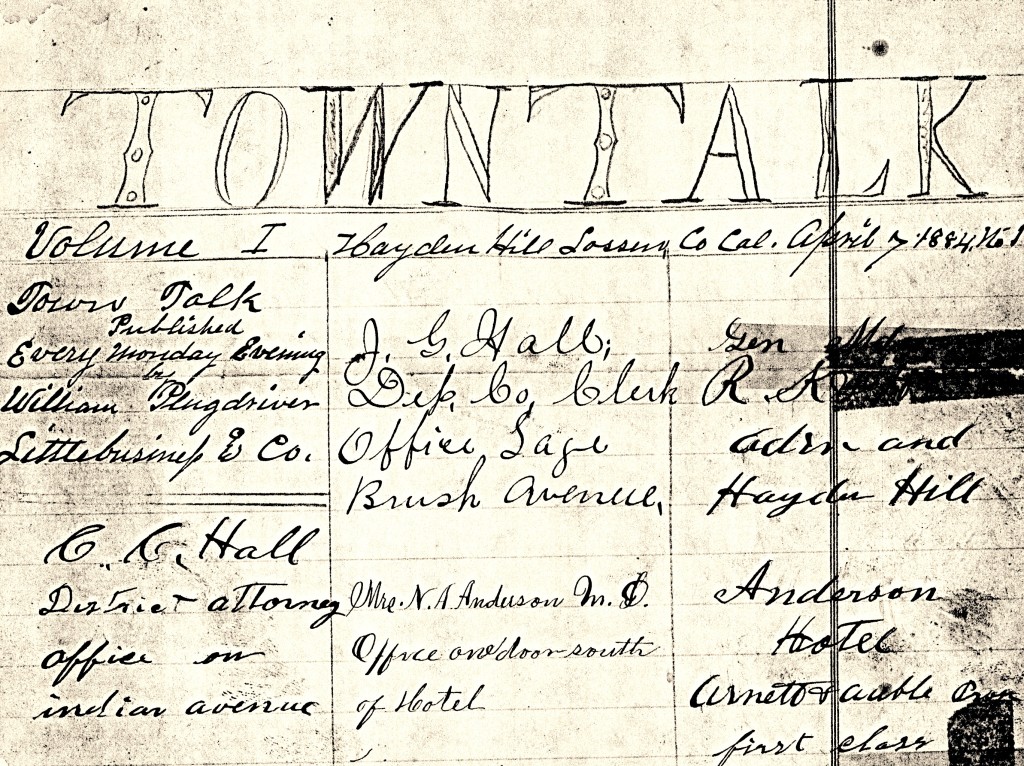
On many occasion they will bring with them interesting family mementos or documents. In one instant, I was literally overwhelmed what the grandsons of William B. Dillon had in their possession. It should be noted that their grandfather came to Hayden Hill in the early 1880s and died there in 1898. What these two men had were two issues of a handwritten newspaper “Town Talk” from Hayden Hill. These kind of documents are extremely rare.
There were two issues, with the first one published on April 7, 1884. The second issue, released a week later, the name was changed to Talk Town. The contents were rather whimsical in nature. Such commentary as “Snow fast disappearing” and “There was a social at the Hotel last evening. The music both instrumental and vocals was good.”
Spread the word, and encourage a friend to subscribe
A year ago, I wrote about Shaffer Mountain, but I really did not do it justice. For those who may not be quite familiar with it the mountain separates Honey Lake and Secret Valleys, and on its southern base is the community of Litchfield.
The mountain was so named after the Shaffer Brothers—Uriah and James. Their first business venture in the region was a warehouse at the then booming mining town of Richmond. On September 8, 1862, the Shaffer Brothers purchased the 1280-ranch of George Lathrop for $4,250. (This property known today as Mapes Ranch a few miles east of Litchfield). The place was located along the Nobles Emigrant Trail and Lathrop had a station there to cater to the travelers. In time, it became known as Shaffers Station. Trade there for a time was brisk, but that quickly changed with the transcontinental railroad to the south, and travel on the Nobles Road was greatly diminished. Making matters worse, the area was in a depressed economy. The property was auctioned off in two different transactions Thomas French and Andrew Litch became the new owners. The Shaffer Brothers moved on and it is not known whatever became of them.
The mountain at an elevation of 6375’ does provide a stunning view of the region. The California Division of Forestry took note of this fact and established a fire lookout there in 1931. The lookout remained in operation until 1949, when it was replaced with Landon Lookout near Eagle Lake.
Spread the word, and encourage a friend to subscribe.
This is a topic that I plead total ignorance. By the early 1900s, Lassen County had small jails in outlying communities. Whether they were just temporary holding facilities, I do not know. The jails at Hayden Hill and Standish were nearly identical. They were not your typical structure. Instead of having vertical boards, they were placed horizontal, making for a very stout structure. The jail at Hayden Hill remained intact until 1991 when Lassen Gold Mining began mining operations there and what few remnants were demolished. The Standish Jail was converted into a storage shed for the Lassen County Road Department.
Enough said, since I got sidetracked from my original topic. In a letter dated from March 1, 1909, Standish resident, J.B. Leavitt, (I am not sure of his official capacity), wrote to the Lassen County Clerk, George Bassett: “Dear Sir: I am in need of some old quilts for the jail at Standish.” What is noteworthy, its the only documented reference I have for the Standish Jail.
Spread the word, and encourage a friend to subscribe.
This was an interesting question posed, though like many there is no simple answer. So I will do this in installments over the next few months.
When the Noble’s Emigrant Trail opened up the Honey Lake Valley, one would thought may be some of the travelers would stop. After all there a number of diary entries when the emigrants first saw the Honey Lake Valley it was a wondrous site with fresh water, grass, pine forests after having traversed endless miles across the Nevada desert. That was not case, whether the area was too remote or they had other plans.
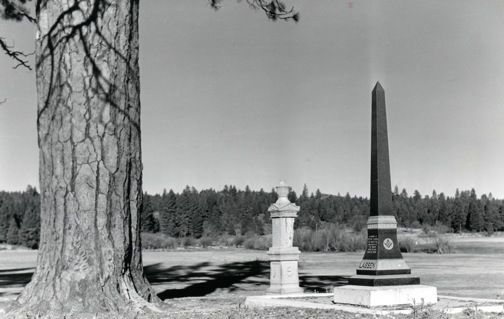
Needless to say it was gold that brought the first wave of settlers. However, when they arrived, they had already been in California. After all it was Peter Lassen who in 1855 brought the first group to the Honey Lake Valley with their discovery gold near the place where he would later be buried. Lassen was a native of Denmark, and came to California in 1840. By 1851 after having failed at several business ventures Lassen had settled at nearby Indian Valley. In 1850, he first came into the Honey Lake Valley in search of the fabled Gold Lake. Lassen not satisfied with his initial gold discovery in the valley continued with prospecting ventures the last one in the Black Rock Desert in 1859 that was a fatal mistake.
Spread the word, and encourage a friend to subscribe.
Yesterday, I mentioned what Hayden Hill was like in 1974. If you are thinking of making a trip there in the near future, think again. In. 1991, Amex Gold, Inc. formed Lassen Gold Mining which mined Hayden Hill from 1992-1997. Actually, the mountain was obliterated. The entire mountain is fenced off to the public.
As a Lassen County Planning Commissioner I had the opportunity to inspect Hayden Hill in the fall of 2010. The property is still under a reclamation process, which is secured with bonds deposited with the County of Lassen. The County Planning Department and ultimately the Planning Commission oversees the process—hence the opportunity for my visit.
Hayden Hill Cemetery, 1909–Dallas & Joyce Snider
One area that remained unscathed from the mining operations as stipulated in the use permit was the Hayden Hill Cemetery. It is interesting to note that the juniper tree in the photograph above taken in 1909, was still there in 2010. One item that caught my interest, I spotted the entrance to the Golden Eagle Mine. I was surprised for I thought for sure it would have been obliterated. Alas, taking of photographs was prohibited and a very attentive representative of Lassen Gold Mining was not going to allow me to roam around.
Golden Eagle Mine,Hayden Hill circa 1890. Courtesy of Donna Howell
On a side note, when we had departed from Hayden Hill through the locked gates, we saw a vehicle approaching. It turns out they came to see the ghost town indicated in their AAA travel book.
Recently, I came across a couple of photographs of Hayden Hill. For those not familiar, it was Lassen County’s premiere mining town, 55 miles north of Susanville and about 12 miles south of Adin.
Like so many mining towns throughout the west, Hayden Hill experienced many boom and bust cycles. In1942, when the U.S. Government put a halt to gold mining during World War II, what little mining activity left at Hayden Hill faded away, and never came back.
By the 1950s and 60s, Hayden Hill’s visitors consisted mainly of rockhounds, bottle collectors and those curious to see a ghost town.
TGolden Eagle Mine, Hayden Hill, May 25, 1974
The Golden Eagle Mine was the largest and most productive mine on Hayden Hill. I was not aware that as late as 1974 remnants of the mill still remained. However, the entrance to the mine was still intact, and still was in 2010 when I was there. It should be noted, that Hayden Hill is sealed off to the public, more about that tomorrow.