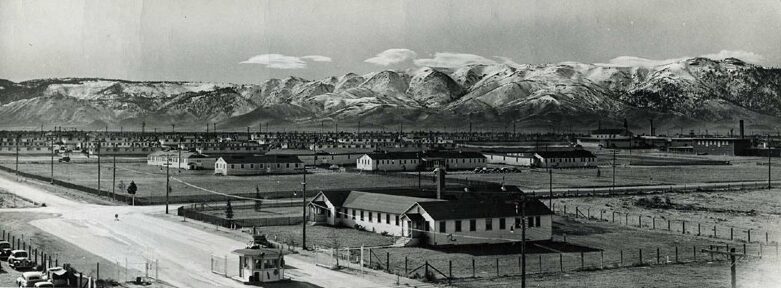
On January 26, 1942, U.S. Representative Harry L. Englebright announced that the War Department had approved the establishment of the Sierra Ordnance Depot. It would be located at Hackstaff, forty miles southeast of Susanville. Hackstaff was a very small station on the Western Pacific Railroad. The ordnance depot, on the other hand, would cover an estimated 25,000 acres sagebrush lands on the eastern side of the Honey Lake Valley. Englebright informed Susanville residents that $20 million had been approved to construct the depot. It would involve the construction of some 1,000 “igloos” for ammunition storage, besides the facilities associated with the depot. Construction would begin immediately.
It was projected that as many as 5,000 people could be involved with the initial construction and operations. A new infrastructure would have to be constructed to accommodate this huge influx of population. Susanvile and the Honey Lake Valley would be heavily impacted by this development, with such issues as housing, schools and roads. The initial reaction was mixed, though Susanville’s business community was more supportive of the project than the agricultural community.
At the February 9, 1942 Susanville City Council meeting, Jack Hill of the Shell Oil Company, informed them of expected problems with the construction of the depot. He said that Susanville would be the initial employment headquarters. The city would shortly be flooded with people seeing employment. Since time was f the essence, Hill suggested that icy become involved in established tent and trailor courts to handle the increase population. After all, with building supplies in demand, this would provide an alternative housing method. Hill warned both the city and county to be prepared for the criminal element, i.e., camp followers found at such construction projects. He said, “You are going to have a very high percentage of non-desirable people arriving with those whose livelihood is made in every conceivable means outside the law. You can combat them if the community is prepared to stop them before they get started. The fastest and easiest way to stop them is to make their activities unprofitable.”
To prepare for the criminal element, a group of local law enforcement officials-the County Sheriff, District Attorney and Chief of Police, paid a visit to Hermiston, Oregon, where a munitions depot had recently been established. Hill was 100 percent correct in his warning. In June 1942, the crime wave swept Susanville and the environs of the Honey Lake Valley. During June 1941, there had had been 31 arrests inside the city. A year later, it has escalated to 103 for the same period. The majority of these offenses were for drunk and disorderly conduct. On one day, June 27, 1942, a record sixteen people were booked into the city jail-a facility that had only 400 square feet of room to house inmates! Over at the county jail just blocks away the situation was just as grim. One alternative solution to alleviate overcrowding the two jails was from the implementation of a special fee. If one had the extra cash, he could pay a fine three times of the existing fine and would not be incarcerated, though it only pertained to misdemeanor offenses.
Support