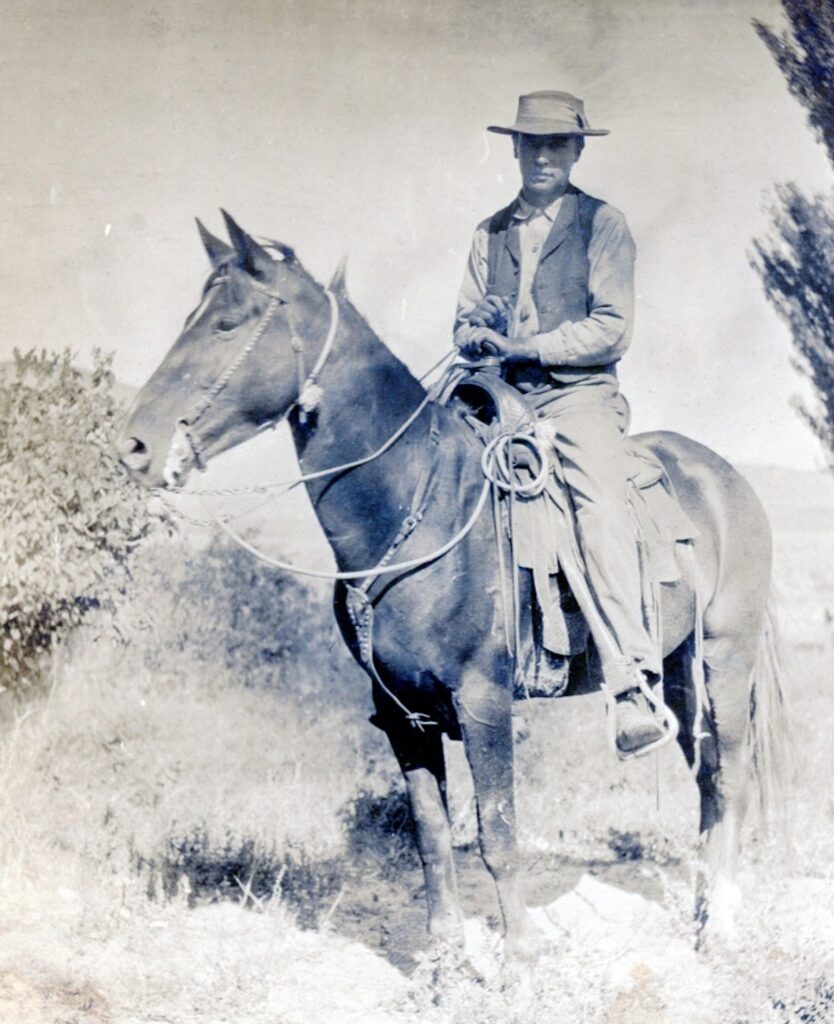
Initially, how the local wild horse population came to be was in the mid1800s. At that time, the Honey Lake Valley had few fences and the settlers allowed their livestock, both cattle and horses, to roam freely during the winter months. Annual spring round ups, that became the origin of today’s rodeos were to capture and brand the animals. There were always some stray horses escaped from being caught, thus began the local wild horse population.

Yet, back then the wild horse population was kept under control by out of work wranglers. During the winter months, it was not unusual for ranches to let go extra help, especially single men. A number of these men, would take up a 160 acre desert homestead to make a home, especially properties with unclaimed springs. To make some extra money, they would catch wild horses and break them. By spring they would sell the horses, and pocket the money.
The Marr Brothers of the Madeline Plains turned that into a fine art of rounding up wild horses. In the 1930s, they would gather wild horses to be used in rodeos, which made for wild times. By 1940, the demand for horses dramatically decreased, thus allowing for the wild horse population to grow unchecked. More about. that later.