Tag Archives: Nevada

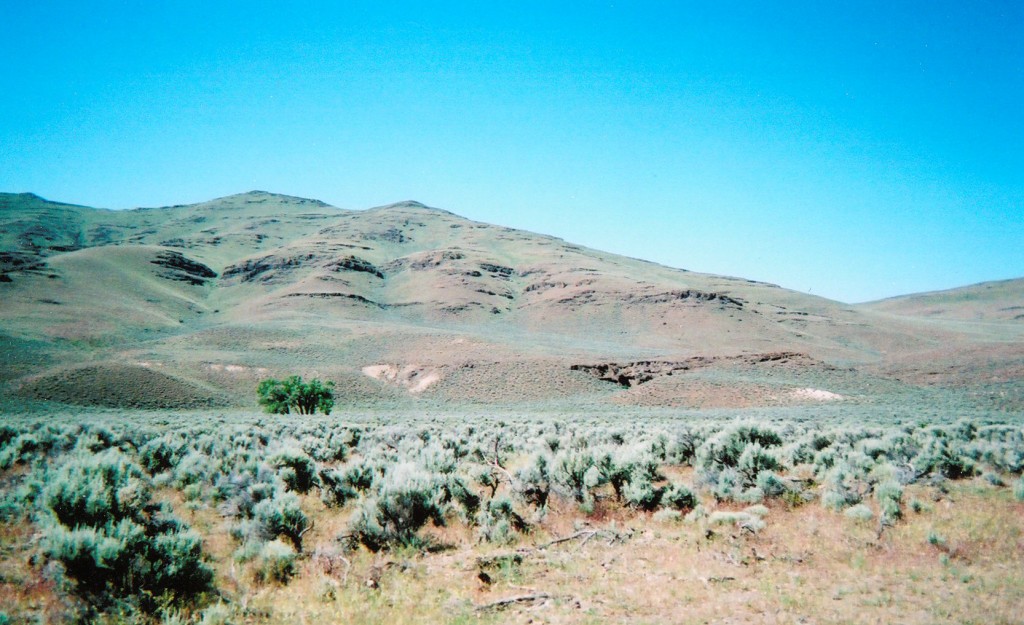
Camp Smoke Creek

Camp Smoke Creek
The camp was located near the cottonwood trees seen in the distance. It is located on private property and is now fenced off.

During the 1860s, the United States Military had a major presence in the region.

On November 9, 1862, Nevada Territorial Governor James W. Nye wrote to Brigadier General George Wright, Commander of the Department of the Pacific, and requested a Company of troops to protects the emigrants from the Indians along the Honey Lake-Humboldt Road. On November 14, 1862, the troops were dispatched. On December 15, 1862, Second Lt. Henry W. Williams arrived at Smoke Creek with twenty-five men and forty days of rations. On March 28, 1864, First Lt. Oscar Jewett, then in command, received orders from Fort Churchill to abandon the camp and to remove all valuable property from the camp as was possible. Continue reading Camp Smoke Creek

Sagebrush War

Roop's Fort
Roop’s Fort, 1940s

Today marks the 151st anniversary of the creation of Lassen County. It was the culmination of the Sagebrush War that finally started the process. In the simplest terms the conflict also known as the Boundary War was the result of John C. Fremont’s selection in 1850 of the 120th Meridian for California’s eastern boundary. The problem was no one knew where that was, and assumed it followed the crest of the Sierra Nevada Mountains. In the late 1850s, with the settlement of the Honey Lake Valley, officials of both California and Nevada saw the uncollected tax dollars waiting to be had. Tensions escalated wherein an armed conflict on February 15, 1863 from the two states took place at Roop’s Fort, also known as Fort Defiance. In the end a truce was called when both sides agreed to conduct a boundary line survey to locate the 120th Meridian, in which it was determined the majority of the Honey Lake Valley was located in California. Thus, began the process to create a new California county. A detailed account of the Sagebrush War can be found in the Lassen County Almanac.