Tag Archives: Mining

Bartlett Said’s Varied Journies

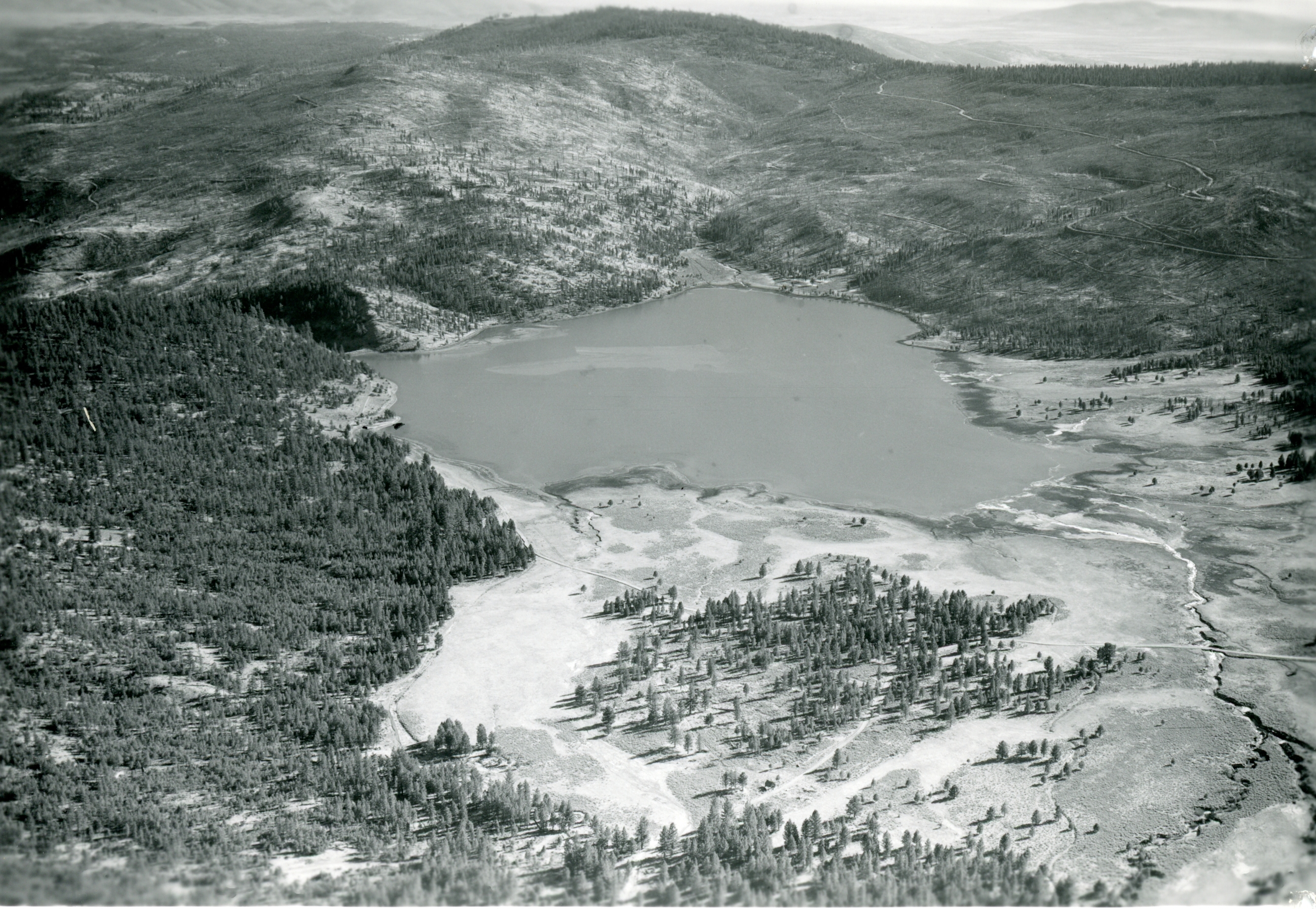
Said Valley Reservoir, 1921. Courtesy of Lola L. Tanner

Approximately some 40 miles north of Susanville, along Highway 139, there lies a small, non-descript place known as Said Valley, or when there is water Said Valley Reservoir, the latter is actually good fishing when it retains water.

It was named for Bartlett Said, somewhat of a free spirit in his day. Born 1813 in Kentucky, Said with his family migrated to Placerville, California in 1850. From there they moved to Rich Bar, Plumas County. His wife, Mary, not fond of her husband, disposed of him. Bartlett, then took solace with his daughter’s family Nancy Jones, who operated Summit House in eastern Plumas County.

One of the reasons for Said’s wonderlust was mining. When news circulated about the discovery of gold in northern Lassen County, Said went to check it out. He located in the northern extreme of Grasshopper Valley, that in time became known as Said Valley.  After several years, he ventured over to Horse Lake.  From there his prospecting adventures took him to Long Valley, in Lassen County, where various relations resided.

Said, like so many others, struggled to make a living at mining. In 1896, the family had placed the elderly patriarch in the Lassen County Hospital, which also served as a poor/old folks home. He died there in 1904, and lies buried in the Susanville Cemetery in an unmarked grave.
Subscribe

Grabel’s Hole

Round Valley Reservoir, 1958. Grabel’s Hole is located in this regoon.

On Sunday, the feature article was on Miners Spring and a broken link to Grabel’s Hole. I had a difficult time trying to locate the article. While most people in region associate mining with Diamond Mountain and Hayden Hill there were other pockets of activity.

In the mid-1870s there was considerable gold mining done just north of Susanville in the vicinity of Round Valley, including nearby Gallatin Peak.  One of those miners, was J.L Grabel. One of the peculiar oddities, is that Grabel never filed a mining claim, yet his activities were reported in the Lassen Advocate. According to folklore,  it was a rich mine, but for reasons unknown became one of those lost mine stories. My grandmother, Lola (Murrer) Tanner (1899-1973) was born and raised in this area. She, too, knew of the story and gave me some clues about the proximity of where it might be located. All these years later, it is have never been something that I have never seriously undertaken to attempt to locate. May be this, is as good as any time to mount an expedition.

Never miss a story, click here to subscribe.

Miner’s Spring – Antelope Grade

The Spires
The Spires, Antelope Grade, circa 1914

Locally, most people think that all the mining activity was along Diamond Mountain, south of Susanville, However, there was  mining activity to the town’s north. See  Grabel’s hole..

Starting in the 1890s, for some odd reason,  considerable prospecting was done on Antelope Mountain. If one looks closely on Highway 139, one can see small mine tailing piles. At a place call “the spires” there is a small spring. that was a popular rest stop back in the horse and buggy days, to stop and give the horses a rest. Charley Carpenter thought it was the perfect place to call home, and built a small cabin there, while he was search of the next mother lode—hence Miner’s Spring.

In 1907, due to an extremely wet March, there was considerable flooding and erosion, that was bringing to surface gold among other things. This was especially true to places not known gold such as Antelope, Shaffer and Skedaddle Mountains. The local populace had a terrible case of gold fever, but by fall that fever broke, when dashed dreams of a new Comstock was just not in the cards.

Subscribe.

A Tragic Mine Accident

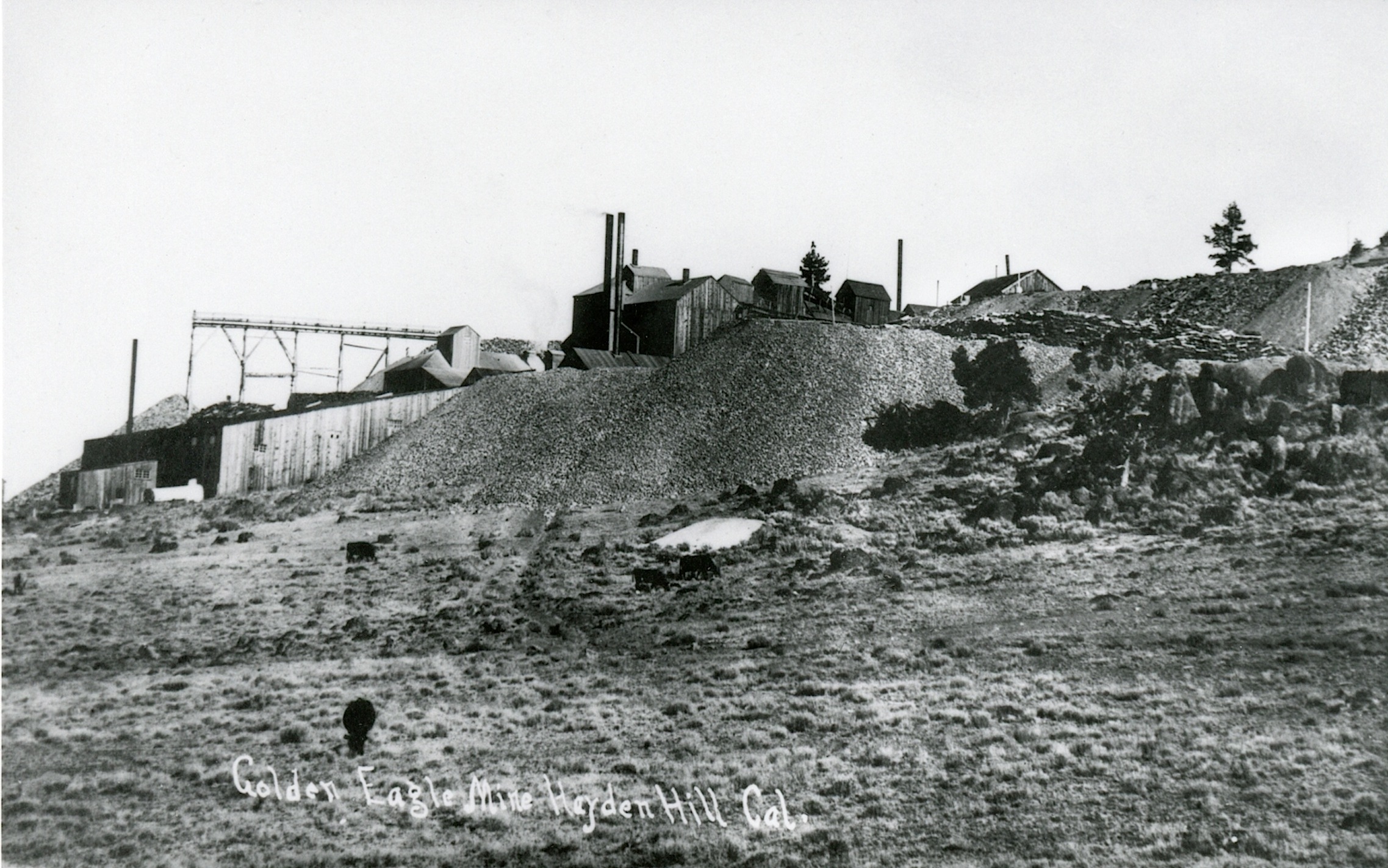
Golden Eagle Mine, 1894. Courtesy of Del & Diane Poole

On July 23, 1890 appeared to be  a typical day at Hayden Hill and then it was not. Frank Auble and W.A. Dunbar were working alone in a mine, the name of which I have not been able to ascertain. The two men came up from the mine shaft to prepare dinner and built a fire in the shaft house to sharpen their picks. They then descended back down the mine shaft, but apparently did not take the proper precaution to extinguish the fire. Eventually, the shaft house caught on fire. By the time the others saw it, they rushed to the scene to extinguish it, By that time some of the mine timbers caught fire. Once the fire was out, an attempt was made to go down the shaft to rescue the men. The gas and smoke was overpowering to prevent them. It was determined to obtain a hose from Adin. When attached to a large billow, this forced the air in the mine shaft to circulate. Montgomery Auble was the first to make the descent and at the  forty-foot level found the bodies of Frank, (his brother) and Dunbar both dead of suffocation. Once the bodies were brought to the surface they were taken to Adin where the two men were buried.

Support by subscribing.

The Hayden Hill Fire of 1910

A view of the western portion of Hayden Hill, 1909—Dallas & Joyce Snider

In 1908, a new vein of gold was discovered at Hayden Hill and another resurgence was on its way. The Golden Eagle, the Hill’s largest mine, hired 100 men for the initial operation and more were added to the payroll. In addition, the Lassen Mining Company’s Juniper Mine enjoyed good fortune and they had over 100 men on the payroll.

It was one of the brightest moments in the town’s history, followed by one of its worst disasters. On September 11, 1910, a fire originated at the Lassen Mining Company’s boarding house, which erupted into an inferno. The town had always had an inadequate water supply and there was not much anyone could to do fight the fire, and just watched the majority of the businesses and residential sections on the west side of the Hill go up in flames. The fire resulted in layoffs and over 150 miners left since there was no housing. The town would never fully recover.

On a rather peculiar note, the fire devastated the town’s cemetery. All the markers in the cemetery, including Joseph Hayden’s the town’s namesake, were all made of wood and the fire wiped those out.

Support by subscribing.

Driskell’s Hayden Hill Saloon

Golden Eagle Mine, Hayden Hill December 9, 1909—-Dallas & Joyce Snider

By 1900 it was becoming apparent that so-called  “Wild West” had become to an end. In the early 1900s, in California, one was now required to go before the County Board of Supervisors to petition for a liquor license. If there was sufficient opposition, the Supervisors would deny the license. Thus, in the same county, one town would be “wet” and another one “dry.”

In 1902, T. Ed Driskell applied for a liquor license to operate a saloon at Hayden Hill, and it was granted. Times were quiet on the Hill (as it was referred) and therefore no opposition. By 1906, mining conditions  were picking up and the mine operators opposed Driskell’s saloon. In mid-May 1907 the Golden Eagle Mine shut down, implying the problems associated with Driskell’s saloon. In reality there were a scarcity of miners to be found.

While the owners of Golden Eagle fought to revoke Driskell’s liquor license, the matter would resolve itself in a peculiar manner. On July 12, 1908, Driskell’s was found dead at his saloon. A Coroner’s Jury was assembled, the cause of death—alcohol poisoning.

Support by subscribing.

Hayden Hill It Is!

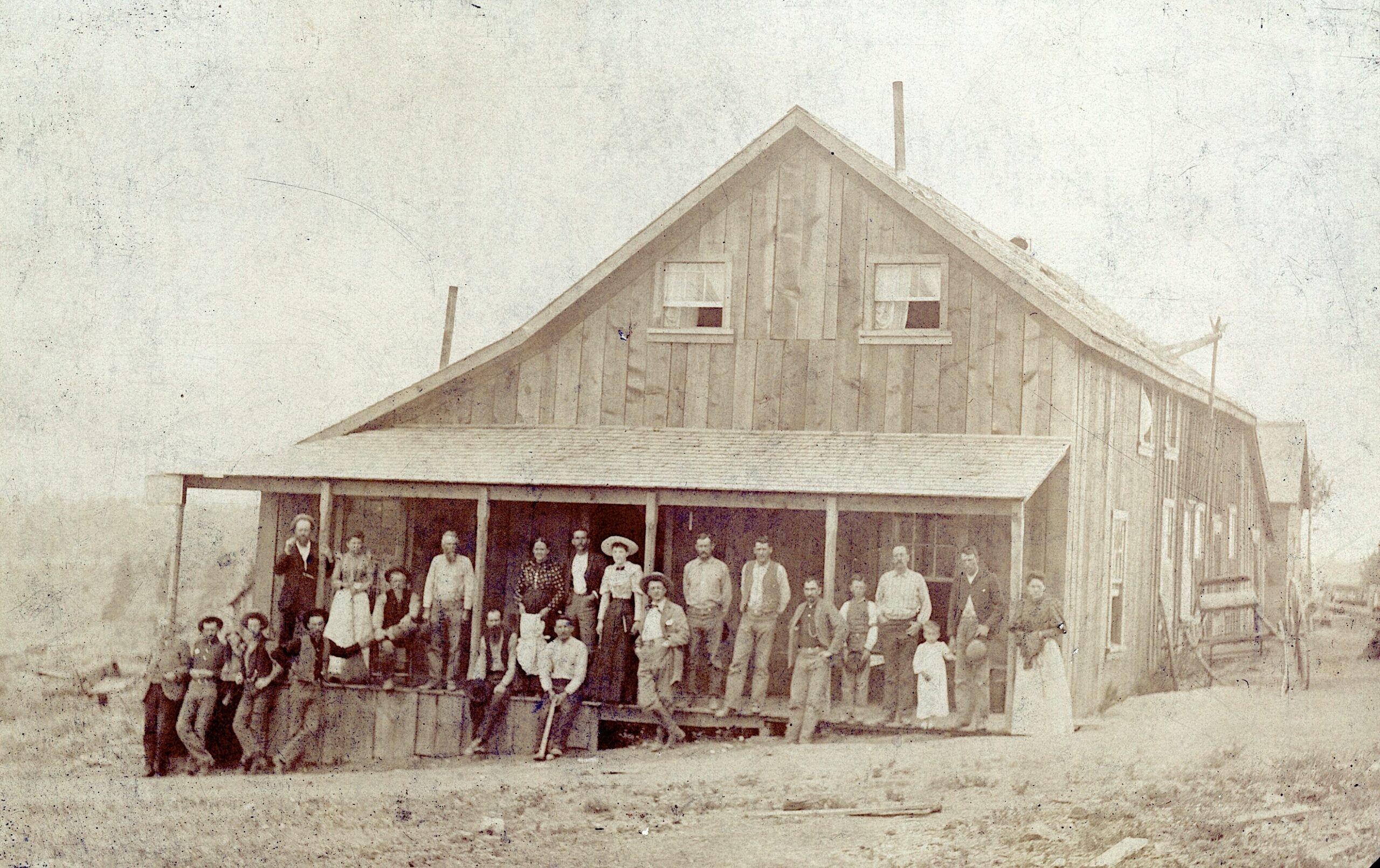
W.T. Summers Boarding House, Hayden Hill, 1894—Del & Diane Poole

During the recent Ask Tim segment, someone had two Hayden Hill questions. One was about the 1890 mining accident that claimed the  lives of Frank Auble and William Dunbar. The other concerns the town’s disastrous fire of 1910.  I am in midst of composing an interesting tale of the abrupt closure of the town’s largest mine the  Golden Eagle in 1907.

Finally, a little bit about today’s featured photograph. Hayden Hill was a peculiar mining community. Through all of its ups and downs, the town never boasted a bona fide hotel. Instead of hotels, the town had boarding houses for the mine workers, which also provided rooms for the transient travelers. My great grand Aunt Rose (Murrer) Bagin operated one at Hayden Hill, and when she finally moved to Reno, had a basement full of brass bed frames from her Hayden Hill days.

Tim

Hayden Hill Journalism

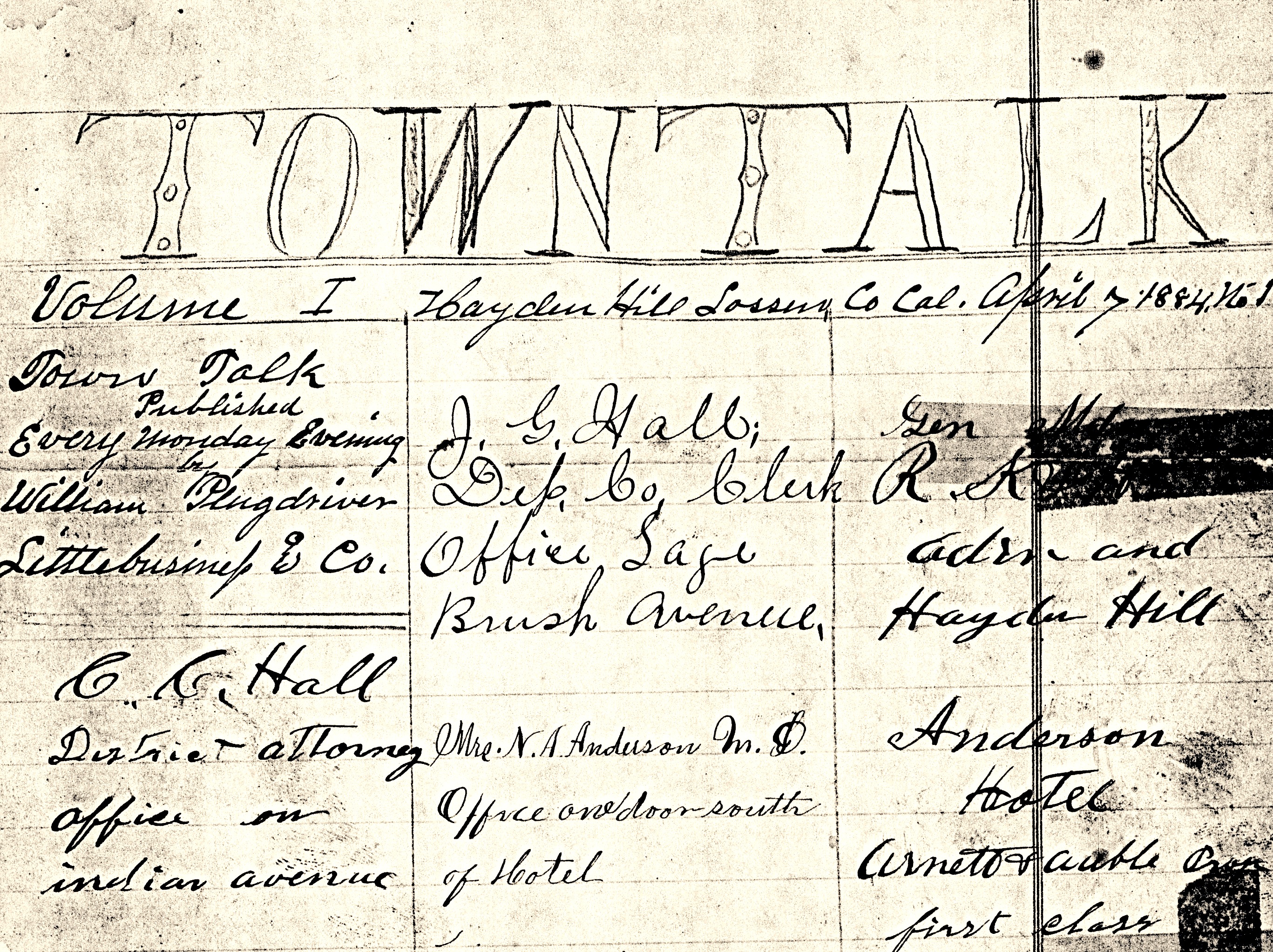
Vol. 1 No. 1 of Town Talk

While I have posted about early journalistic endeavors such as the Richmond Times and the Susanville Reporter, I was surprised to learn that very briefly Hayden Hill had a handwritten newspaper. The first issue was named Town Talk that was published on April 7, 1884. The next issue the name was changed to Talk Town, that was published on April 14, 1884.

The contents were rather whimsical in nature. Such commentary as “Snow fast disappearing” and “There was a social at the Hotel last evening. The music both instrumental and vocals was good.”

Tim

Hayden Hill Mining District Formed

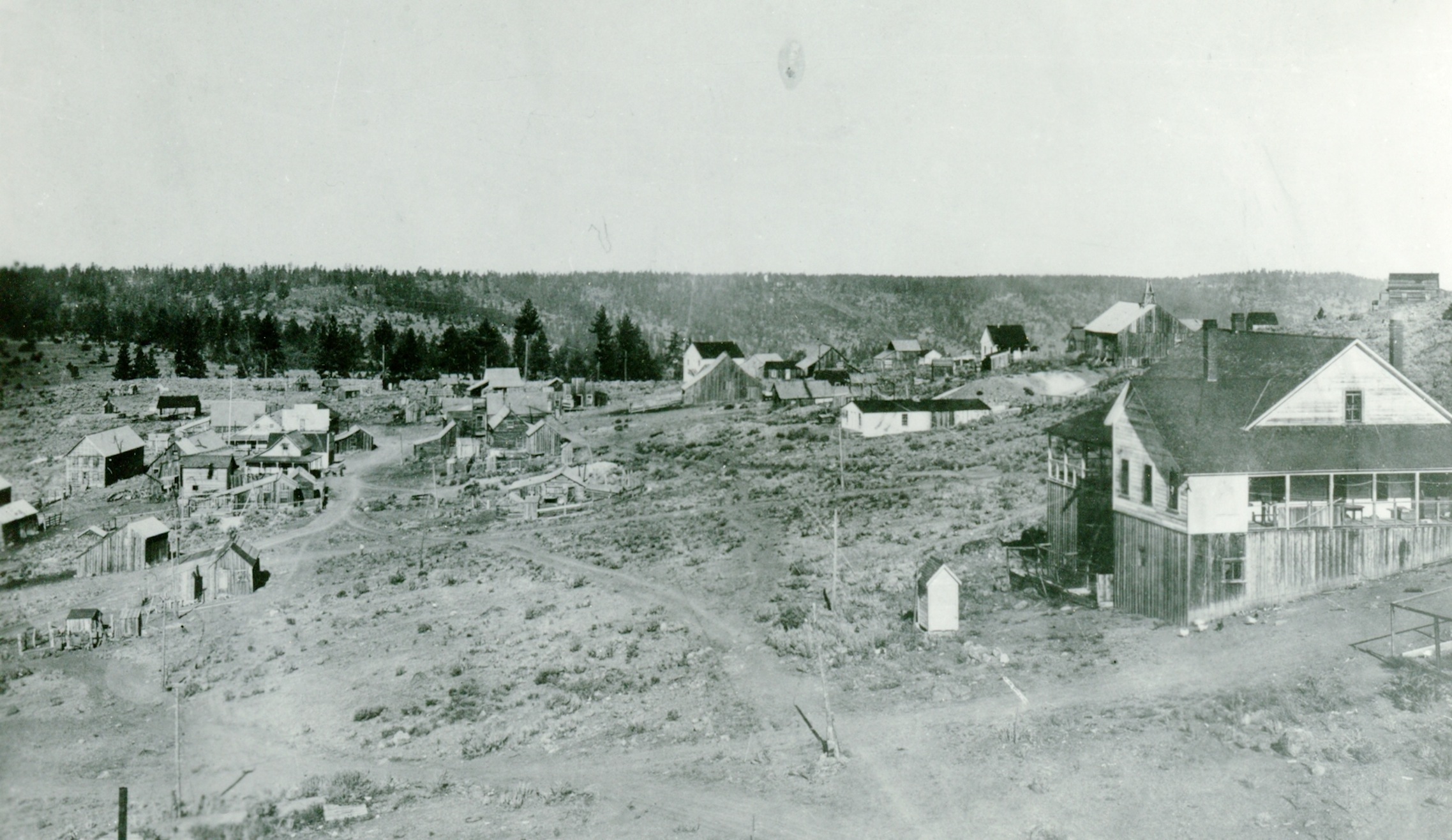
Hayden Hill 1894
Hayden Hill, 1894

Gold was accidentally discovered there in the fall of 1869 when a group of prospectors camped on the mountain, after an expedition in search of the fabled Lost Cabin Mine. They returned the following spring and named their discovery, “The Providence.” Once word spread of the new gold strike over 500 miners had flocked there. On December 5, 1870, it was decided to form a mining district to keep track of the claims. A leather bound ledger was used to record the claims. Once it was full, it was turned over to the Lassen County Recorder. A second ledger did not receive a lot of use, since basically most of the “hill” had been claimed.

It should be also noted, the area was known as the Providence Mines. When the district was formed, it was decided to name it Hayden Hill, instead of Providence, since Joseph W. Hayden, a veteran miner aged 56, was the oldest miner there, and they honored him with the bestowment. Hayden died there on Christmas Day 1884.

Support


Washoe-Lassen Mining Company

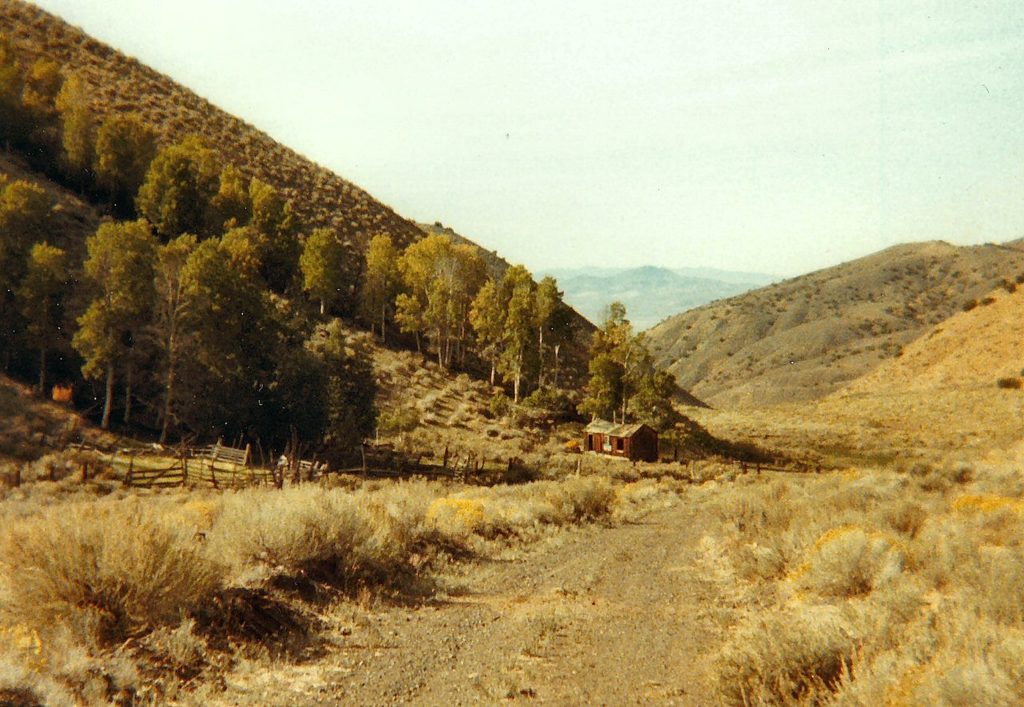
Wild Horse Canyon, September 27, 1984

A few years back, I wrote about the mining activity at Rosebud on the eastern edge of the Black Rock Desert. Yet, there was also considerable mining activity much closer to the Honey Lake Valley in the nearby Smoke Creek Desert. In 1882, the Cottonwood Mining District was established on the Fox Mountains on the east side of the Smoke Creek Desert. Due to its remoteness and lack of any substantial high grade ore, little mining was developed.. Continue reading Washoe-Lassen Mining Company