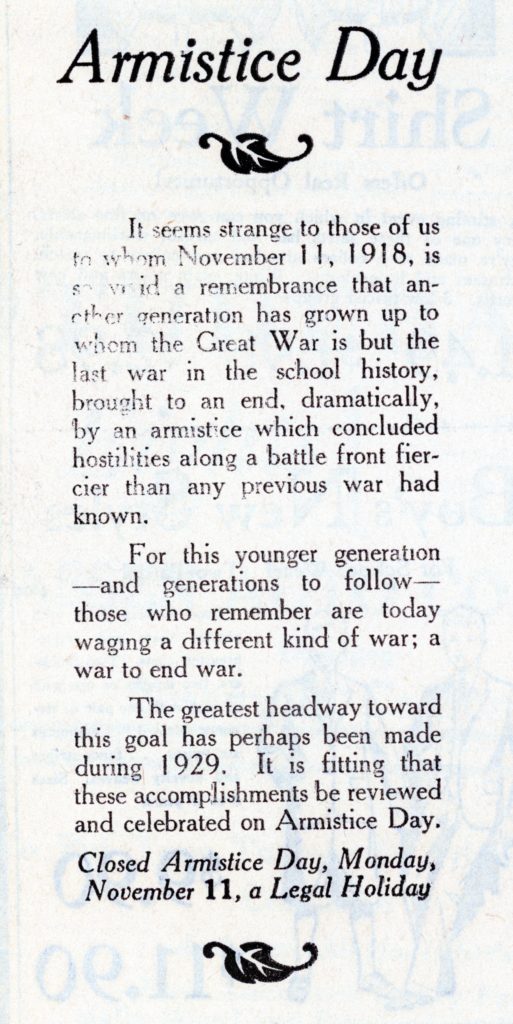
The above was an advertisement placed by the Bank of Lassen County. Using lingo from the newspaper writers of the past, for those of the younger set, Armistice Day is now known as Veteran’s Day. What caught my particular attention of this ad, it had only been eleven years since the ending of what was then referred to as the Great War (World War I) and they raised concern that a younger generation were unaware of it, and the sacrifices made.
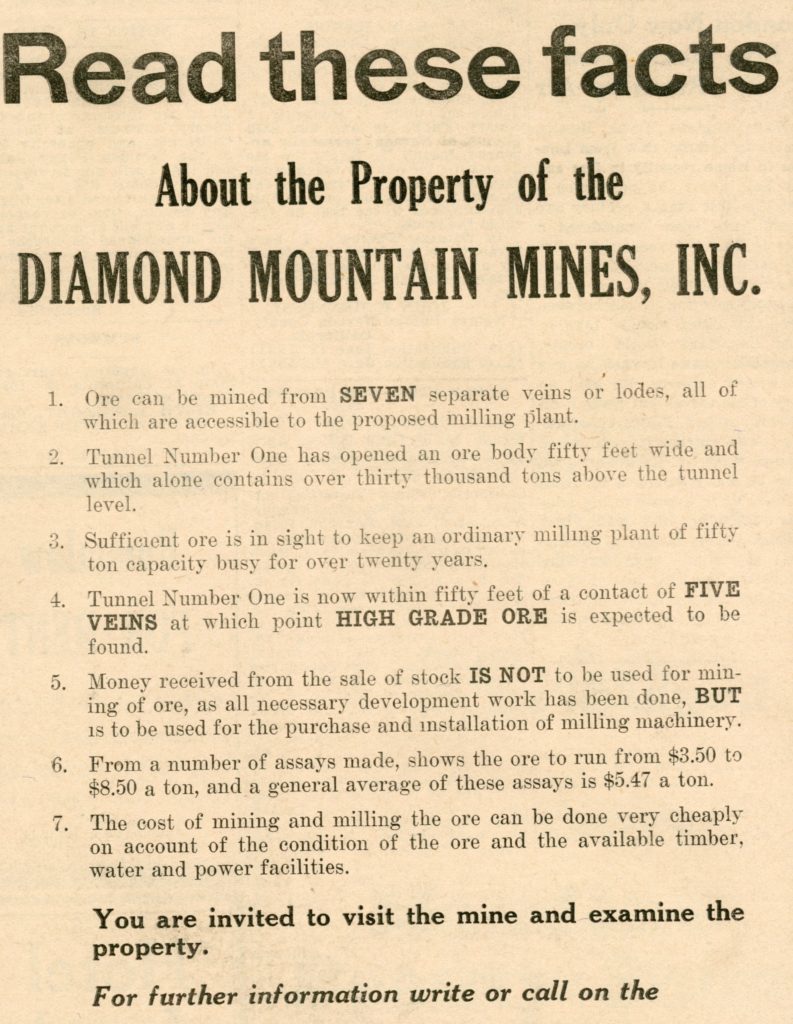
Mining goes through cycles, especially prone to boom and bust episodes. Gold mining on Diamond Mountain was no exception. Very little activity was done from World War I through the 1920s. During the depression of the 1930s, jobs and money were scarce. An interest in the abandoned mines on Diamond Mountain came to the forefront. The first venture was Diamond Mountain Mines, Inc., a group of Susanville businessmen. This company focused on seven different old mines. Others, too, would join in the mining frenzy there during the 1930s. While no one was getting rich, money was made. In 1942, a presidential Executive Order put a halt on gold mining during World War II.
While national news headlines occur nearly daily about the removal of statutes commemorating Confederate leaders, I thought I would provide a brief glimpse of some Civil War matters that occurred locally in the 1860s.
The Honey Lake Justice Court case files provides an interesting glimpse. There were three note worthy cases that appeared on the docket. The first involved Charles Mulkey. On November 9, 1863, Mulkey was noted for his open and boisterous cheering on the streets of Susanville for Jefferson Davis, President of the Confederate States. Criminal charges were filed against him. He pled guilty and was fined $25.
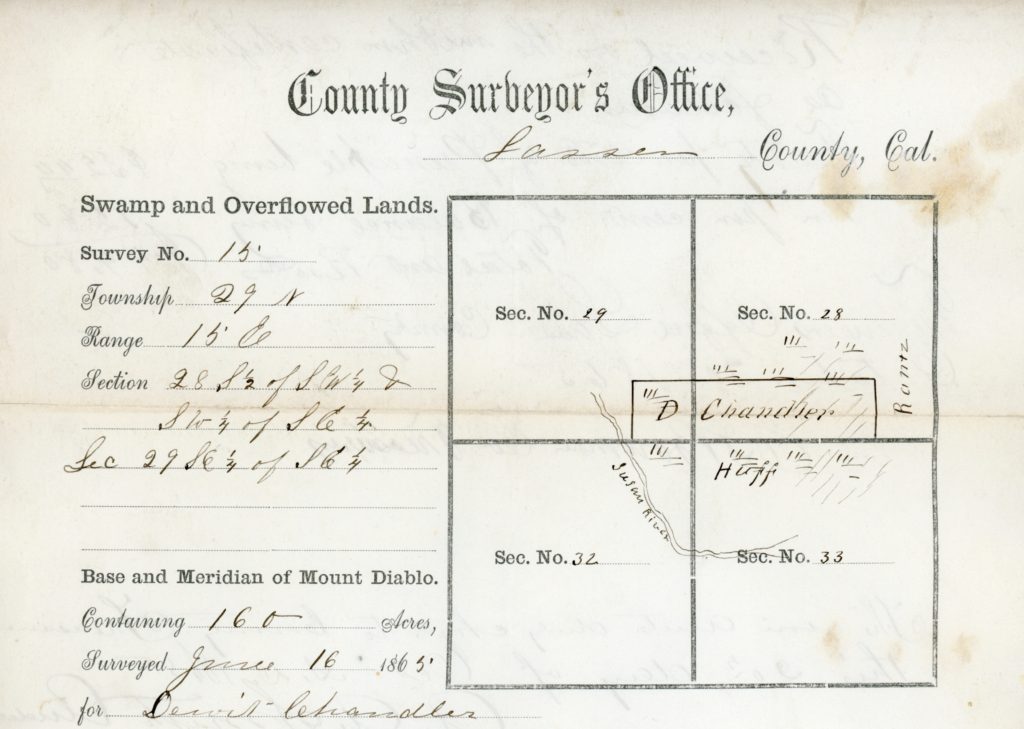
Meanwhile down in the Tule Confederacy, now better known as the Standish district, matters became a bit more turbulent. The region was experiencing quite an influx of settlers, causing boundary disputes and claim jumpers. DeWitt Chandler had his problems with these skirmishes with his neighbors George and John Purcell. The first incident occurred on December 22, 1863 when George Purcell was burning tules when the fire spread and destroyed one of Chandler’s haystacks. It was Chandler’s contention that the fire was intentional and related to Purcell’s loyalty to the Confederate States. Purcell was arrested and brought to trial where a jury found him not guilty. The following spring John Purcell set fire to Chandler’s house, claiming it a victory for the Confederate States. However, there is no record of the results of the charges of the incident. Yet, there is an irony in the tale and that is in August 1864 John Purcell lodged a complaint with the District Attorney seeking the arrest of John H. Harbin who publicly denounced the United States and proclaimed allegiance to the Confederate States.
Spread the word, and encourage a friend to subscribe
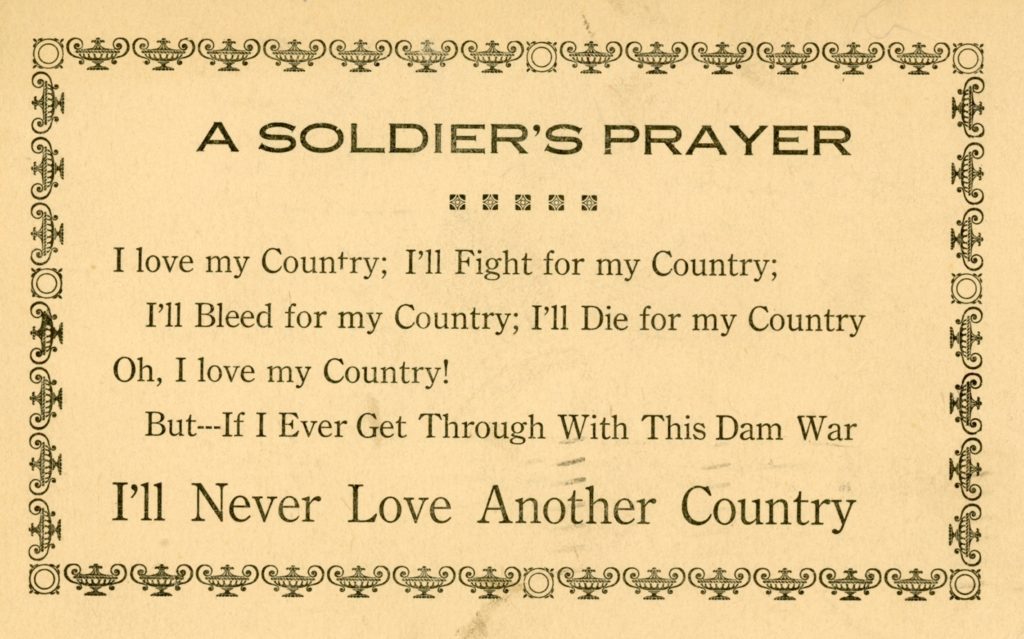
Today, being the traditional Memorial Day, I thought the above was a fitting way to remember those. This 1918 postcard was sent by Alfred Talbott to his cousin Lola Murrer. Talbott served in the U.S. Army. At his time of service, it would be referred to as the Great War, but later became known as World War I.
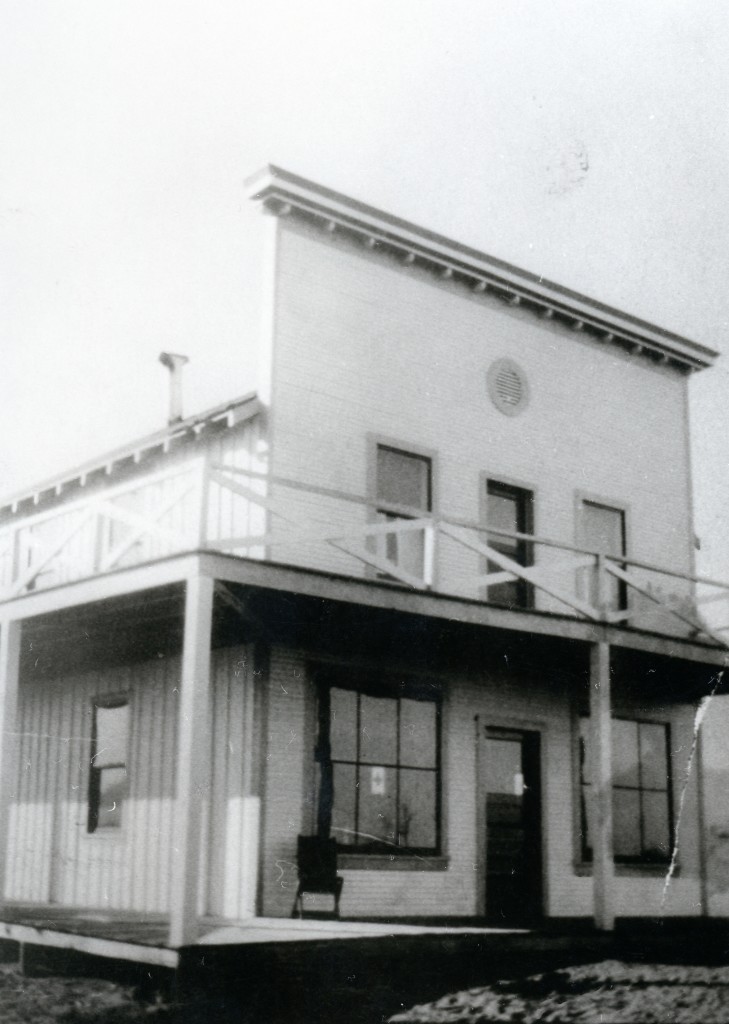
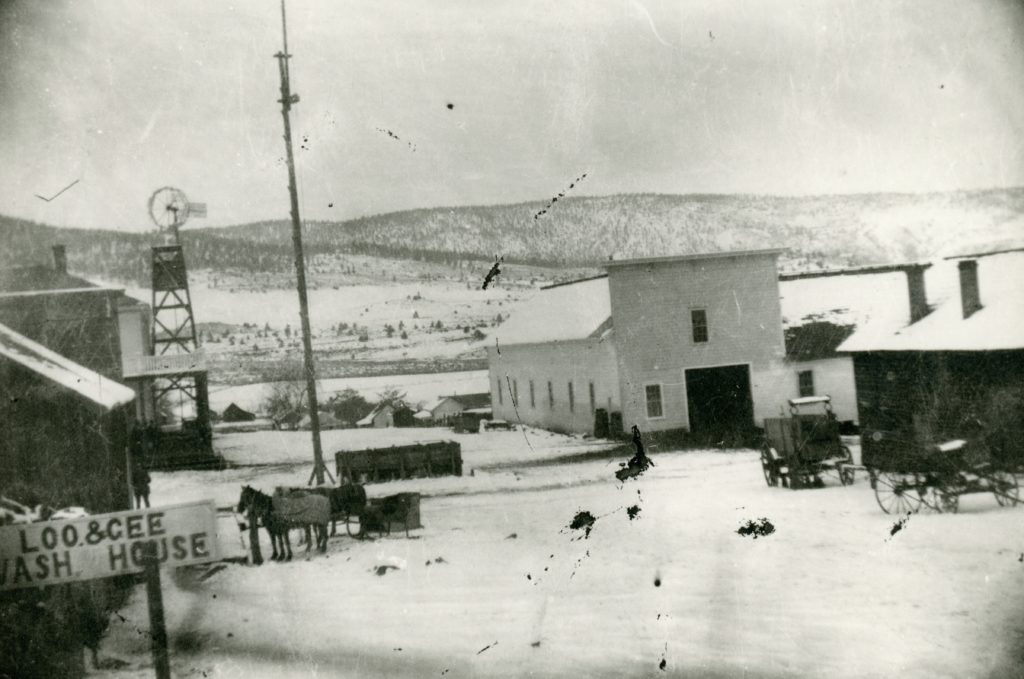
Rayl was one of the many railroad communities wherein the the founder had grandiose plans. Rayl was located at the crossing of two railroads—the NCO and Western Pacific. It is now known today as Herlong. Initially, Stanley Rayl who took over the 40-acre parcel of the former town of Cromwell, had no plans, other than the initial construction of a combination store and hotel.
World War I changed Rayl’s perspective and he prepared an extensive study and lobbied that this location for a proposed military training camp. While not successful, his work was not forgotten and it laid the foundation of the Sierra Ordnance Depot. While the title of property indicated it was sold in 1942, to the Standard Electrical Signal Company for $1,000 the deal fell apart and reverted back to Rayl who died in 1945. In the meantime, the federal government condemned the property for use by the army for the Sierra Ordnance Depot. Rayl’s widow opposed the government’s offer of 10 cents an acre. What was interesting former Lassen County Assessor, Frank Wemple and Lassen County Surveyor T.W. Ogilvie testified on behalf of Mrs. Rayl. Wemple stated the county had it assessed for $2.50 an acre. Both Wemple and Ogilvie went one step further and stated it was actually worth $4.50 an acre almost double of the assessed valuation. It is not clear what the final outcome of what the widowed Rayl was finally compensated.
Spread the word, and encourage a friend to subscribe.
In 1942, the U.S. War Department changed the Western Pacific Railroad’s station from Hackstaff to Herlong, the location of its new Sierra Ordnance Depot. It was done so to honor the first ordnance officer to lose his life in World War II. In 1943, Lt. Col. E.A. Cryne commanding officer at Sierra Ordnance Depot supplied the following information to G.I. Martin, Western Pacific’s agent at Reno as to who was Herlong.
“Capt. Henry W. Herlong, Ordnance Department was born in Florida, August 27, 1911. He graduated from the U.S. Military Academy at West Point in 1933, at which time he was commissioned a second lieutenant. In September 1936, he was transferred from infantry to field artillery and was detailed to the ordnance department December 27, 1939.
“After pursuing a four months’ course in aviation ordnance at Aberdeen Proving Ground, Maryland early in 1940, Capt. Herlong was assigned as a student to the 51st Ordnance Proving Ground at Langley Filed, Virginia, where he remained until October 1940. At this time he was transferred to Savannah, Georgia for duty with the 5th Air Base Group.
“While stationed at Savannah, Captain Herlong was killed in the line duty at LaGrange, Georgia, June 22, 1941.”
Gay Street, Susanville, looking north, 1864. Courtesy of Gilbert Morrill
While of late, I have had made references to logging camps, there were numerous military camps throughout the region in the 1860s. One of these was Camp Johns established near Susanville in June 1864, by Company D, 1st Nevada Territorial Cavalry from Fort Churchill, Nevada. In command was Captain Almond D. Wells. This was a mobile military unit that traveled the territory of Northeastern California and Northwestern Nevada in search of hostile Indians. On August 28, 1864, the camp closed, and the troops returned to Fort Churchill. The camp was named for Thomas Denton Johns, a Pennsylvanian who attended West Point. Johns served as commanding Captain of the Utah Brigade at Virginia City, Nevada in 1860. Camp Johns would be replaced with Camp Susan.
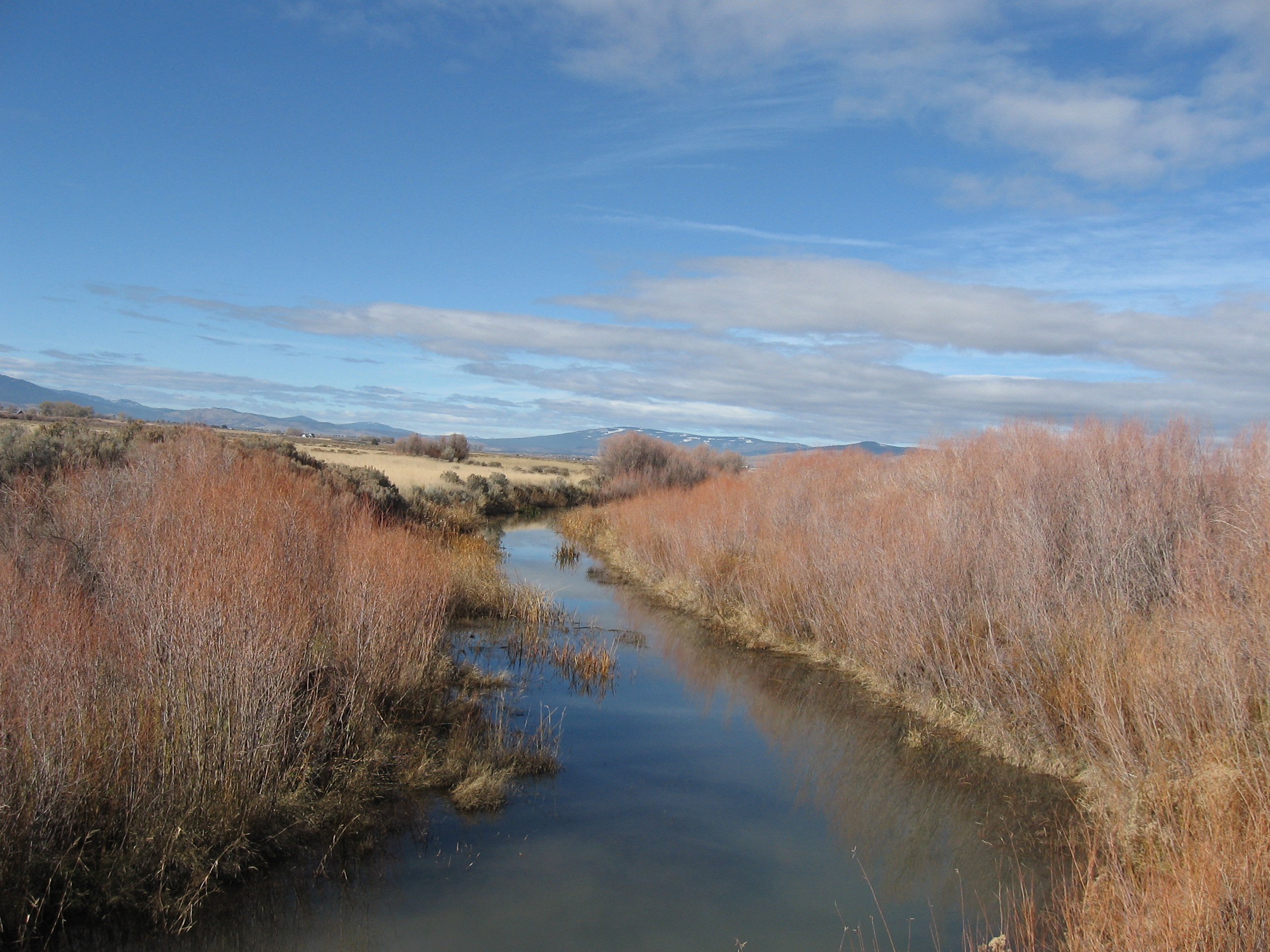
Susan River, near the Soldier Bridge military site. November 19, 2015
During the late 1850s and early 1860s residents of the Honey Lake Valley requested military presence for their protection with the conflicts with the Indians. Most of the times, their requests were ignored. However, when Horace Adams was killed by the Indians on June 18, 1860, at Honey Lake Valley, this time their requested was granted. Continue reading Soldier’s Bridge Military Camp→