Tag Archives: Honey Lake Valley

Johnstonville Post Office

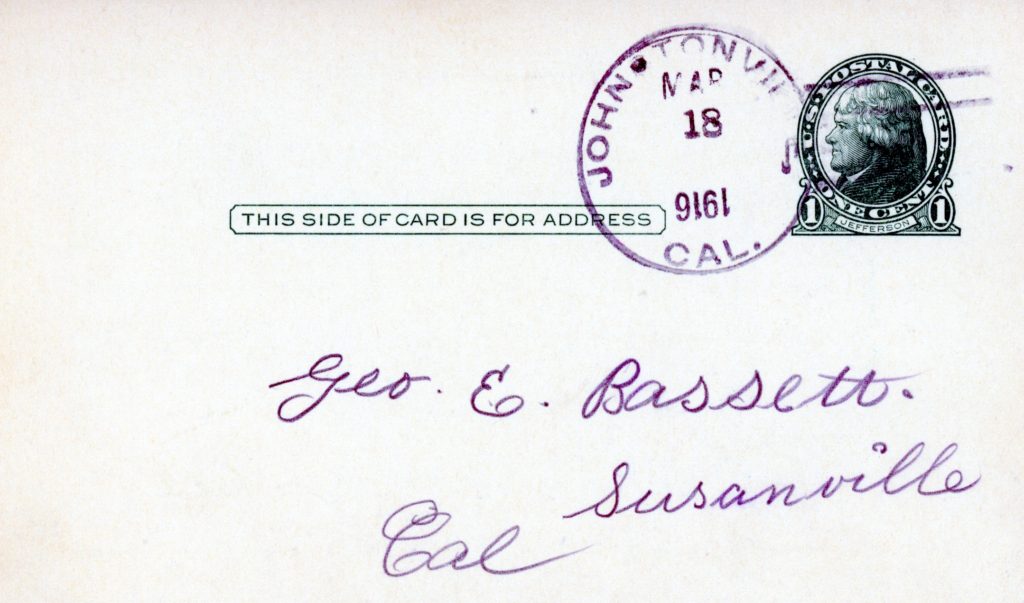
Johnstonville Post Office cancel

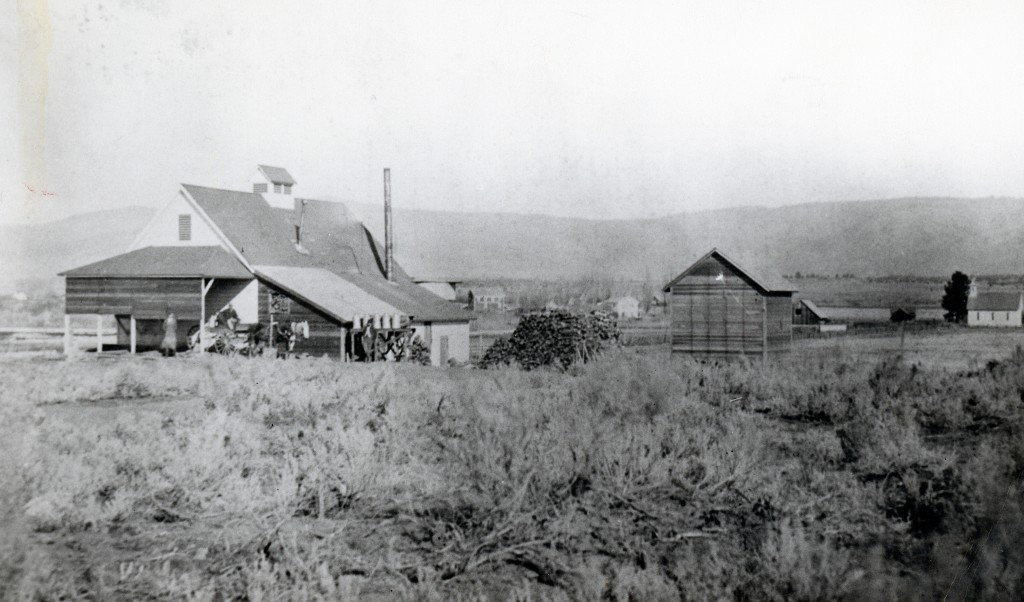
Johnstonville’s close proximity to Susanville hampered its development. Initially, for many years there were only two institutions that existed a school and flour mill. When the Diamond Mountain Creamery was established there, it was an impetuous start for the development of a community. Soon to open was Aaron Hooks blacksmith ship. This was followed by Andrew Spoon’s general store. On November 15, 1902, Spoon had established the Johnstonville Post Office. After a few years Spoon sold out to W.T. Stark in search of new opportunities. On March 3, 1936, Stark’s store, home and along with the post office was destroyed by fire from an overheated chimney. Once reimbursed by insurance all was rebuilt. The post office closed on October 27, 1943. 
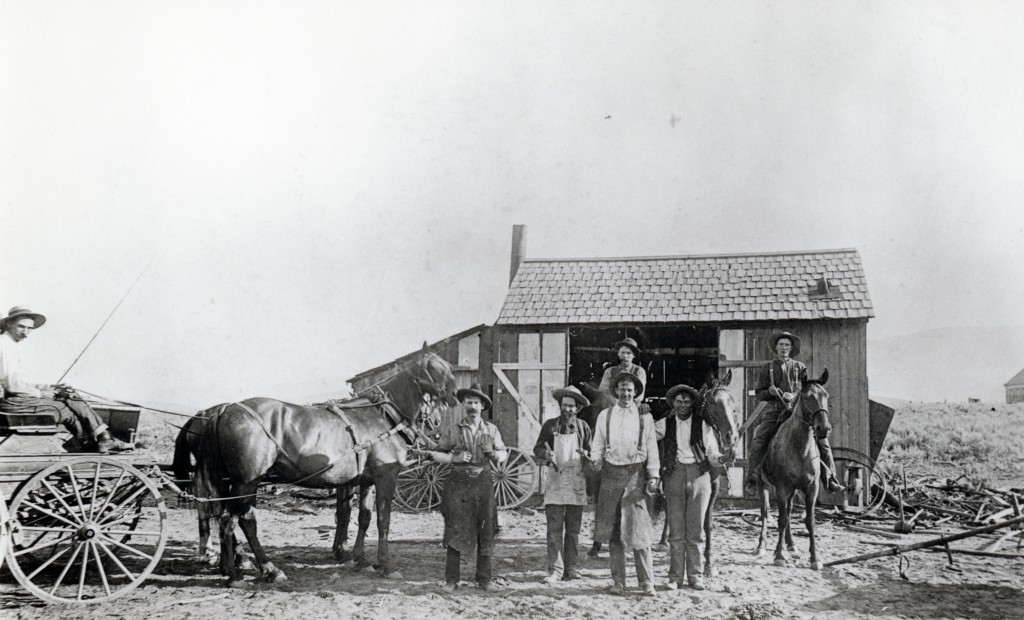
Johnstonville Blacksmith Shop

Subscribe

The strange fate of the Amedee Hotel

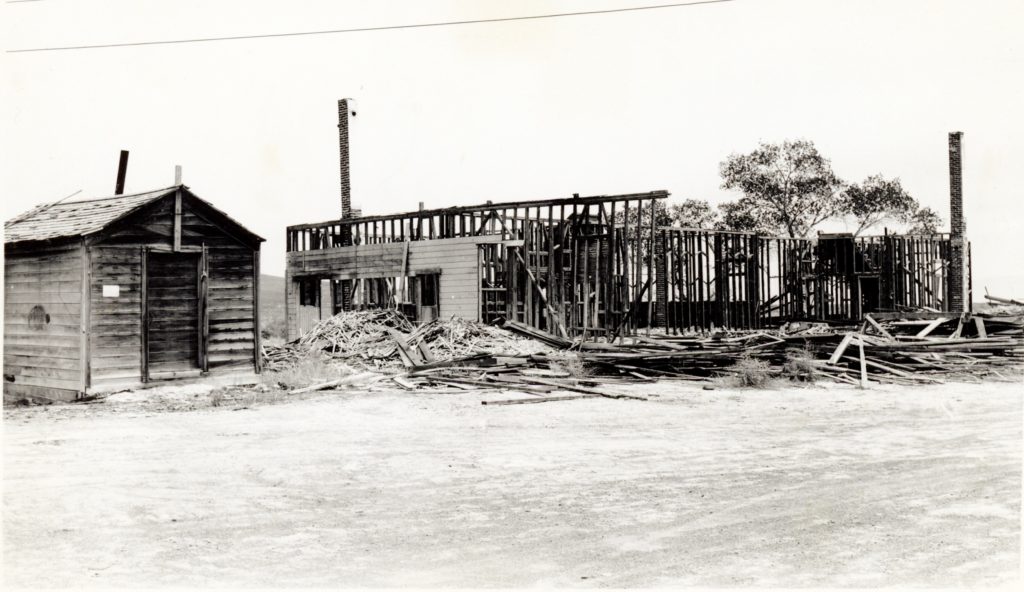
The remnants May 1950. Photograph taken by Harry Ryan

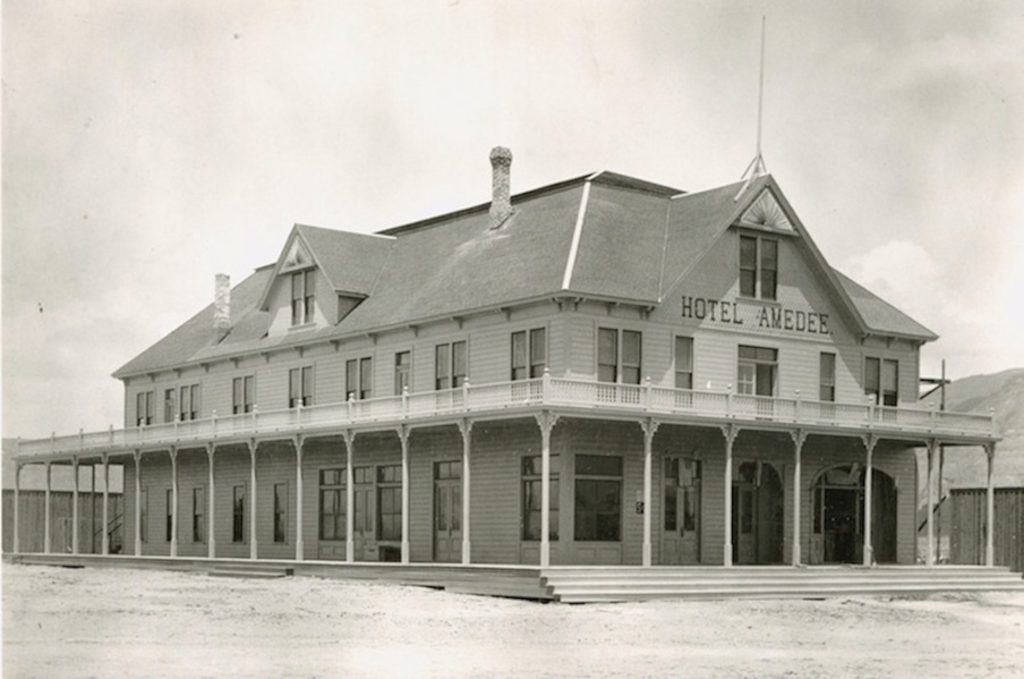
Amedee was the premier railroad boom town on the east side of Honey Lake. It was created in essence when the Nevada-California-Oregon Railroad (NCO) extended its line there in 1891. The following year witnessed lively times rivaling in population of Susanville. The town’s centerpiece was the majestic Amedee Hotel. In 1899, the NCO began work to extend its line north, and Amedee slipped a notch or two in importance. A revival of sorts began in 1910 with the Standish Water Company’s development of an elaborate irrigation system. In 1912. A second railroad, the Fernley & Lassen, added more excitement to region.

By 1917, Amedee’s decline had begun. In 1918, the NCO abandoned the segment of the railroad that serviced Amedee. At the same time the Standish Water Company’s project failed. Then with the advent of World War I a major segment of the east side of Honey Lake was de-populated. By the 1930s, the only occupants of the hotel was the town’s caretaker. By the 1940s the hotel was in a slow decay. In the spring of May 1950, Jack Humphrey who owned it had the hotel dismantled, since it was constructed with premium lumber. The lumber was then hauled to Jack’s residence near Milford, in which he intended to use it to construct a new home the following year. That September a forest fire destroyed the barn that the lumber was stored in.

The Amedee Hotel in its prime.

Subscribe

Standish vs. Litchfield

Standish, 1908. Courtesy of Betty Gorbet

All things considered, since Standish started as a planned utopian community that eventually failed, there was that bit of original quirkeness that prevailed for years, after the demise of the failed experiment. Case in point, when the Fernley & Lassen Railroad surveyed and later constructed the railroad north of the town in 1913, it was not a big issue. It was odd. Other communities would have lobbied hard to have a railroad come into their town. Not Standish. When Ben Gibson plotted out the nearby town of Litchfield that the railroad would become an integral part of that community, Standish yawned. Standish had only been established in 1898, yet it was the first major town in that district and enjoyed a loyal following of the agriculural district, that Litchfield which tried could never overcome.

Never miss a story, click here to subscribe.

Johnstonville Methodist Church

DM Creamery
Diamond Mountain Creamery, Johnstonville, 1897. To the far right, the church is visible.

The Methodist Church at Johnstonville has been a challenge to research. Recently, I came across a transcribed letter dated January 19, 1961 that Ada Hart wrote to Gladys Bass that primarily focused on the history of the Baptist Church at Johnstonville. Thankfully, Ada briefly wrote about the nearby Methodist Church. She wrote that it was built in 1889, along the Susan River, east of the bridge on property owned by Peter Scholl. Ada recalled attending the church there, and that the Susanville pastor was in charge of the services that were held at three in the afternoon. How long it remained in operation and what became of the church, I do not know.

Subscribe

Toad Town No More

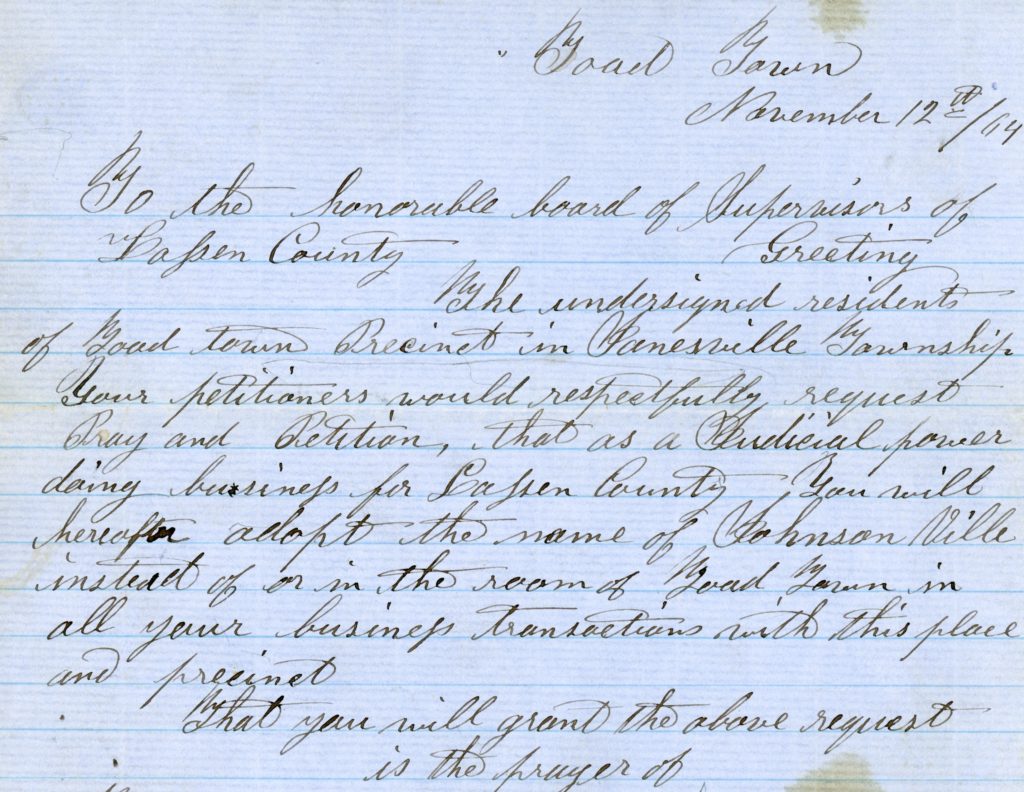
The November 12, 1864 petition.

In its earliest days, Johnstonville suffered an identity crisis. In the mid to late 1850s, a whenever a warm spring/ summer rain storm hit that area and its aftermath caused a swarm of frogs/toads to appear and someone gave that district the name of Toadtown. In 1864, when Lassen County Board of Supervisors were busy with the formation of the county, they named the voting precinct there Toad Town. At the same time, the board named the school district there Susan River. There were some people who did not like the monicker of Toad Town. A dated petition of November 12,1864 signed by 41 individuals asked the Board of Supervisors to change the name to Johnsonville, the “t” omitted. Another peculiar thing about this petition besides the spelling, was the majority of the people who signed it, lived in Susanville. On December. 7, 1864, meeting of the Board of Supervisors they approved the petition as submitted,  changing the Toad Town Voting Precinct to Johnsonville. As to the Susan River School, they did not change the name to Johnstonville until 1878.

Subscribe

Honey Lake Currency

Rutabagas also known as turnips

Isolated settlements in their earliest days had many obstacles to overcome and one item that was hard to come by was cash. This problem was only excabberated during the Civil War years of the 1860s in this region.

The Honey Lakers were a resourceful lot. One crop that grew well was rutabagas. In April 1860 when Honey Lake Valley’s first newspaper, Richmond Times, made its debut they offered a subscription price of 200 pounds of rutabagas. There is one recorded court case in which the lowly rutabaga was accepted as legal tender. In 1866, A. Dillon sued Antone Storff over the payment of labor and sundry supplies. Dillon accepted Storff’s partial payment in the form of rutabagas.

Subscribe

DeWitt, Lassen County

DeWitt Ranch, 1886.

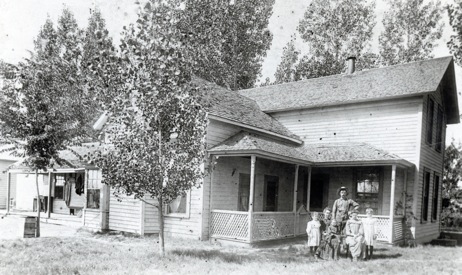
There was a time when the DeWitt family was well known throughout the Honey Lake Valley. However, with time comes many changes and many old time families slowly fade away. DeWitt is one such family.

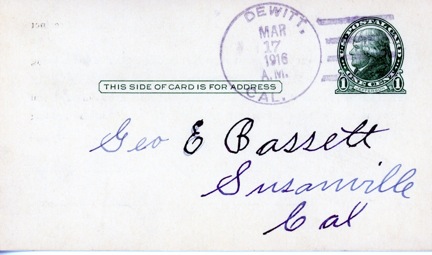
Franklin and Mary DeWitt settled in the Tule District of the Honey Lake Valley. A portion of their ranch is now known as the Fleming State Wildife Refuge Unit. Their son, Walter B. DeWitt (1863-1948) was a life-long resident of the Tule District.  His 1906 biography stated: “The farm which he now occupies is situated on the Spoonville and Hot Springs stage line, about four miles west of the last named place. On his homestead, July 1, 1903, through his earnest and energetic efforts, a post office was established named in his honor, and he was chosen the first postmaster, a position which he still occupies, with his wife as assistant.” The post office closed on November 30, 1927 as part of implementation of the Rural Free Delivery system.

Subscribe

The naming of Honey Lake

Honey Lake, 1984
Honey Lake, February 1984. To the right is the Hartson Sand Ridge. Photograph courtesy of Bob Sorvaag

In the summer of 1850, when Peter Lassen and a group of prospectors traveled through there, they named the lake and the valley for a sweet dew type substance found on the wild grains. Lassen returned that fall and was accompanied by J. Goldsborough Bruff and several other men in a search of the fabled Gold Lake.  On October 5, 1850, Bruff named it Derby Lake, for his friend George H. Derby, a United States topographical engineer, who at that time was surveying Southern California. In 1943, the Oakland Tribune published an article about Fred Lake’s 1892 dream town of Honey Lake City.  That prompted a question from several readers as to how Honey Lake received its name.  John S. Thomas of Oakland wrote the newspaper and stated: “They call it Honey Lake on account of the honey dew that fall on the borders of the lake.  In haying time, if you lay or stand a pitch fork out all night, the handle in the morning will be as sticky as if it had been rubbed with honey.  However, W. E. Booth of Hayward questioned Thomas’ claim in a letter to the Tribune. They published his response:  “Booth used to live in the Honey Lake Valley and worked on a dairy ranch.  Booth insists that he never saw such phenomenon and never heard the story.  It would seem that if such a phenomenon was the source of the name of the lake and region, it would have been a matter of common experience and knowledge.  The phenomenon of which Mr. Thomas speaks may have been incidental, the sticky handle may have been caused something other than the dew .”

It should be noted for the record that the Hudson Bay fur trappers of the 1830s and 1840s referred to the area as Hot Springs Valley.

Litchfield vs. Wikipedia

Litchfield
A town is born, Litchfield. Courtesy of John M. Gibson

Today, a graveside service is being held at the Lassen Cemetery for Clara Beth Haley Green, a great-granddaughter of Andrew Litch. When the family relayed the news of Clara Beth’s passing, they were bewildered by the fact the entry in the online encyclopedia Wikipedia, states that the town of Litchfield is named for Thomas Litch. Of course, this is false. While there is a ton of information to be found on the internet, it does not mean that it is accurate. Even commercial sites are not immune from providing paying customers with erroneus material.

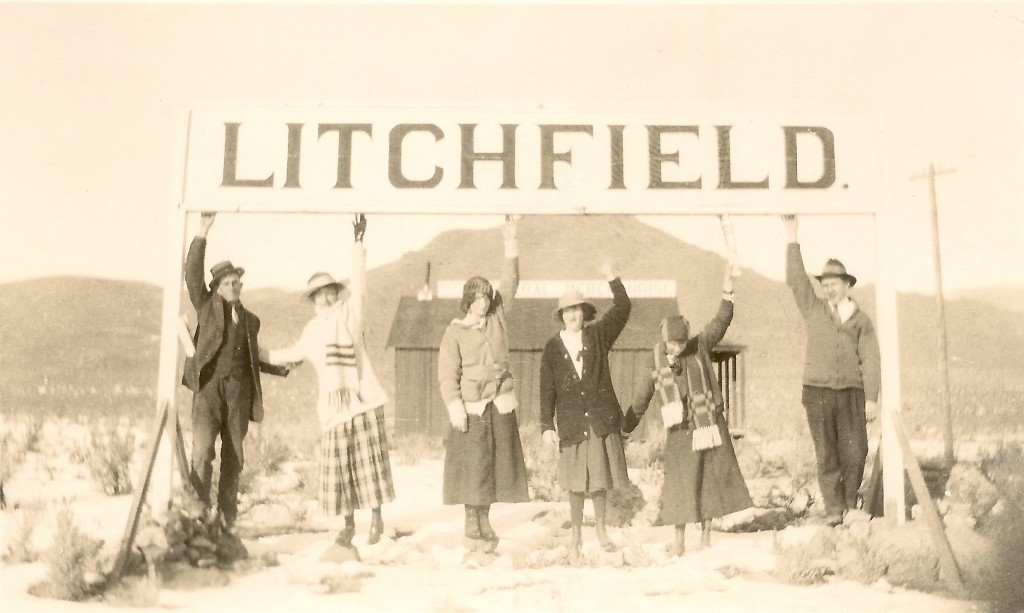
In 1912, with the construction of the Fernley & Lassen Railroad was surveyed to go through ranch of B.F. Gibson and its location in that part of the Honey Lake Valley made it an ideal place for a combination townsite and railroad shipping point.

As Standish was less than three miles away, Gibson offered residents of that community free lots for those willing to relocate, which he dubbed his enterprise, New Standish. However, his offer was not well received, so Gibson named is his new town, Litchfield, in honor of pioneer settler and his father-in-law, Andrew Litch. By the way, the Thomas Litch referenced in Wikipedia, was Andrew’s son.

Support

The Stacy Post Office & Its Mayor

A Stacy postal cancel

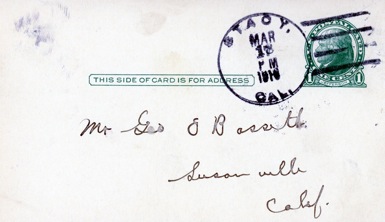
Stacy was a small agricultural community in eastern Honey Lake Valley and serviced by the Fernley & Lassen Railroad. The post office was established on July 11, 1912 and named for Stacy Yoakum Spoon, a wife of one of the town’s promoters. Of note, the Yoakum name may not be familiar to many. Stacy’s father in the early 1900s was the manager of the San Francisco Ranch in Willow Creek Valley, known today as Five Dot. Her sister, Eulalee, married Robert Trussell, a well known Johnstonville family back in the day.


Once upon a time, many years ago, when I was with my Dad, we met an elderly gentleman, who my father introduced me to him as the “Mayor of Stacy.” At that time, to be quite honest, I am not even sure if I knew where Stacy was. Anyhow, that man’s name was Allson Newman, a native of nearby Sierra Valley. In 1916, Newman’s parents, Ferdinand and Jennie located to Stacy, where is father operated a store and the post office. After his father’s death in 1942, Allson took over the family business and postal duties, too. As the region continued to de-populate, the Stacy Post Office closed on June 30, 1951. In the course of time, the Mayor of Stacy, would finally retire to make his home on South Spring Street, Susanville.

Stacy Depot
Stacy Depot. The town was named for Stacy Yoakum Spoon, wife of Grover Franklin Spoon, one of the town’s developers and its first postmaster.

Support