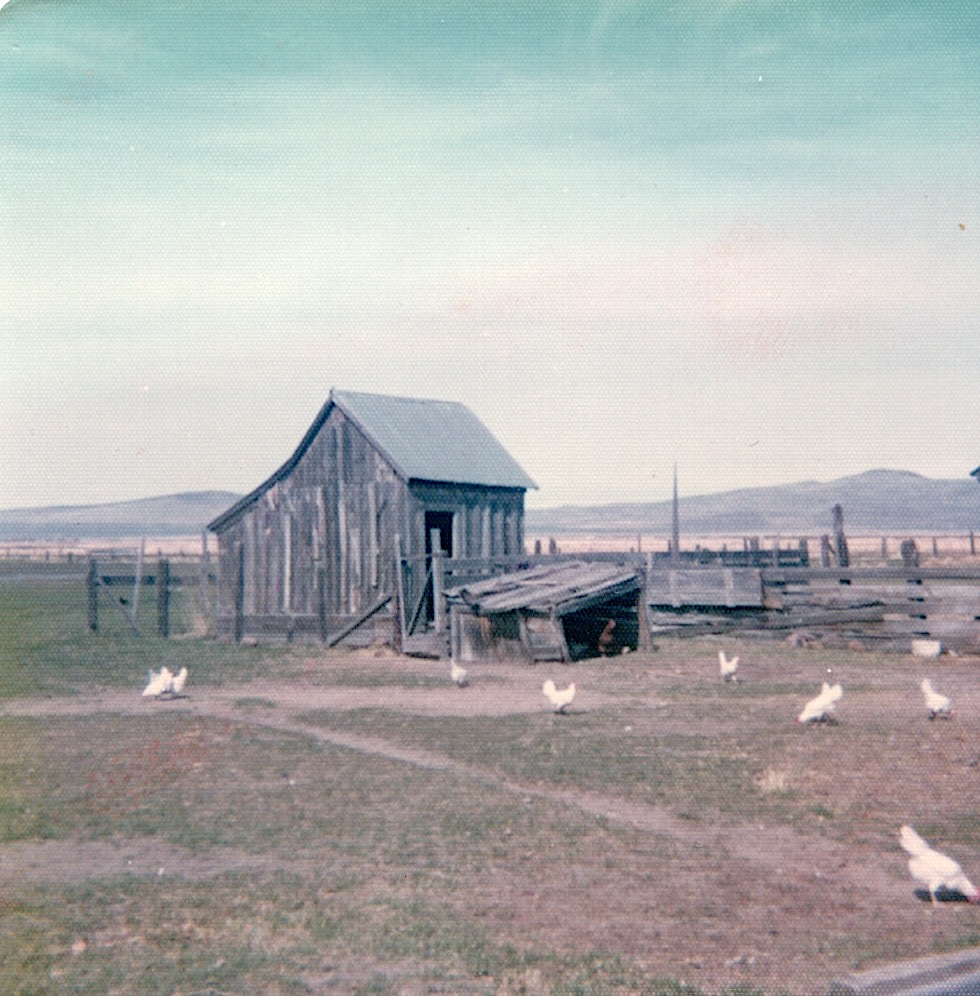
Chicken yard and coop, Tanner Ranch, Honey Lake Valley, April 1974
In the fall of 1927, A.N. Bennett of Bennett & Cardinal, owners of the area’s largest creamery, and a distributor of eggs. Bennett stated for many years, Lassen County produced enough of eggs to meet local demand. That changed in 1922, with the increase of population, but the local egg production had not. In 1922, $140,000 was spent to import eggs into Lassen County. The Lassen County Farm Bureau stepped in, and while local production still did not meet local demand, only $80,000 was spent yearly to import eggs. The farm bureau estimated 20,000 chickens were required to meet local demand. The organization advocated 200 chickens per farm.
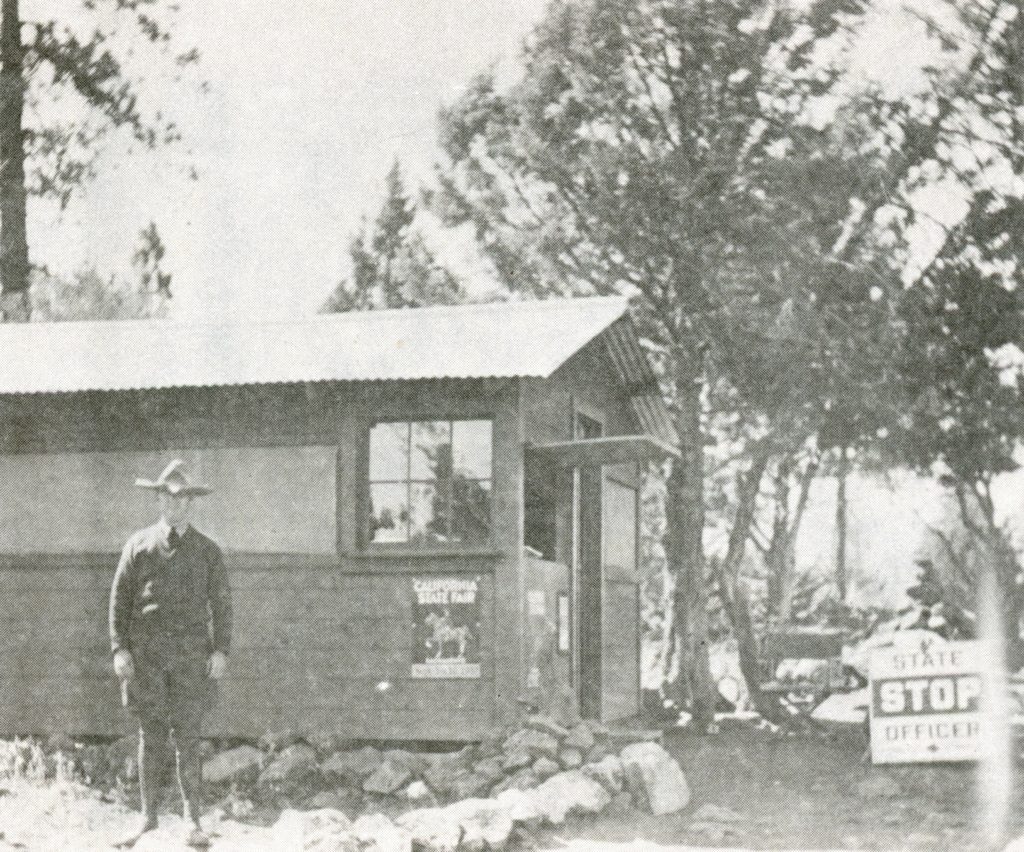
The inspection station at Jacks Valley, ten miles north of Susanville. Many folks know the location as the cement water trough on Highway 139.
California’s Agricultural Inspection Stations along its borders, are often referred by locals as “bug stations.” The agricultural inspection stations, locally, originated with an alfalfa weevil infestation in the southern portion of Lassen County in 1921. The county originally conducted the operations, and in 1923, the state took over.
As the infestations spread, more stations were opened. There was one just west of Susanville near the present day intersection of Highway 36 and Eagle Lake Road. Another one ten miles north of Susanville, just before approaching Willow Creek Valley. These would later be replaced and in 1953, the main station was at Long Valley. In 1976, when the segment of highway 395 was to become a divided highway, the station was in limbo, and the current one was put into place in 1986.
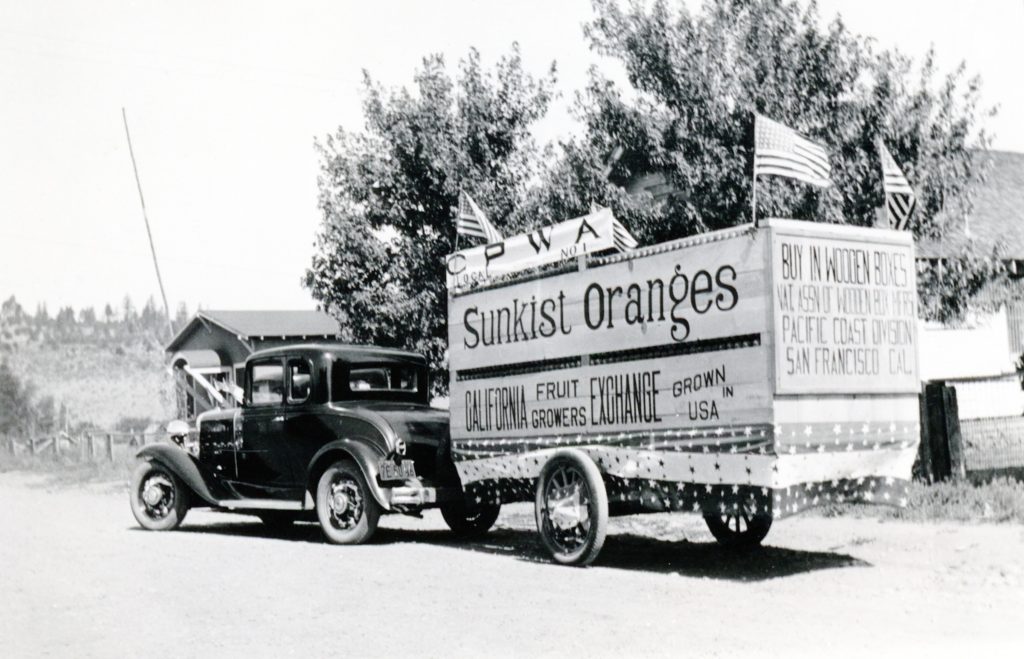
A 1937 Lassen County Fair Parade Entry, featuring an oversized wooden box.
While the California Fruit Growers Exchange over came many challenges there were more hurdles to conquer. Their marketing efforts were effective, there was a problem, as non-citrus grower members benefited at no cost.
Francis Q. Story, a transplanted Boston wool merchant was elected as the Exchange’s president in 1904. Story understood the power of advertising, and it was advertising that transformed citrus from a luxury item into a household staple.
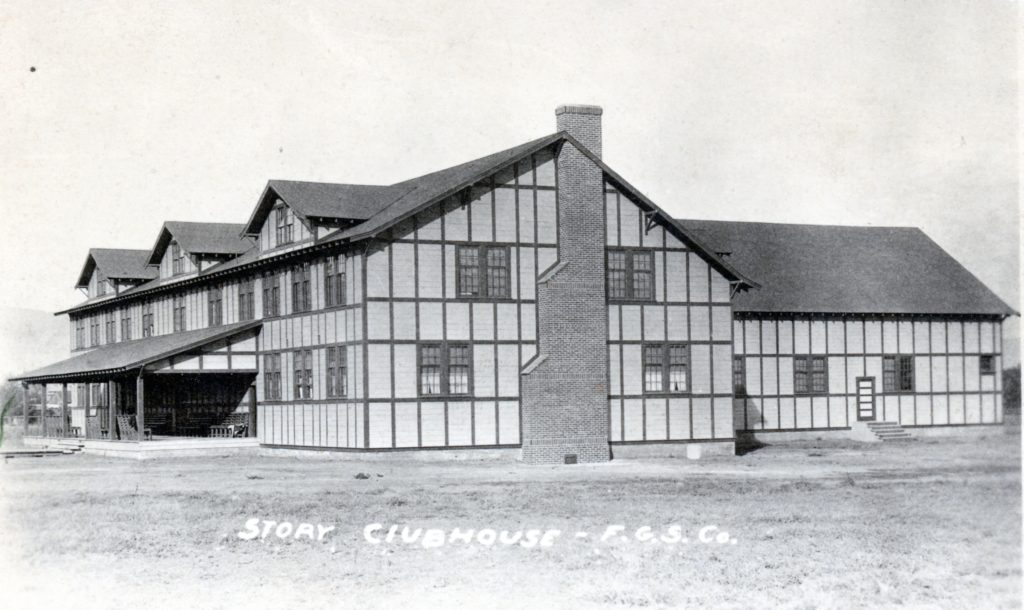
Fruit Growers Story Club, Susanville, 1924. Courtesy of Lola L. Tanner
What the Exchange needed to do was how to distinguish its fruit from that of its competitors—competitors who were benefiting from the Exchange’s advertising at no cost to them. A trademark or brand name was the answer.
In July 1907, R.C. Brandon of the Exchange’s Los Angeles advertising agency Lord & Thomas suggested the name SUNKISSED. On August 30th, an Exchange agent in Chicago, taking a bit of poetic license, changed the name to Sunkist. At the Exchange’s April 1908 meeting the board adopted Sunkist as its trademark, mandating that only the highest-grade oranges would bear the Sunkist name.
The next problem was how to mark them. Initially oranges were individually wrapped, the tissue paper for the highest-grade oranges was printed with the Sunkist name. In 1926, a machine was developed to stamp the name directly onto the fruit. Today, its placed there on a sticker.
These very successful advertising campaigns were also very expensive. From 1908 to 1951 the California Fruit Growers Exchange spent $61 million to advertise the Sunkist brand. The cost, however, was worth it. So successful were the campaigns that the name Sunkist became synonymous with citrus. On February 8, 1951 the California Fruit Growers Exchange officially changed its name to Sunkist Growers to reflect the famous trademark.