A bonus was this morning’s full moon.
Today, I decided to take the day off, the first one this year. With Memorial Day Weekend approaching I have lots to do between now and then. More to follow in a future post. In the meantime, you can always use the search feature in the far right corner and explore 500 plus previous posts.
Enjoy your day, while I do the same.

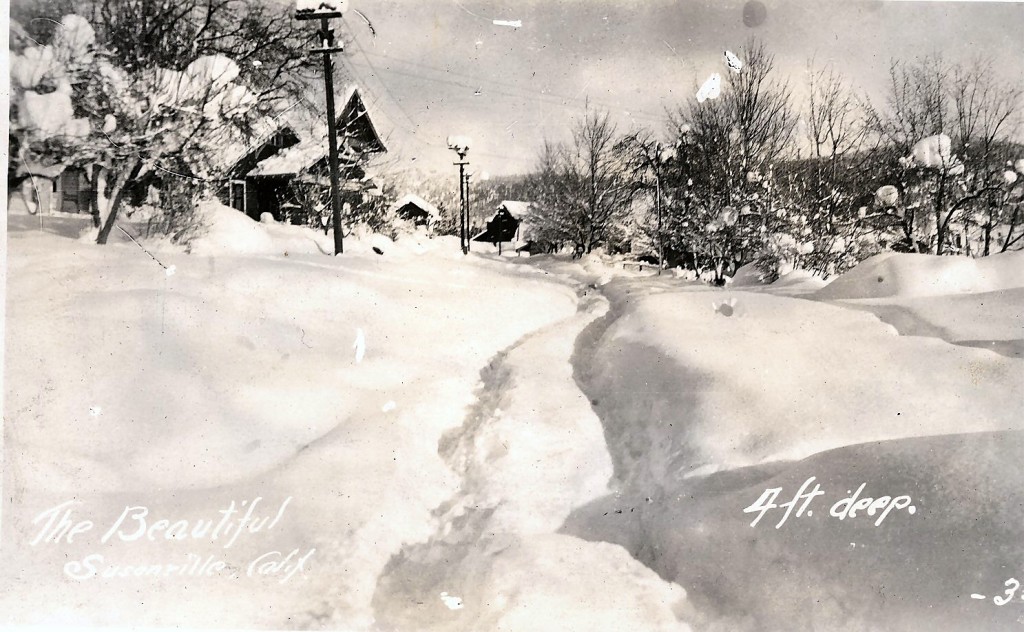
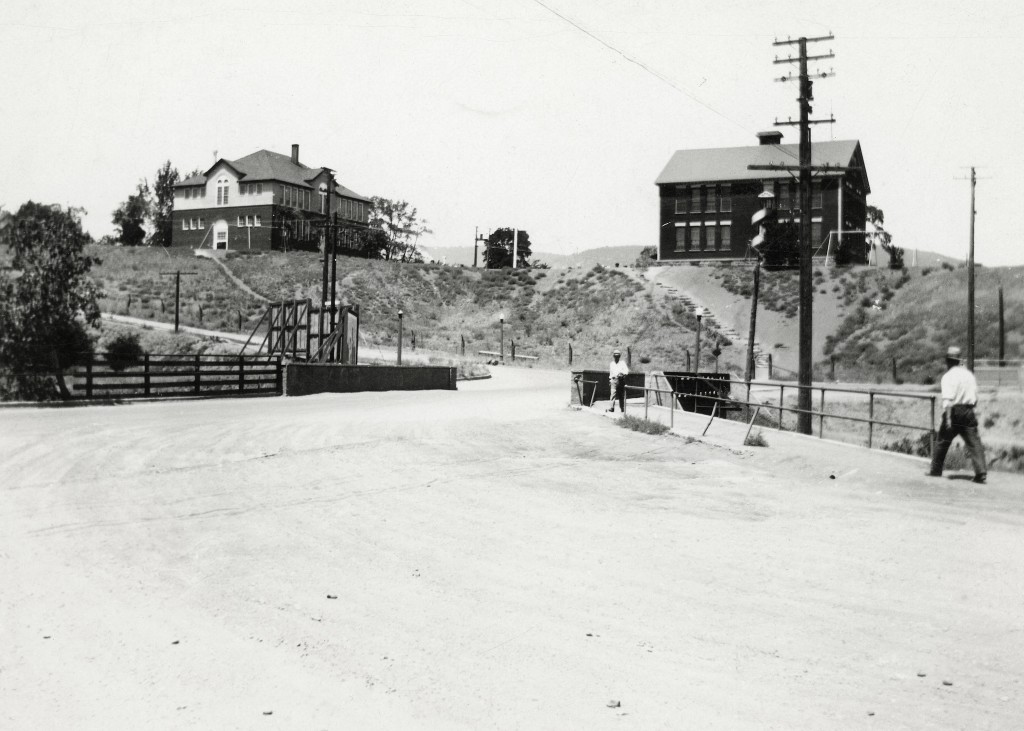
Several folks figured it out, that it is Sunkist Street in 1920, which was the road leading to the Fruit Growers Supply Company’s mill. There was a real easy clue, as I forgot to change the photograph’s name. In case some of you may not realize, if you click on the photograph, it will enlarge the image.
It has been awhile since I did quiz. Some may remember the last featured question was High Rock Ranch, and it stumped quite a few to my amazement. So just for fun, does anyone recognize this Susanville Street? You may leave your answer in the comment section, or the shy one can email me. The winner, by the way will receive the 2017 historical calendar when it is released in the fall.

Yesterday, I came across an article in the New York Times about the Wendel family. However, while quite interesting, it was not the same Wendel clan for the railroad town of the same name. The Nevada-California-Oregon Railroad (NCO) named it after German investor Charles de Wendel. Some twenty-five years ago, Armin Wendel a family descendant contacted me about this town, which he thought was a major U.S. city. He assigned an assistant to make arrangements for a visit. That person contacted me about the Wendel International Airport, and was there a Holiday Day Inn where her boss could stay among many other inquiries. Needless to say Armin was disappointed when I relayed the conditions of the town along with photographs and he never made the journey.
It should be noted, there were two Wendels on the Nevada-California-Oregon Railroad (NCO). The first Wendel Station was established in 1913 in Lake County, Oregon and its existence was brief. In October 1914, the Lassen Advocate reported that the NCO and Southern Pacific (SP) Junction name was to be changed from Caloreta to Wendel. In addition, the post office located there was known as Purser, and that name would also be changed to Wendel. While the NCO adopted the name change, the SP did not change it to Wendel until 1917.
In 1913, with the construction of the town and Westwood, along with the railroad construction crew rapidly approaching to Susanville, the camp followers of the day were not far behind. Out of this delegation were those sometimes referred to as the “ladies of the night.” Continue reading Susanville Bordello’s – Part II

My computer is being overhauled today, new hard drive, etc. This does not affect the website. However, I will not be able to respond to communications, such as comments and emails. Hopefully, all goes smooth and be up and running by mid-day.