Category Archives: History

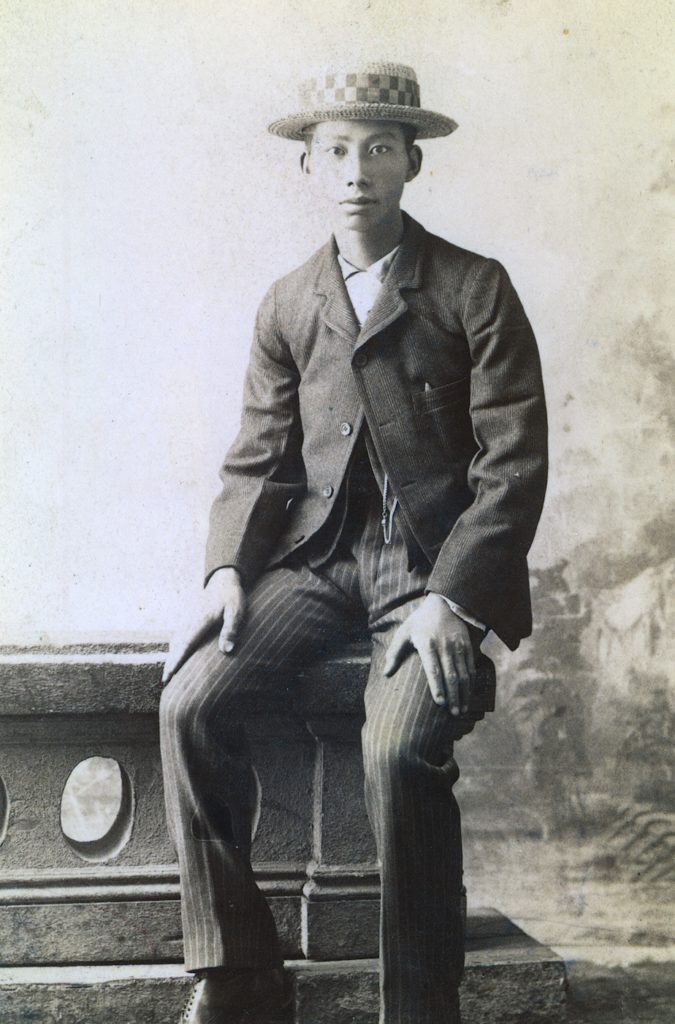
Chin Sin Yu aka Chinaman Joe Folsom

Chin Sin Yu. Courtesy of Philip S. Hall

In the last half of the 1800s there were two groups one would not necessarily  thought to have a presence in the Lassen region–Chinese and Jews. In future posts we will explore both and their influence on the region.

Today, is the story of Chin Sin Yu, known to many as Chinaman Joe Folsom. Joe worked as the cook on the Folsom Ranch, in Willow Creek Valley, north of Susanville and now a State Wildlife Refuge.  Joe  possessed many skills. As Mary Dale Folsom recounted, “It amazes me how Joe found time to do all the things he did. Not only was he the cook, but he had a garden and raised chickens and ducks. He made feather pillows from the duck and goose down. When they were shorthanded he would also get on a horse and help cowboy.” However, he was also known for his skills as a telegraph/telephone operator. In the spring of 1892, Med Folsom had a telephone line constructed to the family ranch.

In 1902, the trade journal, Telephony published a profile concerning Chin Sin Yu: “Joe, as he is known by the operators, is well like by all who know him. He is accommodating and pleasant on the line, always willing to render any assistance possible and when the lines are working hard to do all in his power to get business along. Joe can read and write and can take any telegraphic message that is sent him. He, of course, is not familiar with all the words of our language, but will receive them as sent and copy them correctly delivering the message verbatim as transmitted. The Folsom ranch office is equipped with a set of Atkinson repeaters and it falls to Joe’s duty to attend them at times. These he understands thoroughly, and anyone operating them with him would be surprised (if they did not know) to learn that they were telegraphing with an ordinary Chinaman. One particular feature in Joe’s operating is that he has all the peculiarities of his teacher, Melvinna Folsom, in his sending, and it is hard to distinguish one from the other in writing. Chinamen are noted for their ability to imitate.

“Joe is just as good on the telephone and understands the working of the instruments, switches, etc. He built a local telephone line with two instruments connected and manipulates this entirely by himself. He is proficient in the manipulation of all instruments, batteries, switchboards, connected with the telegraph and the telephone.

“Melvinna Folsom, the manager of the Folsom ranch office, deserves the credit of being tutor of this remarkable Chinaman. When she started to teach him she thought it would be an impossibility to get him to distinguish the difference between sounds, more particularly when he began to learn the letters of the alphabet. He could distinguish no difference between the articulate sounds of the letter b and n. After he had overcome this difficulty to some extent it seemed almost an utter impossibility to get him distinguish between the sounds of the words horse and house. But she labored persistently until she brought him to the perfection he has now attained.”
Never miss a story, click here to subscribe.

Honey Lake’s Sugar Beet Experiment

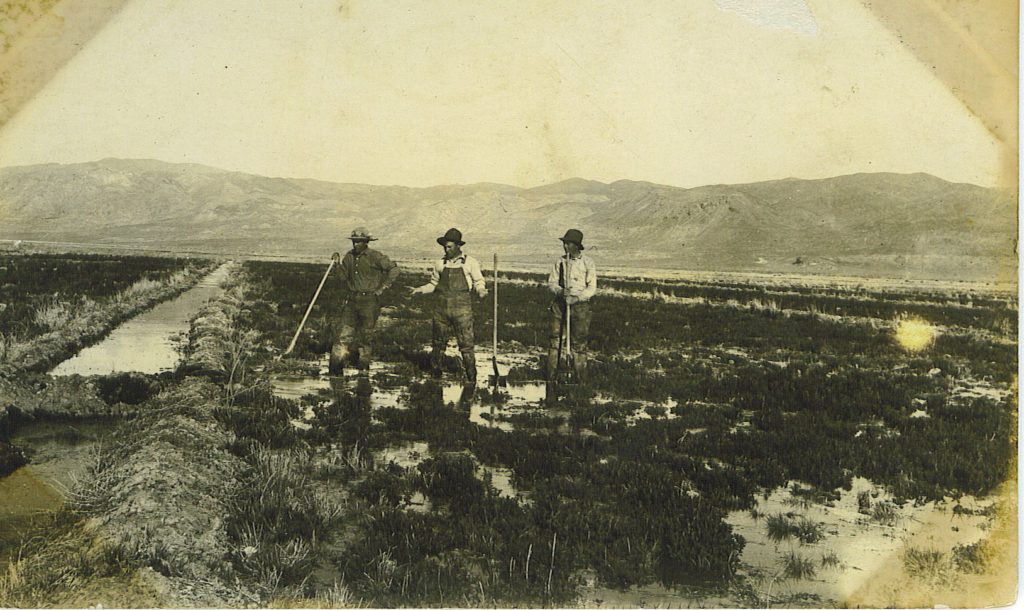
The Zarbock Brothers on their desert homestead near Stacy. Courtesy of Pam Zarbock Bell

In 1910, the Nevada Sugar Company of Fallon, Nevada came courting Honey Lake Valley farmers in the Standish district, as well those homesteaders on the east side of Honey Lake to plant sugar beets. One of the reasons, was the Nevada Sugar Company was in the midst of constructing a $600,000 factory at Fallon.

As an enticement the company stated it would build a second factory at Standish if production was successful and needed transportation facilities. In 1912, with the announcement of Fernley & Lassen Railroad to be constructed through this section of the Honey Lake Valley solved that transportation issue.

It should be noted that in 1911 was the first irrigation season of the Standish Water Company’s pumping plant on Honey Lake’s eastern shore.  In that year they provided water for 1,000 acres that was planted in sugar beets, with the Nevada Sugar Company providing the seed. No  one locally knew anything about growing sugar beets, but they learned quickly. One of the biggest problems encountered  with beet production was the amount of labor required. The problem was compounded as there was a local labor shortage, and then there were those who did not want to work in beet fields. To alleviate the problem 25 Japanese laborers were brought in to assist. Their tenure was brief, even though it was reported they worked twice as fast at a cheaper price.

There were two other problems that ended the experiment. First there was not an adequate water supply and the beets were substandard. It was not only a problem locally, but in Fallon as well for in 1917 the beet factory there closed.

Never miss a story, click here to subscribe.

Fredonyer City

Fredonyer's Claim
Fredonyer’s Claim

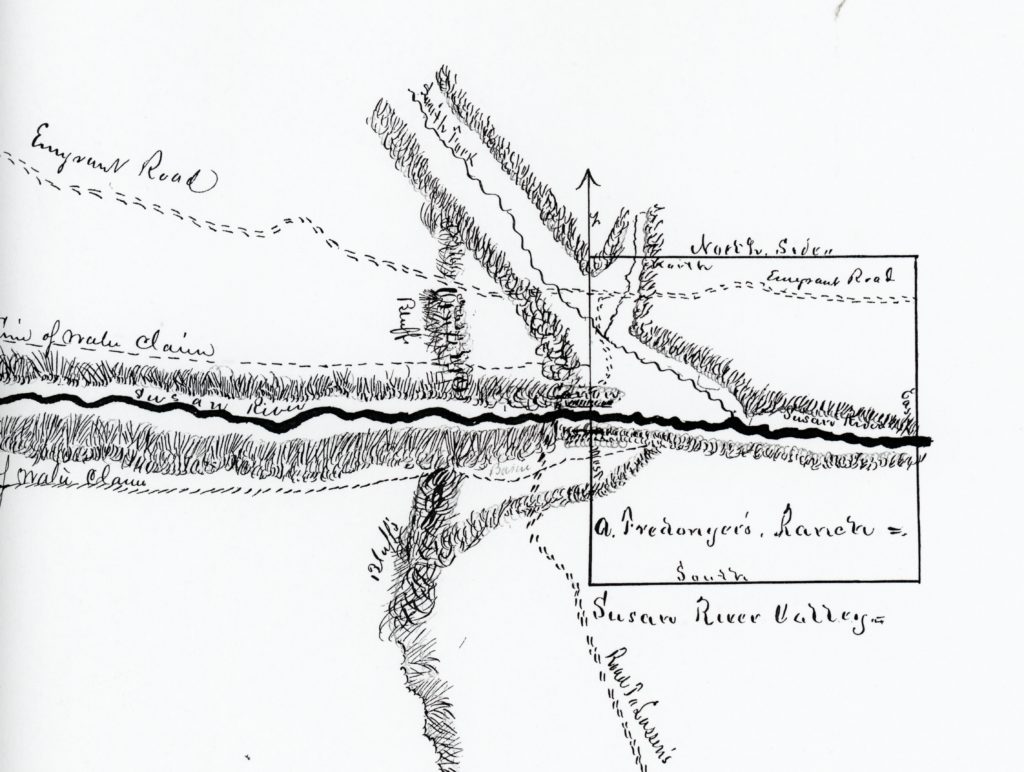
Recently, while researching early water right filings, I had the above document copied to share with everyone.

It should be noted, that in the spring of 1856, news reached the outside world of rich gold discoveries in the Honey Lake Valley and that brought an influx of miners to the region. It ultimately led to the development of a village at Roop’s trading post. At first, the settlement was known as either Roops or Rooptown. In September 1857, twenty of the residents gathered to select a name for the village. Two names were proposed, Nataqua and Fredonyer City, the latter was approved. That proclamation was more or less ignored and the place was simply referred to as Rooptown.

Before that event, however, on April 11, 1857 Atlas Fredonyer had not only filed a claim to the land that Roop had, but also became the first claimant to water rights of the Susan River. It was his intent to build a dam, to power a sawmill, but a flour mill as well. Fredonyer ultimately never proved title to the claim. On the other hand, Isaac Roop never proved title, either. Roop eventually plotted out the town of Susanville and did quite well selling lots to property he did not own.  In 1872, it literally took an act of Congress to correct the situation. All the town’s property was deed to over to the Lassen County District Judge, who in turn re-deeded the property to current owner.

Support by subscribing.

Herlong Junction

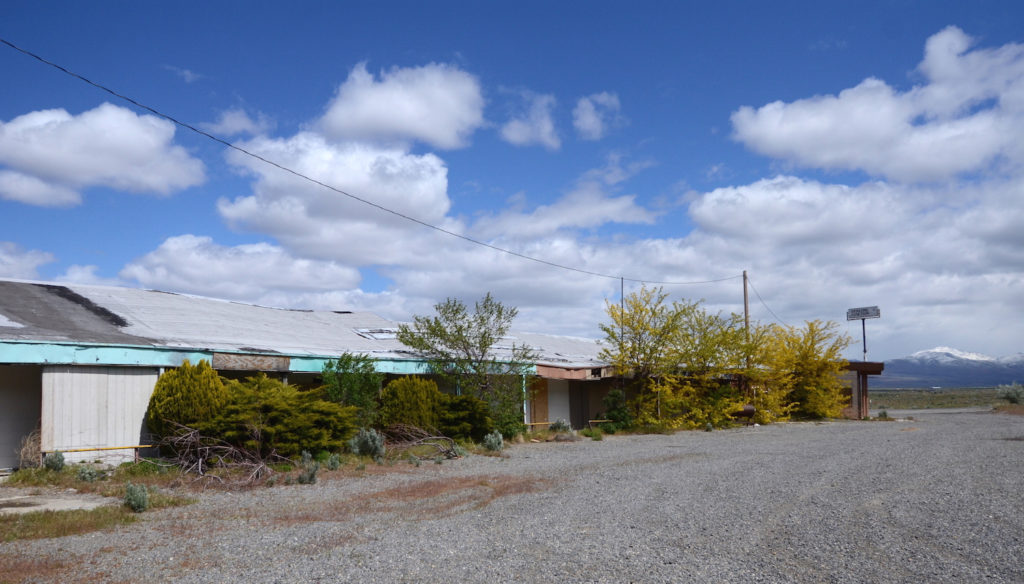
Herlong Junction, April 2016. Courtesy of Oliver Grosz
Herlong Junction, April 25, 2016. Courtesy of Oliver Grosz

Sometimes what appears a simple research project, becomes a challenging one. Herlong Junction is a perfect example.  Prior to the establishment of Herlong nothing existed on this segment of the highway. Yet, when the nearby Sierra Army Depot was established in 1942, it provided entreprenauers with possibilities.

The first to arrive on the scene was Ray and Connie Langley. On February 6, 1948, they purchased a small parcel from Zoa Clayburg. As the story goes, they had a restaurant at Milford and wanted to move the building to this location, however the highway officials would not give them a permit. It was one of those mysterious in the middle of night happenings, that somehow the building transported itself to the new location, and thus the establishment of The Mark.

Before you knew it, on the opposite side of the highway a new building appeared. This consisted of an outpost of Susanville’s Royal Grocery, along with a restaurant. While Royal Grocery no longer exists, its successor does, namely Idaho Grocery.

A lot of changes have occurred over the years, and while the businesses on the east side of the highway have shuttered, The Mark continues on.

In the meantime, I will work on researching this further, and will provide updates on my findings.

Never miss a story, subscribe for as a little as five dollars month. To learn more, click here.


Camp Lasco

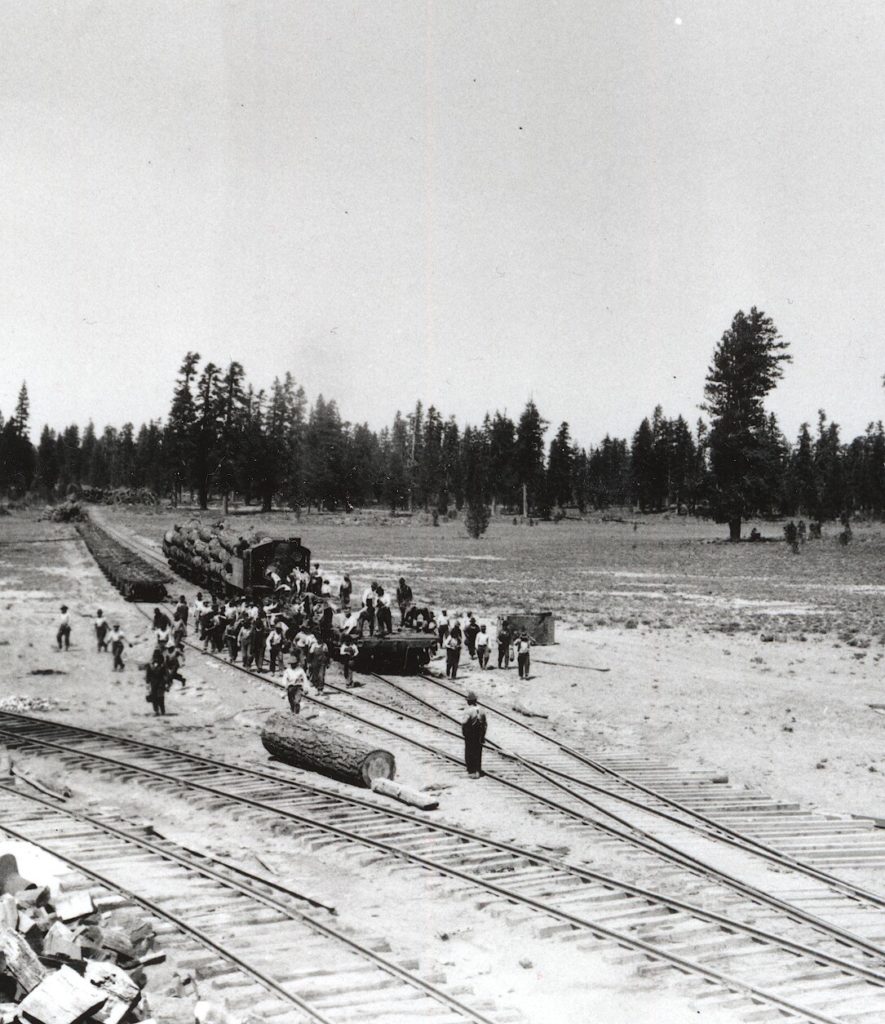
High Noon at Lasco, 1923.

In 1918, the Lassen Lumber & Box Company built a sawmill and box factory at Susanville with an average annual production of 30,000,000 board feet of lumber. Unlike the Fruit Growers Supply Company and Red River Lumber Company, who owned their timber, Lassen Lumber’s  main source of timber came from two timber sales they had purchased from the Lassen National Forest.  In 1919, they started railroad logging on the northside of Peg Leg Mountain.  From 1919 to 1922, they operated three logging camps. In the fall of 1922, construction began on its largest logging camp—Camp Lasco. It opened in the spring of 1923, and became a seasonal home to 250 plus loggers and their families. The camp remained in operation through the logging season of 1930. In the winter of 1930, the Company leased the camp to the Western Pacific Railroad who was in the process of constructing the railroad’s Northern California Extension.

Never miss a story, click here to subscribe.

Dry Valley School

Dry Valley School
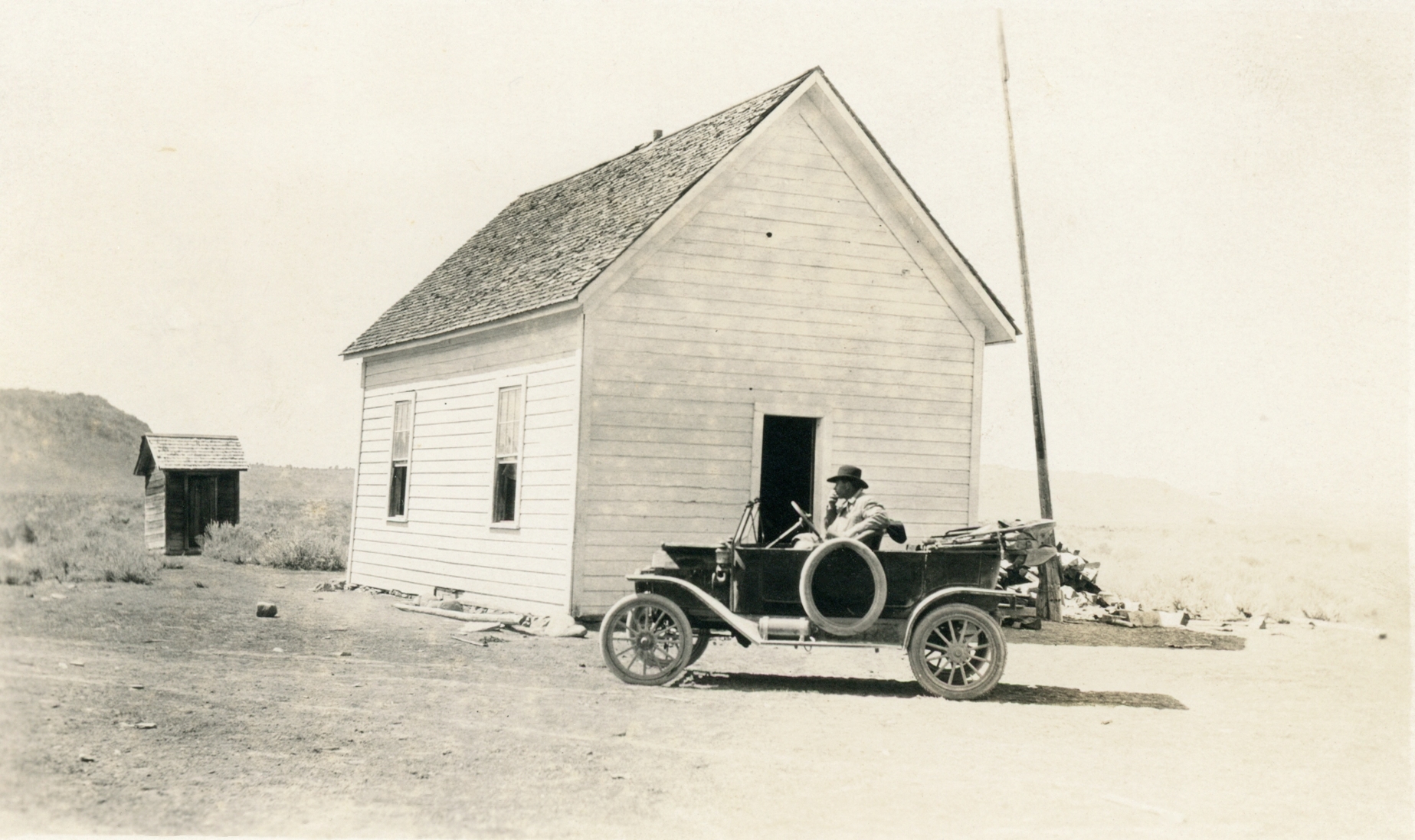
Dry Valley School, 1916. Courtesy of D.M. Durst Collection

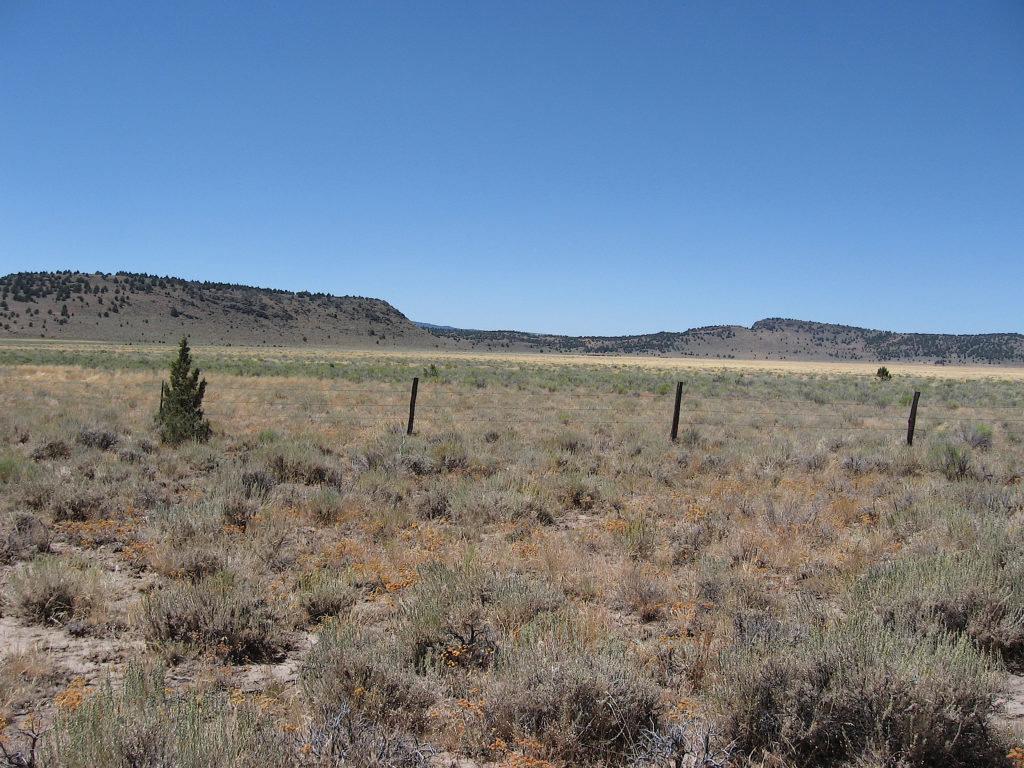
In May 1888, this school, located between Grasshopper Valley and the Madeline Plains, was established. Unfortunately, due to its remoteness, there is very little documentation.

By the early 1920s, many of the homesteads had either been abandoned or sold, forcing the school to close. In July 1927, the two remaining families with children—Conklins and Sakaris—wrote to the Lassen County Board of Supervisors and wrote, “We want back our school.” The board obliged. Three years it closed, due to a lack of students.

Dry Valley School site. August 4, 2016.

In 1932, Emily Rothlin, rural school supervisor recommended the school district by abolished as the valley’s population consisted of nine bachelors. The board obliged. In 1933, James Leavitt bought the abandoned schoolhouse at a surplus sale for $50.

Support this site, Subscribe today.


Honey Lake Boating

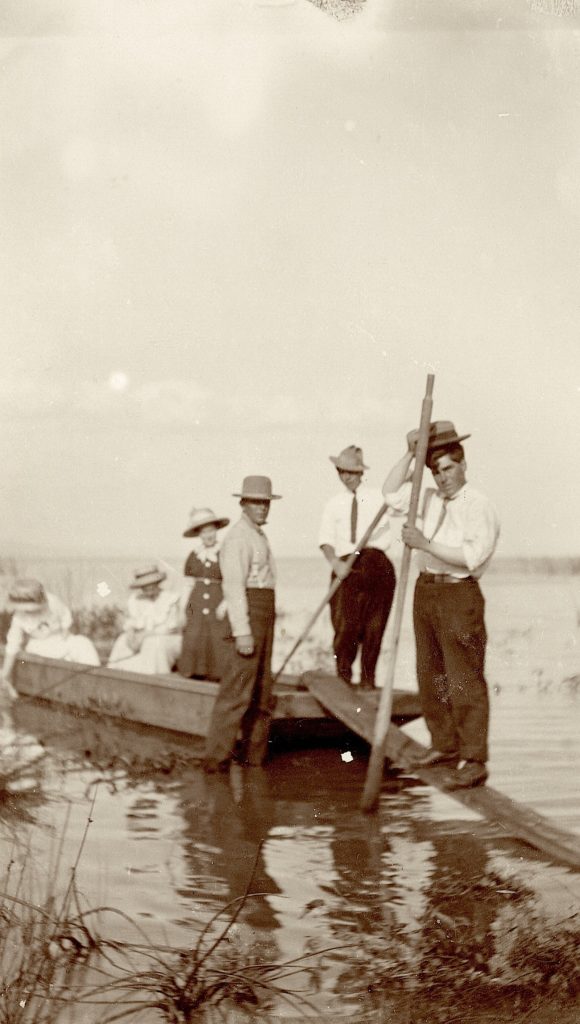
Ready to launch near Milford, 1905. Courtesy of Marge C. Foster

While “Godzilla El Nino” winter of 2015-16 somewhat fizzled in Northeastern California there was enough precipitation that Honey Lake received some water, however, it is all gone now.

Prior to 1916, when Honey Lake was full, and it was for long periods of time, it provided a recreational outlet for those who resided near the lake.  Various residents had small boats for pleasure outings. It should be noted that there were also commercial boat enterprises on the lake as well, and that is topic for another day.

Those who have spent anytime around Honey Lake know how windy it can be. For some boaters this created an interesting hazard.  Fortunately, the Lassen Weekly Mail of April 9, 1915, chronicled one of these encounters: “ A party from Honey Island consisting of Henry Baughman, W.F Snare, and Alex Norwood were in Susanville yesterday. They made the passage from the Island to the mainland in a rowboat and report a very stormy passage. The waves were so high that the bottom of the lake was often exposed and the boat left stranded on the bottom. The party had to wait each time until the wave came back and floated the boat.”

Never miss a story, click here to subscribe.

Great Basin Architecture

Smoke Creek Desert, 1996.

There are anniversaries, and then there are anniversaries. It was a year ago, today, when I broke my hip and became a Nevada resident for six weeks.

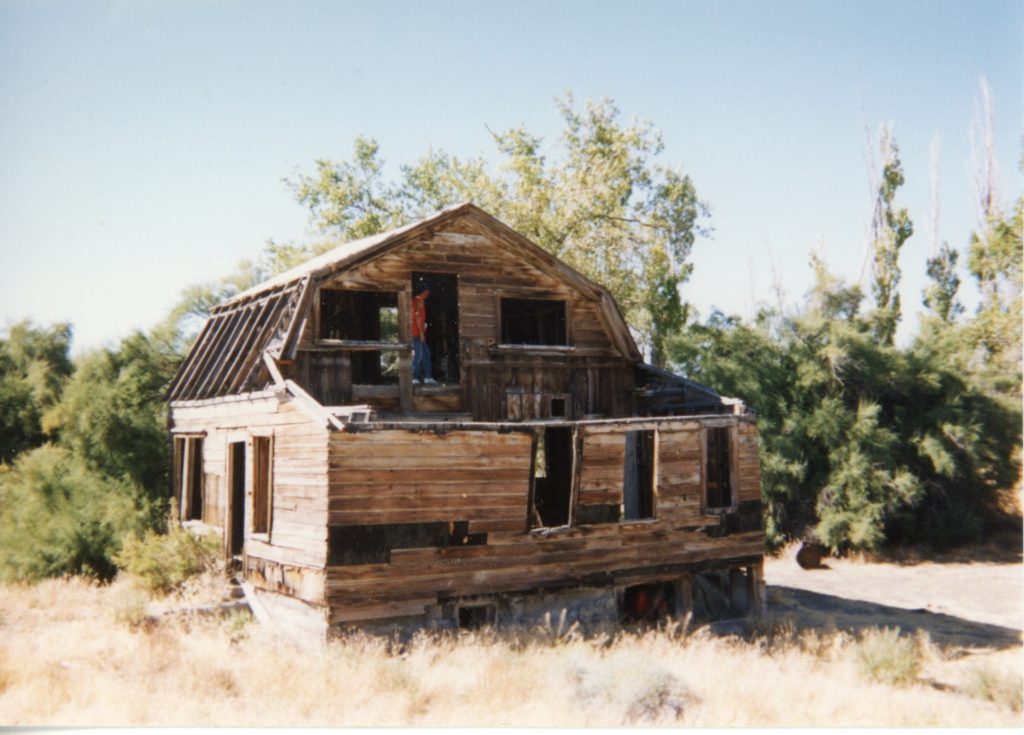
Some may remember back in the early 1990s, the Bureau of Land Management (BLM) and myself hosted prehistoric/historic tours.  However, there were always issues as to historic sites, and BLM always said no.  One of those was Great Basin Architecture of abandoned ranches and homesteads, and they said h-ll no. Since BLM staff were paid, and I was a volunteer and after three years, I decided I had enough. Continue reading Great Basin Architecture

Lonely Graves – Joseph B. Todd

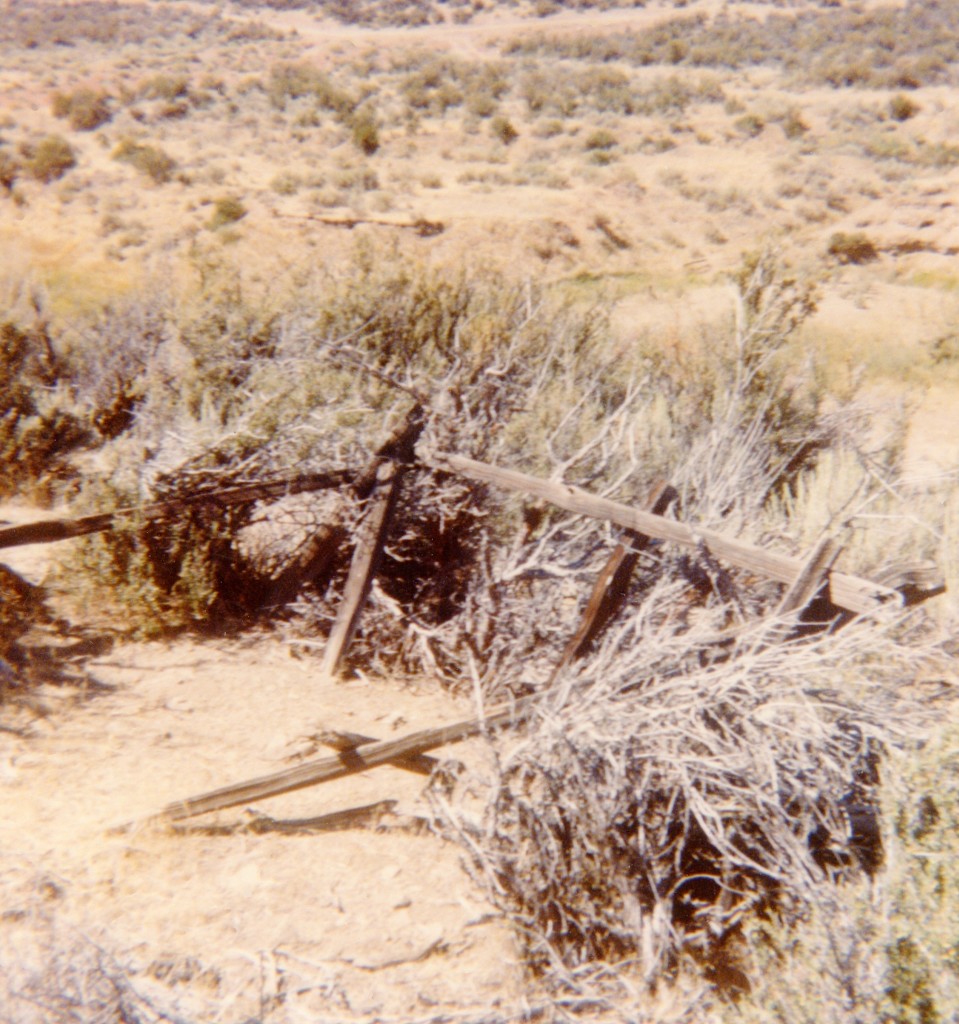
Todd's grave, September 9, 1979
Todd’s grave, September 9, 1979

This grave was briefly mentioned during the St. Patrick’s Cemetery Tour, as his sister Matilda Todd Montgomery  grave was the start of the tour.

Joseph Bellas Todd was born October 16, 1828 at Anterim County, Ireland, and shortly thereafter the family migrated to Philadelphia, Pennsylvania. In 1857, he became the first member of his family to locate Honey Lake Valley and located on a small parcel near Richmond. In the next few years, his  four sisters–Matilda Montgomery, Margaret Streshley, Mary Drake, Sarah Emerson Hosselkus and one brother, John would make their homes there as well.

A confirmed bachelor, Joe Todd remained on his small ranch for next fifty-one years. At the age of 80, he moved to Susanville to reside with his nephew Charlie Emerson. When he died on October 21, 1910, his last request that he be buried on his beloved homestead, and the family obliged.

Never miss a story, click here to subscribe.